The construction and landscaping industries are undergoing a quiet electrification revolution, and at the center of it sits a machine that trades diesel fumes for lithium-ion packs: the electric skid steer. If you're searching for a Bobcat electric skid steer, you're likely weighing whether battery-powered compact equipment can handle real job site demands — torque, runtime, charging logistics, and total cost of ownership — against a proven diesel platform.
The Short Answer
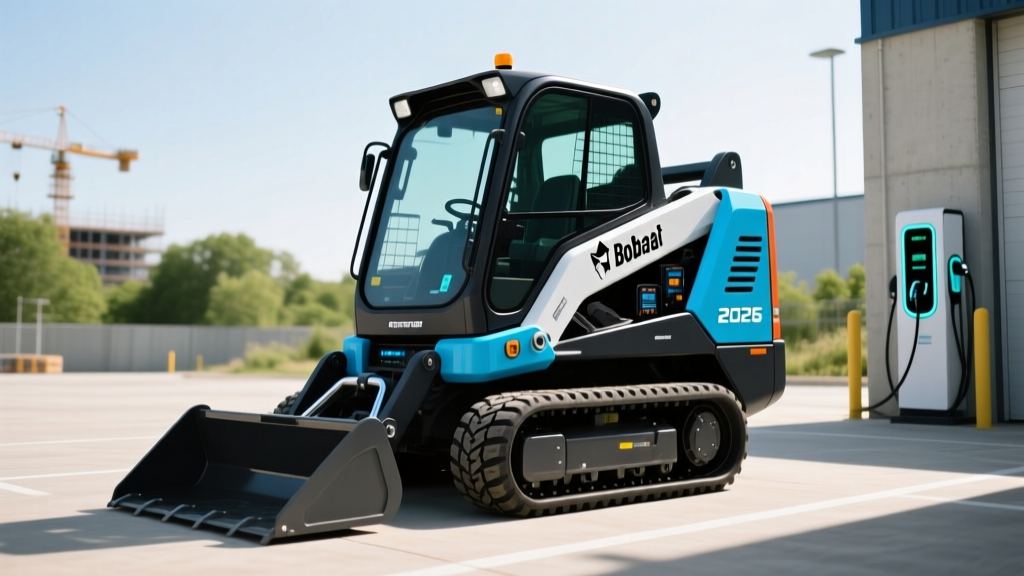
As of 2026, Bobcat's primary electric compact equipment lineup centers on the Bobcat T7X compact track loader (the closest analog to an electric skid steer in their catalog). The T7X uses a 62 kWh lithium-ion battery pack (LFP chemistry), delivers equivalent performance to the diesel T76, and eliminates hydraulic systems entirely — replacing them with electric actuators. Pricing starts around $90,000–$100,000 before incentives. It's best suited for operators with predictable daily duty cycles, indoor or emissions-sensitive work, and access to depot charging. If you need 10+ hours of continuous heavy digging in remote locations with no power, diesel still wins on logistics.
Bobcat T7X Electric Specs: Battery, Power, and Runtime
Understanding the T7X requires separating marketing from physics. Here's what the machine actually delivers:
| Specification | Value |
|---|---|
| Battery Capacity | 62 kWh usable (LFP chemistry) |
| Operating Weight | ~9,700 lbs |
| Rated Operating Capacity | ~2,100 lbs |
| Drive System | Electric motors (no hydraulics) |
| Charging (Level 2 / 240V) | ~10 hours (full charge overnight) |
| Charging (DC Fast, if equipped) | ~2 hours to 80% |
| Typical Runtime (mixed duty) | 4–8 hours depending on load |
| Base MSRP | ~$90,000–$100,000 |
| Warranty (battery) | 5 years / 5,000 hours |
The 62 kWh battery is the single largest cost component and the key to understanding ownership. LFP (lithium iron phosphate) chemistry is the right choice here: it sacrifices some energy density for dramatically better cycle life (3,000+ full cycles before 80% capacity retention), thermal stability, and no cobalt sourcing concerns. For a machine that charges nightly and works daily, cycle life matters more than packing maximum kWh into a small footprint.
Runtime reality check: Bobcat advertises up to 8 hours of runtime, but this is based on light-to-moderate mixed duty (travel, light grading, material handling). Continuous heavy digging, trenching, or pushing loaded buckets will draw significantly more power. Expect 4–5 hours of heavy continuous work before needing a charge — similar to how a diesel skid steer's fuel tank lasts longer idling and traveling than running a hydraulic breaker attachment all day.
Electric vs. Diesel Skid Steer: Total Cost Breakdown
The purchase price of an electric skid steer is substantially higher than its diesel equivalent. The Bobcat T7X at ~$95,000 compares to a diesel T76 at roughly $55,000–$65,000. That $30,000+ premium is the barrier most buyers fixate on — but it's the wrong number to focus on. Total cost of ownership over 5 years tells a different story.
| Cost Category | Bobcat T7X (Electric) | Bobcat T76 (Diesel) |
|---|---|---|
| Purchase Price | $95,000 | $60,000 |
| Fuel/Energy (5 yrs, ~1,500 hrs/yr) | $4,500 (at $0.12/kWh) | $22,500 (at $4.00/gal diesel) |
| Maintenance (5 yrs) | $2,000 | $8,500 |
| Hydraulic Fluid & Filters | $0 (no hydraulics) | $3,000 |
| DEF / Emissions System | $0 | $1,500 |
| Estimated Resale (Year 5) | -$35,000 | -$22,000 |
| Net 5-Year Cost | $66,500 | $73,000 |
The math flips in the electric machine's favor primarily through three channels:
- Energy cost: A diesel skid steer burning 1.5 gallons per hour at $4/gal costs $6/hr in fuel. The T7X drawing roughly 7–8 kWh/hr at $0.12/kWh costs under $1/hr. Over 7,500 hours in five years, that's an $18,000 energy savings.
- Maintenance elimination: No engine oil changes, no fuel filters, no DEF fluid, no DPF regeneration, no hydraulic hoses to replace, no hydraulic fluid to swap every 2,000 hours. Electric motors have bearings and windings — not piston rings and injectors.
- Downtime reduction: Every hour a diesel machine sits for scheduled maintenance is an hour of lost productivity. Electric machines have dramatically fewer scheduled service intervals.
The breakeven point typically arrives around year 3–4 for machines used 1,500+ hours annually. Below 800 hours/year, the diesel machine's lower purchase price may never be recovered through fuel savings.
Charging Logistics: What Job Site Power Looks Like
This is where most first-time electric equipment buyers underestimate the challenge. A 62 kWh battery is roughly equivalent to the battery in a Ford F-150 Lightning Extended Range — it requires serious electrical infrastructure to charge in a reasonable timeframe.
| Charging Method | Power (kW) | Time to Full | Infrastructure Needed |
|---|---|---|---|
| Standard 120V outlet | ~1.4 kW | 44+ hours | None (but impractical) |
| Level 2 (240V, 40A) | ~9.6 kW | ~8–10 hours | Dedicated 50A circuit, ~$2,000–$5,000 install |
| Level 2 (240V, 80A) | ~19.2 kW | ~4–5 hours | Dedicated 100A circuit, ~$4,000–$8,000 install |
| DC Fast Charge (if equipped) | ~30–50 kW | ~2 hours to 80% | Commercial DC charger, $15,000–$30,000+ |
Key distinction — kW vs. kWh: Your battery stores 62 kWh (energy). Your charger delivers kW (power). A 9.6 kW Level 2 charger needs roughly 6.5 hours to deliver 62 kWh — but charging isn't perfectly linear, so expect 8–10 hours accounting for taper at the top of the charge curve.
For most contractors, the practical setup is a Level 2 charger at the shop or depot, plugged in overnight, ready for a full day's work by morning. This mirrors how fleet electric vans and trucks operate. The challenge arises for operators who:
- Work at remote sites with no grid power
- Run double shifts or need mid-day top-ups
- Operate across multiple job sites daily without returning to a home base
For these scenarios, a portable generator (diesel or battery-based like a Bobcat power unit) or a towable battery pack becomes necessary infrastructure. Some contractors are pairing electric skid steers with solar+storage at their yard — charging for free during the day and deploying charged machines in the morning.
Where Electric Skid Steers Excel (and Where They Don't)
Not every job site is a good fit. Here's an honest assessment based on duty cycle, environment, and logistics:
Decision Framework: Should You Go Electric?
Choose the electric Bobcat T7X if:
- You work indoors or in enclosed spaces (warehouses, barns, basements) where diesel exhaust is a health and ventilation problem
- Your municipality or clients require zero-emissions equipment for indoor/urban work
- You have a home base with 240V power for overnight charging
- Your daily duty cycle is under 6–8 hours of mixed work
- You value near-silent operation (residential neighborhoods, hospitals, schools, early-morning work)
- You want to eliminate hydraulic maintenance and fluid disposal costs
Stick with diesel if:
- You work 10+ hours/day on remote sites with no electrical access
- You run high-draw hydraulic attachments continuously (breakers, augers in hard rock)
- You need to tow the machine long distances between sites daily without charging opportunity
- Your annual usage is under 500 hours (the purchase premium won't be recovered)
The noise advantage deserves emphasis. The T7X operates at roughly 70–75 dB under load compared to 85–95 dB for a comparable diesel. That's not just a comfort feature — it's the difference between working under noise ordinance restrictions and getting shut down. Contractors doing early-morning landscaping in residential areas or interior demolition in occupied buildings find the electric machine unlocks work windows that diesel simply cannot.
Incentives, Tax Credits, and the Real Purchase Price
The sticker shock of a $95,000 electric skid steer softens considerably when you account for available incentives. However, the rules are specific and change frequently.
Federal & State Incentive Landscape (2026)
- IRS §45W Clean Vehicle Credit (Commercial): Up to $7,500 for vehicles under 14,000 lbs GVWR, or up to $40,000 for heavier qualified commercial clean vehicles (15–40% of incremental cost over a comparable ICE vehicle). The T7X at ~9,700 lbs may qualify under the lighter vehicle tier — consult a tax professional and review current IRS guidance on clean vehicle credits.
- IRA §179D / Bonus Depreciation: Commercial equipment may qualify for accelerated depreciation schedules, effectively reducing the net cost by 20–30% depending on your tax situation.
- Utility Rebates: Many electric utilities offer $1,000–$5,000 rebates for commercial EV/EV-equipment charging installations. Check with your local provider.
- State Programs: California (CARB), New York, and several other states offer additional point-of-sale or rebate incentives for zero-emissions off-road and construction equipment. Amounts vary by jurisdiction and funding availability — check your state's air quality or energy office.
- Diesel surcharge avoidance: In some jurisdictions, diesel equipment faces emerging emissions surcharges or restricted-zone fees that electric equipment avoids entirely.
The critical caveat: tax credit eligibility depends on your business structure, income, the machine's GVWR classification, and battery component sourcing requirements. Always verify with a qualified tax professional before basing a purchase decision on assumed credit amounts. The IRS rules for commercial clean vehicles under the Inflation Reduction Act have specific definitions that may or may not encompass off-road construction equipment in every interpretation.
Common Misconceptions About Electric Skid Steers
| Myth | Fact |
|---|---|
| "Electric machines don't have enough torque for digging" | Electric motors deliver peak torque at zero RPM — the opposite of diesel, which needs to spool up. The T7X matches or exceeds the breakout force of its diesel equivalent. |
| "The battery won't last and replacement will bankrupt me" | LFP chemistry is rated for 3,000+ cycles at 80% retention. At one cycle per day, that's 8+ years. Replacement cost is estimated at $15,000–$25,000 — significant, but offset by years of fuel/maintenance savings. |
| "You can't use hydraulic attachments" | The T7X uses electric actuators instead of hydraulics for drive and lift functions. Some PTO-driven attachments may require adapters, but Bobcat has developed compatible attachment ecosystems. |
| "It takes too long to charge on a job site" | Overnight depot charging (8–10 hours on Level 2) covers most contractors' needs. For mid-day top-ups, a 30-minute session on DC fast charging can add 30–40% battery. |
| "Cold weather kills the battery" | LFP batteries do lose 15–25% capacity in sub-freezing temperatures, but the T7X has active thermal management. Cold-weather runtime will be reduced — plan accordingly, just as you'd account for diesel gelling in winter. |
What First-Time Electric Equipment Buyers Should Know
If this is your first electric machine — whether a skid steer, compact track loader, or excavator — here are the operational shifts to prepare for:
1. Plan your charging infrastructure before the machine arrives. A 62 kWh battery on a standard 120V outlet is a non-starter. Budget $2,000–$8,000 for a proper Level 2 installation at your shop, including potential panel upgrades if your electrical service is maxed out. A licensed electrician should assess your panel capacity before you commit.
2. Rethink your daily workflow around the charge cycle. Diesel operators refuel in 3 minutes whenever the tank runs low. Electric operators charge overnight and deploy with a full "tank" every morning. This actually works better for most contractors — no fuel runs, no fuel storage, no spill risk — but it requires discipline about plugging in at end of day.
3. Monitor State of Health (SoH), not just State of Charge (SoC). The machine's display will show battery degradation over time. LFP chemistry degrades slowly and predictably. If you see accelerated drop-off (unlikely under normal use), it may indicate a thermal management issue worth addressing under warranty.
4. Train operators on regen and power management. Electric machines recover energy during deceleration and downhill travel (regenerative braking). Operators who learn to anticipate stops and use terrain to their advantage can extend runtime by 10–15%.
5. Insurance may cost more initially. Insurers are still building actuarial data on electric construction equipment. Expect premiums 10–20% higher than equivalent diesel machines in the first few years, though this gap is narrowing as the installed base grows.
Frequently Asked Questions
Can the Bobcat T7X really replace a diesel skid steer on a real job site?
For 80% of typical skid steer tasks — material handling, grading, site cleanup, loading trucks, light demolition — yes. The T7X matches the diesel T76 in rated operating capacity and delivers superior low-speed torque. The 20% where diesel still wins involves sustained heavy hydraulic attachment use in remote locations without charging access.
How much does it cost to charge the Bobcat T7X per day?
A full charge from 0–100% on a 62 kWh battery at the US commercial average of $0.12/kWh costs approximately $7.44. Compare that to filling a diesel skid steer's 15-gallon tank at $4/gallon: $60. Daily energy cost is roughly one-eighth that of diesel.
What happens when the battery reaches end of life?
LFP batteries at 80% capacity retention still function — they simply offer reduced runtime (roughly 50 kWh instead of 62 kWh). Full replacement is estimated at $15,000–$25,000. Additionally, retired EV/equipment batteries are increasingly entering second-life applications (stationary storage) or recycling streams, which may offset replacement costs in the future.
Are there other electric skid steer options besides Bobcat?
Yes. Companies like Volvo CE (ECR25 Electric compact excavator, L25 Electric wheel loader), JCB, Kubota, and startups like Battery Electric Vehicles offer electric compact equipment. However, Bobcat's dealer network and attachment ecosystem remain among the strongest in the compact equipment space, which matters for parts and service support.
Does the federal tax credit apply to off-road construction equipment?
The IRS §45W and §30D credits are primarily structured around on-road vehicles with specific GVWR and highway-use definitions. Some electric off-road equipment may qualify under the broader §45W commercial clean vehicle credit or through bonus depreciation provisions, but eligibility is not automatic. Work with a tax professional familiar with construction equipment and current IRA provisions to determine your specific eligibility.