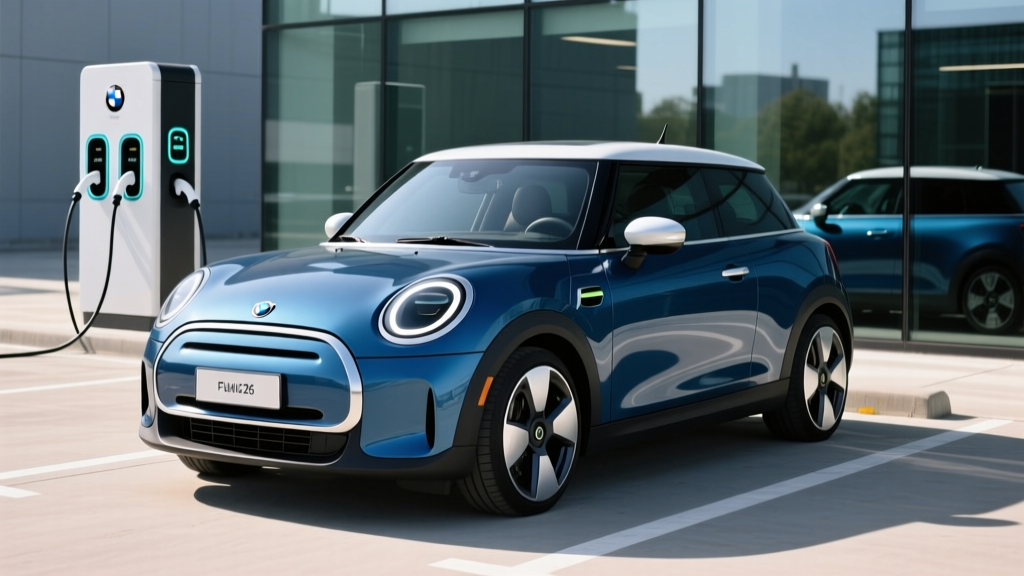
The Mini Cooper Electric has always been the EV you buy with your heart, not your spreadsheet. But for 2026, BMW's iconic British hatchback makes a stronger case for the spreadsheet, too. With a larger battery, faster charging, and a starting price that undercuts several rivals, the latest BMW Mini electric car is no longer just a compliance vehicle — it's a legitimate daily driver for urban commuters who refuse to sacrifice personality for efficiency.
We spent time with the 2026 Mini Cooper SE (the all-electric variant sold in the US) to answer the questions that actually matter: What's the real range when you're merging onto the freeway in January? How fast does it charge on a road trip? And does it qualify for the federal tax credit? Here's everything we found.
2026 Mini Cooper SE: Quick Verdict
The 2026 Mini Cooper SE is a premium subcompact electric hatchback that trades maximum range for maximum character. It won't win a range war against a Chevrolet Equus or Tesla Model 3, but it delivers enough miles for most commutes, charges quickly enough for road trips, and offers a driving experience that's genuinely fun. If you live in a city, charge at home, and want an EV that doesn't look like every other crossover in the lot, the Mini Cooper SE deserves a serious look.
Range, Battery, and Real-World Efficiency
Real-World Expectation: Expect 130–145 miles in mixed city/highway driving during mild weather. In cold climates (below 30°F), plan for 105–125 miles due to battery chemistry limitations and cabin heating draw. Highway-only driving at 75 mph yields approximately 120–130 miles.
The 2026 Mini Cooper SE uses a 54.2 kWh battery pack (40.7 kWh usable), built with NMC (nickel manganese cobalt) lithium-ion cells. BMW has moved away from the smaller 32.6 kWh pack used in the pre-2025 generations, nearly doubling usable capacity and finally giving the Mini Cooper SE a range figure that works for real life.
| Spec | Value |
|---|---|
| EPA Range | 152 mi (Classic) / 146 mi (Signature/Iconic) |
| Battery (Usable) | 40.7 kWh (54.2 kWh gross), NMC chemistry |
| Efficiency | 114 MPGe combined / 29 kWh per 100 mi |
| Max DC Fast Charge | 95 kW (CCS2/NACS adapter compatible) |
| 10–80% DC Charge Time | ~28 minutes |
| Level 2 Home Charge Rate | 11 kW (7.4 kW on 240V/32A typical home circuit) |
| Level 2 Full Charge Time | ~5.5 hours (0–100% at 7.4 kW) |
| Motor | Single front-mounted electric motor, FWD |
| Horsepower | 215 hp (Cooper SE) |
| 0–60 mph | 6.7 seconds |
| Base MSRP | $30,900 (Classic trim, before incentives) |
| Battery Warranty | 8 years / 100,000 miles (capacity ≥70%) |
Efficiency is rated at 114 MPGe combined (city: 121 MPGe, highway: 106 MPGe) per EPA data on fueleconomy.gov, translating to about 29 kWh per 100 miles. That's respectable for the class — slightly behind the Nissan Leaf (111 MPGe but larger) and ahead of some older luxury subcompacts.
Why Real-World Range Falls Short of the EPA Sticker
The EPA test cycle includes substantial low-speed city driving where regenerative braking recovers energy. On the highway, the Mini's aerodynamic profile (Cd 0.30) and lack of a heat pump on lower trims mean cold-weather range drops noticeably. We recommend budgeting 15–20% below the EPA figure for mixed use, and 25–30% below for sustained highway or cold-weather driving.
Charging Speed: DC Fast and Home Level 2
Charging is where the 2026 Mini Cooper SE shows meaningful improvement over its predecessors. The peak DC fast-charge rate is now 95 kW, up from the previous generation's 50 kW ceiling. That's still not class-leading — the Hyundai Ioniq 5 peaks at 240 kW — but it's adequate for a car with a 40.7 kWh usable battery.
| Charging Level | Power (kW) | Miles Added per Hour | Notes |
|---|---|---|---|
| Level 1 (120V household) | 1.4 kW | ~4 mi/hr | Emergency/top-up only |
| Level 2 (240V, 32A) | 7.4 kW | ~25 mi/hr | Standard home charger; full charge ~5.5 hrs |
| Level 2 (240V, 48A) | 11 kW | ~37 mi/hr | Requires 60A circuit; full charge ~3.7 hrs |
| DC Fast (peak) | 95 kW | ~250 mi/hr equivalent | 10–80% in ~28 min; tapers sharply above 80% |
At a DC fast charger, the Mini Cooper SE will go from 10% to 80% in approximately 28 minutes. The charge curve holds near peak (85–95 kW) from 10% to roughly 50% state of charge, then tapers to around 45 kW by 80%. Charging past 80% is slow — expect another 25+ minutes to go from 80% to 100%. On road trips, plan your stops around the 10–80% window for the best time efficiency.
For home charging, a standard Level 2 wallbox at 240V/32A delivers 7.4 kW, adding roughly 25 miles of range per hour. A full overnight charge is easy. If your electrical panel supports a 60-amp circuit, you can push the onboard charger to its 11 kW maximum, cutting a full charge to under four hours.
Connector note: The 2026 Mini Cooper SE ships with a CCS2 port in the US. BMW provides a NACS adapter for Tesla Supercharger access, reflecting the industry-wide shift to the North American Charging Standard. Check Mini's official spec page for the latest adapter details.
Performance and Driving Dynamics
The Mini Cooper SE is front-wheel drive, powered by a single electric motor producing 215 horsepower and 243 lb-ft of torque. That's a significant bump from the 181 hp of the previous generation, and it translates to a 0–60 mph time of 6.7 seconds.
That's quick enough to feel lively in city traffic and confident when merging. The instant torque delivery makes the car feel even faster than the numbers suggest off the line. Mini's trademark go-kart handling carries over — the low center of gravity from the floor-mounted battery, firm suspension tuning, and quick steering ratio make this one of the most engaging EVs to drive on a twisty road.
Trade-offs? The ride is firm. You'll feel potholes and expansion joints more than in a Hyundai Kona Electric or Nissan Leaf. And the FWD layout means you'll spin the front tires under hard acceleration on wet roads. If you want all-wheel drive, you'll need to look elsewhere — BMW offers the Countryman SE ALL4 for that, but it's a larger, pricier vehicle.
Interior, Tech, and Cargo Space
The 2026 Cooper SE features Mini's latest interior design language, anchored by a 9.4-inch circular OLED center display running MINI Operating System 9. The interface is responsive and visually distinctive, with customizable widgets and wireless Apple CarPlay and Android Auto. A head-up display, heated steering wheel, and Harman Kardon premium audio are available on higher trims.
Driver assistance features include:
- Adaptive cruise control with stop-and-go
- Lane-keeping assist
- Parking assistant with surround-view camera
- Active blind-spot detection
Important: These are SAE Level 2 driver-assist features. They require your hands on the wheel and eyes on the road at all times. This is not autonomous driving.
Cargo space is the Mini's most practical limitation. You get 8.7 cubic feet behind the rear seats and 33.2 cubic feet with the rear seats folded. Rear legroom is tight at 32.9 inches — adults will fit on short trips but won't thank you for long drives. Front passengers get 41.3 inches of legroom and supportive sport seats.
There is no frunk (front trunk). The charge port is located on the passenger-side rear quarter panel, where the gas filler cap would be on a conventional Mini.
Pricing, Trims, and Federal Tax Credit Eligibility
The 2026 Mini Cooper SE is offered in three trims:
| Trim | Base MSRP | Key Features | Est. Federal Credit | Est. Net Price |
|---|---|---|---|---|
| Classic | $30,900 | 152 mi range, 16" wheels, basic ADAS | Up to $3,750* | ~$27,150 |
| Signature | $33,900 | 146 mi range, 17" wheels, panoramic roof, heated seats | Up to $3,750* | ~$30,150 |
| Iconic | $37,400 | 146 mi range, 18" wheels, HUD, premium audio, full ADAS | Up to $3,750* | ~$33,650 |
*Federal tax credit estimates based on 2026 IRS §30D rules. Actual credit depends on battery component and critical mineral sourcing requirements, buyer income limits, and MSRP caps. See details below.
Does the Mini Cooper SE Qualify for the Federal EV Tax Credit?
The answer is partially, and it depends on your situation. Under current IRS §30D rules, new EVs can qualify for up to $7,500 in federal tax credits, split into two halves:
- $3,750 if battery components meet North American manufacturing thresholds
- $3,750 if critical minerals are sourced from the US or free-trade-agreement partners
As of 2026, the Mini Cooper SE's battery is manufactured in Europe, which typically satisfies one of the two halves ($3,750) depending on the specific sourcing declarations BMW files with the IRS. The full $7,500 is unlikely under current rules.
Additional eligibility requirements:
- MSRP cap: The vehicle must have an MSRP under $55,000 (sedans/hatchbacks). All Cooper SE trims qualify.
- Buyer income cap: Adjusted gross income must be ≤ $150,000 (single) / ≤ $300,000 (joint). Above these limits, no credit.
- Point-of-sale transfer: You can transfer the credit to the dealer at purchase for an upfront price reduction, rather than waiting to claim it on your tax return.
Because battery sourcing rules tighten annually, we strongly recommend verifying eligibility with your dealer and a tax professional before purchase. State incentives (California, Colorado, New York, and others) may stack on top — check your state's energy office for current programs.
Warranty and Long-Term Ownership
BMW backs the Mini Cooper SE with the following warranty coverage:
- Battery: 8 years / 100,000 miles (guaranteed ≥70% of original capacity)
- Powertrain: 4 years / 50,000 miles
- Bumper-to-bumper: 4 years / 50,000 miles
- Corrosion protection: 12 years / unlimited miles
The 70% capacity retention threshold is industry-standard. NMC batteries in the Mini's size class typically degrade 8–12% over the first five years with normal use, meaning you should stay well within warranty coverage. Avoid routinely DC fast-charging to 100% and leaving the car at full charge in extreme heat for extended periods — both accelerate degradation.
Maintenance costs are low compared to gas-powered Minis. No oil changes, no transmission fluid, no spark plugs. Budget for cabin air filter replacement (~$50–80 annually), brake fluid checks every two years, and tire rotation every 7,500 miles. Insurance premiums tend to run 10–15% higher than the gas Cooper, reflecting higher repair costs for EV-specific components.
Pros, Cons, and Who Should Buy
Pros
- Engaging, go-kart-like driving dynamics rare in the EV segment
- Distinctive, customizable design with premium interior materials
- Improved 152-mile EPA range is practical for most urban commutes
- 95 kW DC fast charging is adequate for road trips
- Starting price under $31,000 is competitive after credits
- Wireless CarPlay/Android Auto and responsive infotainment
- Strong resale value and brand cachet
Cons
- Range drops significantly in cold weather (25–30% loss)
- Tight rear seat and limited cargo space
- Firm ride quality — not ideal for rough roads
- No frunk; limited storage solutions
- FWD only — no AWD option for snow-belt buyers
- Federal tax credit likely limited to $3,750, not the full $7,500
- 95 kW peak charge rate trails rivals like Ioniq 5 and Model 3
Who Is This EV For?
Buy it if: You're a city dweller or suburban commuter with home charging access, you value driving fun and design over maximum cargo space, and your daily round trip is under 80 miles. It's an excellent second car or a stylish primary EV for singles and couples without children.
Look elsewhere if: You need 250+ miles of range for frequent road trips, you regularly carry rear-seat passengers, you live in a cold climate without garage parking, or you need all-wheel drive. Consider the Tesla Model 3, Hyundai Ioniq 5, or Chevrolet Equinox EV for those use cases.
Frequently Asked Questions
What is the real-world range of the 2026 BMW Mini electric car?
The EPA rates the Mini Cooper SE at 152 miles on the Classic trim and 146 miles on higher trims. In real-world mixed driving, expect 130–145 miles in mild weather and 105–125 miles in cold conditions. Highway driving at 75 mph will yield roughly 120–130 miles.
How fast does the Mini Cooper SE charge at home and on the road?
At a DC fast charger, it peaks at 95 kW and charges from 10–80% in about 28 minutes. At home on a Level 2 (240V/32A) charger, it adds about 25 miles per hour and reaches a full charge in roughly 5.5 hours.
Does the 2026 Mini Cooper SE qualify for the $7,500 federal tax credit?
Likely not the full amount. Under current IRS §30D rules, the Cooper SE is expected to qualify for $3,750 (half credit) based on battery component sourcing. Eligibility also depends on your income (≤$150K single / ≤$300K joint) and the vehicle's MSRP (all trims qualify under the $55K cap). Confirm with your dealer and tax professional.
Is the Mini Cooper SE worth buying over the Tesla Model 3 or Hyundai Ioniq 5?
It depends on priorities. The Model 3 offers 341 miles of range and a Supercharger network; the Ioniq 5 offers 303 miles and 240 kW charging. The Mini wins on driving dynamics, parking ease, and personality. If range and charging speed are your top concerns, the Tesla or Hyundai are stronger picks. If you want a fun, compact, city-friendly EV, the Mini is hard to beat.
Does the Mini Cooper SE have a front trunk (frunk)?
No. The space under the hood is occupied by the electric motor and power electronics. All cargo goes in the rear hatch area (8.7 cu ft behind rear seats, 33.2 cu ft with seats folded).
Can I charge the Mini Cooper SE at Tesla Superchargers?
Yes, using the BMW-provided NACS adapter. Mini has confirmed compatibility with the Tesla Supercharger network for 2026 models, though you'll need to use the Mini app or Tesla app to initiate sessions at non-Tesla vehicles.
The 2026 BMW Mini Cooper SE isn't trying to be everything to everyone. It's a deliberate, well-executed niche vehicle: the premium urban EV for drivers who care about how a car looks and feels, not just how far it goes. If that's you — and you can charge at home — it's one of the most satisfying electric cars you can buy today.