Quick Answer: What We Know About the 2028 BMW M3 EV
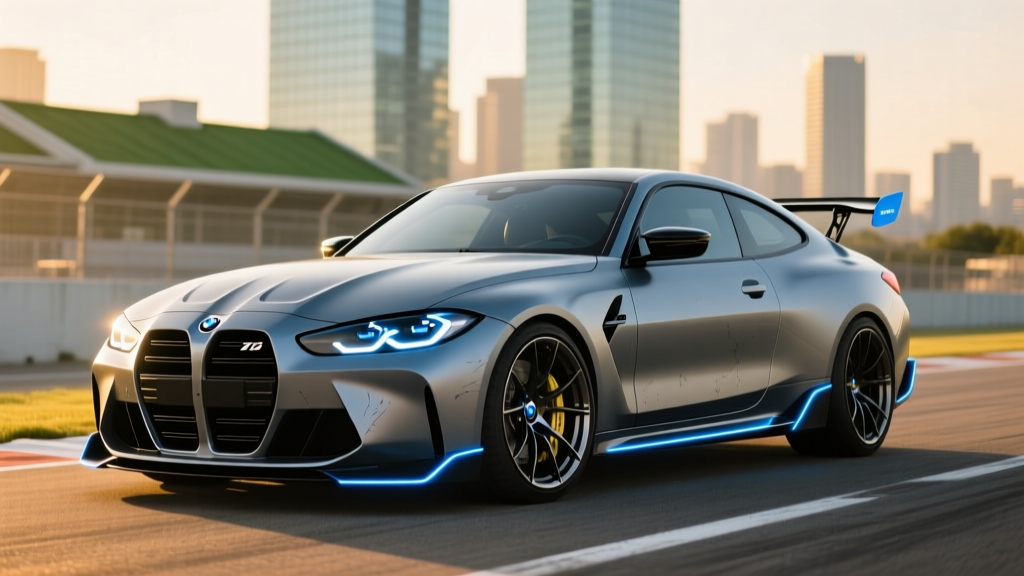
The BMW M3 EV is an announced, unreleased performance sedan expected for the 2028 model year, built on BMW's Neue Klasse platform with an 800-volt architecture and a projected four-motor layout producing over 1,000 horsepower. Based on current prototype reporting and BMW's confirmed Neue Klasse specs, expect a usable battery capacity above 100 kWh (likely NMC chemistry), an EPA-estimated range target near 400 miles, DC fast charging at up to 350 kW (10–80% in roughly 20 minutes), and a starting MSRP likely between $85,000 and $95,000. No final EPA certifications, pricing, or production specs have been published by BMW as of 2026. All figures below are estimates drawn from prototype sightings, supplier disclosures, and BMW's published Neue Klasse platform targets.
For decades, the BMW M3 has defined the sports sedan segment. The current G80-generation M3 Competition xDrive produces 523 horsepower from a 3.0-liter twin-turbo inline-six, hits 60 mph in 3.4 seconds, and starts around $80,000. By 2028, BMW intends to offer an all-electric M3 alongside it — and eventually phase the inline-six out of the M3 lineup entirely. Here is everything the prototype data, platform engineering disclosures, and industry reporting tell us so far, paired with a realistic ownership-cost breakdown for buyers weighing this against the gas M3 or competitors like the Tesla Model S Plaid and Porsche Taycan Turbo GT.
Neue Klasse Platform: The Engineering Behind the M3 EV
The 2028 M3 EV rides on BMW's Neue Klasse architecture, a dedicated EV platform that replaces the flexible CLAR underpinnings used in the current i4 and iX. The Neue Klasse platform introduces three critical upgrades over BMW's existing EVs:
- 800-volt electrical architecture — enables faster DC charging and more efficient power delivery compared to the 400V systems in the current i4 M50.
- Cylindrical battery cells — BMW has confirmed a switch from prismatic to round cells (similar in form factor to Tesla's 4680), with a stated 20% improvement in energy density and 30% faster charging capability.
- Gen6 eDrive motors — BMW's next-generation electric motors eliminate rare-earth magnets in some configurations and deliver higher power density per kilogram.
For the M3 EV specifically, prototype sightings and supply-chain reporting point to a quad-motor configuration — one motor per wheel — enabling torque vectoring that no mechanical differential can match. BMW M division CEO Frank van Meel has confirmed the electric M3 will use "at least" four motors. Total system output is projected above 1,000 hp, placing it in the territory of the Lotus Eletre R and well beyond the current gas M3.
Projected Range, Battery, and Charging Specs
Because the M3 EV is not yet in production, no EPA certification exists. The figures below are estimates based on Neue Klasse platform targets, prototype battery-pack reporting, and segment benchmarks. Treat them as preliminary.
| Spec | M3 EV (Est.) | 2026 M3 Comp. xDrive |
|---|---|---|
| Battery (usable) | ~105 kWh (NMC, cylindrical) | N/A |
| EPA Range (est.) | ~380–420 mi | ~370 mi (15.5 gal tank) |
| Real-World Highway Range | ~290–330 mi | ~300–320 mi |
| Horsepower | 1,000+ hp (quad motor) | 523 hp |
| 0–60 mph | ~2.5 sec (est.) | 3.4 sec |
| Max DC Charge Rate | ~350 kW peak | N/A |
| 10–80% DC Charge | ~18–22 min (est.) | ~5 min (gas fill-up) |
| Level 2 Charge Rate | ~22 kW (est.) | N/A |
| Architecture | 800V | N/A |
| Base MSRP (est.) | $85,000–$95,000 | ~$80,300 |
| Federal Tax Credit (§30D) | TBD — likely $0 (MSRP & sourcing) | N/A |
| Battery Warranty | 8 yr / 100,000 mi (BMW std.) | N/A |
Charging Curve Expectations
An 800V architecture with cylindrical NMC cells should allow the M3 EV to sustain peak charge rates longer than BMW's current 400V vehicles. However, peak kW is never sustained across the entire session. Based on comparable 800V platforms (Hyundai Ioniq 5 N, Porsche Taycan, Lucid Air), expect the following charge-curve behavior:
- 10–40% SoC: Sustained ~300–350 kW
- 40–60% SoC: Taper to ~220–280 kW
- 60–80% SoC: Taper to ~150–180 kW
- 80–100% SoC: Dramatic taper to <50 kW (protect cell longevity)
This means a 10–80% session at a capable 350 kW station could take 18–22 minutes, but a 10–100% session could stretch past 40 minutes. For road trips, plan stops around the 10–80% window for maximum efficiency. Check fueleconomy.gov for official EPA data once BMW certifies the production model.
M3 EV vs. Gas M3: 5-Year Cost of Ownership
Performance EVs carry higher upfront costs but can offset them through fuel and maintenance savings. The table below compares a projected M3 EV purchase against the current G80 M3 Competition xDrive over five years and 75,000 miles of mixed driving. Electricity costs assume a national average of $0.16/kWh for home charging and $0.40/kWh for public DC fast charging; gas assumes $3.80/gallon premium (93 octane).
| Category | M3 EV (Est.) | M3 Gas (2026) |
|---|---|---|
| Purchase Price (base MSRP) | $90,000 | $80,300 |
| Federal Tax Credit (§30D) | $0 (likely over MSRP cap) | N/A |
| Fuel/Energy (75k mi) | $4,800 (est. 3.2 kWh/mi, mixed home/public) | $10,600 (est. 18 mpg, premium) |
| Maintenance (5 yr) | $1,500 (tires, cabin filter, fluid top-offs) | $4,500 (oil, brakes, plugs, diff fluid) |
| Insurance (5 yr avg.) | $18,000 | $15,000 |
| Depreciation (est. 5 yr) | $40,500 (45%) | $32,100 (40%) |
| Total 5-Year Cost | $154,800 | $142,500 |
| Cost per Mile | $2.06 | $1.90 |
Key takeaway: The M3 EV will likely cost more to own over five years, primarily due to a higher purchase price, steeper depreciation (performance EVs depreciate faster than their gas counterparts historically), and higher insurance premiums. Fuel and maintenance savings recover roughly $8,800 over five years, but they do not fully close the gap against a ~$10,000 higher purchase price and ~$8,400 in additional depreciation. Buyers choosing the M3 EV are paying for instant torque, a lower center of gravity, and the driving experience — not pure economics.
Federal Tax Credit Reality
Under current IRS §30D rules, the federal EV tax credit caps at $7,500 but carries significant restrictions:
- MSRP cap: Sedans must be under $55,000 to qualify. The M3 EV at ~$85,000–$95,000 will almost certainly exceed this cap and receive $0 in federal credit.
- Income cap: Modified AGI limits of $150,000 (single) / $300,000 (joint) apply — many M3 buyers will be near or above these thresholds.
- Battery sourcing: Critical mineral and battery component requirements tighten annually through 2029. BMW's supply chain for Neue Klasse cells (likely Samsung SDI) may or may not meet US-sourcing thresholds.
- Point-of-sale transfer: If the credit were available, buyers could apply it as a down-payment reduction at the dealer. But the MSRP cap makes this moot for the M3 EV.
Consult a tax professional for your specific situation. State-level incentives (California's CVRP, Colorado's innovative motor vehicle credit, etc.) may apply — check your state's energy office for current programs.
Performance & Driving: What Quad Motors Change
The shift from a twin-turbo inline-six to a four-motor EV powertrain fundamentally alters the M3's character. Here is what the engineering suggests:
Advantages of the Quad-Motor EV Layout
- Individual wheel torque vectoring: Each wheel receives independently controlled torque, enabling cornering dynamics that no mechanical limited-slip differential can replicate. The inside rear wheel can be braked or reversed while the outside wheel accelerates — virtually eliminating understeer.
- Instant torque delivery: Electric motors produce peak torque at 0 RPM. The 1,000+ hp M3 EV should launch harder than any gas M3, with no turbo lag and no shift interruptions.
- Lower center of gravity: A floor-mounted 105 kWh battery pack drops the car's CG significantly below the gas M3's, improving roll stiffness and cornering composure.
Trade-offs to Expect
- Weight: A 105 kWh battery pack alone weighs roughly 1,000–1,100 lbs. Total curb weight for the M3 EV is likely 5,000–5,300 lbs — approximately 1,200 lbs heavier than the gas M3 Competition xDrive (~3,900 lbs). This mass affects tire wear, braking distances, and transitional handling feel.
- Sound: BMW has developed "IconicSounds Electric" with Hans Zimmer, but synthesized motor sound cannot replicate the inline-six exhaust note. Some buyers will view this as a dealbreaker; others won't care.
- High-speed efficiency: EVs lose efficiency disproportionately at sustained speeds above 80 mph due to aerodynamic drag (drag force increases with the square of velocity). Track-day range will be significantly lower than the EPA estimate.
Home Charging & Real-World Ownership
A 105 kWh battery demands serious home charging infrastructure. Here is what M3 EV buyers should plan for:
| Level | Power | Miles Added/Hour | Full Charge Time (0–100%) |
|---|---|---|---|
| Level 1 (120V outlet) | ~1.4 kW | ~3–4 mi/hr | ~75+ hours |
| Level 2 (240V, 48A circuit) | ~11.5 kW | ~30–35 mi/hr | ~9–10 hours |
| Level 2 (240V, 80A / wall connector) | ~19.2 kW | ~50–55 mi/hr | ~5.5 hours |
| DC Fast Charge (350 kW station) | Up to 350 kW peak | ~900+ mi/hr (at peak) | 10–80% in ~20 min |
Home Charging Installation Costs
Most M3 EV buyers will want a 48-amp or higher Level 2 wall connector on a dedicated 60-amp circuit. Here is what to budget:
| Item | Cost Range |
|---|---|
| Level 2 EVSE (48A wall connector) | $500–$750 |
| Electrician labor (240V/60A circuit run) | $800–$2,500 |
| Electrical permit | $50–$200 |
| Panel upgrade (if needed — 200A service) | $1,500–$4,000 |
| Total (no panel upgrade) | $1,350–$3,450 |
| Total (with panel upgrade) | $2,850–$7,450 |
Always hire a licensed electrician for a site assessment before purchasing an EVSE. Your panel's available amperage, the distance from panel to garage, and local code requirements will determine final cost. Many utility companies offer rebates of $250–$1,000 for Level 2 installations — check with your provider.
Apartment and Condo Considerations
If you lack a dedicated garage or parking space with electrical access, home charging becomes a significant challenge. Options include:
- Requesting your HOA or landlord install shared Level 2 chargers (some states have "right to charge" laws that prevent HOAs from blocking installation).
- Relying on workplace charging if your employer offers it.
- Depending on public DC fast-charging networks (Electrify America, EVgo, Tesla Supercharger — BMW has not confirmed NACS adoption for the M3 EV, so connector type remains TBD).
Exclusive reliance on public charging raises your per-mile energy cost from ~$0.05/mi (home Level 2) to ~$0.15–$0.20/mi (DC fast charging), significantly narrowing the fuel-cost advantage over the gas M3.
Common Misconceptions About the M3 EV
| Myth | Fact |
|---|---|
| "It will get the full $7,500 federal tax credit." | The §30D MSRP cap for sedans is $55,000. The M3 EV at $85k–$95k will not qualify. IRS source. |
| "400 miles of range means 400 miles of real driving." | Highway driving at 75 mph, cold weather, and aggressive throttle use can reduce range 25–35%. Plan for ~290–330 highway miles. |
| "EVs have no maintenance costs." | EVs skip oil changes and spark plugs, but tires wear faster due to instant torque and heavier weight. A set of four performance tires for the M3 EV could cost $1,200–$2,000 and last 15,000–25,000 miles. |
| "It will charge at 350 kW the entire session." | Peak kW is only sustained at low SoC. The charge curve tapers significantly above 50% to protect battery health. A 10–80% session averages well below peak rate. |
| "The battery will need replacing in 5 years." | BMW's standard EV battery warranty is 8 years/100,000 miles against degradation below 70% capacity. Modern NMC packs with active thermal management routinely exceed 200,000 miles with 85–90% capacity retention. |
| "An EV M3 can't match the gas M3 on track." | EVs deliver faster lap times due to instant torque and AWD grip, but sustained track use causes battery and motor thermal throttling. The M3 EV will be faster for 1–2 hot laps but may derate power during extended sessions. |
Decision Framework: Should You Wait for the M3 EV?
Choose the M3 EV (wait for 2028) if:
- You have access to Level 2 home charging (garage or dedicated parking with 240V).
- You prioritize instant torque, a sub-3-second 0–60 time, and tech-forward driving dynamics over exhaust sound and lightweight feel.
- Your daily commute is under 100 miles round-trip and you take road trips fewer than 6 times per year.
- You're willing to pay a premium ($90k+ with no federal credit) for a first-year platform that may have early-production quirks.
- You live in a region with reliable DC fast-charging infrastructure ( Electrify America, EVgo, or Tesla Supercharger access).
Choose the gas M3 Competition (buy now) if:
- You lack reliable home charging access or live in an apartment without EV infrastructure.
- You regularly drive in extreme cold (below 10°F) where EV range loss of 30%+ is routine.
- You take frequent long road trips through charging-desert regions (rural Midwest, Mountain West).
- Exhaust sound, mechanical engagement, and a ~3,900-lb curb weight are core to what you love about the M3.
- You want a proven platform with known long-term reliability and a robust used-parts ecosystem.
Consider the Tesla Model S Plaid or Porsche Taycan Turbo GT if:
- You want 1,000+ hp EV performance today without waiting until 2028.
- The Model S Plaid starts at ~$89,990 with a proven Supercharger network and 396-mile EPA range.
- The Taycan Turbo GT starts at ~$230,000 but offers the most track-capable EV sedan on the market with 1,019 hp and Weissach-package weight reduction.
What to Watch Before the M3 EV Launches
Between now and the 2028 model year, several critical details will determine whether the M3 EV lives up to the prototype promise:
- NACS vs. CCS connector adoption: BMW has not yet confirmed whether Neue Klasse vehicles sold in North America will use the Tesla NACS connector or retain CCS1. This affects which charging networks you can use natively without adapters.
- EPA certification: Official range, MPGe, and energy consumption figures won't be published until roughly 6–12 months before production begins. Watch fueleconomy.gov for listings.
- Battery chemistry confirmation: BMW has signaled NMC for performance models, but an LFP option for lower trims is possible. NMC offers higher energy density; LFP offers longer cycle life and lower cost but heavier weight per kWh.
- Insurance cost data: Performance EVs carry 15–30% higher insurance premiums than gas equivalents due to repair complexity and higher total-loss valuations. Real quotes won't be available until the VIN is in insurance databases.
- Track-mode thermal management: Can the M3 EV sustain full power for multiple laps without derating? BMW M's cooling system design will be critical for buyers who plan track-day use.
Frequently Asked Questions
Is the BMW M3 EV confirmed for production?
Yes. BMW has confirmed that an electric M3 based on the Neue Klasse platform is in development, with production expected to begin for the 2028 model year. However, final specifications, pricing, and EPA certifications have not been published as of 2026. All figures in this article are estimates based on prototype data, platform disclosures, and segment analysis.
Will the gas BMW M3 be discontinued?
BMW has indicated that the inline-six M3 will eventually be phased out in favor of the electric model, but no official discontinuation date has been announced. Expect both powertrains to be sold concurrently for at least one or two model years before the gas version is retired, likely around 2029–2030.
How much will the BMW M3 EV cost?
Based on BMW's current pricing strategy and the Neue Klasse platform cost, expect a base MSRP between $85,000 and $95,000, with higher trims or a potential M3 CS EV variant exceeding $110,000. This price will exceed the $55,000 MSRP cap for the federal §30D tax credit on sedans, meaning buyers should not expect the $7,500 credit.
Will the M3 EV use Tesla's NACS charging connector?
BMW has not confirmed connector details for North American Neue Klasse vehicles as of 2026. Most legacy automakers have committed to NACS adoption by 2025–2026, so it is likely — but not guaranteed — that the M3 EV will feature a native NACS port for direct Supercharger access. If it ships with CCS1, a NACS adapter would provide Supercharger compatibility.
Can I charge the M3 EV at home on a standard outlet?
Technically yes, but impractically. A standard 120V Level 1 outlet delivers roughly 1.4 kW, adding about 3–4 miles of range per hour. Fully charging a 105 kWh battery from empty would take 75+ hours. For daily use, a Level 2 (240V) home charger on a 60-amp circuit is strongly recommended, adding roughly 30–55 miles of range per hour depending on amperage.
How does the M3 EV compare to the Tesla Model S Plaid?
On paper, the M3 EV targets similar performance (1,000+ hp, sub-3-second 0–60) with potentially greater range (~400 mi vs. 396 mi EPA for the Plaid). The Plaid has the advantage of availability today, a proven Supercharger network, and over-the-air update maturity. The M3 EV will likely offer superior build quality, a more traditional luxury interior, and BMW's driving dynamics — but won't arrive until 2028 at the earliest.
What battery chemistry will the M3 EV use?
BMW has confirmed cylindrical cells for Neue Klasse but has not specified chemistry for the M3 variant. NMC (nickel manganese cobalt) is the likely choice for a performance model due to its higher energy density. NMC cells offer more range per kilogram than LFP (lithium iron phosphate) but have slightly shorter cycle life and higher raw-material costs. BMW's battery warranty is expected to cover 8 years/100,000 miles against degradation below 70% state of health.