Quick Verdict: The iX3's Electric Identity
The BMW iX3 has always occupied a peculiar space in the luxury compact EV SUV segment. Unlike purpose-built electric platforms from rivals, the first-generation iX3 shared its bones with the X3, a decision that drew criticism from EV purists but earned praise from BMW loyalists who wanted familiarity. The 2026 BMW iX3 arrives on BMW's dedicated Neue Klasse architecture, finally giving the model a ground-up electric foundation that addresses the packaging and charging-speed compromises of its predecessor. With an EPA-estimated 260 miles of range, 200 kW DC fast-charging capability, and a starting price near $59,900, the new iX3 aims squarely at the Tesla Model Y, Audi Q4 e-tron, and Genesis GV60. Here's what the numbers actually look like when you drive, charge, and live with one.
| Spec | Value |
|---|---|
| EPA Est. Range | 260 miles |
| Battery (Usable) | 80 kWh, NMC chemistry |
| Drivetrain | Rear-wheel drive (single motor); AWD (dual motor) available |
| Horsepower | 282 hp (RWD) / 360 hp (AWD xDrive) |
| 0-60 mph | 6.5 sec (RWD) / 5.2 sec (AWD) |
| Max DC Fast Charge | 200 kW (peak) |
| 10-80% DC Charge Time | ~27 minutes |
| Level 2 Home Charge | 11 kW onboard charger (~36 mi/hr) |
| EPA Efficiency | 87 MPGe combined (2.9 mi/kWh) |
| Cargo Volume | 28.7 cu ft (rear seats up) / 57.4 cu ft (folded) |
| Base MSRP | $59,900 (RWD) / $65,400 (xDrive AWD) |
| Battery/Powertrain Warranty | 8 years / 100,000 miles |
Range and Efficiency: EPA Sticker vs. Reality
The 2026 iX3 carries an 80 kWh usable lithium-ion battery pack using NMC (nickel manganese cobalt) cell chemistry. BMW opted for NMC over LFP (lithium iron phosphate) to prioritize energy density and cold-weather performance, a trade-off that gives the iX3 competitive range in a compact luxury footprint but means slightly faster calendar degradation over a 10-year ownership horizon compared to LFP packs.
In real-world highway driving at 70-75 mph in mild temperatures (55-75°F), expect approximately 225-240 miles before reaching 10% SoC. In sub-freezing winter conditions (20-30°F), plan for 195-215 miles due to cabin heating demands and increased battery internal resistance. City driving with frequent regenerative braking opportunities can push real-world range to 255-270 miles. The AWD xDrive variant drops EPA range to an estimated 245 miles.
The iX3's 87 MPGe combined rating (roughly 2.9 miles per kWh) places it mid-pack among luxury compact EV SUVs. For comparison, the Tesla Model Y Long Range achieves about 122 MPGe combined, while the Audi Q4 50 e-tron sits around 89 MPGe. Efficiency isn't the iX3's headline strength — BMW tuned this platform for driving dynamics first, and the slightly higher rolling resistance and less aggressive aero optimization show up at the charging meter.
According to fueleconomy.gov, the iX3's efficiency profile translates to an estimated annual electricity cost of roughly $650-$750 at the US average residential rate of $0.16/kWh, assuming 15,000 miles driven per year. That's approximately $1,200-$1,500 less per year than fueling a comparable gas-powered BMW X3 xDrive30i.
Charging Speed: DC Fast Charging and Home Setup
Charging speed remains one of the most consequential specs for EV ownership satisfaction, and the Neue Klasse iX3 delivers meaningful improvements over the previous generation's 150 kW ceiling.
| Charging Level | Power | Speed | Typical Use |
|---|---|---|---|
| Level 1 (120V) | ~1.4 kW | ~5 miles/hour | Emergency / trickle |
| Level 2 (240V) | 11 kW | ~36 miles/hour | Home overnight, workplace |
| DC Fast Charge | 200 kW (peak) | 10-80% in ~27 min | Road trips, public stations |
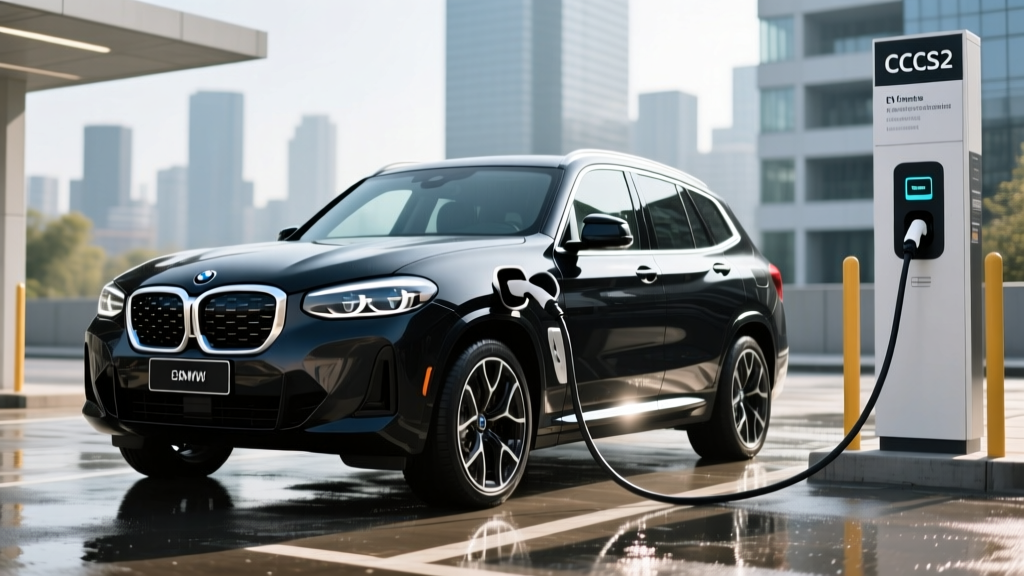
The 200 kW peak DC fast-charge rate is competitive, but the charge curve tells the full story. The iX3 sustains above 150 kW from roughly 10% to 50% SoC, then tapers to around 100-120 kW through 70%, and drops below 60 kW past 80%. This taper profile means that while the 10-80% sprint takes approximately 27 minutes under ideal conditions (battery preconditioned, ambient temperature 65-80°F, connected to a 350 kW-capable charger), a 10-90% charge stretches closer to 42 minutes. If you're planning road-trip stops, target chargers rated at 150 kW or higher — Electrify America and Tesla Supercharger stations (via BMW's included adapter for NACS compatibility) both work well.
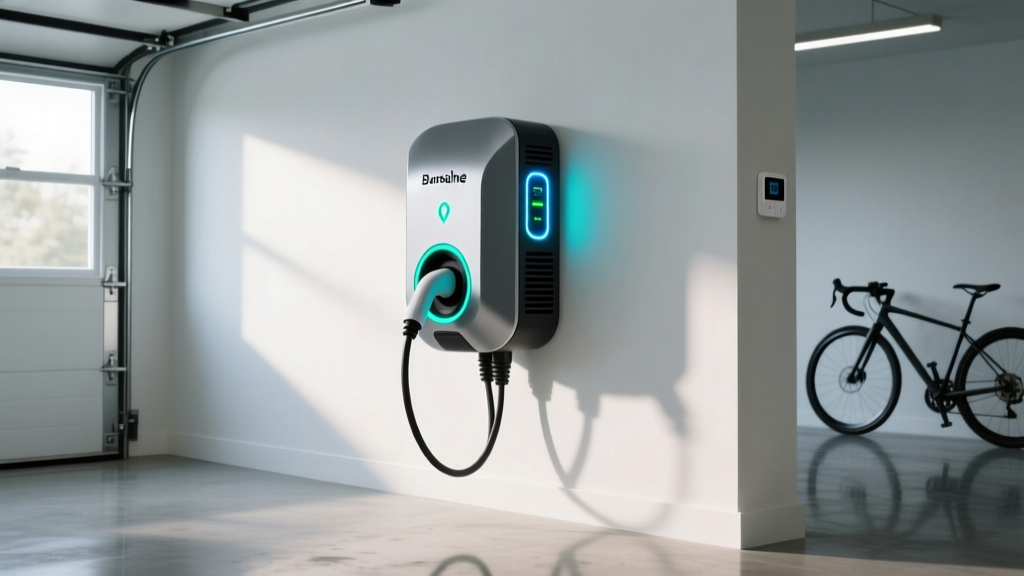
At home on a Level 2 charger, the iX3's 11 kW onboard charger means a full 0-100% charge takes roughly 8.5 hours. For most owners arriving home at 30-40% SoC, an overnight charge from 10 PM to 6 AM easily refills the pack. Budget approximately $800-$1,500 for a professional Level 2 home charger installation (40-amp or 50-amp circuit), though homes requiring electrical panel upgrades could see costs reach $2,500-$4,000.
BMW includes a NACS (North American Charging Standard) adapter with the 2026 iX3, granting access to Tesla's Supercharger network — a significant practical advantage as Tesla's network remains the most reliable and widely distributed DC fast-charging infrastructure in the US.
Performance and Driving Dynamics
The rear-wheel-drive iX3 produces 282 horsepower and 295 lb-ft of torque from a single rear-mounted electric motor, delivering a 0-60 mph time of 6.5 seconds. That's adequate for merging and passing but won't pin you to the seat. The dual-motor xDrive AWD variant bumps output to 360 hp and 369 lb-ft, cutting the 0-60 time to 5.2 seconds — a meaningful improvement for drivers who value acceleration or frequently carry heavy loads.
BMW's Neue Klasse platform positions the battery pack low in the chassis, giving the iX3 a center of gravity that belies its SUV ride height. The steering is precise by electric-SUV standards, and the standard adaptive dampers (on xDrive trims) manage the 4,850-pound curb weight competently through corners. Regenerative braking offers three selectable levels plus an adaptive mode that uses radar and navigation data to modulate regen intensity based on traffic and upcoming intersections. One-pedal driving is available but not as aggressive as Tesla's or Nissan's implementations — BMW expects drivers to use the friction brakes occasionally, which helps maintain brake rotor health.
The iX3 is not a performance EV in the vein of a Model Y Performance or Ford Mustang Mach-E GT. It's a luxury cruiser that happens to be quick. If you want sub-4-second 0-60 times, look elsewhere. If you want composed, quiet, and confidence-inspiring daily driving, the iX3 delivers.
Interior, Cargo, and Technology
The 2026 iX3's interior marks a generational leap in cabin technology. The centerpiece is BMW's new Panoramic iDrive display, a full-width head-up projection spanning the base of the windshield that replaces the traditional instrument cluster. A 14.9-inch central touchscreen running BMW iDrive 9 handles infotainment, navigation, and vehicle settings. Wireless Apple CarPlay and Android Auto are standard, as is a 5G-connected navigation system with real-time traffic and charging-station availability.
Passenger space is competitive: front-seat headroom measures 40.2 inches with 40.8 inches of legroom, while rear-seat passengers get 38.7 inches of headroom and 37.4 inches of legroom — sufficient for adults on longer trips, though the Tesla Model Y offers slightly more rear legroom. Cargo volume behind the second row is 28.7 cubic feet, expanding to 57.4 cubic feet with the 40/20/40 split rear seats folded. There is no front trunk (frunk), as BMW allocated that space to HVAC and power electronics — a minor omission that matters if you rely on frunk storage for charging cables or groceries.
Standard driver-assistance features include adaptive cruise control with stop-and-go, lane-keeping assist, blind-spot monitoring, and automated parking. BMW's Driving Assistant Professional package (a $2,500 option) adds hands-off highway driving up to 85 mph with driver-eye monitoring — this is an SAE Level 2 system, meaning the driver must remain attentive and ready to resume control at all times. It is not autonomous driving.
Pricing, Trim Levels, and Federal Tax Credit
The 2026 BMW iX3 is offered in two primary configurations:
| Trim | Base MSRP | As-Tested (Typical) | Est. Federal Credit | Effective Price |
|---|---|---|---|---|
| iX3 (RWD) | $59,900 | $63,500 | Up to $7,500* | ~$56,000 |
| iX3 xDrive (AWD) | $65,400 | $71,200 | Up to $7,500* | ~$63,700 |
*Federal tax credit eligibility depends on buyer income, battery sourcing, and MSRP caps under IRS §30D. See details below.
The IRS §30D federal clean vehicle credit offers up to $7,500 for qualifying buyers and vehicles, but eligibility involves several conditions that change periodically:
- MSRP cap: SUVs must have an MSRP at or below $80,000. Both iX3 trims clear this threshold.
- Buyer income cap: Modified adjusted gross income must not exceed $300,000 (joint filers), $225,000 (head of household), or $150,000 (single filers).
- Battery sourcing requirements: A percentage of critical minerals and battery components must be sourced from the US or free-trade-agreement countries. BMW's supply chain compliance shifts annually — verify current eligibility on fueleconomy.gov before purchase.
- Point-of-sale transfer: As of 2024, qualifying buyers can transfer the credit to the dealer at purchase, reducing the out-of-pocket price immediately rather than waiting to claim it on a tax return.
Because battery-sourcing rules tighten each year, we recommend confirming iX3 eligibility at the time of purchase. Consult a tax professional for your specific situation.
Pros and Cons: Living With the iX3
- Premium interior with class-leading build quality and materials
- Composed ride and handling for an electric SUV
- 200 kW DC fast-charging with NACS adapter included
- Strong 8-year/100,000-mile battery and powertrain warranty
- Competitive cargo space and practical rear-seat dimensions
- Access to Tesla Supercharger network via included adapter
- EPA range of 260 miles trails Tesla Model Y LR (310+ mi)
- No front trunk (frunk) for supplemental storage
- Efficiency (87 MPGe) lags behind top-tier competitors
- Driver-assist packages add cost quickly
- Real-world winter range drops to ~200 miles
- Lacks the 800V architecture of Hyundai/Kia competitors
Who Should Buy the BMW iX3?
The 2026 BMW iX3 is best suited for luxury-oriented buyers who prioritize interior quality, driving refinement, and brand cachet over maximum range or value-per-dollar metrics. It's an excellent daily commuter and weekend road-tripper for households with reliable home charging access and typical daily drives under 80 miles round-trip. Families will appreciate the rear-seat space and cargo volume, though those who regularly haul more than two rear-seat passengers may want to consider a three-row option.
If range maximization is your top priority, the Tesla Model Y Long Range (310+ miles EPA) or Hyundai Ioniq 5 (303 miles) deliver more miles per charge. If charging speed is paramount, the Hyundai Ioniq 5 and Kia EV6 (800V architecture, 10-80% in ~18 minutes) outpace the iX3. But if you want a BMW that happens to be electric — with the material quality, dealer network, and driving character that implies — the iX3 occupies its niche convincingly.
Frequently Asked Questions
What is the real-world range of the 2026 BMW iX3?
The EPA rates the RWD iX3 at 260 miles. In real-world highway driving at 70 mph, expect 225-240 miles. In cold weather (below 32°F), range drops to approximately 195-215 miles. City driving with regenerative braking can approach or slightly exceed the EPA number.
How fast does the iX3 charge on a DC fast charger?
The iX3 peaks at 200 kW and charges from 10% to 80% in approximately 27 minutes under ideal conditions (preconditioned battery, moderate ambient temperature, 150+ kW charger). Sustained charging speed tapers significantly above 80% SoC.
Does the BMW iX3 qualify for the $7,500 federal EV tax credit?
The iX3's MSRP falls under the $80,000 SUV cap, making it potentially eligible. However, qualification depends on your income (under $300K joint / $150K single), the battery's critical-mineral and component sourcing compliance for the current tax year, and point-of-sale transfer availability. Verify on fueleconomy.gov and with your dealer before purchasing.
Is the BMW iX3 worth buying over a Tesla Model Y?
It depends on your priorities. The Model Y offers more range (310+ miles), faster charging infrastructure natively, and a lower starting price. The iX3 offers superior interior material quality, a more traditional luxury driving experience, BMW's dealer and service network, and a more refined cabin noise level. If you value luxury over efficiency-per-dollar, the iX3 makes a strong case.
What is the battery warranty on the 2026 iX3?
BMW covers the iX3's high-voltage battery and electric powertrain for 8 years or 100,000 miles, whichever comes first. The warranty guarantees the battery will retain at least 70% of its original capacity during that period. The basic vehicle warranty is 4 years / 50,000 miles.
Does the iX3 have a frunk (front trunk)?
No. BMW allocated the front-axle area to power electronics and HVAC components. All cargo storage is in the rear cargo area (28.7 cu ft behind the second row, 57.4 cu ft with seats folded).
What charging connector does the 2026 iX3 use?
The 2026 iX3 comes equipped with a NACS (North American Charging Standard) port and includes an adapter for CCS1 chargers. This gives access to both Tesla Superchargers and third-party networks like Electrify America, EVgo, and ChargePoint.