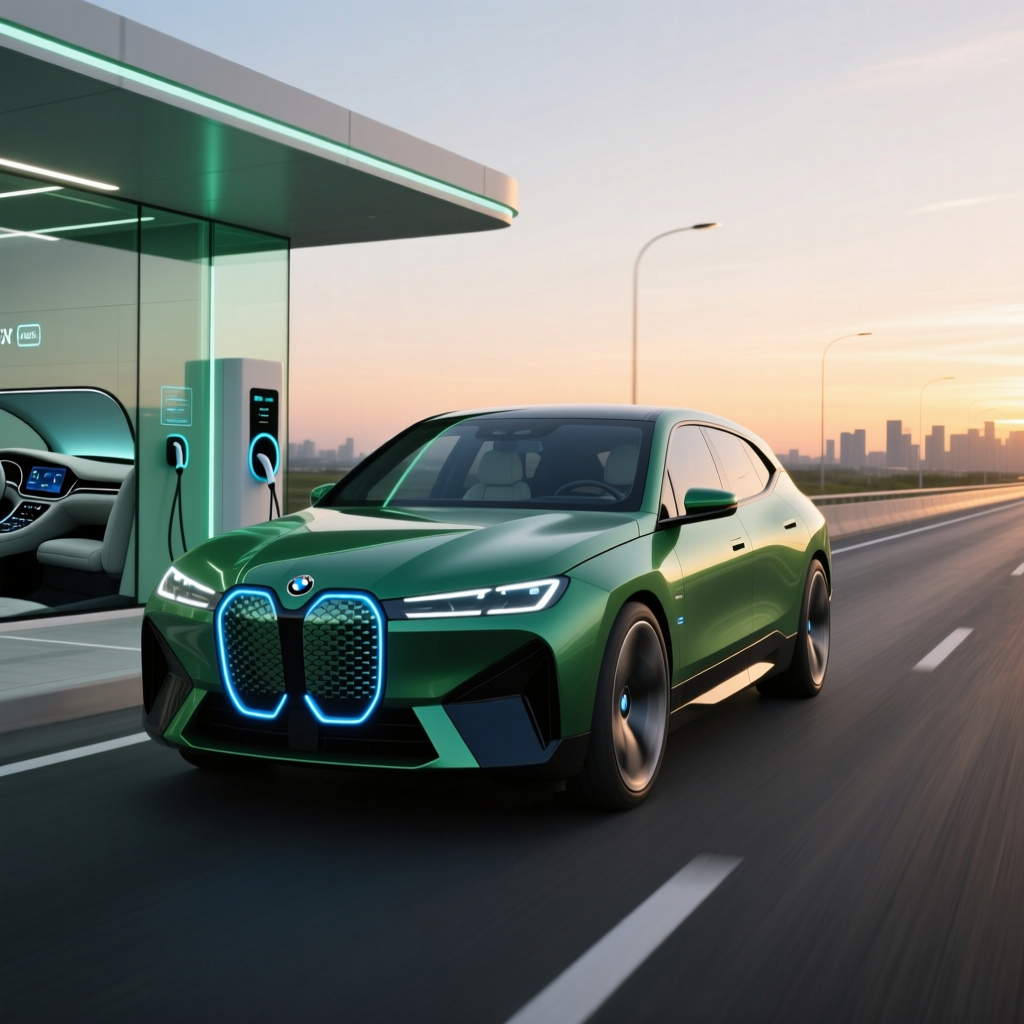
The BMW iX xDrive50 represents BMW's commitment to building a purpose-designed luxury electric SUV rather than simply converting an existing platform. Built on BMW's dedicated EV architecture, the iX xDrive50 pairs dual electric motors with a large battery pack to deliver all-wheel drive, impressive range, and the kind of refined driving experience that has long defined the brand. In this comprehensive real-world review, we put the iX xDrive50 through its paces to see how it performs beyond the spec sheet — from actual highway range and charging speeds to daily usability and long-term ownership costs.
If you are exploring the luxury electric SUV segment, this review will help you understand exactly where the iX xDrive50 fits among competitors like the Mercedes-Benz EQS SUV, the Audi e-tron lineup, and the Tesla Model X. Let's dive into every aspect of living with this electric SUV.
Vehicle Overview: What Is the BMW iX xDrive50?
The BMW iX xDrive50 is a midsize luxury electric SUV that seats five passengers and competes in one of the most fiercely contested segments in the EV market. It sits on BMW's modular electric platform, which was designed from the ground up for battery-electric propulsion. This dedicated architecture gives BMW engineers the freedom to optimize weight distribution, interior packaging, and structural rigidity in ways that converted platforms simply cannot match.
Under the skin, the iX xDrive50 features a dual-motor all-wheel-drive system producing a combined output of 516 horsepower and 564 lb-ft of torque. Power comes from a gross battery capacity of approximately 111.5 kWh (with a usable capacity around 105.2 kWh). BMW quotes a 0-60 mph time of 4.4 seconds, which is genuinely quick for a vehicle weighing over 5,600 pounds.
The exterior design is polarizing — BMW's bold kidney grille and angular surfacing divide opinion — but the cabin tells a different story entirely. Inside, the iX xDrive50 offers one of the most thoughtfully designed and lavishly appointed interiors in the luxury EV segment. Shoppers comparing options should also check our best luxury electric SUVs roundup to see how the iX stacks up against the competition.
Real-World Range and Efficiency
The EPA rates the BMW iX xDrive50 at approximately 324 miles of combined range when equipped with the standard 20-inch wheels. Opting for larger 21-inch or 22-inch wheels reduces that figure somewhat due to increased rolling resistance and aerodynamic drag. On paper, this places the iX xDrive50 among the range leaders in the luxury electric SUV class.
But real-world driving tells a more nuanced story. In mixed driving conditions — a blend of city streets, suburban roads, and highway cruising at speeds between 65 and 75 mph — owners and independent testers consistently report achieving between 280 and 310 miles on a full charge. Highway-heavy driving at sustained speeds above 70 mph tends to push actual range closer to 260-280 miles, particularly in cold weather when battery efficiency drops and cabin heating demands increase.
The iX xDrive50's efficiency rating hovers around 86 MPGe combined according to EPA figures, which translates to roughly 2.0-2.2 kWh per mile in real-world conditions. This is competitive with rivals, though the lighter Tesla Model X Long Range edges ahead in efficiency thanks to its lower curb weight. Regenerative braking in the iX is well-calibrated, with an adaptive mode that uses navigation and sensor data to modulate regen intensity automatically — a feature that reduces the need for one-pedal driving while still maximizing energy recapture.
For drivers who frequently travel long distances, the iX xDrive50's range is more than adequate for most trips with a single charging stop. If range is your top priority, compare the iX with other long-range contenders in our longest-range electric SUVs guide.
Charging Speed and Infrastructure
The BMW iX xDrive50 supports DC fast charging at a peak rate of up to 200 kW via its CCS connector. BMW states that the battery can charge from 10 percent to 80 percent state of charge in approximately 35 minutes under ideal conditions. In real-world testing at Electrify America and other high-power charging networks, peak charging rates typically reach 175-195 kW in the early portion of the session before tapering as the battery fills.
The charging curve is an important consideration. The iX xDrive50 maintains strong charging speeds up to roughly 50-60 percent state of charge, after which the rate begins to taper more aggressively. A 10-80 percent charge in real-world conditions at a 350 kW-capable station typically takes between 33 and 40 minutes, which is competitive but slightly behind the Hyundai Motor Group's E-GMP platform vehicles that operate on an 800-volt architecture.
For Level 2 AC charging, the iX xDrive50 comes with an 11 kW onboard charger as standard, which can fully replenish the battery in roughly 10-11 hours. This is perfectly suited for overnight home charging using a Level 2 wallbox. BMW also offers an optional 22 kW onboard charger in some markets, which halves AC charging time for those with access to higher-capacity Level 2 infrastructure.
One area where the iX excels is charging preconditioning. When a charging station is entered as a navigation destination, the vehicle automatically prepares the battery temperature for optimal charging speed upon arrival. This feature works reliably and makes a noticeable difference in charging performance, especially in cold weather. For a broader look at charging infrastructure compatibility, see our EV charging networks comparison.
Interior, Technology, and Comfort
Step inside the BMW iX xDrive50, and any controversy about the exterior design quickly fades. The cabin is a masterclass in modern luxury, blending premium materials with cutting-edge technology in a way that feels both futuristic and welcoming. BMW has adopted a minimalist design philosophy here, with clean horizontal lines, a floating center console, and an absence of physical clutter.
The centerpiece of the dashboard is BMW's Curved Display, which seamlessly integrates a 12.3-inch digital instrument cluster with a 14.9-inch central touchscreen running BMW's iDrive infotainment system. The interface is responsive, visually sharp, and logically organized, though some users may find the reduction in physical buttons requires an adjustment period. Climate controls are primarily accessed through the touchscreen, which can be distracting while driving, though voice commands and the excellent iDrive rotary controller provide useful alternatives.
Material quality is outstanding throughout. The cabin features available SensaTec synthetic leather or genuine leather upholstery, open-pore wood trim, and crystal-like glass controls for the iDrive controller, gear selector, and start/stop button. The available Bowers & Wilkins Diamond Surround Sound System with 30 speakers delivers audiophile-grade sound quality that rivals anything in the segment.
Front seats are generously proportioned, heated, and offer extensive power adjustment with lumbar support. Available ventilated and massaging front seats elevate comfort on long journeys. Rear-seat passengers enjoy ample legroom and headroom thanks to the flat floor enabled by the dedicated EV platform, though the center rear position is best suited for shorter trips due to the contoured seatback design. Cargo capacity is approximately 35.5 cubic feet behind the rear seats, expanding to 77.9 cubic feet with the rear seats folded — competitive within the class, though the absence of a front trunk (frunk) is a missed opportunity for additional storage.
Technology features include wireless Apple CarPlay and Android Auto, a head-up display, a panoramic electrochromic glass roof that can switch between transparent and opaque modes, and BMW's Digital Key Plus, which allows your smartphone to function as the vehicle key via ultra-wideband technology. The available Driving Assistance Professional Package adds advanced adaptive cruise control with stop-and-go functionality, lane-keeping assistance, and automated lane-change capability on highways. Explore more tech-forward options in our best EV interior technology roundup.
Driving Dynamics and Performance
The BMW iX xDrive50 delivers a driving experience that manages to be both effortlessly quick and genuinely engaging — a combination that has eluded many electric SUVs. The dual-motor all-wheel-drive system provides instant torque delivery from a standstill, and the 516 horsepower on tap ensures that highway merging and passing maneuvers are executed with complete confidence.
What truly sets the iX apart in the driving dynamics department is its chassis tuning. BMW has leveraged the low center of gravity provided by the underfloor battery pack and paired it with a sophisticated suspension system that includes adaptive dampers and available two-axle air suspension. The result is an SUV that handles corners with minimal body roll, absorbs road imperfections with genuine composure, and maintains a ride quality that rivals the best luxury sedans.
Steering is precise and well-weighted, though it lacks some of the feedback that driving enthusiasts might crave. Three driving modes — Personal, Sport, and Efficient — allow drivers to tailor throttle response, steering weight, and suspension firmness to their preferences. Sport mode sharpens the vehicle's responses noticeably and adds a synthetic engine sound through the speakers that, while not essential, adds a sense of drama during spirited driving.
The iX xDrive50's braking performance is strong and progressive, with a seamless blend of regenerative and friction braking that avoids the inconsistent pedal feel that plagues some EVs. The available M Sport brakes provide even greater stopping power and fade resistance for those who drive aggressively. Overall, the iX xDrive50 proves that BMW's reputation for building driver-focused vehicles translates convincingly to the electric era. For more performance-oriented options, check out our fastest electric SUVs comparison.
Ownership Costs and Value
The BMW iX xDrive50 commands a premium starting price that places it firmly in luxury territory, typically starting in the mid-$80,000 range before options and destination charges. A well-equipped example with popular packages can easily approach or exceed $100,000. While this is a significant investment, the total cost of ownership picture is more favorable than the sticker price alone might suggest.
Electricity costs for charging the iX xDrive50 are substantially lower than fueling a comparable gasoline-powered luxury SUV. Based on average U.S. electricity rates, fully charging the battery at home costs roughly $12-$18 depending on local rates, compared to $60-$80 or more to fill the tank of a similarly sized gasoline SUV. Over the course of typical annual driving, fuel savings alone can amount to $2,000-$3,000 or more.
Maintenance costs are also reduced compared to internal combustion vehicles. The iX xDrive50 has no engine oil to change, no transmission fluid to service, and no spark plugs or exhaust system to maintain. BMW offers a complimentary maintenance program for the initial ownership period, and the battery is covered by an eight-year or 100,000-mile warranty. Brake wear is significantly reduced thanks to regenerative braking, potentially extending pad and rotor life to well beyond 100,000 miles.
Insurance costs tend to be higher than average for the segment, reflecting the vehicle's value and repair costs. Depreciation is a wildcard — luxury EVs have shown variable depreciation patterns, though BMW's brand strength and the iX's competitive capabilities should provide reasonable support for residual values. Federal and state EV incentives may be available depending on your location and tax situation, which can meaningfully reduce the effective purchase price. Consult the IRS clean vehicle credit guidelines for current eligibility details.
When evaluating value, the iX xDrive50 competes favorably with the Mercedes-Benz EQE SUV and the Audi Q8 e-tron, offering comparable or superior range, performance, and interior quality at a similar price point. Our luxury EV total cost of ownership guide breaks down the numbers across several popular models.
Pros and Cons
Pros
- Excellent real-world range — 280-310 miles in mixed driving is among the best in the luxury electric SUV class
- Superb interior quality — Premium materials, thoughtful design, and cutting-edge technology create a genuinely luxurious cabin experience
- Refined driving dynamics — Adaptive suspension and low center of gravity deliver a blend of comfort and agility that few competitors match
- Strong fast-charging capability — 200 kW peak DC charging with effective battery preconditioning
- Spacious and comfortable — Generous rear-seat room and cargo capacity thanks to the dedicated EV platform
- Quiet and composed — Excellent noise isolation makes for a serene highway cruising experience
Cons
- No front trunk (frunk) — The absence of under-hood storage is a practical shortcoming in an EV
- Polarizing exterior design — The bold styling, particularly the large kidney grille, is not universally appreciated
- Reduced physical controls — Climate and other functions accessed primarily through the touchscreen can distract from driving
- Premium pricing — Options can push the price well past $100,000, and insurance costs are above average
- Heavy curb weight — At over 5,600 pounds, the mass is noticeable during aggressive direction changes and affects tire wear
- No third-row option — Families needing more than five seats will need to look elsewhere
Key Specifications Comparison
| Specification | BMW iX xDrive50 | Mercedes EQE 350+ SUV | Audi Q8 e-tron | Tesla Model X Long Range |
|---|---|---|---|---|
| Powertrain | Dual Motor AWD | Single Motor RWD | Dual Motor AWD | Dual Motor AWD |
| Horsepower | 516 hp | 288 hp | 402 hp | 670 hp |
| Torque | 564 lb-ft | 406 lb-ft | 490 lb-ft | N/A |
| Battery (Usable) | ~105.2 kWh | ~90.6 kWh | ~106 kWh | ~100 kWh |
| EPA Range | ~324 miles | ~305 miles | ~285 miles | ~335 miles |
| DC Fast Charge Peak | 200 kW | 170 kW | 170 kW | 250 kW |
| 0-60 mph | 4.4 seconds | 6.4 seconds | 5.5 seconds | 3.8 seconds |
| Cargo Volume | 35.5 cu ft | 52.0 cu ft | 28.5 cu ft | 37.1 cu ft (+ frunk) |
| Curb Weight | ~5,660 lbs | ~5,300 lbs | ~5,800 lbs | ~5,185 lbs |
This comparison illustrates that the iX xDrive50 occupies a compelling middle ground — offering more power and range than the Audi Q8 e-tron, significantly more performance than the base EQE SUV, and a more luxurious interior than the Tesla Model X. For a deeper dive, read our BMW iX vs Tesla Model X head-to-head comparison.
Frequently Asked Questions
How long does it take to charge the BMW iX xDrive50 at home?
Using a standard Level 2 home charger (11 kW / 48 amps), the BMW iX xDrive50 can be fully charged from empty in approximately 10-11 hours. Most owners find that plugging in overnight provides a full battery every morning. If you install a higher-capacity Level 2 charger and equip the optional 22 kW onboard charger, that time drops to roughly 5-6 hours. A standard 120-volt household outlet (Level 1) adds only about 3-5 miles of range per hour of charging, making it impractical as a primary charging method for a battery this large.
Is the BMW iX xDrive50 good in winter and cold weather?
The iX xDrive50 performs well in cold weather thanks to its sophisticated thermal management system, which includes a heat pump for efficient cabin heating and battery temperature regulation. Expect range to decrease by roughly 15-25 percent in freezing temperatures compared to mild-weather driving, which is typical for modern EVs. The all-wheel-drive system provides confident traction on snow and ice, and features like heated seats, a heated steering wheel, and the available heated armrests make winter driving comfortable. Battery preconditioning for charging also works effectively in cold conditions, helping maintain fast-charging speeds even when temperatures drop.
Does the BMW iX xDrive50 qualify for federal tax credits?
Tax credit eligibility for electric vehicles depends on several factors including where the vehicle is assembled, battery component sourcing, and the buyer's tax liability. The BMW iX is assembled at BMW's plant in Dingolfing, Germany, which has historically affected its eligibility for certain U.S. federal tax incentives under current clean vehicle credit rules. However, leasing the vehicle may provide access to incentives structured differently under commercial vehicle provisions. Tax laws and eligibility criteria change regularly, so we strongly recommend consulting a tax professional and checking the latest fueleconomy.gov listings before making a purchase decision.
How does the BMW iX xDrive50 compare to the BMW iX M60?
The BMW iX M60 is the performance-oriented variant of the iX lineup, featuring a more powerful dual-motor setup producing up to 610 horsepower and 811 lb-ft of torque. The M60 achieves a 0-60 mph time of approximately 3.6 seconds and includes M-specific chassis tuning, sportier styling elements, and additional performance hardware. However, the M60 sacrifices some range — typically around 20-30 miles less than the xDrive50 — and commands a significantly higher price. For most buyers, the xDrive50 offers the ideal balance of performance, range, and value, while the M60 caters to enthusiasts who prioritize maximum acceleration and sportier handling above all else.
What is the warranty coverage on the BMW iX xDrive50?
BMW provides a comprehensive warranty package for the iX xDrive50 that includes a 4-year/50,000-mile limited vehicle warranty, an 8-year/100,000-mile high-voltage battery warranty (covering degradation below a specified capacity threshold), and a 4-year/unlimited-mileage corrosion perforation warranty. BMW also includes complimentary scheduled maintenance for the initial coverage period, as well as roadside assistance. The battery warranty guarantees that the high-voltage battery will retain a minimum percentage of its original capacity (typically 70 percent) over the coverage period, providing peace of mind for long-term ownership. Extended warranty options are available through BMW Financial Services for those who plan to keep the vehicle beyond the initial coverage period.
Final Verdict
The BMW iX xDrive50 is a deeply impressive luxury electric SUV that succeeds on nearly every metric that matters. It delivers genuine long-distance range, charges quickly on the road, offers a cabin that rivals the best in the business, and drives with the kind of refinement and composure that BMW has spent decades perfecting. The polarizing exterior design and lack of a frunk are legitimate criticisms, and the premium pricing demands careful consideration of the total ownership picture.
For buyers seeking a luxury electric SUV that prioritizes build quality, driving refinement, and everyday usability without sacrificing performance, the iX xDrive50 deserves a very close look. It stands as one of the most complete packages in its class — a convincing argument that traditional luxury automakers can build electric vehicles that are every bit as desirable as their gasoline-powered predecessors. Be sure to explore our full collection of EV reviews and our best electric SUVs picks for more in-depth comparisons and buying guidance.