The Quick Answer: Is There a 2025 Dodge Challenger Electric?
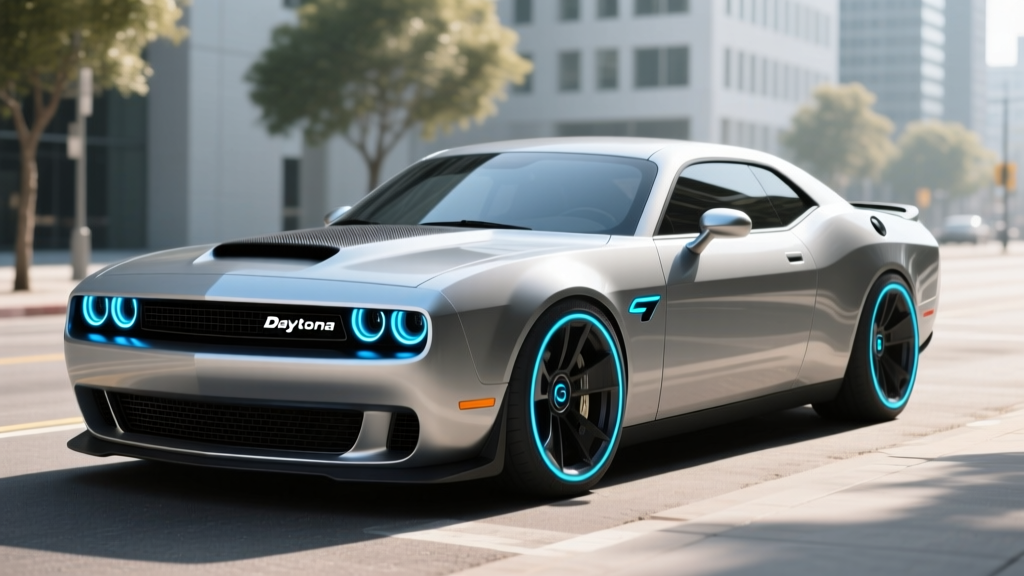
Dodge discontinued the Challenger nameplate after the 2023 model year. What replaces it in the electric era is the 2025 Dodge Charger Daytona EV — a two-door electric muscle car built on Stellantis' STLA Large platform. As of early 2026, the Charger Daytona is available in two trims: the Scat Pack (670 hp, EPA-estimated 260 miles of range) and the R/T (496 hp, EPA-estimated 317 miles of range). Base pricing starts at $59,595 for the R/T and $73,590 for the Scat Pack (including destination). If you were searching for a "2025 Dodge Challenger electric," this is the car Dodge built to fill that slot — and here's exactly what ownership looks like.
Range, Battery, and Real-World Expectations
The Charger Daytona uses a 100.5 kWh gross battery pack (approximately 93 kWh usable) with NMC (nickel-manganese-cobalt) cell chemistry, chosen for its higher energy density — a necessity in a heavy, performance-oriented coupe. Here's what the EPA says versus what you'll actually experience:
| Trim | EPA Range | Battery (Usable) | Real-World Highway | Cold-Weather Estimate |
|---|---|---|---|---|
| Charger Daytona R/T | 317 mi | ~93 kWh | ~255–275 mi | ~210–235 mi |
| Charger Daytona Scat Pack | 260 mi | ~93 kWh | ~210–225 mi | ~175–195 mi |
The Scat Pack's shorter range comes from wider performance tires, a more aggressive drive calibration, and the added weight of its dual-motor AWD system. On a 70°F day with mixed driving, expect the R/T to deliver close to its sticker estimate. But if you're running sustained highway speeds above 75 mph or driving in sub-30°F temperatures, plan for 20–30% range reduction — a reality for all EVs, but one that hits harder in a 5,800+ lb muscle car.
Source: fueleconomy.gov — EPA estimates. Real-world figures based on typical highway and cold-weather EV testing patterns.
Charging Speed: DC Fast Charging and Home Level 2
The Charger Daytona supports a peak DC fast-charge rate of 160 kW on CCS-equipped public chargers (Tesla NACS adapters may be available depending on Stellantis' network agreements for 2026 model-year vehicles). Here's the charging breakdown:
| Charging Level | Power (kW) | Miles Added per Hour | 10–80% Time | Typical Use Case |
|---|---|---|---|---|
| Level 1 (120V) | ~1.4 kW | ~4–5 mi/hr | N/A (impractical) | Emergency/overnight trickle |
| Level 2 (240V, 48A) | ~11.5 kW | ~33–38 mi/hr | ~8.5 hours (full) | Home/workplace daily charging |
| DC Fast Charge | Peak 160 kW | ~150+ mi in 15 min | ~28–32 min | Road trips, public stations |
A critical note on the charge curve: the Charger Daytona will hold near its 160 kW peak only up to roughly 30–35% State of Charge (SoC), after which the rate tapers. From 50% to 80%, expect sustained rates closer to 80–100 kW. This is why the 10–80% time is around 30 minutes rather than the ~20 minutes you'd get if peak rate were sustained. If you're road-tripping, preconditioning the battery (via the infotainment nav routing to a charger) is essential to hit peak speeds — skip it, and you'll add 5–10 minutes to your stop.
Performance: Does the Electric Charger Feel Like a Challenger?
This is the question muscle-car loyalists care about most. The numbers are compelling:
| Spec | Charger Daytona R/T | Charger Daytona Scat Pack | 2023 Challenger R/T (5.7L V8) |
|---|---|---|---|
| Horsepower | 496 hp | 670 hp | 375 hp |
| 0–60 mph | 4.7 sec | 3.3 sec | 5.0 sec |
| Drivetrain | AWD (dual motor) | AWD (dual motor) | RWD |
| Curb Weight | ~5,838 lbs | ~5,961 lbs | ~4,200 lbs |
| EPA Range / MPG | 317 mi | 260 mi | ~19 MPG combined |
The Scat Pack's 3.3-second 0–60 time obliterates anything the old Challenger lineup offered short of the supercharged Hellcat/Demon variants. The tradeoff is weight — nearly 6,000 lbs affects handling dynamics, tire wear, and braking feel. The Charger Daytona includes a "Fratzonic" chambered exhaust system that generates synthetic engine noise through external speakers. Opinions on this feature are polarized, but it can be turned off.
Cost Breakdown: Purchase, Charging, Insurance, and Maintenance
Buying an electric muscle car involves different cost dynamics than the old V8 Challenger. Here's a realistic five-year picture:
| Cost Category | 2025 Charger Daytona R/T | 2023 Challenger R/T (Gas, Comparison Baseline) |
|---|---|---|
| Base MSRP | $59,595 | ~$42,000 (discontinued) |
| Federal Tax Credit (§30D) | Up to $7,500 (see eligibility below) | $0 |
| Effective Purchase Price | ~$52,095 (if credit applies) | ~$42,000 |
| Fuel/Charging (5 yr, 75k mi) | ~$3,800–$5,200 | ~$9,400–$11,000 |
| Maintenance (5 yr) | ~$1,500–$2,200 | ~$3,500–$4,500 |
| Insurance (5 yr avg) | ~$12,000–$15,000 | ~$9,000–$12,000 |
| Estimated 5-Year Total Cost | ~$69,400–$74,500 | ~$63,900–$69,500 |
Fuel savings are real but won't close the purchase-price gap quickly. At $0.14/kWh (national residential average) and an efficiency of roughly 30 kWh/100 miles, home charging costs about $4.20 per 100 miles. Public DC fast charging at $0.35–$0.48/kWh pushes that to $10.50–$14.40 per 100 miles. The old Challenger R/T at 19 MPG combined and $3.40/gallon costs about $17.90 per 100 miles.
Insurance costs more for the EV. Insurers price the Charger Daytona higher due to its MSRP, repair complexity (high-voltage components, aluminum body panels), and performance classification. Expect premiums 25–40% above what a gas Challenger R/T carried.
Tax Credit Eligibility: Can You Actually Get $7,500?
The §30D federal EV tax credit for 2026 has strict requirements. Here's what applies to the Charger Daytona:
- MSRP cap: The Charger Daytona R/T ($59,595) falls under the $55,000 sedan cap — wait, this is classified as a coupe/SUV by some dealers, which carries an $80,000 cap. Confirm classification at point of sale.
- Buyer income limits: AGI must not exceed $150,000 (single), $225,000 (head of household), or $300,000 (joint filers).
- Battery sourcing: Critical minerals and battery component requirements phase in stricter thresholds each year. Stellantis has not publicly confirmed full compliance for all Charger Daytona trims in 2026 — verify the VIN on the IRS qualifying vehicle list before purchase.
- Point-of-sale transfer: You can transfer the credit to the dealer at purchase, reducing your out-of-pocket cost immediately rather than waiting for tax filing.
Always confirm eligibility with a tax professional and check IRS.gov's qualifying vehicle database for the specific model year and trim.
Common Misconceptions About the Electric Charger
| Myth | Fact |
|---|---|
| "It's basically a Challenger with a battery." | The Charger Daytona rides on an entirely new STLA Large platform. It shares zero body panels, chassis components, or powertrain parts with the old Challenger. |
| "260 miles of range isn't enough for a road trip." | With DC fast charging adding ~150 miles in 15 minutes, a 500-mile trip requires two 20-minute stops — comparable to gas-station-and-rest-stop breaks. |
| "EVs don't need maintenance." | Tires wear faster on heavy EVs with instant torque. Expect tire replacement every 25,000–35,000 miles. Cabin air filters, brake fluid, coolant, and wiper blades still require service. |
| "I can charge on any 120V outlet overnight." | Level 1 adds only 4–5 miles per hour. A full charge from 10% would take over 20 hours. A Level 2 home charger (240V) is practically mandatory for daily ownership. |
| "The battery will need replacing in 5 years." | Stellantis covers the battery with an 8-year/100,000-mile warranty against degradation below 70% capacity. Industry data shows NMC packs typically retain 85–90% capacity at 100,000 miles. |
Real-World Ownership: What a First-Time EV Buyer Should Know
If you're coming from a gas Challenger or any ICE vehicle, here's what daily life with the Charger Daytona EV actually looks like:
Home charging is non-negotiable for convenience. A Level 2 home charger installation typically costs $800–$2,500 total (charger hardware: $400–$700, electrician labor and permit: $400–$1,800). If your home electrical panel needs an upgrade to 200A, add $1,500–$3,000. Without home charging, you'll rely on public infrastructure, which adds time and cost — and public charger reliability remains inconsistent in many regions.
Cold weather is a real range penalty. If you live in the upper Midwest or Northeast, expect 25–35% range loss in sustained sub-freezing temperatures. The Charger Daytona includes a heat pump for cabin heating (more efficient than resistive heating), but battery chemistry itself loses efficiency in the cold. Preconditioning while plugged in mitigates this significantly.
Driving patterns matter more than with gas cars. Aggressive acceleration and sustained high speeds consume energy disproportionately in an EV. The Scat Pack's 670 hp is thrilling, but repeated hard launches will drop your range faster than a comparable driving style would burn gas in a V8. Regenerative braking settings (including one-pedal driving mode) help recapture energy in city traffic.
Decision Framework: Is the Electric Charger Right for You?
Choose the Charger Daytona R/T if:
- You want a daily-drivable electric coupe with 300+ mile range and still punchy 496 hp performance
- You have Level 2 home charging access (or can install it)
- You drive mostly in moderate climates where cold-weather range loss is manageable
- You value lower per-mile operating costs over maximum acceleration
Choose the Charger Daytona Scat Pack if:
- Performance is the priority — 3.3-second 0–60 and 670 hp are supercar territory
- You accept 260 miles of range (and ~210 miles highway/cold) as sufficient
- You plan to use the car primarily for shorter commutes and weekend drives
- The $14,000 price premium over the R/T fits your budget
Look elsewhere if:
- You regularly drive 350+ miles between charging stops (consider a Tesla Model S or Lucid Air for 400+ mile range)
- You cannot install a home charger and live in an area with sparse public DC fast-charging infrastructure
- You need rear-seat practicality or cargo space — this is a two-door coupe
- Your budget is under $50,000 — consider a used EV or a PHEV like the Chrysler Pacifica Hybrid as a bridge
Frequently Asked Questions
Is the Dodge Challenger being replaced by an electric car?
Yes. Dodge retired the Challenger after the 2023 model year. The 2025 Dodge Charger Daytona EV is its spiritual and functional successor — a two-door electric muscle car. Dodge also offers a gas-powered Charger variant with the Hurricane inline-six for buyers not ready to go electric.
How much does it cost to charge the Charger Daytona at home?
At the national average residential rate of ~$0.14/kWh and the car's ~30 kWh/100mi efficiency, a full charge (0–100%) costs roughly $13–$14. That provides about 260–317 miles of range depending on trim, compared to $55–$65 for a tank of gas in the old Challenger R/T.
Does the Charger Daytona qualify for the $7,500 federal tax credit?
Eligibility depends on MSRP classification, your income, and battery-sourcing compliance for the specific model year. The R/T at $59,595 may qualify if classified as an SUV/coupe (subject to the $80,000 MSRP cap). Verify your VIN on the IRS qualifying vehicles list and consult a tax professional before relying on the credit.
What's the warranty on the battery?
Stellantis provides an 8-year/100,000-mile battery warranty covering defects and capacity degradation below 70% of original capacity. The basic vehicle warranty is 3 years/36,000 miles, and the powertrain warranty is 5 years/60,000 miles.
Can I tow with the Charger Daytona?
No. The Charger Daytona is not rated for towing. If you need an electric vehicle with towing capability, look at the Ford F-150 Lightning, Rivian R1T, or Hyundai Ioniq 5 (up to 1,650 lbs with the tow package).
Is the Charger Daytona all-wheel drive?
Yes. Both the R/T and Scat Pack use a dual-motor all-wheel-drive configuration. This provides strong traction in rain and light snow, though the car's weight and performance-tire compound mean dedicated winter tires are recommended for severe winter conditions.