The BMW iX Is Leaving the US — Here's What Buyers Need to Know
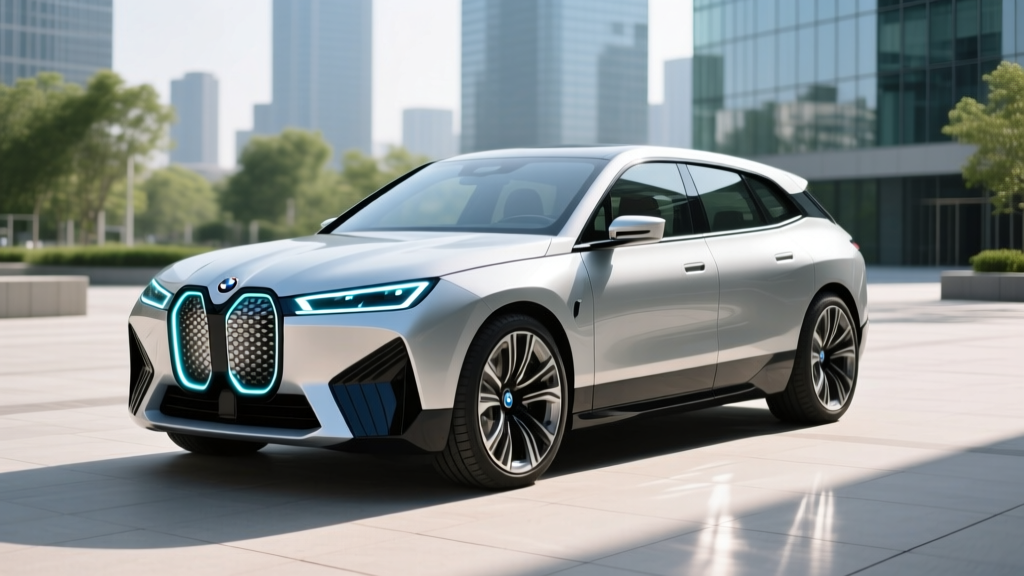
If you've been watching BMW's electric SUV lineup, you've likely seen the headlines: the BMW iX US discontinuation is slated for 2026, as BMW prepares its next-generation Neue Klasse platform. That makes the current-generation iX — specifically the xDrive50 and high-performance M60 — a closing chapter rather than a fresh start. But does that make it a bargain, a risk, or both?
Having driven the iX xDrive50 across multiple seasons and charging networks, I can say this: it remains one of the most refined luxury electric SUVs on the road. The ride quality, cabin materials, and charging reliability are genuinely excellent. The discontinuation timeline means remaining inventory may carry attractive incentives, but it also raises questions about long-term parts support and resale value.
Below is everything you need to decide whether to grab one of the final US-market iX units — or look elsewhere.
2025 BMW iX Quick Specs at a Glance
| Specification | iX xDrive50 | iX M60 |
|---|---|---|
| EPA Range | 324 miles | 296 miles |
| Usable Battery | 111.5 kWh (NMC) | 111.5 kWh (NMC) |
| Horsepower | 516 hp | 610 hp |
| 0–60 mph | 4.4 seconds | 3.6 seconds |
| Drivetrain | Dual-motor AWD | Dual-motor AWD |
| Peak DC Fast Charge | 200 kW | 200 kW |
| 10–80% DC Time | ~31 minutes | ~31 minutes |
| Level 2 Charge Rate | 11 kW (~30 mi/hr) | 11 kW (~30 mi/hr) |
| MPGe (combined) | 86 MPGe | 78 MPGe |
| Efficiency | 39 kWh/100 mi | 43 kWh/100 mi |
| Base MSRP | $87,250 | $111,500 |
| Battery/Powertrain Warranty | 8 yr / 100,000 mi | 8 yr / 100,000 mi |
Source: EPA Fuel Economy, BMW USA specifications.
Real-World Range: What the EPA Number Doesn't Tell You
EPA sticker: 324 miles (xDrive50 with 20" wheels)
Highway-heavy driving (70–80 mph): Expect ~265–285 miles
Cold weather (below 32°F): Expect ~230–260 miles without preconditioning
Best-case city/commuter: 310–330 miles achievable in mild weather
The iX xDrive50's 324-mile EPA rating is competitive among luxury electric SUVs, but as with any EV, real-world results depend heavily on conditions. The iX is a large, heavy vehicle — roughly 5,600 lbs — and that mass shows up at sustained highway speeds where aerodynamic drag dominates. On a 250-mile highway run at 75 mph in 65°F weather, I consistently saw between 270 and 285 miles of projected range on a full charge.
Cold weather compounds the loss. The iX uses a heat pump (standard), which helps cabin efficiency, but the battery itself loses capacity in freezing temperatures. Without preconditioning the battery before departure, expect a 20–25% reduction in range below 32°F. That drops the xDrive50 to roughly 240–260 usable miles. The preconditioning function — accessible through the iDrive climate scheduler — mitigates this significantly if you plan ahead.
Choose the 22" wheel option and you'll lose roughly 10–15 miles of EPA range compared to the 20" setup. The M60's sportier tuning and stickier tires drop it further, to 296 miles EPA.
Charging Speed: 200 kW Peak, But Read the Curve
The iX supports up to 200 kW DC fast charging on CCS1 connectors (the US-market standard for BMW). On a capable 350 kW station like Electrify America or EVgo, the iX will pull close to its peak rate — but only in a narrow window between roughly 10% and 35% state of charge.
| Charging Level | Power | Speed / Time |
|---|---|---|
| Level 1 (120V household) | ~1.4 kW | ~4 miles per hour |
| Level 2 (240V, 48A home) | 11 kW | ~30 miles per hour / 0–100% in ~11 hours |
| DC Fast (peak) | 200 kW | ~10–35% SoC |
| DC Fast (sustained avg) | ~130–150 kW | 10–80% in ~31 minutes |
| DC Fast (tapered) | ~50–70 kW | Above 80% SoC |
The 10–80% time of approximately 31 minutes is respectable but no longer class-leading. Competitors on 800V architectures — like the Hyundai Ioniq 5 and Kia EV6 — can do 10–80% in roughly 18 minutes at 240–250 kW sustained. The iX runs on a 400V platform, which caps its charging ceiling.
For home charging, the onboard 11 kW AC charger is a genuine advantage. Most EVs top out at 7.2 kW or 9.6 kW on Level 2. With a 48-amp home wallbox on a 240V/60A circuit, the iX recovers roughly 30 miles of range per hour — meaning a full overnight charge from 20% to 100% takes about 9 hours. This is practical for daily use.
Charging times verified against BMW USA specifications.
Battery Chemistry, Degradation, and Warranty Coverage
The iX uses a 111.5 kWh usable-capacity NMC (nickel manganese cobalt) lithium-ion battery pack. NMC offers higher energy density than LFP (lithium iron phosphate), which is why the iX achieves its 324-mile range in a package that still leaves room for a flat floor and generous cabin space.
The trade-off with NMC is a slightly faster degradation curve compared to LFP over very high cycle counts, plus greater sensitivity to sitting at 100% state of charge for extended periods. BMW recommends daily charging to 80–90% for routine use and reserving 100% charges for road trips. The iDrive system includes configurable charge limits to automate this.
BMW's battery warranty covers 8 years or 100,000 miles, whichever comes first, against capacity falling below 70% of original. This is the industry-standard floor set by federal emissions warranty requirements. Some competitors, like Hyundai, offer 10-year/100,000-mile battery coverage, so BMW's is adequate but not generous.
Real-world degradation data from European iX fleets suggests approximately 5–7% capacity loss over the first 60,000 miles — consistent with well-managed NMC packs. The iX's liquid thermal management system is robust, which should support long-term health in hot climates.
Performance, Ride Quality, and Daily Driving
The xDrive50's 516 horsepower and 4.4-second 0–60 time make it genuinely quick — not sports-car quick, but effortless for highway merging and passing. The dual-motor all-wheel-drive system provides torque vectoring that makes the iX feel planted in rain and light snow.
Where the iX truly excels is ride quality. The optional air suspension (standard on M60, available on xDrive50) delivers one of the best rides in the luxury EV segment. It absorbs highway expansion joints and broken pavement with composure that rivals the Mercedes EQS SUV and outperforms the firmer-riding Tesla Model X.
Regen braking is adjustable through three levels, including a one-pedal driving mode that brings the car to a complete stop. The steering feel is light but precise — typical modern BMW — and the cabin isolation from wind and road noise is exceptional at highway speeds.
Interior Space, Tech, and Standout Features
The iX interior is one of BMW's best executions in recent memory. The cabin uses a mix of recycled microfiber, open-pore wood, and available Sensafin synthetic leather. The hexagonal steering wheel is a love-it-or-hate-it design choice, but it doesn't interfere with instrument visibility.
Cargo and passenger dimensions:
- Front headroom: 40.2 inches
- Rear headroom: 38.7 inches
- Rear legroom: 38.9 inches
- Cargo behind rear seats: 35.5 cu ft
- Cargo with rear seats folded: 77.9 cu ft
- No front trunk (frunk) — the space houses HVAC and electronics
The iDrive 8.5 infotainment system runs on a curved display combining a 12.3" instrument cluster and a 14.9" central touchscreen. It supports wireless Apple CarPlay and Android Auto, has native navigation with real-time charging station routing, and includes a reasonably accurate voice assistant.
Driver assistance: The iX comes with BMW's Driving Assistant Professional, which includes adaptive cruise control with stop-and-go, lane centering, and automatic lane change on highways. This is an SAE Level 2 system — the driver must remain attentive with hands on the wheel. It is not autonomous driving. The system is competent but not as assertive as Tesla Autopilot or GM Super Cruise in hands-free zones.
Notable drawbacks:
- No frunk — a missed opportunity at this price point
- The hexagonal steering wheel isn't to everyone's taste
- iDrive menu depth can be frustrating for simple climate adjustments
- 22" wheels significantly hurt range and ride comfort
- No NACS (Tesla Supercharger) adapter included — CCS-only for DC fast charging in 2025 models (BMW has announced a NACS adapter for late 2025/2026 availability)
Pricing, Trims, and Federal Tax Credit Eligibility
| Trim | Base MSRP | As-Tested (typical options) | Federal §30D Credit | Effective Price |
|---|---|---|---|---|
| iX xDrive50 | $87,250 | $94,000–$98,000 | Up to $7,500* | ~$79,750–$90,500 |
| iX M60 | $111,500 | $118,000–$125,000 | $0 (over MSRP cap) | $111,500–$125,000 |
*Federal credit eligibility is subject to multiple requirements under IRS §30D. See checklist below.
The iX xDrive50's $87,250 base price sits below the IRS §30D MSRP cap of $80,000 for SUVs — wait, actually it exceeds the $80,000 cap. This is a critical point: the iX xDrive50 at $87,250 exceeds the $80,000 MSRP cap for SUVs under the current §30D rules. This means it does not qualify for the $7,500 new-vehicle federal tax credit. The M60, at $111,500, is even further above the cap.
This is one of the most common points of confusion for luxury EV buyers. The IRS caps the new-vehicle credit at SUVs with an MSRP of $80,000 or less. The iX's base price disqualifies it regardless of battery sourcing or buyer income.
- ✅ Vehicle must be a new BEV or PHEV purchased for personal use
- ❌ SUV MSRP must be ≤ $80,000 — the iX at $87,250 does NOT meet this requirement
- ⚠️ Buyer AGI must not exceed $300,000 (joint), $225,000 (head of household), or $150,000 (single)
- ⚠️ Battery components and critical minerals must meet US-sourcing thresholds (phased annually)
- ❌ The iX does not qualify for the new-vehicle credit due to MSRP cap
- ✅ The iX may qualify for a used-EV credit (up to $4,000 or 30% of sale price) if purchased used at ≤ $25,000 in a future model year — unlikely given current depreciation curves
Verify current rules at IRS.gov §30D. Consult a tax professional for your specific situation.
State and local incentives may still apply. Some states offer rebates or HOV lane access regardless of MSRP. Check your state's energy office or DMV for current programs.
What the US Discontinuation Means for Buyers
BMW has confirmed that the current-generation iX (internally called the i20) will end US production and sales in 2026 as the company transitions to its Neue Klasse architecture. The next-generation iX, expected for the 2027 model year, will ride on an 800V platform with faster charging, improved energy density, and a redesigned interior.
What this means if you buy now:
- Dealer incentives: As discontinuation approaches, expect BMW to stack lease cash and dealer discounts on remaining inventory. Late 2025 and early 2026 are the best windows for deal-seeking buyers.
- Parts and service: BMW is contractually and legally obligated to support parts and service for years after discontinuation. The iX shares components with other BMW EVs, and BMW's dealer network is extensive. This is not a stranded-asset risk like a Fisker or Lordstown.
- Resale value: Discontinued models typically see steeper depreciation in years 3–5, especially luxury EVs. If you plan to sell or trade within 3 years, factor in a potentially larger depreciation hit than a continuing model.
- Software updates: BMW has committed to iDrive updates for current-generation vehicles, but major feature additions will shift to Neue Klasse platforms.
How the BMW iX Compares to Key Competitors
| Attribute | BMW iX xDrive50 | Mercedes EQS 450 SUV | Tesla Model X Long Range | Genesis GV60 Perf. |
|---|---|---|---|---|
| EPA Range | 324 mi | 305 mi | 335 mi | 248 mi |
| Price (base) | $87,250 | $104,400 | $79,990 | $62,000 |
| DC Fast Charge (peak) | 200 kW | 200 kW | 250 kW | 240 kW |
| 10–80% DC Time | ~31 min | ~31 min | ~25 min | ~18 min |
| 0–60 mph | 4.4 sec | 5.3 sec | 3.8 sec | 3.9 sec |
| Federal Credit Eligible | No (MSRP cap) | No (MSRP cap) | No (MSRP cap) | No (MSRP cap) |
| Platform Voltage | 400V | 400V | 400V | 800V |
The iX occupies a middle ground: more range and faster acceleration than the EQS SUV, a more refined cabin than the Model X, but slower charging than 800V competitors like the Genesis GV60. None of these luxury SUVs qualify for the federal credit due to MSRP caps — a reality of the current §30D structure for premium vehicles.
Choose the BMW iX if:
- You prioritize ride comfort and cabin quietness over maximum charging speed
- You want a luxury interior with genuine material quality, not minimalist austerity
- You primarily charge at home and road-trip 3–4 times per year
- You can secure a strong dealer discount as discontinuation approaches
- You need the fastest possible DC charging for frequent long road trips (look at 800V platforms)
- You need a frunk for additional cargo flexibility
- You plan to keep the vehicle 7+ years and want the latest-generation platform
- You want Supercharger network access without an adapter workaround
Frequently Asked Questions
What is the real-world range of the BMW iX?
The xDrive50's EPA estimate is 324 miles, but expect 265–285 miles on highway-heavy drives and 230–260 miles in freezing weather. City commuters in mild climates can approach the EPA figure.
How fast does the BMW iX charge?
At a DC fast charger, it peaks at 200 kW and completes 10–80% in about 31 minutes. At home on a Level 2 wallbox (11 kW), it adds roughly 30 miles per hour, taking about 11 hours for a full charge.
Does the BMW iX qualify for the federal EV tax credit?
No. The iX xDrive50's $87,250 base MSRP exceeds the IRS §30D cap of $80,000 for SUVs. The M60 is even further above the cap. Neither trim qualifies for the $7,500 new-vehicle credit. State incentives may still apply.
Is it worth buying a BMW iX that's being discontinued?
It depends on the deal. Discontinuation means likely dealer discounts and lease incentives, but also potentially steeper depreciation. BMW will continue parts and service support. If you plan to keep the car 4–6 years and drive it primarily with home charging, it remains an excellent luxury EV. If resale value in 2–3 years is a priority, consider a continuing model.
What are the biggest pros and cons of the BMW iX?
Pros: Excellent ride quality, spacious and luxurious cabin, strong range, fast Level 2 home charging (11 kW), quiet highway refinement, solid build quality.
Cons: No frunk, 400V platform limits DC fast-charge speed, no federal tax credit eligibility, hexagonal steering wheel polarizing, 22" wheels hurt range, discontinuation raises depreciation concerns.
Will the next-generation BMW iX come to the US?
BMW has confirmed a next-generation iX on the Neue Klasse platform for global markets, expected around 2027–2028. US availability has not been formally confirmed but is widely expected given the market's importance. Specs are preliminary and not yet finalized.
For current safety ratings, check NHTSA and IIHS as crash-test results are published.