Quick Verdict: A Luxury Electric SUV That Prioritizes Refinement Over Headline Numbers
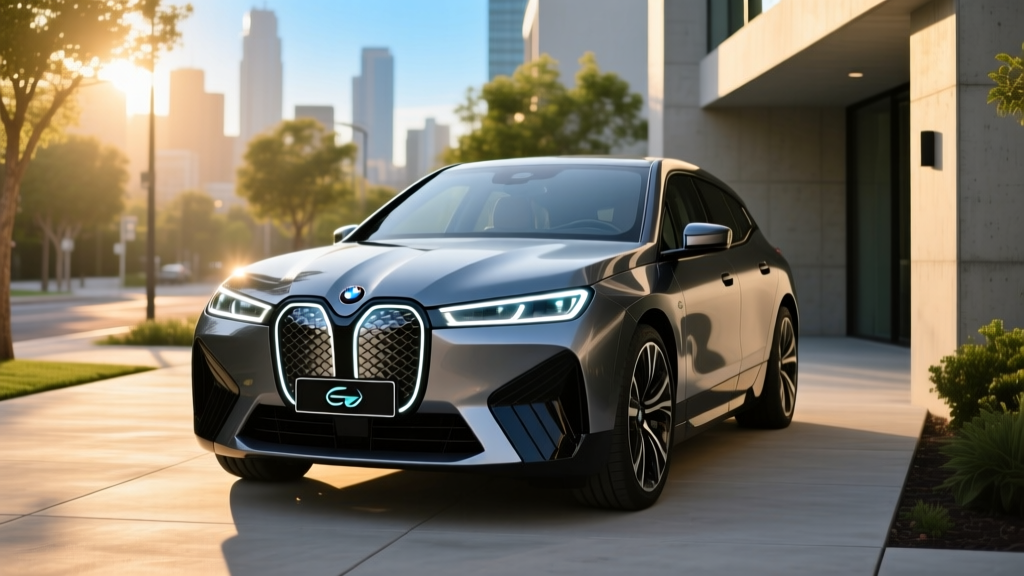
The BMW iX occupies a specific niche in the luxury EV space: it's the electric SUV for buyers who value cabin serenity, ride quality, and understated design over 0-60 bragging rights or maximum range-per-dollar. For 2026, BMW continues to offer the iX in xDrive50 and M60 trims, both riding on the same 105.6 kWh (usable) battery pack with dual-motor all-wheel drive. The xDrive50 delivers a strong 324-mile EPA range, while the M60 sacrifices roughly 40 miles for a 610-horsepower performance punch.
This is not a budget EV, and it doesn't pretend to be. With a starting MSRP above $87,000, the iX competes directly against the Mercedes-Benz EQE SUV, Audi Q8 e-tron, and Tesla Model X. Where it wins: interior material quality, highway ride comfort, and DC fast-charging speeds that make road trips genuinely practical. Where it falls short: no frunk, limited third-row availability, and a polarizing exterior design that hasn't aged into universal acceptance.
Below, we break down every spec that matters — from real-world range expectations and charging curves to tax credit eligibility and ownership economics.
Battery, Range, and Efficiency: What the Numbers Actually Mean
| Spec | iX xDrive50 | iX M60 |
|---|---|---|
| Battery (usable capacity) | 105.6 kWh | 105.6 kWh |
| Battery chemistry | NMC (Nickel Manganese Cobalt) | NMC (Nickel Manganese Cobalt) |
| EPA estimated range | 324 miles | 288 miles |
| EPA MPGe (combined) | 86 MPGe | 78 MPGe |
| Efficiency (kWh/100 mi) | 39 kWh/100 mi | 43 kWh/100 mi |
| Drivetrain | Dual-motor AWD | Dual-motor AWD |
| Horsepower | 516 hp | 610 hp |
| 0-60 mph | 4.4 seconds | 3.6 seconds |
BMW uses an NMC (nickel manganese cobalt) lithium-ion pack in the iX, chosen for its higher energy density compared to LFP chemistry. This is typical for premium vehicles where maximizing range within a given physical package takes priority over the lower cost and longer cycle life that LFP offers. The 105.6 kWh usable capacity sits within a gross pack rated around 111.5 kWh, with the difference reserved as a top-and-bottom buffer to protect long-term battery health.
The EPA rates the iX xDrive50 at 324 miles and the M60 at 288 miles. In mixed real-world driving, expect the following:
- City/suburban driving: Close to or slightly above EPA — regenerative braking recovers energy in stop-and-go traffic. Expect 310-340 miles in the xDrive50.
- Highway (70-80 mph sustained): Aerodynamic drag is the enemy. Expect 260-285 miles in the xDrive50, 235-255 in the M60.
- Cold weather (below 32°F): Plan for a 20-30% reduction depending on cabin heating demand and whether you precondition. A 324-mile xDrive50 could deliver 225-260 miles in freezing conditions without preconditioning.
The iX's heat pump (standard equipment) helps mitigate cold-weather losses compared to resistive heating, but physics always wins in deep winter.
Efficiency at 39 kWh/100 miles for the xDrive50 is respectable for a 5,600-pound luxury SUV, though it trails the more aerodynamic Tesla Model X (around 33-35 kWh/100 mi). The M60's higher consumption reflects its more aggressive powertrain calibration and stickier, wider tires.
Charging Speed: DC Fast Charging and Home Level 2
Charging speed is where the iX genuinely impresses within its segment. BMW equipped the iX with a peak DC fast-charge rate of 195 kW on a CCS1 connector, which translates to a 10-80% charge in approximately 34 minutes under ideal conditions. That's competitive with the best in the luxury SUV class and meaningfully faster than the Audi Q8 e-tron's ~170 kW peak.
| Charging Method | Power (kW) | Speed / Time | Notes |
|---|---|---|---|
| DC Fast Charge (CCS1) | Up to 195 kW peak | 10-80% in ~34 min | Sustains ~150 kW to ~50% SoC, then tapers; preconditioning recommended |
| Level 2 (240V, 48A) | 11.5 kW | ~22 miles of range per hour; 0-100% in ~11 hours | Requires a 60A circuit; BMW includes a Flexible Fast Charger |
| Level 1 (120V) | ~1.4 kW | ~3 miles of range per hour | Emergency/trickle only; a full charge takes 75+ hours |
Understanding the charge curve: The 195 kW peak rate is not sustained across the entire session. Like all EVs, the iX charges fastest at low states of charge and tapers as the battery fills. You'll see close to peak speeds from 10-40% SoC, with the rate dropping to around 100-120 kW above 60% and further tapering above 80%. This is why the 10-80% metric is the industry standard — charging past 80% at a DC fast charger is painfully slow and generally not worth your time on a road trip.
Preconditioning matters. If you navigate to a charging station using the iX's built-in navigation, the vehicle will automatically warm or cool the battery to optimal temperature before you arrive. Skipping this step — or arriving at a charger with a cold-soaked battery in winter — can cut your peak charge rate by 30-50%.
For home charging, the iX's 11.5 kW onboard charger is a strong point. A properly installed Level 2 home station (such as a ChargePoint Home Flex or Wallbox Pulsar Plus on a 60-amp circuit) will add roughly 22 miles of range per hour of charging, meaning an overnight session easily replenishes a full day's driving. Budget $500-$1,200 for a quality Level 2 unit and $800-$2,500 for professional installation, depending on your electrical panel's capacity and the run length to your garage or driveway.
Pricing, Trims, and Federal Tax Credit Eligibility
The 2026 BMW iX is offered in two primary trims. Pricing reflects BMW's MSRP before destination charges, dealer adjustments, or incentives:
| Trim | Base MSRP | Typical As-Tested | Federal Tax Credit (§30D) |
|---|---|---|---|
| iX xDrive50 | $87,250 | $92,000-$98,000 (with options) | Eligibility depends on battery sourcing and buyer income — see below |
| iX M60 | $111,500 | $115,000-$125,000 (with options) | Same sourcing/income rules apply |
Federal tax credit reality check: Under IRS §30D rules, the iX faces several hurdles for the full $7,500 credit:
- MSRP cap: SUVs must be under $80,000 MSRP to qualify. The iX xDrive50 starts at $87,250, which exceeds this cap. As currently structured, neither iX trim qualifies for the new-vehicle §30D credit based on MSRP alone.
- Buyer income cap: Even if the MSRP cap were met, adjusted gross income must not exceed $300,000 (joint filers), $225,000 (head of household), or $150,000 (single).
- Battery sourcing: The credit is split into two halves ($3,750 each) based on critical mineral sourcing and battery component manufacturing requirements, which shift annually and are subject to Foreign Entity of Concern (FEOC) restrictions.
- Point-of-sale transfer: If eligible, the credit can be transferred to the dealer at purchase for an immediate price reduction rather than claimed on your tax return.
The iX's MSRP disqualifies it from the new-vehicle credit. However, buyers should check whether any state or local incentives apply — these vary by jurisdiction and some have no MSRP cap. Consult your tax professional and your state's energy office for current programs.
Interior, Cargo, and Technology
The iX's cabin is where BMW justifies its premium pricing. The interior uses a mix of sustainable materials — recycled microfiber, FSC-certified wood, and olive-leaf-tanned leather — that feel genuinely upscale without relying on the chrome-and-gloss-black formula common in German luxury EVs.
Passenger space:
- Front headroom: 40.2 inches
- Front legroom: 40.3 inches
- Rear headroom: 38.7 inches
- Rear legroom: 38.1 inches
Rear-seat comfort is a genuine strength. The flat floor (no transmission tunnel) and generous legroom make the iX a comfortable four- or five-passenger vehicle for adults on long trips.
Cargo volume:
- Behind rear seats: 35.5 cubic feet
- Rear seats folded: 77.9 cubic feet
- Frunk (front trunk): None — the iX does not offer a front storage compartment
The lack of a frunk is a notable omission in a purpose-built EV platform. Competitors like the Tesla Model X and Rivian R1S offer front storage, and many buyers expect it. BMW uses that space for HVAC and power electronics, but it's a talking point if you frequently carry charging cables or small items you want separated from the main cargo area.
Technology highlights:
- BMW iDrive 8.5: A curved display setup with a 14.9-inch central touchscreen and 12.3-inch instrument cluster. Wireless Apple CarPlay and Android Auto are standard. The system is responsive and feature-rich, though some users find the nested menu structure requires a learning curve.
- Driving Assistant Professional: This includes adaptive cruise control with stop-and-go, lane-keeping assist, and automatic lane change on highways. This is an SAE Level 2 system — the driver must remain engaged and hands on or near the wheel at all times. It is not self-driving.
- Parking Assistant Professional: Includes a 3D surround-view camera and automated parking maneuvers, which is genuinely useful given the iX's 195.5-inch length.
- Harman Kardon or Bowers & Wilkins audio: Available premium audio systems with up to 30 speakers. The B&W Diamond Surround option is exceptional for audiophiles.
BMW's Driving Assistant Professional is an SAE Level 2 system. It provides lane centering and adaptive cruise, and can perform automatic lane changes when confirmed by the driver. It does NOT drive autonomously. You are responsible for all vehicle movements at all times. Competing systems like GM's Super Cruise offer hands-free operation on mapped highways, which BMW does not currently match.
Warranty and Long-Term Battery Outlook
| Coverage | Term |
|---|---|
| Basic vehicle warranty | 4 years / 50,000 miles |
| Powertrain warranty | 4 years / 50,000 miles |
| High-voltage battery warranty | 8 years / 100,000 miles (retains ≥70% capacity) |
| Corrosion warranty | 12 years / unlimited miles |
| Complimentary maintenance | 3 years / 36,000 miles |
The high-voltage battery warranty guarantees that the pack will retain at least 70% of its original capacity over 8 years or 100,000 miles. This is industry-standard for luxury EVs (matching Mercedes, Audi, and Tesla). NMC batteries in BMW's Gen5 eDrive architecture have shown favorable degradation curves in European fleet data, typically losing 5-8% capacity over the first 60,000 miles before the degradation rate slows considerably.
If out-of-warranty replacement becomes necessary, BMW has not published a single retail price for the full iX pack, but industry estimates for a 105+ kWh NMC replacement range from $18,000 to $28,000 including labor. Individual module replacement (if only a portion of the pack degrades) can reduce this cost significantly.
How the iX Compares to Key Competitors
At this price point, cross-shopping is inevitable. Here's how the iX xDrive50 stacks up against its most common alternatives:
| Spec | BMW iX xDrive50 | Mercedes EQE 350+ SUV | Audi Q8 e-tron Premium Plus | Tesla Model X Long Range |
|---|---|---|---|---|
| EPA Range | 324 mi | 305 mi | 285 mi | 335 mi |
| Battery (usable) | 105.6 kWh | 90.6 kWh | 106 kWh | ~100 kWh |
| Peak DC Charge | 195 kW | 170 kW | 170 kW | 250 kW |
| 0-60 mph | 4.4 sec | 6.4 sec | 5.5 sec | 3.8 sec |
| Base MSRP | $87,250 | $77,900 | $75,595 | $79,990 |
| Cargo (rear seats up) | 35.5 cu ft | 14 cu ft (rear cargo only) | 28.5 cu ft | 40.2 cu ft + frunk |
- Choose the BMW iX if: You prioritize ride comfort, cabin material quality, and highway refinement above all else. You value strong (but not class-leading) DC charging speed and want an SUV that feels like a traditional BMW in its driving dynamics despite its weight.
- Choose the Mercedes EQE SUV if: You want a lower entry price and a more conservative exterior design, and you don't mind sacrificing cargo space and some range.
- Choose the Audi Q8 e-tron if: You want the most conventional luxury SUV experience with the lowest starting price in this group, and your driving is mostly under 250 miles per trip.
- Choose the Tesla Model X if: You need maximum range, the fastest Supercharger network access, a frunk, and available third-row seating — and you're willing to accept Tesla's panel-gap inconsistencies and minimalist interior approach.
Pros and Cons
- Exceptional ride quality and cabin quietness at highway speeds
- Strong 195 kW DC fast-charging capability for practical road trips
- Premium interior materials with sustainable sourcing
- Generous rear-seat legroom for adult passengers
- Competitive 324-mile EPA range (xDrive50)
- Heat pump standard for improved cold-weather efficiency
- No frunk — unusual for a dedicated EV platform
- MSRP exceeds $80,000 cap, disqualifying from federal §30D credit
- Polarizing exterior design remains divisive
- Driver-assist system requires hands-on engagement (no hands-free highway mode like Super Cruise)
- Cargo volume trails Tesla Model X and Rivian R1S
- iDrive learning curve for first-time BMW EV owners
Who Should Buy the BMW iX?
The iX is best suited for:
- Luxury commuters who drive 40-80 miles daily and can charge at home overnight. The 324-mile range means charging 2-3 times per week at most, and the 11.5 kW Level 2 rate ensures a full battery every morning.
- Families prioritizing comfort over utility — the rear seat is excellent for two adults or three children, but if you need a third row or maximum cargo, the Model X or Rivian R1S serve better.
- Road trippers willing to plan — the 195 kW DC charging and CCS compatibility (with growing network access, including BMW's partnerships with Electrify America) make long-distance travel practical, with ~34-minute stops every 250 miles or so.
It is not ideal for buyers seeking the lowest cost per mile of range, maximum cargo flexibility, hands-free driving capability, or federal tax credit eligibility at this price point.
Frequently Asked Questions
What is the real-world range of the BMW iX?
The EPA rates the iX xDrive50 at 324 miles and the M60 at 288 miles. In real-world highway driving at 70-80 mph, expect 260-285 miles (xDrive50) and 235-255 miles (M60). In freezing weather without preconditioning, reduce those numbers by 20-30%. City driving with regenerative braking often matches or slightly exceeds EPA estimates.
How fast does the BMW iX charge?
On a DC fast charger, the iX peaks at 195 kW and charges from 10-80% in approximately 34 minutes when the battery is preconditioned. At home on a Level 2 (240V, 48A) charger, it draws up to 11.5 kW, adding about 22 miles of range per hour — enough for a full overnight charge.
Does the BMW iX qualify for the federal EV tax credit?
Under current IRS §30D rules, the iX does not qualify for the new-vehicle federal tax credit because its MSRP ($87,250 for xDrive50, $111,500 for M60) exceeds the $80,000 cap for SUVs. State and local incentives may still apply — check your jurisdiction's programs. Consult a tax professional for personalized guidance.
Is the BMW iX worth buying vs. competitors?
If ride quality, cabin refinement, and BMW driving dynamics are your top priorities, the iX delivers a compelling package. If you prioritize maximum range, cargo space, or hands-free driving features, the Tesla Model X or vehicles with GM's Super Cruise may serve you better. The iX's biggest value challenge is its MSRP, which eliminates the federal tax credit and pushes the effective price above similarly equipped competitors.
Does the BMW iX have a frunk?
No. The iX does not offer a front trunk. BMW uses the front compartment for HVAC components and power electronics. If front cargo storage is important to you, the Tesla Model X and Rivian R1S both offer frunks.
What is the BMW iX's towing capacity?
The iX is rated to tow up to 3,500 pounds when properly equipped with the factory hitch. This is sufficient for a small trailer or a pair of personal watercraft but trails the Rivian R1S (7,700 lbs) and Tesla Model X (5,000 lbs).
How long will the BMW iX battery last?
BMW warranties the high-voltage battery for 8 years or 100,000 miles against capacity loss below 70%. Based on NMC chemistry data from BMW's Gen5 eDrive platform, typical degradation is 5-8% over the first 60,000 miles, slowing significantly afterward. Many owners report 90%+ state of health at 80,000 miles with normal charging habits (avoiding frequent 100% charges and DC fast-charging exclusively).
Sources: EPA fuel economy data via fueleconomy.gov, BMW USA official specifications, IRS §30D clean vehicle credit guidance via irs.gov.