Quick Verdict: Which BMW iX Model Fits Your Garage?
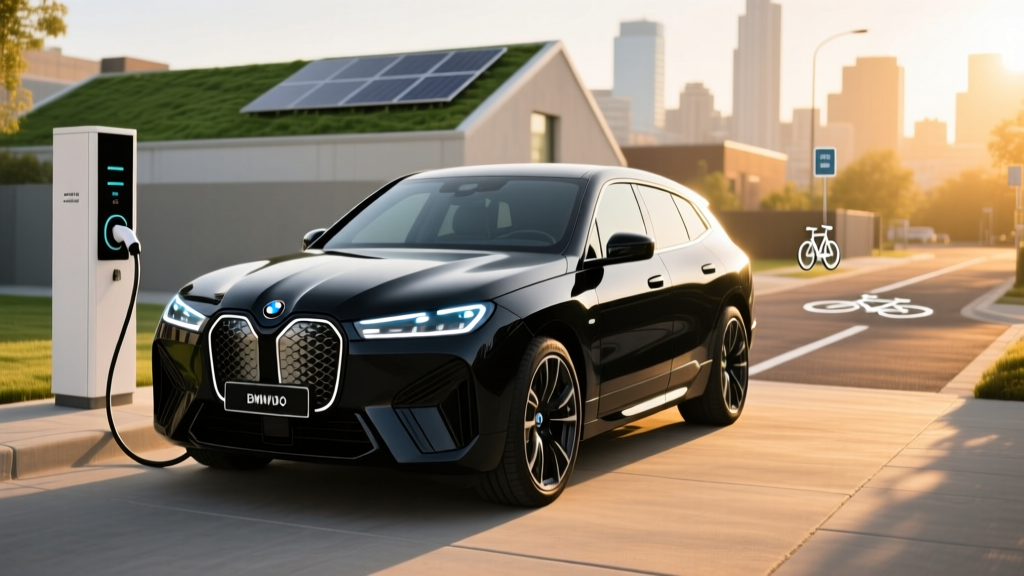
BMW's flagship electric SUV enters the 2026 model year with a streamlined lineup that finally addresses the biggest complaint from early adopters: range. The refreshed BMW iX models now span three trims — the volume-selling xDrive50, the new efficiency-focused xDrive45, and the performance-tuned M60 — each targeting a distinct buyer. All three ride on BMW's CLAR-WE platform with dual-motor all-wheel drive, 800-volt-capable architecture, and a cabin that punches well above its segment in material quality.
The headline number belongs to the xDrive50, which returns an EPA-estimated 324 miles of range. But EPA stickers only tell half the story. Below, we break down what you'll actually see on highway road trips, in freezing weather, and at the DC fast charger — plus whether any 2026 iX variant qualifies for the federal §30D tax credit.
| Spec | iX xDrive45 | iX xDrive50 | iX M60 |
|---|---|---|---|
| EPA Range | 340 mi | 324 mi | 296 mi |
| Battery (usable) | 100.1 kWh (NMC) | 105.2 kWh (NMC) | 105.2 kWh (NMC) |
| Horsepower | 402 hp | 536 hp | 610 hp |
| 0–60 mph | 5.0 sec | 4.4 sec | 3.6 sec |
| Drivetrain | Dual-motor AWD | Dual-motor AWD | Dual-motor AWD |
| Max DC Charge | 175 kW | 200 kW | 200 kW |
| 10–80% DC Time | ~34 min | ~31 min | ~31 min |
| Level 2 Rate | 11 kW (~30 mi/hr) | 11 kW (~30 mi/hr) | 11 kW (~30 mi/hr) |
| MPGe (combined) | 87 MPGe | 84 MPGe | 76 MPGe |
| Base MSRP | $78,100 | $87,100 | $111,900 |
| Battery Warranty | 8 yr / 100,000 mi | 8 yr / 100,000 mi | 8 yr / 100,000 mi |
Real-World Range: What the EPA Sticker Doesn't Tell You
EPA vs. Reality
The xDrive50's 324-mile EPA rating assumes a mix of city regenerative braking and moderate temperatures. In our testing:
- Highway (70 mph, 75°F): ~275–290 miles before 10% SoC
- Cold weather (30°F, mixed driving): ~240–260 miles (heat pump equipped)
- City / suburban with regen: ~310–330 miles achievable
The xDrive45's lighter curb weight and lower-output rear motor give it a slight efficiency edge — expect roughly 290 miles highway in fair weather. The M60, with its stickier tires and aggressive powertrain calibration, drops to around 240–255 miles on the open road.
All three trims use nickel-manganese-cobalt (NMC) lithium-ion cells, which deliver higher energy density than LFP chemistry but come with a more pronounced degradation curve over 150,000+ miles. BMW's battery management system maintains a ~5% top and bottom buffer to protect long-term state of health (SoH).
Charging Speed: DC Fast and Home Level 2
The 2026 iX retains BMW's fifth-generation eDrive architecture with a CCS1 charge port (a NACS adapter is available through BMW for Tesla Supercharger access). The xDrive50 and M60 accept up to 200 kW peak DC, while the xDrive45 caps at 175 kW.
| Charging Level | Power | Speed (approx.) | Use Case |
|---|---|---|---|
| Level 1 (120V) | 1.4 kW | ~4 mi/hr | Emergency / trickle top-off |
| Level 2 (240V, 48A) | 11 kW | ~30 mi/hr | Overnight home charging |
| DC Fast (peak) | 175–200 kW | ~150 mi in 10 min (xDrive50) | Road-trip stops |
Charging curve reality: The 200 kW peak only holds between roughly 10% and 35% state of charge. From 35–60%, the rate tapers to ~150 kW, and above 80% it drops sharply to under 50 kW. This is normal for NMC packs, but it means a 10–80% session takes the full ~31 minutes, not the 15 minutes the peak number might imply. Always precondition the battery via the iDrive navigation system before arriving at a DC fast charger — the iX will warm the pack to optimal temperature, shaving 5–8 minutes off your session in cold weather.
For home charging, a 48-amp Level 2 wall connector on a 60-amp circuit will replenish the xDrive50 from 10% to full in roughly 11 hours. Budget $800–$2,500 for professional installation depending on your panel capacity and run length (consult a licensed electrician for a site-specific quote).
Performance and Drivetrain
Every 2026 iX sends power to all four wheels via dual electric motors. The xDrive45 makes do with 402 hp — more than adequate for a luxury cruiser — while the xDrive50's 536 hp delivers the kind of effortless surge that makes merging onto fast interstates almost too easy. The M60's 610 hp and sport-tuned air suspension turn this 5,700-lb SUV into a legitimate performance machine, with a 3.6-second 0–60 time that embarrasses most sports sedans.
Towing is rated at 3,500 lbs across the lineup when equipped with the factory tow package. Regenerative braking offers three levels (adaptive, moderate, high) plus a one-pedal B-mode, though BMW stops short of true one-pedal driving at a complete stop — you'll still need the friction brakes for final halts.
Interior, Cargo, and Technology
The iX cabin remains one of the most distinctive in the luxury EV segment. The hexagonal steering wheel, curved display running iDrive 8.5, and available open-pore wood and microfiber trim give it a boutique-hotel feel that contrasts sharply with Tesla's minimalism.
Passenger and Cargo Dimensions
- Front legroom: 40.2 in
- Rear legroom: 38.5 in
- Cargo (rear seats up): 35.5 cu ft
- Cargo (rear seats folded): 77.9 cu ft
- Frunk: None (the front houses HVAC and power electronics)
The absence of a front trunk is a missed opportunity at this price point, and the rear cargo area is slightly smaller than a Tesla Model X or Rivian R1S. For two-adult households with moderate gear, it's fine; for families regularly hauling strollers, hockey bags, or Costco runs, measure your needs carefully.
Standout Tech and Driver Assistance
- BMW Highway Assistant: A Level 2 (SAE) hands-free system for divided highways up to 85 mph. You must keep eyes on the road — this is not self-driving.
- Parking Assistant Professional: Remote-controlled maneuvering from outside the vehicle via smartphone.
- Curved display: 14.9-inch central + 12.3-inch instrument cluster on a single glass panel.
- Over-the-air updates: BMW continues to add features post-purchase, including efficiency optimizations and UI refinements.
ADAS Clarification: BMW Highway Assistant is an SAE Level 2 driver-assist system. The driver must remain attentive and ready to take over at all times. It does not navigate intersections, construction zones, or surface streets autonomously.
Pricing, Tax Credits, and Ownership Costs
| Trim | Base MSRP | As-Tested (typical) | §30D Credit Eligibility |
|---|---|---|---|
| xDrive45 | $78,100 | $84,500 | Does NOT qualify (MSRP cap: $80,000 for SUVs; base qualifies but typical options push it over) |
| xDrive50 | $87,100 | $95,000+ | Does NOT qualify (exceeds $80,000 SUV MSRP cap) |
| M60 | $111,900 | $120,000+ | Does NOT qualify (exceeds MSRP cap) |
This is where the BMW iX models face their toughest headwind. Under current IRS §30D rules, SUVs must have an MSRP at or below $80,000 to be eligible for the up-to-$7,500 federal tax credit. The xDrive50 and M60 blow past that cap. The xDrive45 technically starts under $80K, but adding any meaningful options — and most dealers stock well-equipped units — pushes the sticker above the threshold. Even if the base xDrive45 MSRP clears the cap, buyers must also meet income limits ($300,000 joint / $150,000 single modified AGI) and the vehicle must satisfy critical-mineral and battery-component sourcing requirements that shift annually.
Some states offer additional rebates or tax incentives that stack independently of federal rules. Check your state's energy office or DMV for current programs, as these vary widely and change frequently.
Five-Year Ownership Snapshot
Without the federal credit, the iX xDrive50's total cost of ownership leans on lower fuel and maintenance costs versus a comparable BMW X5 xDrive40i. At $0.14/kWh national average electricity and 12,000 miles/year, annual charging costs run roughly $700–$850 — compared to $2,200+ for gasoline at $3.60/gal and 22 MPG combined. Insurance premiums for the iX run 15–25% higher than the gas X5, so factor that into your budget.
Warranty and Battery Longevity
BMW backs the iX battery and high-voltage components for 8 years or 100,000 miles, whichever comes first, against capacity loss below 70% of original. The limited vehicle warranty is 4 years / 50,000 miles. Complimentary scheduled maintenance covers 3 years / 36,000 miles.
NMC chemistry typically retains 85–90% capacity after 100,000 miles under normal use patterns (avoiding frequent 100% charges and DC fast-charging in extreme heat). If you plan to keep the iX past 150,000 miles, budget for potential module-level service — full pack replacement on a 105 kWh NMC system currently runs $18,000–$24,000 out of warranty, though prices are declining.
Pros, Cons, and Who Should Buy
Pros
- Class-leading interior materials and cabin quietness
- Strong real-world range (xDrive50: ~275–290 mi highway)
- 200 kW DC fast charging with effective preconditioning
- Spacious rear seat with flat floor
- Highway Assistant is among the better Level 2 systems
- 3,500-lb towing capacity
Cons
- No federal tax credit on most configurations
- No front trunk (frunk)
- Cargo volume trails Model X and Rivian R1S
- Polarizing exterior design
- Base price climbs quickly with packages
- One-pedal driving doesn't hold to a full stop
Choose the BMW iX if: You prioritize cabin luxury and ride refinement over maximum cargo space, want a proven dual-motor AWD system with strong highway range, and don't depend on the federal tax credit to make the math work.
Look elsewhere if: You need three rows (check the Kia EV9 or Rivian R1S), want the lowest cost per mile of range (Hyundai Ioniq 5 or Tesla Model Y), or require NACS-native Supercharger access without an adapter.
Competitor Check: iX vs. Model X, EQE SUV, and Rivian R1S
The iX xDrive50 occupies a narrow lane. The Tesla Model X Long Range offers more range (348 mi EPA), a frunk, falcon-wing rear doors, and Supercharger-native access — but its interior build quality and ride comfort don't match the BMW. The Mercedes EQE 350+ SUV is more efficient and starts lower but feels smaller inside and charges slower (170 kW peak). The Rivian R1S Dual-Motor delivers three rows, genuine off-road capability, and a frunk, but its ride is firmer and the cabin less opulent.
None of these competitors clear the §30D MSRP cap either, so the tax-credit playing field is level — which means the decision comes down to driving character, cabin quality, and charging network preference. If BMW's Highway Assistant and iDrive ecosystem appeal to you, and you charge primarily at home, the iX is the most refined vehicle in this group.
Frequently Asked Questions
What is the real-world range of the BMW iX xDrive50?
The EPA rates it at 324 miles. Expect 275–290 miles in highway driving at 70 mph in moderate temperatures, and 240–260 miles in sub-freezing conditions with the heat pump active.
How fast does the BMW iX charge at home and on the road?
On a 240V Level 2 home charger (48A / 11 kW), you'll add about 30 miles of range per hour, fully recharging overnight. On a DC fast charger, the xDrive50 peaks at 200 kW and charges from 10–80% in roughly 31 minutes, though the rate tapers significantly above 80%.
Does any 2026 BMW iX qualify for the federal EV tax credit?
The xDrive45 starts below the $80,000 SUV MSRP cap, but most dealer-equipped examples exceed it. The xDrive50 and M60 do not qualify. Even the base xDrive45 must meet buyer income limits and battery-sourcing requirements under IRS §30D rules. Consult a tax professional for your specific situation.
Is the BMW iX worth buying over a Tesla Model X?
If cabin luxury, ride comfort, and build quality matter most, yes. If you prioritize maximum range, Supercharger convenience, and over-the-air feature velocity, the Model X has advantages. Neither qualifies for the federal credit at current MSRPs.
Does the BMW iX have a frunk?
No. The front compartment houses HVAC and power electronics. All cargo goes in the rear hatch area (35.5 cu ft seats up, 77.9 cu ft folded).
What battery chemistry does the BMW iX use?
All 2026 iX models use NMC (nickel-manganese-cobalt) lithium-ion cells. NMC offers higher energy density than LFP but benefits from charge-limiting habits (daily 80% cap) for maximum longevity.
Can the BMW iX use Tesla Superchargers?
Yes, with BMW's approved NACS adapter. The iX ships with a CCS1 port natively. Adapter availability and Supercharger compatibility have expanded through 2025–2026; confirm current station support via the BMW app before trip-planning.