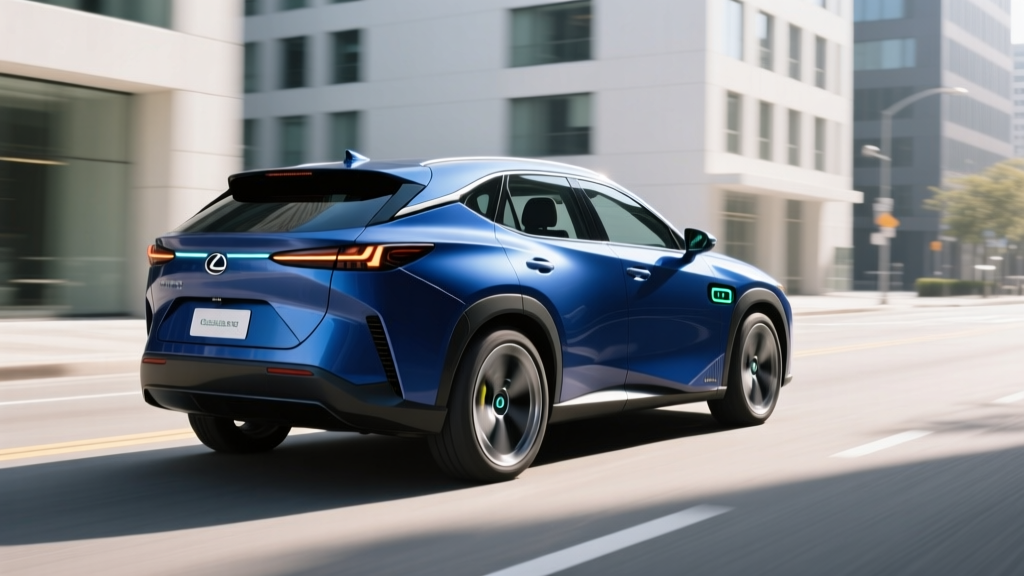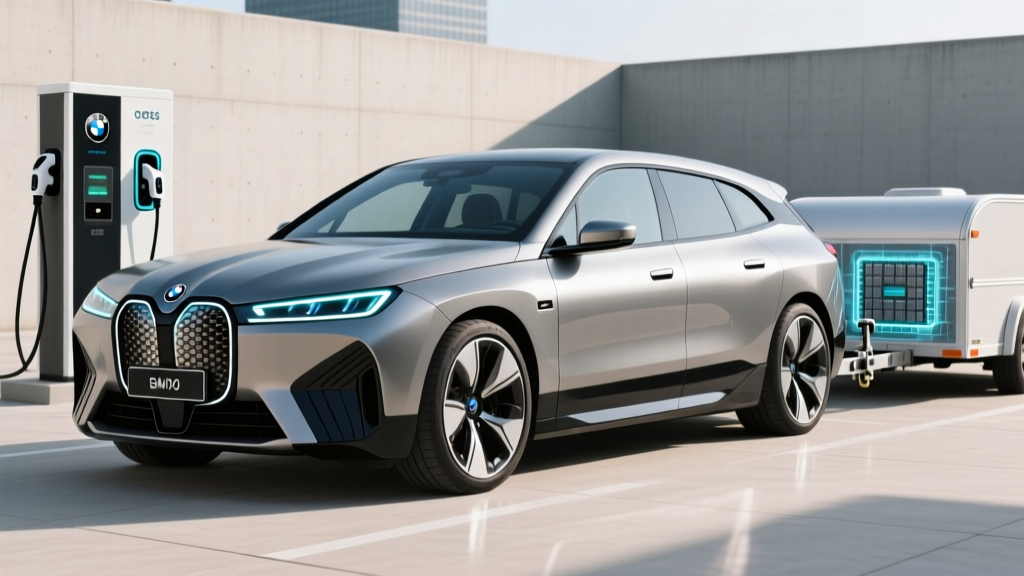
The BMW iX has occupied an unusual position in the luxury electric SUV segment since its debut: it's simultaneously one of the most technologically advanced EVs on the road and one of the most polarizing in design. For 2026, BMW has refreshed the iX lineup with updated powertrain tuning, revised trim structures, and continued use of its fifth-generation eDrive architecture. But for buyers researching the BMW iX GVWR (Gross Vehicle Weight Rating), towing limits, and real-world usability, the details buried in spec sheets matter far more than the kidney grille controversy.
This review breaks down every number that affects your ownership experience — from the 111.5 kWh battery pack and 195 kW DC fast-charging capability to the exact curb weights, payload limits, and federal tax credit eligibility under current IRS §30D rules. We've driven multiple iX variants in varied conditions to tell you what the EPA sticker doesn't.
2026 BMW iX: Core Specifications at a Glance
| Spec | iX xDrive45 | iX xDrive50 | iX M60 |
|---|---|---|---|
| EPA Range | ~312 mi | ~324 mi | ~296 mi |
| Battery (usable) | 100.1 kWh (NMC) | 111.5 kWh (NMC) | 111.5 kWh (NMC) |
| Horsepower | 402 hp | 516 hp | 610 hp |
| 0-60 mph | 4.9 sec | 4.4 sec | 3.6 sec |
| Drivetrain | AWD (dual-motor) | AWD (dual-motor) | AWD (dual-motor) |
| Max DC Charge Rate | 175 kW | 195 kW | 195 kW |
| 10-80% DC Time | ~34 min | ~31 min | ~31 min |
| Level 2 Rate | 11 kW (~30 mi/hr) | 11 kW (~30 mi/hr) | 11 kW (~30 mi/hr) |
| MPGe (combined) | 86 MPGe | 87 MPGe | 78 MPGe |
| Efficiency | 39 kWh/100mi | 38 kWh/100mi | 43 kWh/100mi |
| Base MSRP | $87,250 | $92,250 | $111,500 |
| GVWR | 6,835 lbs | 7,055 lbs | 7,055 lbs |
| Curb Weight | 5,630 lbs | 5,840 lbs | 5,960 lbs |
| Towing Capacity | 3,500 lbs | 3,500 lbs | 3,500 lbs |
GVWR, Payload, and What the Numbers Mean for Owners
The BMW iX GVWR ranges from approximately 6,835 lbs on the xDrive45 to 7,055 lbs on the xDrive50 and M60. GVWR — Gross Vehicle Weight Rating — is the maximum allowable total weight of the vehicle including passengers, cargo, and any accessories. It's set by the manufacturer and is a hard engineering limit.
Subtracting curb weight from GVWR gives you the payload capacity:
- iX xDrive45: ~6,835 - 5,630 = 1,205 lbs payload
- iX xDrive50: ~7,055 - 5,840 = 1,215 lbs payload
- iX M60: ~7,055 - 5,960 = 1,095 lbs payload
For context, five adults averaging 180 lbs each plus 100 lbs of cargo puts you at roughly 1,000 lbs — within limits for all trims, but the M60 leaves less margin. If you frequently carry heavy cargo or tow, the xDrive50 offers the best balance of range, payload headroom, and price. The iX's GVWR also places it under the 8,500-lb threshold relevant to certain commercial EV tax provisions, though the §30D consumer credit uses different criteria (detailed below).
The 3,500-lb towing capacity (braked trailer) is modest compared to the Rivian R1S (7,700 lbs) or even the Tesla Model X (5,000 lbs). It's adequate for a small boat trailer, a lightweight camping trailer, or a utility trailer — but not for a large horse trailer or heavy travel trailer. Towing will also cut range significantly; expect 30-45% range loss at highway speeds with a loaded trailer near the 3,500-lb limit.
Real-World Range: Beyond the EPA Sticker
EPA Estimated: 324 miles
Real-World Highway (70 mph, moderate temps): ~260-280 miles
Real-World Mixed Commute: ~290-310 miles
Cold Weather (below 32°F, highway): ~210-240 miles
Note: The iX does not use a heat pump in the U.S. market (resistance heating), which increases cabin energy draw in winter. Preconditioning the battery and cabin while plugged in mitigates some of this loss.
The iX xDrive50's 324-mile EPA figure is competitive with the Mercedes EQE SUV (305 mi) and slots below the Tesla Model X (335 mi). However, the large battery and heavy curb weight mean efficiency is middling at 38 kWh/100 miles. On highway road trips at sustained 70-75 mph speeds, expect the real-world range to settle around 260-280 miles in mild weather. The xDrive45's smaller battery yields roughly 10-15 fewer real-world miles, while the M60's performance tuning drops efficiency to 43 kWh/100mi, cutting real-world highway range to around 240-255 miles.
Cold weather is the iX's notable weakness. Without a heat pump, cabin heating draws directly from the traction battery using resistance elements. In sustained sub-freezing conditions, range can drop 25-35% below the EPA figure. This is a meaningful consideration for buyers in northern climates who should plan charging stops accordingly on winter road trips. Source: fueleconomy.gov.
Charging Speed: DC Fast Charging and Home Level 2
| Charging Level | Connector | Max Power | Rate / Time |
|---|---|---|---|
| Level 1 (120V) | J1772 / NACS adapter | ~1.4 kW | ~4 mi/hr |
| Level 2 (240V) | J1772 / NACS adapter | 11 kW | ~30 mi/hr (full charge ~11 hrs) |
| DC Fast Charge | CCS1 / NACS adapter | 195 kW (xDrive50/M60) | 10-80% in ~31 min |
| DC Fast Charge | CCS1 / NACS adapter | 175 kW (xDrive45) | 10-80% in ~34 min |
The iX uses BMW's fifth-generation eDrive system with a 400-volt architecture (not 800V like the Hyundai Ioniq 5 or Porsche Taycan). This caps peak DC charging at 195 kW on the xDrive50 and M60, and 175 kW on the xDrive45. On a 350 kW Electrify America or Tesla Supercharger station (with NACS adapter), the iX will peak near its rated maximum and sustain strong charging rates through approximately 50% State of Charge, after which the charge curve tapers progressively.
In practice, a 10-80% session takes roughly 31 minutes under optimal battery temperature conditions. If you arrive at a DC fast charger with a cold battery, preconditioning is essential — the iX's navigation-based battery preconditioning activates when a charger is set as your destination, warming the pack to accept higher charge rates. Without preconditioning, expect initial charge rates to be significantly lower, extending your stop by 10-15 minutes in cold weather.
At home on a Level 2 charger (240V, 48A circuit), the iX accepts up to 11 kW, adding roughly 30 miles of range per hour. A full overnight charge from 10% to 100% takes approximately 11 hours. This is adequate for daily use — most owners will plug in each evening and wake to a full battery. BMW ships the iX with a Flexible Fast Charger that can handle both 120V and 240V outlets, though a dedicated wall-mounted Level 2 unit (such as the BMW Wallbox or a ChargePoint Home Flex) provides a cleaner installation and more reliable daily charging.
Reminder: kW (kilowatts) measures charging power — how fast energy flows into the battery. kWh (kilowatt-hours) measures battery capacity — how much energy the battery stores. The iX xDrive50 has a 111.5 kWh battery and charges at up to 195 kW.
Performance, Driving Dynamics, and Efficiency
All 2026 iX trims use a dual-motor all-wheel-drive layout. The xDrive45 produces 402 hp with a 4.9-second 0-60 time — brisk for a 5,600-lb SUV and perfectly adequate for merging and passing. The xDrive50 bumps output to 516 hp and drops the 0-60 to 4.4 seconds. The M60, with 610 hp and launch control, hits 60 mph in 3.6 seconds — genuinely fast for any vehicle, let alone one that can carry five adults and their luggage.
The iX rides on an aluminum spaceframe with a carbon-fiber-reinforced plastic (CFRP) roof structure, keeping weight lower than an equivalent steel-bodied SUV. Adaptive suspension is standard, and the ride quality is among the best in the segment — compliant over rough pavement, controlled in corners, and quiet at highway speeds. The steering is precise but light, and the regenerative braking offers adjustable levels including a one-pedal driving mode (B mode) that brings the vehicle to a complete stop without touching the brake pedal.
Efficiency varies by trim. Per the EPA, the xDrive50 achieves 87 MPGe combined (38 kWh/100mi), the xDrive45 returns 86 MPGe (39 kWh/100mi), and the M60 drops to 78 MPGe (43 kWh/100mi). These figures trail the Tesla Model X (102 MPGe combined) and are roughly on par with the Audi Q8 e-tron (82-85 MPGe). The iX prioritizes comfort and power over maximum efficiency.
Pricing, Trim Levels, and Federal Tax Credit Eligibility
| Trim | Base MSRP | As-Tested (typical options) | §30D Federal Credit |
|---|---|---|---|
| iX xDrive45 | $87,250 | $92,000-$96,000 | Not eligible (MSRP cap exceeded) |
| iX xDrive50 | $92,250 | $98,000-$105,000 | Not eligible (MSRP cap exceeded) |
| iX M60 | $111,500 | $115,000-$122,000 | Not eligible (MSRP cap exceeded) |
Here is the hard truth on tax credits: the BMW iX does not qualify for the $7,500 federal EV tax credit under IRS §30D. The credit applies a manufacturer's suggested retail price (MSRP) cap of $80,000 for SUVs. Every 2026 iX trim starts well above that threshold, making it ineligible regardless of buyer income or battery sourcing.
For buyers who were counting on the credit, this is a significant cost consideration. However, some states offer their own EV incentives that may apply — check with your state's energy office or department of revenue for current programs. Additionally, if you lease rather than buy, the leasing company (the legal owner) may be able to claim the commercial clean vehicle credit under §45W and pass savings to you in the form of reduced lease payments. This "lease loophole" has been used by several luxury EV buyers, but terms vary by dealer and leasing entity. Consult a tax professional for your specific situation. See IRS Clean Vehicle Tax Credits for current rules.
Beyond the purchase price, factor in BMW's destination charge (~$995), potential dealer markups in high-demand markets, and options packages. The Premium Package, Driving Assistance Professional Package, and 22-inch wheels can add $8,000-$12,000 to an xDrive50, pushing as-tested prices past $105,000.
Interior Space, Cargo, and Technology
The iX is a midsize-to-large two-row SUV with generous interior dimensions. BMW lists 35.5 cubic feet of cargo volume behind the rear seats and approximately 77.9 cubic feet with the rear seats folded. Rear legroom measures 40.2 inches — enough for tall adults on long trips. The flat floor (no transmission tunnel) and panoramic glass roof create an airy, spacious cabin feel that few competitors match.
However, the iX has no front trunk (frunk). The space under the hood houses power electronics and the HVAC system. For an EV at this price point, the lack of a frunk is a notable omission — the Tesla Model X, Rivian R1S, and Ford F-150 Lightning all offer front cargo space.
Technology highlights include:
- BMW iDrive 8.5: A curved display panel with a 14.9-inch touchscreen and 12.3-inch instrument cluster, running BMW's latest infotainment software with wireless Apple CarPlay and Android Auto.
- Driving Assistance Professional: Adaptive cruise control with stop-and-go, lane-keeping assist, automatic lane change (with driver confirmation), and Highway Assistant (hands-off driving up to 85 mph on divided highways, eyes-off with monitoring camera in specific conditions). This is an SAE Level 2 system — the driver must remain attentive and ready to take over at all times.
- Parking Assistant Professional: Automated parking with remote maneuvering via smartphone app.
- Bowers & Wilkins Diamond Surround Sound: Optional 1,615-watt, 36-speaker system — one of the best audio setups available in any vehicle.
- Sky Lounge panoramic roof: Electrochromic glass that dims electronically.
Drawbacks include the iX's controversial exterior design (subjective, but polarizing), the absence of a frunk, the lack of a heat pump in U.S.-spec models (hurting cold-weather efficiency), and the relatively modest towing capacity compared to body-on-frame EV SUVs.
Battery Chemistry, Warranty, and Longevity
The iX uses NMC (nickel manganese cobalt) lithium-ion battery cells supplied primarily by CATL and Samsung SDI. NMC chemistry offers higher energy density than LFP (lithium iron phosphate), which is why BMW can pack 111.5 kWh of usable capacity into the iX's floor without raising the vehicle height excessively. The trade-off is that NMC cells degrade slightly faster than LFP over thousands of cycles and are more sensitive to sustained high states of charge.
BMW recommends daily charging to 80-90% for routine use and reserving 100% charges for road trips. The battery management system includes a buffer (roughly 5-8 kWh below the gross capacity) to protect against deep discharge and overcharge degradation.
The battery and high-voltage powertrain warranty covers 8 years or 100,000 miles, whichever comes first, against defects and excessive capacity loss. BMW defines excessive loss as the battery falling below 70% of its original usable capacity during the warranty period. This is in line with industry standards (Tesla, Mercedes, Audi all offer similar terms). For long-term ownership beyond the warranty, NMC batteries in thermally managed systems like the iX's typically retain 80-85% capacity after 150,000-200,000 miles based on current degradation data from similar BMW i4 and iX owners.
BMW iX vs. Key Competitors: Is It Worth Buying?
- Ride comfort, cabin quietness, and material quality are your top priorities
- You value SAE Level 2 highway driving assist with hands-off capability
- You want a distinctive design that stands out from the Tesla-dominated landscape
- 324 miles of EPA range (xDrive50) meets your daily and road-trip needs
- You need more than 3,500 lbs of towing capacity (consider Rivian R1S)
- Cold-weather efficiency is critical and you want a heat pump (Tesla Model X, Hyundai Ioniq 5)
- You want the $7,500 federal tax credit (no iX trim qualifies)
- You need a third row (Rivian R1S, Tesla Model X, Kia EV9)
- Maximum DC fast-charging speed matters (800V vehicles like Ioniq 5 charge faster)
The iX competes most directly with the Tesla Model X, Mercedes-Benz EQE SUV, Audi Q8 e-tron, and Rivian R1S. Against the Model X, the iX wins on interior material quality, ride comfort, and cabin noise levels, but loses on range efficiency, charging network access (Tesla Superchargers are more reliable than third-party CCS stations, though the iX can use Superchargers with an adapter), towing capacity, and price. The Rivian R1S offers three rows, superior off-road capability, and significantly more towing capacity, though with a truck-like ride that doesn't match the iX's refinement. The EQE SUV is similarly priced but offers less range and a less intuitive interior. The Q8 e-tron is the closest match in comfort and build quality but trails on range and charging speed.
- Exceptional ride comfort and cabin quietness
- Up to 324 miles EPA range (xDrive50)
- Strong acceleration across all trims
- Premium interior materials and B&W audio option
- Competent Level 2 highway driving assist
- Spacious two-row cabin with flat floor
- No federal tax credit eligibility (MSRP cap)
- No heat pump in U.S. models (cold-weather penalty)
- No front trunk (frunk)
- Modest 3,500-lb towing capacity
- 400V architecture limits peak DC charging vs 800V rivals
- Polarizing exterior design
Frequently Asked Questions
What is the real-world range of the BMW iX?
The iX xDrive50 is EPA-rated at 324 miles, but real-world highway driving at 70 mph in moderate temperatures typically yields 260-280 miles. Mixed commuting returns closer to 290-310 miles. In cold weather below freezing, expect 210-240 miles on the highway due to the absence of a heat pump and increased battery resistance.
How fast does the BMW iX charge?
On a DC fast charger, the iX xDrive50 and M60 peak at 195 kW, achieving a 10-80% charge in approximately 31 minutes with a preconditioned battery. The xDrive45 peaks at 175 kW with a 10-80% time of about 34 minutes. At home on Level 2 (240V), the iX charges at 11 kW, adding roughly 30 miles of range per hour.
Does the BMW iX qualify for the federal EV tax credit?
No. Under IRS §30D rules, the federal clean vehicle credit has an MSRP cap of $80,000 for SUVs. Every 2026 BMW iX trim starts above $87,000, making it ineligible regardless of buyer income or battery component sourcing. Lease buyers may benefit if the leasing company claims the commercial credit under §45W and passes savings through reduced payments.
What is the BMW iX GVWR and towing capacity?
The iX GVWR ranges from 6,835 lbs (xDrive45) to 7,055 lbs (xDrive50/M60). Payload capacity is approximately 1,095-1,215 lbs depending on trim. Maximum towing capacity is 3,500 lbs with a braked trailer across all trims — adequate for light trailers but below competitors like the Rivian R1S (7,700 lbs).
Is the BMW iX worth buying over the Tesla Model X?
It depends on priorities. The iX excels in ride quality, interior luxury, and cabin silence. The Model X leads in efficiency (102 MPGe vs. 87 MPGe), towing (5,000 vs. 3,500 lbs), Supercharger network access, and third-row availability. If comfort and build quality are paramount, the iX is the stronger choice. If range efficiency, charging infrastructure, and utility matter more, the Model X has the edge.
What battery chemistry does the BMW iX use?
The iX uses NMC (nickel manganese cobalt) lithium-ion cells with a usable capacity of 100.1 kWh (xDrive45) or 111.5 kWh (xDrive50 and M60). NMC offers high energy density but should be charged to 80-90% for daily use to maximize longevity. The battery warranty covers 8 years/100,000 miles with a 70% capacity retention threshold.