The BMW iX has been one of the most technically impressive luxury electric SUVs on the market since its launch, and the BMW iX Flow color changing car concept — using E Ink electronic ink panels to shift the vehicle's exterior color at the push of a button — captured global attention. But here's the critical question buyers need answered in 2026: Can you actually buy the color-changing Flow technology on a production iX, and how does the underlying vehicle stack up on range, charging speed, and daily usability?
This review separates the viral concept from the production reality, then gives you the exact numbers — EPA range, DC fast-charge curves, battery chemistry, tax credit eligibility, and real-world ownership costs — you need to evaluate the BMW iX as a luxury EV purchase.
The E Ink Color-Changing Reality: Concept vs. Production
The BMW iX Flow debuted at CES 2022 wrapped in E Ink panels that could shift between white and gray. A more advanced version shown at CES 2023 added multi-color capability using E Ink's Spectra 3 technology, with 240 individually controllable body segments producing a full palette of colors and patterns.
The rest of this review focuses on the production 2026 BMW iX — which is very much available and remains one of the most capable luxury electric SUVs you can buy. The iX's underlying EV platform is what makes the Flow concept compelling in the first place.
2026 BMW iX Specs: Range, Battery, and Efficiency
| Spec | xDrive50 | M60 |
|---|---|---|
| EPA Range | 324 miles | 296 miles |
| Battery (usable) | 105.2 kWh (NMC) | 105.2 kWh (NMC) |
| Drivetrain | Dual-motor AWD | Dual-motor AWD |
| Horsepower | 516 hp | 610 hp |
| 0-60 mph | 4.4 sec | 3.6 sec |
| MPGe (combined) | 86 MPGe | 78 MPGe |
| Efficiency | 39 kWh/100mi | 43 kWh/100mi |
| Max DC Charge Rate | 200 kW | 200 kW |
| 10-80% DC Time | ~31 min | ~31 min |
| Level 2 Rate | 11 kW (~30 mi/hr) | 11 kW (~30 mi/hr) |
| Base MSRP | $87,250 | $111,500 |
The iX uses BMW's fifth-generation eDrive system with NMC (nickel manganese cobalt) battery chemistry — chosen for its high energy density, which is essential in a vehicle this size to achieve 300+ mile range. NMC cells are supplied primarily by CATL and Samsung SDI for BMW's Gen5 platform.
EPA Sticker: 324 mi (xDrive50) / 296 mi (M60)
Highway driving (70-75 mph): Expect ~265–285 mi in moderate temperatures. The iX's tall, aerodynamic-profile SUV shape carries more drag than a sedan at sustained highway speeds.
Cold weather (below 30°F): Range drops to roughly 220–250 mi. The iX includes a standard heat pump, which mitigates cabin-heating energy draw, but battery chemistry still loses efficiency in freezing temperatures.
City/regenerative driving: Can meet or slightly exceed EPA estimates thanks to aggressive regen and low-speed efficiency.
Charging Speed: DC Fast Charging and Home Setup
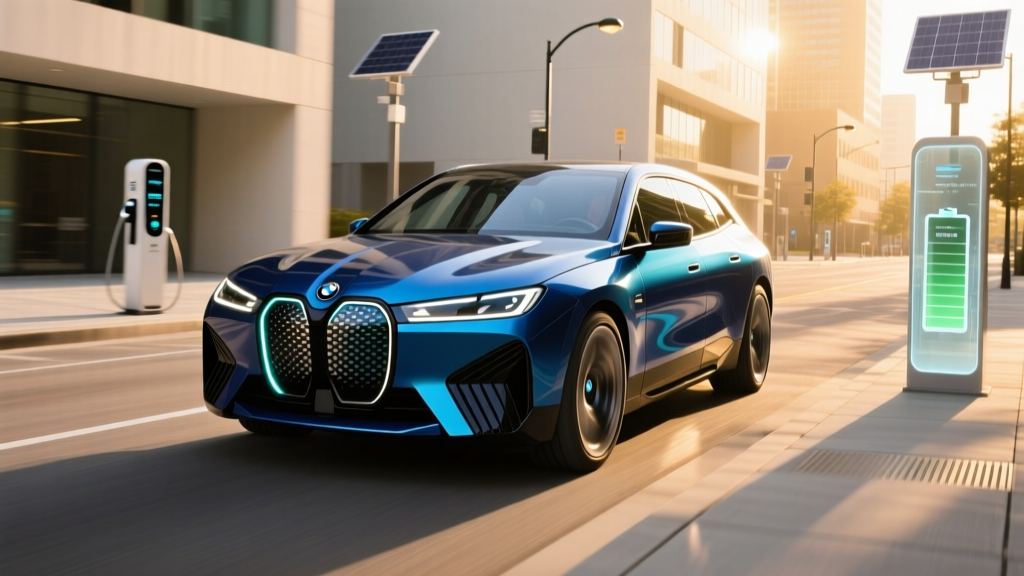
The BMW iX charges at a peak rate of 200 kW on DC fast chargers using the CCS1 connector. BMW's battery management system preconditions the battery automatically when a DC fast-charging station is entered into the navigation system, which is essential for hitting peak charge rates.
| Charge Level | Power (kW) | Speed (mi/hr) | Notes |
|---|---|---|---|
| Level 1 (120V) | 1.4 kW | ~3–4 mi/hr | Emergency only; ~90 hr for full charge |
| Level 2 (240V home) | 11 kW | ~30 mi/hr | Full charge in ~10.5 hr; requires 50A circuit |
| DC Fast (peak) | 200 kW | ~640 mi/hr (peak) | 10-80% in ~31 min; tapers above 80% |
Charging-curve reality: The iX holds close to 200 kW from roughly 10% to 40% State of Charge, then progressively tapers. From 60% to 80%, expect ~100–120 kW. This is why BMW quotes 10-80% time rather than a full-charge time — the last 20% can add another 20+ minutes. On a road trip, plan to charge from 10-80% and keep moving.
The iX uses the CCS1 connector for DC charging. BMW has announced NACS (Tesla-style) adoption for future models, but the 2026 iX still ships with CCS1. BMW provides a NACS adapter for access to Tesla Supercharger V2 stalls (V3/V4 stalls require a third-party adapter or future factory update). Always check BMW's official EV page for the latest adapter compatibility.
Performance and Driving Dynamics
The xDrive50's 516 horsepower and 4.4-second 0-60 time place it firmly in performance-SUV territory — comparable to a Porsche Cayenne S but with instant electric torque and no transmission lag. The M60 bumps output to 610 hp and drops the sprint to 3.6 seconds, making it one of the quickest SUVs on the road, gas or electric.
Both trims use BMW's xDrive dual-motor all-wheel-drive system with torque vectoring. Air suspension is standard, with an available rear-wheel steering system that tightens the turning circle — useful for a vehicle with a 123-inch wheelbase. The iX rides on a dedicated EV architecture (not a converted ICE platform), giving it a low center of gravity and flat floor that translates directly to cabin space and handling composure.
Interior Space, Cargo, and Technology
The iX is a midsize luxury SUV, roughly comparable in footprint to the BMW X5. Interior dimensions are generous:
- Cargo volume: 35.5 cu ft behind rear seats; 77.9 cu ft with rear seats folded
- Rear legroom: 38.9 inches — among the best in the segment
- Front headroom: 40.2 inches (panoramic glass roof reduces intrusion)
- Frunk (front trunk): None — the iX's under-hood space houses power electronics and does not offer a front cargo compartment
The absence of a frunk is a notable drawback for an EV at this price point. Competitors like the Rivian R1S and Ford F-150 Lightning offer meaningful front cargo space. You'll rely entirely on the rear cargo area and cabin storage.
The iX runs BMW's iDrive 8.5 infotainment system on a curved display (14.9-inch touchscreen + 12.3-inch instrument cluster). Wireless Apple CarPlay and Android Auto are standard. The available Driving Assistant Professional package provides SAE Level 2 highway assist with lane-centering, adaptive cruise, and automatic lane changes — but this is not autonomous driving. The driver must remain attentive and keep hands near the wheel at all times.
Pricing, Tax Credits, and Total Cost
| Trim | Base MSRP | As-Tested (typical) | §30D Credit Eligible? |
|---|---|---|---|
| xDrive50 | $87,250 | $94,000–$102,000 | ❌ No — exceeds $80K SUV MSRP cap |
| M60 | $111,500 | $120,000–$135,000 | ❌ No — exceeds $80K SUV MSRP cap |
Federal tax credit reality: Under IRS §30D clean vehicle credit rules, SUVs must have an MSRP at or below $80,000 to qualify. Both iX trims exceed this cap, making the iX ineligible for the $7,500 federal tax credit regardless of buyer income or battery sourcing. This is a significant cost factor compared to EVs like the Tesla Model X (which also exceeds the cap) versus the Rivian R1S Dual-Motor Standard, which starts below $80K and may qualify depending on battery sourcing and buyer income limits ($300K joint / $150K single AGI).
Some states offer separate EV rebates or incentives that are not subject to the federal MSRP cap — check your state's energy office or fueleconomy.gov for state-specific programs.
Warranty and Battery Longevity
BMW provides a competitive warranty package for the iX:
- Basic vehicle warranty: 4 years / 50,000 miles
- Battery and high-voltage components: 8 years / 100,000 miles (covers defects and capacity loss below 70% of original capacity)
- Maintenance: 3 years / 36,000 miles of complimentary scheduled maintenance (a BMW perk that covers brake fluid, cabin filters, and inspections)
The 70% capacity retention threshold over 8 years is standard for the industry. NMC chemistry in the iX has shown strong real-world durability in European-market data, with most owners reporting 3-5% degradation in the first two years before leveling off. The iX's liquid-cooled thermal management system actively regulates cell temperature during charging and driving, which is the single most important factor in long-term battery health.
Pros, Cons, and the Competition
- 324-mile EPA range (xDrive50) — competitive with the best in the segment
- 200 kW DC fast charging with effective preconditioning
- Premium interior materials, quiet cabin, excellent ride quality
- Strong performance: 4.4s 0-60 even on the base trim
- Dedicated EV platform — not a compromise conversion
- Heat pump standard (improves cold-weather efficiency)
- No federal tax credit — MSRP exceeds the $80K SUV cap
- No frunk — unusual for a dedicated EV platform at this price
- E Ink Flow color-changing body is NOT available for purchase
- CCS1 connector requires an adapter for Tesla Supercharger access
- High starting price; well-optioned xDrive50 easily crosses $100K
- Polarizing exterior design (large kidney grille) — subjective but frequently cited
Key competitors: The iX competes against the Mercedes-Benz EQE SUV (307 mi range, ~$78K base, potentially tax-credit-eligible), the Audi Q8 e-tron (285 mi range, ~$75K base), the Rivian R1S (up to 410 mi with Max pack, starts ~$79,900), and the Tesla Model X (335 mi, ~$80K base). The Rivian R1S is the strongest competitor on range and price, while the Mercedes EQE SUV edges closer to tax-credit eligibility. The iX wins on interior quality and driving dynamics but loses on value and charging-network access.
Who Should Buy the BMW iX?
The 2026 BMW iX is best suited for buyers who:
- Prioritize interior luxury and ride quality over maximum range or lowest price
- Have reliable home Level 2 charging and can absorb the higher per-mile electricity cost of a 105 kWh battery
- Don't depend on the Tesla Supercharger network as their primary DC fast-charging source (or are willing to use an adapter)
- Want a dedicated EV platform with BMW driving dynamics, not a converted gas-car chassis
- Are not relying on the $7,500 federal tax credit to make the purchase economics work
If your budget is under $80K, you need tax-credit eligibility, or you regularly road-trip through areas with limited CCS charging infrastructure, the Rivian R1S or Mercedes EQE SUV deserve a closer look.
Frequently Asked Questions
Can I actually buy the BMW iX Flow with color-changing E Ink panels?
No. As of 2026, the E Ink Flow color-changing technology remains a BMW research concept. It has not been certified for production use, crash safety, or long-term durability. No iX sold to consumers includes this feature. The production iX is available in standard BMW paint colors and Individual program options.
What is the real-world highway range of the BMW iX?
The xDrive50's EPA rating is 324 miles, but sustained highway driving at 70-75 mph in moderate temperatures typically yields 265–285 miles. In freezing weather, expect 220–250 miles. City driving with regenerative braking can match or slightly exceed the EPA number.
Does the BMW iX qualify for the $7,500 federal EV tax credit?
No. Under current IRS §30D rules, SUVs must have an MSRP of $80,000 or less. The iX xDrive50 starts at $87,250 and the M60 at $111,500 — both exceed the cap. Buyer income limits and battery-sourcing requirements are irrelevant here since the MSRP cap disqualifies the vehicle outright.
How fast does the BMW iX charge at home?
On a 240V Level 2 home charger delivering 11 kW, the iX gains approximately 30 miles of range per hour. A full charge from empty takes roughly 10.5 hours — practical for overnight charging. A 50-amp dedicated circuit is recommended; consult a licensed electrician to confirm your panel can support it.
Is the BMW iX worth it vs. the Rivian R1S or Tesla Model X?
The iX delivers superior interior quality, ride comfort, and BMW driving dynamics. However, the Rivian R1S offers more range (up to 410 mi), a lower starting price (~$79,900, potentially tax-credit-eligible), a frunk, and better off-road capability. The Tesla Model X offers more Supercharger network access and falcon-wing rear doors. If luxury and comfort are your top priorities and budget is flexible, the iX is excellent. If value, range, or tax-credit eligibility matter more, the R1S is the stronger pick.
What battery chemistry does the BMW iX use?
The iX uses NMC (nickel manganese cobalt) lithium-ion cells — chosen for high energy density, which is necessary to achieve 300+ miles of range in a heavy luxury SUV. NMC offers more range per kilogram than LFP (lithium iron phosphate) but is more sensitive to sustained high State of Charge. BMW recommends charging to 80% for daily use and 100% only before long trips.