Why a BMW iX CPO Deserves a Second Look
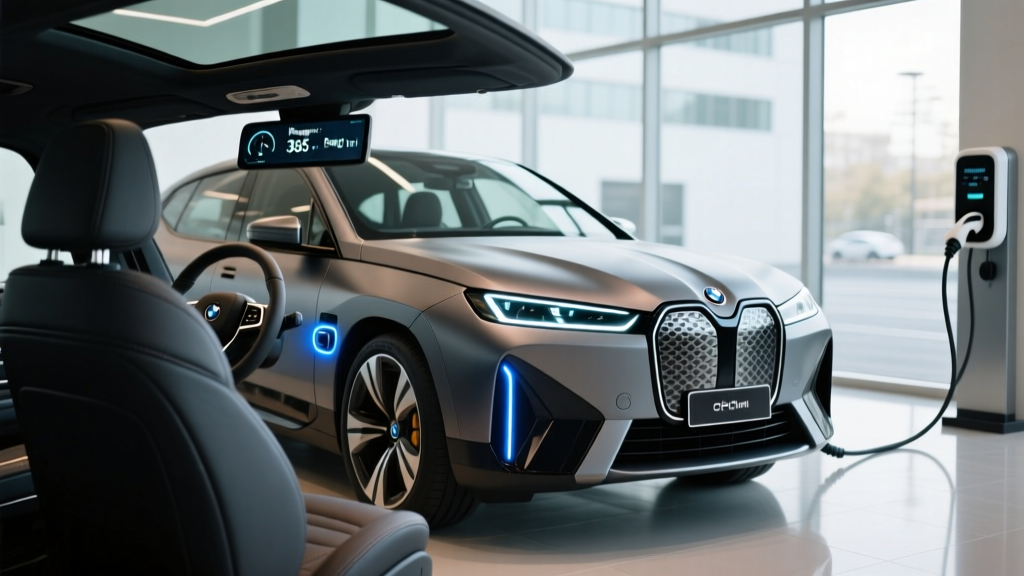
The BMW iX launched for the 2022 model year as the brand's flagship electric SUV — a tech-dense, dual-motor luxury hauler built on a dedicated EV platform. By 2026, early model-year examples (2022–2024) are aging into the sweet spot for BMW's Certified Pre-Owned program, where steep first-owner depreciation meets remaining factory warranty coverage. If you've been searching for a BMW iX CPO, you're likely weighing a used luxury EV against new competitors like the Tesla Model X, Rivian R1S, and Mercedes EQE SUV. This guide gives you the exact numbers — range, charging speeds, battery chemistry, warranty transferability, and real ownership costs — to decide whether a certified pre-owned iX is a smart buy or a depreciating trap.
BMW's CPO program adds a 1-year/unlimited-mileage warranty on top of whatever remains of the original 4-year/50,000-mile new-vehicle limited warranty, plus a 172-point inspection. The high-voltage battery retains its original 8-year/100,000-mile warranty (to 70% capacity), which is fully transferable to subsequent owners. That battery coverage is the single most important factor when buying any used EV.
BMW iX Trims, Specs, and What Changed by Model Year
The iX launched in two trims and has since expanded. Here's how the lineup breaks down for CPO-eligible model years:
| Spec | iX xDrive50 | iX M60 | iX xDrive45 (2025+) |
|---|---|---|---|
| EPA Range | 324 mi (20" wheels) | 296 mi (21" wheels) | 312 mi (est.) |
| Battery (usable/total) | 105.2 kWh / 111.5 kWh | 105.2 kWh / 111.5 kWh | ~100 kWh |
| Battery Chemistry | NMC (Nickel Manganese Cobalt) | NMC | NMC |
| Horsepower | 516 hp | 610 hp | 402 hp |
| 0–60 mph | 4.4 sec | 3.6 sec | 4.9 sec |
| Drivetrain | Dual-motor AWD | Dual-motor AWD | Dual-motor AWD |
| Max DC Fast Charge | 200 kW | 200 kW | 200 kW |
| 10–80% DC Time | ~31 min | ~31 min | ~31 min |
| Level 2 Charge Rate | 11 kW (onboard charger) | 11 kW | 11 kW |
| Combined MPGe | 86 MPGe | 78 MPGe | ~84 MPGe |
| Efficiency | 39 kWh/100 mi | 43 kWh/100 mi | ~40 kWh/100 mi |
| Original Base MSRP | $84,100 (2022) | $108,900 (2023) | $76,900 (2025) |
The xDrive50 is the volume seller and the most common CPO find. The M60 commands a premium on the used market but offers supercar-rivaling acceleration. The xDrive45, introduced for 2025, serves as a lower entry point but is less common in CPO inventories as of early 2026.
Real-World Range: What the EPA Sticker Doesn't Tell You
Real-world expectations based on owner data and independent testing:
- Highway (70–75 mph, moderate temps): ~260–280 miles. The iX's tall, heavy SUV profile hurts aerodynamic efficiency at sustained speed.
- City/suburban mixed driving: ~300–320 miles. Regenerative braking recovers energy in stop-and-go traffic.
- Cold weather (below 32°F): ~220–260 miles. The iX uses a heat pump (standard), which mitigates cabin-heating losses compared to resistive heaters, but NMC chemistry still loses 15–25% range in deep cold.
- Worst-case (highway + cold + 22" wheels): ~200–220 miles. If you regularly drive I-70 in January, plan your charging stops accordingly.
The 324-mile EPA figure for the xDrive50 is legitimate for mixed driving in mild conditions. But the iX is a large, 5,600-pound SUV, and physics penalizes it at highway speeds more than a sedan like the BMW i4 or Tesla Model 3. On a 300-mile road trip at 75 mph in 40°F weather, expect to arrive at your destination needing a charge — or plan one 20-minute DC stop along the way.
According to fueleconomy.gov, the iX xDrive50 achieves 86 MPGe combined (39 kWh/100 mi). That's competitive with the Audi e-tron (now Q8 e-tron) but trails the more aerodynamic Tesla Model X Long Range (102 MPGe combined). If efficiency is your top priority, the iX trades some range per kWh for interior volume and ride quality.
Charging Speed: 200 kW DC and What the Curve Actually Looks Like
The BMW iX supports a peak DC fast-charge rate of 200 kW on a CCS1 connector. Here's how that translates in practice:
| Charging Level | Power (kW) | Speed (mi/hr added) | Notes |
|---|---|---|---|
| Level 1 (120V household) | ~1.4 kW | ~4 mi/hr | Emergency/trickle only; ~75+ hr for full charge |
| Level 2 (240V, 48A home charger) | 11 kW | ~31 mi/hr | Full charge in ~10–11 hours; ideal overnight |
| DC Fast Charge (CCS1) | Peak 200 kW | Up to ~560 mi/hr | 10–80% in ~31 min; tapers sharply above 80% |
Charging curve reality: The iX hits its 200 kW peak at a low state of charge (around 10–20% SoC) and sustains strong power through about 50%. From 50–80%, power tapers progressively — you'll see 150 kW, then 100 kW, then lower. The advertised 10–80% time of ~31 minutes is achievable at a 350 kW Electrify America or EVgo station in moderate temperatures, but expect 35–40 minutes at a 150 kW charger or in cold weather.
Preconditioning matters. The iX will precondition its battery when you navigate to a DC fast charger via the built-in navigation. This warms the pack to optimal charging temperature and can shave 5–10 minutes off your session in cold weather. Always route through the nav system when heading to a fast charger — arriving with a cold pack means the car limits charge rate to protect the cells.
For home charging, the 11 kW onboard charger is generous. A Level 2 wallbox (like a ChargePoint Home Flex or BMW Wallbox) on a 60A circuit delivers roughly 31 miles of range per hour of charging. Most owners who plug in overnight start every day with a full battery, making the 324-mile EPA range more than adequate for daily use.
CPO Pricing, Tax Credits, and Total Value
The BMW iX suffered significant first-owner depreciation — typical for luxury EVs. Here's what the CPO market looks like in early 2026:
| Model Year / Trim | Original MSRP | CPO Price Range | Depreciation from MSRP |
|---|---|---|---|
| 2022 iX xDrive50 | $84,100–$95,000 | $48,000–$58,000 | 35–45% |
| 2023 iX xDrive50 | $87,100–$98,000 | $55,000–$65,000 | 30–40% |
| 2023 iX M60 | $108,900–$120,000 | $68,000–$82,000 | 30–38% |
| 2024 iX xDrive50 | $87,200–$99,000 | $62,000–$74,000 | 25–32% |
Does a BMW iX CPO Qualify for the Federal Tax Credit?
This is where CPO buyers need to pay close attention. The used EV tax credit (IRS §25E, not §30D — which applies to new vehicles only) offers up to $4,000 or 30% of the sale price, whichever is lower, for qualifying pre-owned EVs. Here are the rules as of the 2026 tax year:
- Vehicle price cap: Sale price must be $25,000 or less to qualify.
- Vehicle age: Must be at least 2 model years old (so 2024 or older in 2026).
- Buyer income cap: AGI must not exceed $75,000 (single), $112,500 (head of household), or $150,000 (joint).
- Dealer requirement: Must be purchased from a licensed dealer (private sales don't qualify).
- First transfer: The credit applies only to the first qualified sale after August 16, 2022 — meaning if the CPO unit was previously sold as "used" and someone claimed the credit, it's gone.
The reality: Most BMW iX CPO units sell well above the $25,000 price cap. A 2022 xDrive50 at $50,000+ does not qualify for the $4,000 used-EV credit. You would need to find an exceptionally high-mileage or damaged-title example under $25,000 — which BMW wouldn't certify. Do not count on any federal tax credit when budgeting for a BMW iX CPO. Consult a tax professional and review current rules at IRS.gov for your specific situation.
Some states offer their own used-EV rebates (California's CVRP used-EV rebate, for example), but these vary by jurisdiction and funding availability. Check your state's energy or environmental agency for current programs.
Interior, Tech, and Daily Livability
The iX interior is where BMW justifies its luxury positioning. The cabin uses sustainable materials (recycled plastics, FSC-certified wood, olive-leaf-tanned leather available), and the design is a dramatic departure from the conservative BMW tradition.
Space and Practicality
- Cargo volume: 35.5 cu ft behind the rear seats; 77.9 cu ft with rear seats folded. No frunk (front trunk), which is a missed opportunity given the dedicated EV platform.
- Rear legroom: 38.9 inches — generous for adults on long trips.
- Front headroom: 40.2 inches (with panoramic glass roof, which is fixed and electrochromic — it darkens electronically but does not open).
- Towing capacity: 3,500 lbs (braked) — adequate for a small trailer or a pair of jet skis, but not a large boat or camper.
Infotainment and Driver Assistance
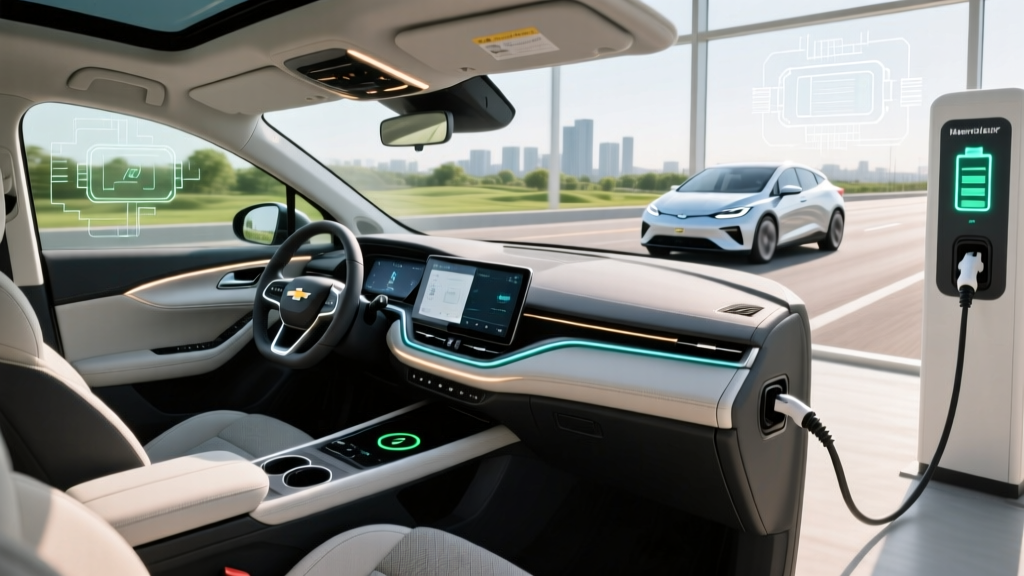
The iX runs BMW's iDrive 8 (2022–2024 models) on a curved display setup: a 12.3-inch instrument cluster merged with a 14.9-inch central touchscreen. Wireless Apple CarPlay and Android Auto are standard. The system is responsive but has drawn criticism for burying climate controls in submenus (BMW later addressed some of this via OTA updates).
Driver assistance includes BMW's Driving Assistant Professional package (optional on xDrive50, standard on M60), which provides:
- Adaptive cruise control with stop-and-go
- Lane-keeping assist with active lane change
- Highway Assistant (hands-off driving up to 85 mph on divided highways — but eyes-on, SAE Level 2)
- Parking Assistant Plus with surround-view cameras and remote parking
BMW's Highway Assistant is a Level 2 driver-assist system. You may take your hands off the wheel at certain speeds on mapped highways, but you must keep your eyes on the road. The system monitors driver attention via an interior camera. This is not autonomous driving — you remain legally and physically responsible for the vehicle at all times.
Notable Drawbacks
- No frunk: The entire front compartment houses HVAC and power electronics. You lose 2–3 cu ft of secure storage that competitors like the Rivian R1S and Ford F-150 Lightning offer.
- Polarizing exterior design: The oversized kidney grille and angular styling generate strong opinions. This is subjective but affects resale demand.
- iDrive 8 learning curve: Heavy reliance on touchscreen and voice for climate/seat controls frustrates some drivers accustomed to physical buttons.
- Run-flat tires: The iX ships without a spare tire and uses run-flat tires. Replacement run-flats are expensive ($300–$500 each for 22" performance tires) and may not be available at every tire shop in rural areas.
Battery Warranty, Degradation, and CPO Inspection Details
The BMW iX uses an NMC (Nickel Manganese Cobalt) battery pack with a total capacity of 111.5 kWh (105.2 kWh usable). BMW provides a buffer at both the top and bottom of the pack to reduce stress on the cells, which helps long-term longevity.
Battery Warranty
- Coverage: 8 years / 100,000 miles (whichever comes first)
- Capacity threshold: BMW warrants the battery to retain at least 70% of its original net capacity
- Transferability: Fully transferable to subsequent owners — critical for CPO buyers
For a 2022 model-year iX purchased CPO in 2026, you'd have approximately 4 years and ~70,000 miles of battery warranty remaining (assuming average mileage of ~12,000 miles/year). That's meaningful coverage. If the battery degrades below 70% within that window, BMW replaces or repairs it at no cost.
Real-World Degradation Data
The iX has been on the road since late 2021 (European deliveries). Early data from European and U.S. owners suggests modest degradation — typically 3–6% capacity loss over the first 2–3 years / 30,000–50,000 miles. This is consistent with modern NMC packs with active thermal management. The iX's liquid-cooled battery and conservative buffer strategy appear to be paying off.
However, individual results vary. Frequent DC fast charging, sustained operation at 100% SoC, and exposure to extreme heat can accelerate degradation. When inspecting a CPO iX, ask the dealer for a battery health report (State of Health or SoH reading). BMW's diagnostic tools can pull this data, and a CPO-certified unit should show it on the vehicle history.
BMW CPO Inspection: What's Covered
BMW's CPO program includes a 172-point inspection covering:
- High-voltage battery health check and capacity test
- Electric drivetrain and motor function
- Charging system (AC and DC port function, cable condition)
- Brakes, suspension, tires, and standard mechanical systems
- Vehicle history report (CARFAX) — must be clean title, no structural damage
The CPO warranty adds 1 year / unlimited mileage of comprehensive coverage beyond the original 4-year/50,000-mile new-vehicle warranty. If the original warranty has already expired (likely for 2022 models in 2026), the CPO warranty provides a fresh 12-month blanket. This is one of the stronger CPO programs in the luxury segment.
BMW iX CPO vs. Key Competitors
BMW iX xDrive50 CPO Pros
- 324-mi EPA range remains competitive in 2026
- 200 kW DC charging with strong curve sustainment
- Quiet, refined ride quality with adaptive suspension
- Spacious rear seat and 77.9 cu ft max cargo
- 8-yr/100,000-mi battery warranty transfers to CPO buyer
- Strong depreciation = value for second owner
- Heat pump standard for cold-weather efficiency
BMW iX xDrive50 CPO Cons
- No federal used-EV tax credit (price exceeds $25K cap)
- No frunk — lost cargo utility vs. rivals
- Run-flat tires are costly to replace
- iDrive 8 interface requires touchscreen for basic climate controls
- Polarizing design may limit resale demand
- Real-world highway range drops to ~260 mi
- Insurance costs remain elevated for luxury EVs
How It Compares
| Factor | BMW iX xDrive50 (2022–23) | Tesla Model X LR (2022–23) | Rivian R1S Dual (2022–23) | Mercedes EQE 350+ SUV (2023) |
|---|---|---|---|---|
| CPO Price Range | $48,000–$65,000 | $52,000–$68,000 | $55,000–$72,000 | $42,000–$55,000 |
| EPA Range | 324 mi | 348 mi | 316 mi (Large Pack) | 305 mi |
| DC Fast Charge Peak | 200 kW | 250 kW | 200 kW (2022); 220 kW (2023+) | 170 kW |
| Third Row | No | Yes (optional, tight) | Yes (optional) | No |
| Frunk | No | Yes (small) | Yes | No |
| Battery Warranty Remaining | ~4–6 years | ~4–6 years | ~5–6 years | ~5–6 years |
Choose the BMW iX CPO if: You prioritize ride refinement, cabin quietness, and a luxury-brand dealership experience. The iX is the most "traditional luxury" of this group — it drives like a BMW, not like a tech product.
Choose the Tesla Model X if: Range and Supercharger network access are your top priorities, and you want optional third-row seating.
Choose the Rivian R1S if: You need genuine off-road capability, a frunk, or plan to tow more than 3,500 lbs (R1S tows up to 7,700 lbs).
Choose the Mercedes EQE SUV if: Budget is the primary concern and you can accept less range and slower DC charging.
Who Should Buy a BMW iX CPO — and Who Shouldn't
Best fit: A luxury-minded buyer with home Level 2 charging who commutes 30–60 miles daily, takes occasional 200–300 mile road trips, and values a serene cabin and adaptive air suspension. The iX excels as a daily driver for a family of four with moderate cargo needs.
Not ideal for: Buyers without home charging access (relying solely on public DC charging adds time and cost). Also not ideal for frequent 400+ mile road trippers in cold climates (range drops and charging stops add up), or anyone who needs a third row or serious towing capacity.
Insurance note: Luxury EVs carry higher insurance premiums. Expect to pay $2,400–$3,600/year for full coverage on a CPO iX, depending on your location, driving record, and coverage levels. Get quotes before committing to the purchase.
Frequently Asked Questions
What is the real-world range of the BMW iX xDrive50?
The EPA rates the iX xDrive50 at 324 miles (with 20-inch wheels). In real-world highway driving at 70–75 mph, expect 260–280 miles. In cold weather below freezing, that can drop to 220–260 miles. City driving with regenerative braking gets closer to the EPA figure, around 300–320 miles.
How fast does the BMW iX charge at home and on the road?
At home on a Level 2 charger (240V, 48A), the iX charges at 11 kW, adding about 31 miles of range per hour — a full charge takes roughly 10–11 hours. On a DC fast charger, it peaks at 200 kW and charges from 10–80% in approximately 31 minutes under ideal conditions. At a 150 kW station or in cold weather, expect 35–40 minutes for 10–80%.
Does a BMW iX CPO qualify for the federal EV tax credit?
Almost certainly not. The federal used-EV credit (§25E) caps the vehicle sale price at $25,000. Most BMW iX CPO examples sell for $48,000–$74,000, well above that threshold. The new-vehicle §30D credit ($7,500) does not apply to used or CPO purchases. Some state incentives may apply — check your local programs.
Is the BMW iX CPO worth buying vs. a new EV?
Financially, the CPO route captures 30–45% of depreciation already absorbed by the first owner, while retaining most of the battery warranty. A 2022–2023 iX xDrive50 at $50,000–$60,000 delivers 324 miles of range, luxury features, and CPO warranty coverage for thousands less than a new equivalent. The trade-off is missing the latest model-year tech updates and having fewer years of battery warranty remaining. For value-oriented luxury EV buyers, the CPO iX is one of the strongest plays in the 2026 market.
What should I check before buying a BMW iX CPO?
Request the battery State of Health (SoH) report from the dealer's diagnostic system. Verify the remaining battery warranty (8 years/100,000 miles from original in-service date). Confirm the CPO warranty start date and coverage terms. Check the CARFAX for any prior damage or insurance claims. Inspect tire condition — run-flat replacements are expensive. Test the DC fast-charge port at a public station if possible to verify charge-rate function.
How long will the BMW iX battery last?
BMW warranties the high-voltage battery for 8 years or 100,000 miles to 70% capacity retention. Early real-world data from 2022–2023 models shows 3–6% degradation over 2–3 years, suggesting the pack is well-managed. With proper care (avoiding sustained 100% SoC, minimizing DC fast charging in extreme heat, using preconditioning), the battery should provide reliable service well beyond the warranty period. Full battery replacement costs, if ever needed out of warranty, are estimated at $15,000–$22,000 based on current BMW parts pricing — though this is a worst-case scenario most owners won't face.