Vehicle Overview: Redefining the Executive Sedan
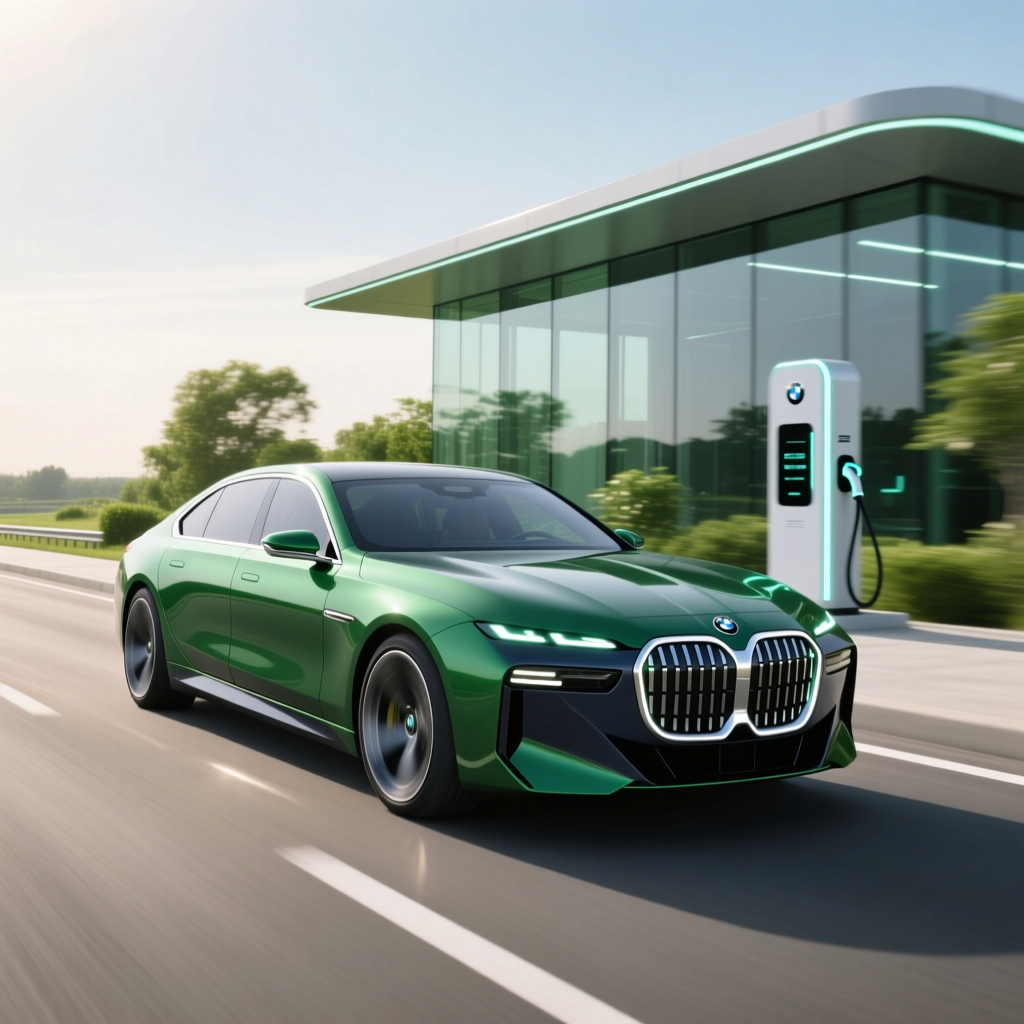
The transition to electric mobility has fundamentally altered the landscape of luxury automobiles, and the BMW i7 xDrive60 stands as a testament to this evolution. As the battery-electric counterpart to the iconic 7 Series, the i7 xDrive60 is not merely a compliance vehicle; it is a ground-up reimagining of what a flagship executive sedan can be. By marrying the stately presence and uncompromising comfort of BMW’s traditional luxury sedan with a cutting-edge, dual-motor electric powertrain, the automaker has created a vehicle that caters to both the traditional chauffeur-driven executive and the modern, eco-conscious driving enthusiast.
Positioned at the very top of the brand’s electric vehicle lineup, the i7 xDrive60 competes directly with heavyweights like the Mercedes-EQ EQS, the Lucid Air, and the Porsche Taycan. However, where some rivals prioritize outright sports-car performance or hyper-aerodynamic teardrop shapes, the i7 leans heavily into monumental luxury, technological theater, and commanding road presence. Its bold, polarizing exterior design is matched only by an interior that borders on a first-class airline suite. For buyers navigating the upper echelons of the EV market, understanding the nuances of this flagship is critical. If you are exploring the broader market, our curated list of the best luxury electric sedans provides an excellent starting point for comparison.
In this comprehensive review, we will dissect the BMW i7 xDrive60, examining its real-world efficiency, charging capabilities, cabin technology, and driving dynamics. We will also break down the ownership costs and provide a detailed specification comparison to help you determine if this Bavarian behemoth deserves a spot in your garage.
Real-World Range and Efficiency
When evaluating a luxury electric sedan, range anxiety is often mitigated by the sheer size of the battery pack, and the i7 xDrive60 does not disappoint. Powering the vehicle is a 101.7 kWh (usable capacity) lithium-ion battery pack integrated into the chassis. According to EPA fuel economy estimates, the i7 xDrive60 achieves an impressive 318 miles of range when equipped with the standard 19-inch aerodynamic wheels. Opting for the larger, more aggressive 20-inch or 22-inch wheel options will naturally reduce this figure, dropping the EPA estimate to approximately 296 miles and 274 miles, respectively.
However, EPA estimates only tell part of the story. Independent test results from organizations like Edmunds and Car and Driver have consistently shown that BMW’s electric powertrains are highly efficient in real-world conditions. In mixed city and highway driving, the i7 xDrive60 frequently meets or slightly exceeds its EPA ratings, thanks in part to its highly effective regenerative braking system and advanced thermal management. The vehicle’s adaptive recuperation system uses radar and navigation data to automatically adjust regenerative braking forces, coasting when the road ahead is clear and aggressively harvesting energy when approaching slower traffic or intersections.
On the highway, where electric vehicles typically suffer from aerodynamic drag and reduced efficiency, the i7’s active grille shutters, air curtains, and flush door handles help it maintain a remarkably low drag coefficient. While it may not achieve the stratospheric highway range of the ultra-aerodynamic Lucid Air, the i7 xDrive60 provides more than enough cushion for cross-country grand touring, easily handling 250-mile legs between charging stops without inducing range anxiety.
Charging Speed and Infrastructure
A large battery is only as good as the speed at which it can be replenished. The BMW i7 xDrive60 features an 800-volt-capable architecture (though it operates natively at a slightly lower voltage than some dedicated 800V rivals) that supports DC fast charging at a peak rate of 195 kW. Under optimal conditions at a Level 3 fast charger, the i7 can sprint from a 10 percent to an 80 percent state of charge in approximately 34 minutes. This translates to adding roughly 170 miles of range in just 10 minutes of plugging in.
For home charging, the i7 comes standard with an 11 kW onboard charger, which can fully replenish the massive battery pack in about 11 hours using a Level 2 home wallbox. An optional 22 kW onboard charger is available in select markets, cutting that time in half for those with access to high-amperage three-phase residential power. To maximize convenience, BMW has integrated ‘Plug & Charge’ functionality into the vehicle’s software. This allows the car to automatically authenticate and initiate billing at compatible public charging networks the moment the cable is connected, eliminating the need to fumble with smartphone apps or RFID cards. For a deeper dive into optimizing your home and public charging setup, be sure to read our comprehensive EV charging guide.
Interior Luxury and Technology
Stepping into the BMW i7 xDrive60 is akin to entering a high-end architectural digest spread. The cabin is a masterclass in material quality, ambient lighting, and technological integration. The dashboard is dominated by the BMW Curved Display, which houses a 12.3-inch digital instrument cluster and a 14.9-inch central infotainment touchscreen running the latest iteration of the iDrive operating system. The interface is snappy, visually stunning, and supported by a highly capable voice assistant that understands natural language commands.
However, the true party piece of the i7 is found in the rear seats. The available 31-inch 8K BMW Theater Screen drops down from the headliner, transforming the rear cabin into a private cinema. Integrated with Amazon Fire TV, the screen spans nearly the entire width of the cabin and is accompanied by motorized rear sunshades that automatically deploy to block out glare. When paired with the available Bowers & Wilkins Diamond Surround Sound System—which features 36 speakers, 1,965 watts, and 4D shaker technology built into the seats—the sensory experience is unparalleled in the automotive world.
Front and rear passengers alike benefit from the Executive Lounge seating package, which offers massaging, ventilated, and heated seats with unprecedented adjustability. The rear right seat can recline deeply, complete with a motorized footrest that deploys from the back of the front passenger seat. Furthermore, the automatic doors, which can be opened and closed via a button press or the key fob, feature obstacle detection and add a profound sense of occasion to every arrival and departure. The integration of the Interaction Bar—a crystalline, backlit strip that spans the dashboard and door panels—elevates the ambient lighting to an interactive art installation.
Driving Dynamics and Performance
Despite its substantial curb weight—exceeding 6,000 pounds—the BMW i7 xDrive60 defies physics with remarkable grace. The dual-motor all-wheel-drive system generates a combined output of 536 horsepower and 549 lb-ft of torque. This is sufficient to propel the massive sedan from 0 to 60 mph in just 4.5 seconds, a figure that feels even quicker in practice due to the instantaneous torque delivery inherent to electric motors. The acceleration is relentless, smooth, and accompanied by a synthetic, Hans Zimmer-composed drive sound that adds a subtle, futuristic crescendo to hard acceleration.
Where the i7 truly shines is in its ride quality and chassis composure. Standard two-axle adaptive air suspension automatically adjusts the ride height and damping based on driving conditions, effectively isolating the cabin from road imperfections. The available Integral Active Steering (rear-wheel steering) is a revelation for a vehicle of this size. By turning the rear wheels in the opposite direction of the fronts at low speeds, the turning circle is reduced to that of a compact hatchback, making the i7 surprisingly maneuverable in tight urban environments. At higher speeds, the rear wheels turn in phase with the fronts, enhancing high-speed lane-change stability.
While it may not possess the raw, track-focused agility of a Porsche Taycan, the i7 xDrive60 is engineered for effortless, high-speed grand touring. The steering is precise, albeit slightly numb, and the braking system seamlessly blends regenerative and mechanical braking, avoiding the grabby feel that plagues some lesser EVs. It is a vehicle that encourages you to arrive at your destination feeling more relaxed than when you departed.
Ownership Costs and Value Proposition
Commanding a starting MSRP well over the $120,000 mark, the BMW i7 xDrive60 is a significant financial commitment. When factoring in destination charges and the inevitable addition of high-end option packages (such as the Executive Lounge and Bowers & Wilkins audio), a well-equipped model can easily approach $150,000. Due to its high price tag, the i7 typically exceeds the MSRP caps set by federal EV tax credit programs, meaning buyers must rely on state-level incentives or lease loopholes to offset the initial cost.
However, the long-term ownership costs present a more favorable picture compared to its internal combustion counterparts, such as the V8-powered 760i. Electric motors require virtually no routine maintenance—there are no oil changes, spark plugs, or transmission fluid flushes to worry about. Furthermore, the aggressive regenerative braking system significantly extends the life of the mechanical brake pads and rotors. Insurance premiums for high-end luxury EVs can be steep, so securing multiple quotes is highly recommended. Depreciation remains a wildcard in the rapidly evolving EV market, but BMW’s strong brand equity and the i7’s flagship status should provide some insulation against the steepest drops. For a direct comparison with its primary German rival, check out our Mercedes-EQ EQS vs. BMW i7 comparison.
Pros and Cons
Pros:
- Unrivaled rear-seat luxury with the available 8K Theater Screen and Executive Lounge seating.
- Whisper-quiet cabin and exceptional ride quality courtesy of adaptive air suspension.
- Strong real-world range that closely matches or exceeds EPA estimates.
- Rear-wheel steering makes the large sedan surprisingly agile in urban settings.
- High-quality interior materials and intuitive iDrive infotainment system.
Cons:
- Polarizing exterior design, particularly the massive front grille, may not appeal to all buyers.
- DC fast-charging speeds, while adequate, lag slightly behind 800V rivals like the Lucid Air and Porsche Taycan.
- Heavy curb weight is noticeable during aggressive cornering and emergency braking.
- High starting price and expensive optional packages quickly inflate the final cost.
Key Specifications Comparison
To understand where the BMW i7 xDrive60 sits in the competitive landscape, we have compiled a specification table comparing it to its most prominent luxury EV sedan rivals. For a deeper dive into the American contender, read our Lucid Air vs. BMW i7 breakdown.
| Specification | BMW i7 xDrive60 | Mercedes-EQ EQS 580 4MATIC | Lucid Air Grand Touring |
|---|---|---|---|
| Base MSRP (Approx.) | $120,000 | $125,000 | $140,000 |
| Powertrain | Dual Motor AWD | Dual Motor AWD | Dual Motor AWD |
| Horsepower | 536 hp | 536 hp | 819 hp |
| 0-60 mph | 4.5 seconds | 4.1 seconds | 3.0 seconds |
| EPA Range (Max) | 318 miles | 371 miles | 516 miles |
| Peak DC Charging | 195 kW | 200 kW | 300+ kW |
| Cargo Space | 17.7 cu-ft | 22.0 cu-ft | 32.0 cu-ft |
Frequently Asked Questions
How long does it take to charge the BMW i7 xDrive60?
Charging times vary depending on the power source. Using a standard Level 2 home charger (11 kW), a full charge from empty takes approximately 11 hours. When utilizing a DC fast charger capable of delivering the vehicle’s peak rate of 195 kW, the i7 xDrive60 can charge from 10 percent to 80 percent in about 34 minutes. This rapid replenishment makes the vehicle highly viable for long-distance road trips, provided you map out high-speed charging corridors.
Does the BMW i7 qualify for federal EV tax credits?
Generally, no. The federal EV tax credit program imposes strict Manufacturer’s Suggested Retail Price (MSRP) caps, typically limiting eligible sedans to those priced under $55,000. Because the BMW i7 xDrive60 starts well over $120,000, it does not qualify for the standard point-of-sale federal tax credit for purchase. However, buyers who choose to lease the vehicle may be able to benefit from the commercial clean vehicle credit, which leasing companies often pass on to the consumer in the form of a capitalized cost reduction. Always consult with a local BMW financial advisor or tax professional for the most current incentive structures.
How does the i7 xDrive60 compare to the Mercedes-EQ EQS?
The rivalry between these two German flagships is fierce. The Mercedes-EQ EQS prioritizes aerodynamic efficiency and a swooping, teardrop silhouette, resulting in superior EPA range estimates and a slightly more spacious cargo area due to its liftback design. However, the BMW i7 counters with a more traditional, commanding sedan profile, vastly superior rear-seat entertainment options (like the 8K Theater Screen), and a more intuitive infotainment interface. If maximum range and cargo versatility are your priorities, the EQS has the edge. If traditional luxury, rear-seat theater, and driving dynamics are paramount, the i7 is the superior choice.
What is the warranty coverage for the BMW i7 battery?
BMW provides robust warranty coverage for its electric vehicles to ensure peace of mind for luxury buyers. The i7 xDrive60’s high-voltage battery is backed by an 8-year or 100,000-mile limited warranty, whichever comes first. This warranty covers defects in materials and workmanship, as well as excessive battery degradation (typically defined as dropping below 70 percent of its original capacity). Additionally, the vehicle itself is covered by a 4-year/50,000-mile limited warranty and includes complimentary scheduled maintenance for the first 3 years or 36,000 miles.
Is the BMW i7 xDrive60 a good alternative to luxury electric SUVs?
Absolutely. While the market has heavily favored crossovers and SUVs in recent years, the i7 xDrive60 offers a compelling argument for the traditional sedan. Because it does not have to push a taller, heavier, and less aerodynamic body through the air, the i7 often delivers better real-world efficiency and a quieter cabin than similarly priced luxury electric SUVs. Furthermore, the lower center of gravity translates to superior handling dynamics and reduced body roll. For buyers who do not require the maximum towing capacity or the elevated seating position of an SUV, the i7 represents the pinnacle of electric grand touring. If you are still on the fence, compare it against the best electric SUVs on the market to see which body style best fits your lifestyle.