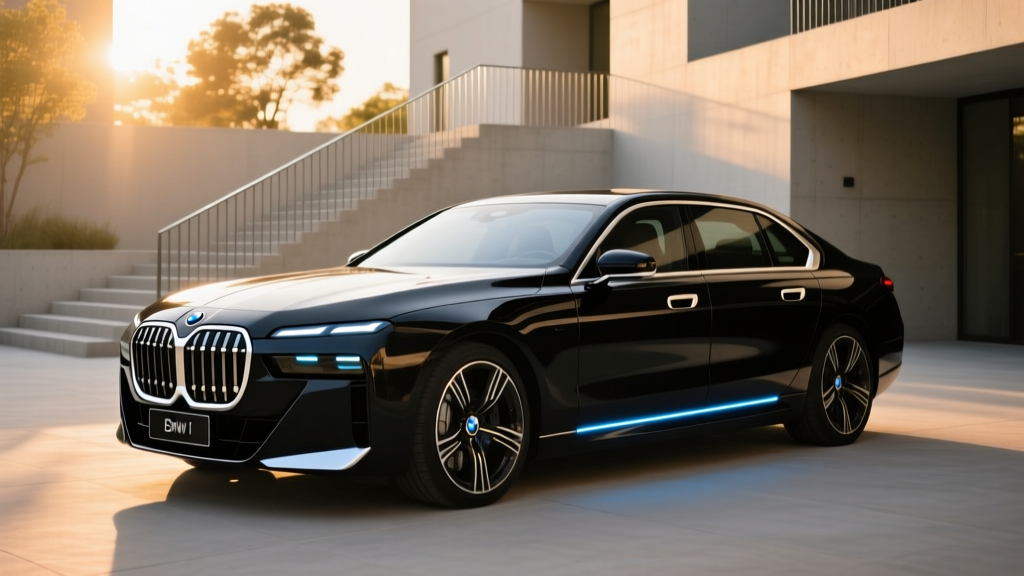
The BMW i7 is the automaker's flagship electric luxury sedan — a full-size executive hauler that attempts to prove battery-electric powertrains belong in the ultra-premium segment. For buyers researching BMW i7 specs, the numbers tell a compelling story: over 300 miles of EPA range, sub-5-second acceleration, and a cabin loaded with technology. But luxury EVs live and die by real-world usability, charging convenience, and total cost. This review breaks down every critical spec and pairs it with the ownership realities that spec sheets omit.
BMW i7 Specs at a Glance
| Specification | i7 xDrive50 | i7 M70 xDrive |
|---|---|---|
| EPA Range | 318 miles | 295 miles |
| Battery (usable) | 101.7 kWh (NMC) | 101.7 kWh (NMC) |
| Drivetrain | Dual-motor AWD | Dual-motor AWD |
| Horsepower | 536 hp | 650 hp |
| Torque | 549 lb-ft | 749 lb-ft (w/ M Launch Control) |
| 0-60 mph | 4.5 seconds | 3.5 seconds |
| Top Speed | 149 mph | 155 mph |
| Max DC Fast Charge | 195 kW | 195 kW |
| 10-80% DC Charge | ~34 minutes | ~34 minutes |
| Level 2 Charge Rate | 11 kW (AC) | 11 kW (AC) |
| MPGe (combined) | 82 MPGe | 76 MPGe |
| Efficiency | 41 kWh/100 mi | 44 kWh/100 mi |
| Base MSRP | $120,675 | $170,475 |
| Battery Warranty | 8 yr / 100,000 mi | 8 yr / 100,000 mi |
Range and Efficiency: EPA Sticker vs. Real World
Real-World Expectation: Plan for 260–290 miles on highway road trips at 70–80 mph. In freezing temperatures (below 32°F), expect a 20–30% reduction, dropping effective range to roughly 220–250 miles for the xDrive50.
The i7 xDrive50's 318-mile EPA rating places it in competitive territory against the Mercedes-Benz EQS sedan and ahead of most electric SUVs. The 101.7 kWh usable battery pack uses NMC (nickel manganese cobalt) chemistry, which offers higher energy density than LFP alternatives — important in a sedan where packaging space is at a premium.
Efficiency lands at 82 MPGe combined for the xDrive50, translating to 41 kWh per 100 miles. That figure is respectable for a 5,800-pound luxury sedan, though the lighter Tesla Model S achieves 124 MPGe combined for comparison. According to fueleconomy.gov, the i7's energy consumption is typical for its weight class.
On a practical level, 260+ real-world highway miles means most drivers can handle daily commutes for a full week on a single charge, and road-trip stops occur roughly every 3.5 to 4 hours of driving — a cadence most owners find manageable when paired with DC fast charging.
Charging Speeds: DC Fast, Level 2, and the Charge Curve Reality
| Charging Level | Power | Speed / Time | Best Use Case |
|---|---|---|---|
| Level 1 (120V) | ~1.4 kW | ~3–4 miles per hour | Emergency / overnight trickle |
| Level 2 (240V, 48A) | 11 kW (max onboard) | ~28–30 miles per hour; full charge in ~11 hrs | Home daily charging |
| DC Fast Charge | Up to 195 kW peak | 10–80% in ~34 min; adds ~170 mi in 20 min | Road trips |
The i7's peak DC fast-charge rate of 195 kW is its most debated spec. While competitors like the Hyundai Ioniq 5 peak at 240 kW and the Lucid Air exceeds 300 kW, BMW's approach prioritizes a flatter, more sustained charge curve over an eye-grabbing peak number.
Here's what that means in practice: the i7 holds close to its peak charge rate through roughly 40% state of charge before tapering. A 10–80% session takes about 34 minutes on a 200+ kW charger. That's 5–10 minutes slower than the fastest-charging rivals, but the difference matters most on back-to-back road-trip days. For the vast majority of owners who charge at home overnight, daily charging experience is identical.
On Level 2, the 11 kW onboard charger is a strong point. Most home Level 2 chargers deliver 9.6 to 11.5 kW, meaning the i7 can absorb the full output of a typical 48-amp home wall connector. A full charge from empty takes roughly 11 hours — easily accomplished overnight.
Pro tip: Use the i7's preconditioning feature before arriving at a DC fast charger. The navigation system will automatically warm the battery when a charger is set as your destination, enabling faster charge rates from the moment you plug in. Skip this step in cold weather and you'll see significantly slower initial charging speeds.
Performance and Driving Dynamics
The dual-motor all-wheel-drive powertrain in the xDrive50 produces 536 horsepower and launches the i7 to 60 mph in 4.5 seconds. That's brisk for a sedan stretching over 212 inches long and weighing nearly three tons. The M70 variant turns up the intensity with 650 hp and a 3.5-second sprint — firmly sports-sedan territory in a car with a six-figure price and a massage-equipped rear seat.
BMW's adaptive air suspension with automatic self-leveling comes standard across the lineup, and rear-wheel steering (up to 3 degrees) is available to shrink the turning radius in city driving. Regenerative braking offers multiple modes including an adaptive setting that uses navigation and sensor data to modulate regen intensity — one-pedal driving is available but not as aggressive as some competitors.
Towing capacity is limited to approximately 4,400 pounds when properly equipped, which is adequate for a light utility trailer but not a primary reason anyone buys this sedan.
Interior Space, Technology, and Standout Features
The i7's cabin is where BMW justifies its flagship pricing. Key dimensions:
- Front headroom: 39.8 inches
- Rear headroom: 38.6 inches
- Rear legroom: 42.0 inches
- Trunk volume: 17.7 cubic feet
- Frunk: Not available (no front trunk)
The rear seat experience is the i7's party piece. Available Executive Lounge seating includes power-reclining rear seats with massage, heated and ventilated cushions, and a 31.3-inch 8K Theater Screen that drops from the ceiling — turning the back row into a private cinema with built-in Amazon Fire TV. It's a genuine differentiator in the segment.
The iDrive 8.5 infotainment system runs on a curved display panel (12.3-inch instrument cluster + 14.9-inch touchscreen) with wireless Apple CarPlay and Android Auto, a head-up display, and available Bowers & Wilkins Diamond surround sound (36 speakers, 1,965 watts).
Driver Assistance: The i7 includes BMW's Driving Assistant Professional, which provides adaptive cruise control with stop-and-go, lane-keeping assist, and automatic lane-change capability on highways. This is a SAE Level 2 system — the driver must remain fully engaged and keep hands on or near the wheel at all times. It is not autonomous driving.
Notable drawbacks: The absence of a frunk is a missed opportunity for additional cargo space. The Theater Screen, while impressive, is a $3,000+ option that limits rear visibility when deployed. And at nearly 5,800 pounds, tire wear is accelerated compared to lighter vehicles — budget for premium tire replacements every 25,000–35,000 miles.
Pricing, Trim Levels, and Federal Tax Credit Eligibility
| Trim | Base MSRP | Typical As-Tested | Federal §30D Credit |
|---|---|---|---|
| i7 xDrive50 | $120,675 | $130,000–$145,000 | Not eligible (MSRP cap exceeded) |
| i7 M70 xDrive | $170,475 | $175,000–$195,000 | Not eligible (MSRP cap exceeded) |
The BMW i7 does not qualify for the federal §30D EV tax credit. Under current IRS rules, new clean vehicle credits are capped at sedans with an MSRP of $55,000 or less. The i7's starting price of $120,675 places it far beyond this threshold, regardless of battery sourcing or buyer income.
Buyers should also check state and local incentive programs — some states offer rebates or HOV-lane access that have no MSRP cap. These vary by jurisdiction and change frequently, so consult your state's energy or DMV office for current programs.
For buyers who want BMW electric luxury within the federal credit's reach, the BMW i4 (in qualifying trims) may be eligible depending on battery sourcing requirements and buyer income limits ($150,000 single / $300,000 joint for new vehicles).
BMW i7 vs. Key Competitors
The i7 competes in a small but fierce segment of full-size electric luxury sedans:
- Mercedes-Benz EQS 450+: 352 miles EPA range, 107.8 kWh battery, starts around $105,550. More range, slightly less performance, comparable luxury.
- Lucid Air Grand Touring: 516 miles EPA range, 112 kWh battery, starts around $127,400. Dominates on range and efficiency; less established dealer/service network.
- Tesla Model S Long Range: 402 miles EPA range, starts around $79,990. Best value and range, but interior quality and ride refinement don't match the i7's luxury standard.
The i7 wins on interior craftsmanship, rear-seat experience, and BMW's established dealer network for service. It loses on range (Lucid and Tesla lead) and charging speed (most rivals charge faster). The EQS is its closest match, trading a range advantage for the i7's more engaging driving dynamics and the available Theater Screen.
Warranty and Long-Term Ownership
BMW backs the i7's high-voltage battery with an 8-year / 100,000-mile warranty covering defects and capacity loss below 70% of original capacity. The standard limited warranty covers 4 years / 50,000 miles, with complimentary scheduled maintenance for 3 years / 36,000 miles.
NMC battery chemistry in the i7 is proven technology used across BMW's EV lineup. Based on industry data from similar packs, expect 10–15% degradation over 100,000 miles under normal use — meaning a 318-mile new battery might deliver roughly 270–285 miles after a decade of typical driving. Extreme heat exposure and frequent DC fast charging to 100% can accelerate degradation.
Battery replacement costs, should they arise out of warranty, are estimated at $15,000–$25,000 based on current pack pricing — a figure that continues to decline as battery manufacturing scales.
Who Should Buy the BMW i7?
- You want flagship luxury sedan quality with a battery-electric powertrain
- Rear-seat comfort and technology are a priority (executive transport, chauffeured use)
- You have reliable home Level 2 charging access
- You value BMW's dealer and service network over maximum range
- Range is your top priority — the Lucid Air offers 500+ miles
- You need the federal tax credit — the i7's MSRP disqualifies it
- You frequently drive in extreme cold without garage charging
- You want the fastest DC charging speeds for cross-country road trips
Pros
- Exceptional interior luxury and build quality
- 31.3-inch rear Theater Screen is segment-unique
- Strong 536–650 hp performance with composed handling
- 11 kW Level 2 charging maximizes home charging speed
- Comprehensive BMW dealer/service network
Cons
- 195 kW peak DC charging trails key competitors
- No federal tax credit eligibility (MSRP cap)
- No front trunk (frunk) for additional cargo
- Real-world highway range drops significantly in cold weather
- High starting price and expensive option packages
Frequently Asked Questions
What is the real-world range of the BMW i7?
The xDrive50's EPA rating is 318 miles, but expect 260–290 miles in mixed highway driving at normal speeds. In freezing temperatures, range can drop to 220–250 miles. The M70 variant sacrifices range for performance, delivering roughly 240–270 real-world miles.
How fast does the BMW i7 charge at home and on road trips?
At home on a Level 2 (240V) charger, the i7 accepts up to 11 kW, adding about 28–30 miles per hour and fully charging overnight in ~11 hours. On DC fast chargers, it peaks at 195 kW and charges from 10–80% in approximately 34 minutes — adequate but not class-leading.
Does the BMW i7 qualify for the federal EV tax credit?
No. Under IRS §30D rules, sedans must have an MSRP at or below $55,000 to qualify. The i7 starts at $120,675, making it ineligible regardless of buyer income or battery sourcing. Check your state for possible local incentives that may not have MSRP caps.
Is the BMW i7 worth buying over the Mercedes EQS or Lucid Air?
The i7 is the strongest pick if rear-seat luxury, driving engagement, and BMW's service network matter most. The Lucid Air wins decisively on range (516 vs. 318 miles). The Mercedes EQS offers more range and a lower starting price but less engaging dynamics. Test-drive all three — the decision often comes down to which cabin experience resonates with you.
What is the BMW i7's battery warranty?
BMW covers the high-voltage battery for 8 years or 100,000 miles, whichever comes first, against defects and capacity retention below 70% of original capacity. The vehicle's standard warranty covers 4 years / 50,000 miles.
Does the i7 have a front trunk (frunk)?
No. BMW did not equip the i7 with a front trunk. All cargo space is in the rear trunk, which offers 17.7 cubic feet — competitive with other full-size luxury sedans but less versatile than EVs that utilize the front compartment for additional storage.