BMW i7 (G70): The High-Voltage Luxury Flagship Decoded
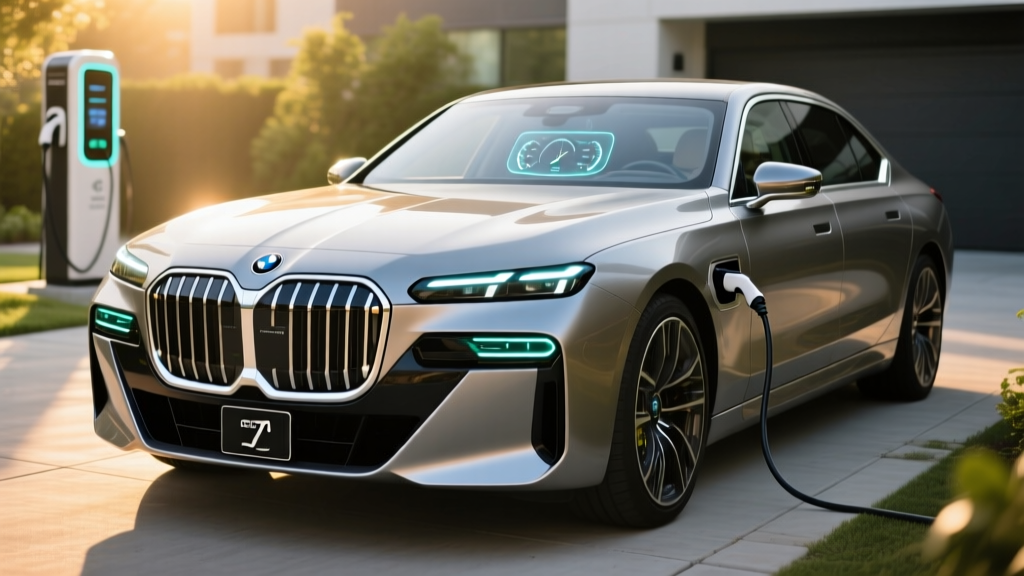
The BMW i7 is the battery-electric variant of BMW's 7 Series luxury sedan, built on the G70 platform and sharing its CLAR architecture with the combustion 7 Series. Underneath its imposing kidney grille and crystal headlights lies a sophisticated high-voltage electrical system that BMW engineered to deliver flagship-level performance without compromising the refinement expected of a six-figure luxury sedan. This review breaks down the i7's electrical architecture, real-world range, charging behavior, and ownership economics with the precision buyers in this segment demand.
For the 2024 model year, BMW offers the i7 exclusively as the xDrive60 variant in the United States — a dual-motor all-wheel-drive configuration that pairs a 105.7 kWh usable battery with 536 horsepower. An M70 performance variant arrived later, but the xDrive60 remains the volume model and the focus of this analysis.
| Specification | Value |
|---|---|
| EPA Range | 318 miles (19" wheels) / 297 miles (21" wheels) |
| Battery (Usable) | 105.7 kWh, NMC (Nickel Manganese Cobalt) |
| Battery (Gross) | 111.5 kWh |
| Drivetrain | Dual-motor AWD (xDrive) |
| Horsepower | 536 hp |
| Torque | 549 lb-ft |
| 0–60 mph | 4.5 seconds |
| Top Speed | 149 mph (electronically limited) |
| Max DC Fast Charge | 195 kW (CCS1) |
| 10–80% DC Charge | ~34 minutes |
| Level 2 Charge Rate | 11 kW (onboard charger) |
| EPA Efficiency | 82 MPGe combined / 41 kWh/100mi |
| Cargo Volume | 17.7 cu ft (trunk) |
| Rear Legroom | 42.8 inches |
| Battery Warranty | 8 years / 100,000 miles |
| Base MSRP | $119,300 (+ $995 destination) |
High-Voltage Electrical System Architecture
The i7's high-voltage system operates on BMW's fifth-generation eDrive technology, which integrates the electric motors, power electronics, and single-speed reduction gear into a compact, co-axial housing at each axle. The system voltage is nominally 400 volts — not the 800V architecture found in the Porsche Taycan or Hyundai Ioniq 5. This is a deliberate engineering choice: BMW prioritized packaging efficiency and compatibility with the shared CLAR platform over the faster charging speeds that 800V enables.
The battery pack sits low in the floor pan, composed of prismatic NMC (nickel manganese cobalt) cells arranged in modules. BMW sources cells from CATL and Samsung SDI, with final pack assembly at BMW's Dingolfing plant in Germany. The gross capacity is 111.5 kWh, but the usable window is 105.7 kWh — BMW reserves roughly 5.8 kWh as a buffer (approximately 2.8 kWh at the top and 3.0 kWh at the bottom) to protect long-term cell health and prevent deep-discharge damage.
The thermal management system uses a multi-circuit liquid cooling and heating setup with a heat pump as standard equipment. This heat pump scavenges waste heat from the motors and power electronics to warm the cabin and precondition the battery, which is critical for maintaining range in cold climates and enabling peak charging speeds at DC fast chargers. BMW's preconditioning algorithm activates automatically when a charging station is entered into the navigation system, warming or cooling the cells to the optimal ~35°C window before arrival.
Range: EPA Sticker vs. Real-World Reality
EPA Estimated Range: 318 miles (with standard 19" aero wheels)
Real-World Expectation:
- Mixed driving (70°F): 280–310 miles achievable with moderate driving
- Sustained highway (75 mph, 70°F): ~250–270 miles — large sedans face significant aero drag at speed
- Cold weather (30°F, cabin heat): ~220–250 miles — expect 20–30% reduction despite the heat pump
- With 21" M Sport wheels: EPA drops to 297 miles; real-world highway closer to 240 miles
The 318-mile EPA figure positions the i7 competitively against the Mercedes-Benz EQS 450+ (340 miles EPA on its larger 108.4 kWh usable pack and RWD layout) and ahead of the Audi e-tron GT (238 miles). However, the i7's tall, bluff-nosed sedan profile generates more aerodynamic drag than the EQS's teardrop shape, which matters significantly at highway speeds where aero losses dominate.
In independent real-world highway testing at a steady 70 mph in moderate temperatures, the i7 xDrive60 typically delivers between 250 and 270 miles before reaching 10% state of charge. That's roughly a 15–21% shortfall from the EPA combined figure, which is consistent with how large, powerful luxury EVs perform in highway-heavy driving. The EPA combined cycle includes significant low-speed city driving where regenerative braking recovers energy — a condition that flatters heavy EVs with strong regen.
Cold-weather performance is mitigated but not eliminated by the heat pump. At 30°F with cabin heating active, expect a 20–30% range reduction, landing real-world range in the 220–250 mile corridor. Preconditioning the cabin and battery while still plugged in at home is essential for maximizing winter usability.
Charging Speed: DC Fast and Home Level 2
The i7 uses the CCS1 connector for DC fast charging in North America. It does not natively support the Tesla NACS connector, though BMW has announced future NACS adoption and current CCS vehicles can access Tesla Superchargers via a BMW-provided CCS-to-NACS adapter at participating stations.
| Charging Level | Power / Voltage | Speed | Use Case |
|---|---|---|---|
| Level 1 (120V household) | ~1.4 kW | ~4 miles per hour | Emergency / trickle top-up |
| Level 2 (240V, 48A) | 11 kW (onboard max) | ~30 miles per hour | Overnight home charging |
| DC Fast Charge | Up to 195 kW peak | 10–80% in ~34 min | Road trips, public charging |
DC Fast Charging — The Curve Reality: The 195 kW peak rate is achievable only under ideal conditions — battery preconditioned to optimal temperature, state of charge below 20%, and a charger capable of delivering 195+ kW. In practice, the i7 sustains roughly 150–180 kW from 10% to about 40% SoC, then progressively tapers. From 80% to 100%, charging slows dramatically to protect cell longevity, adding 20+ minutes for that final 20%. The 34-minute 10–80% claim assumes a 350 kW-capable CCS station (Electrify America, EVgo, or similar).
Compared to 800V rivals, the i7's 400V system charges more slowly. The Porsche Taycan peaks at 270 kW and hits 10–80% in roughly 22 minutes. The Hyundai Ioniq 5 (also 800V) does 10–80% in about 18 minutes at a 350 kW charger. This is the trade-off of BMW's platform-sharing strategy.
Home Level 2 Charging: The onboard charger accepts up to 11 kW (48 amps at 240V). On a dedicated Level 2 home charger — such as a BMW Wallbox or a ChargePoint Home Flex on a 60A circuit — a full 10–100% charge takes approximately 10.5 hours. That's practical for overnight replenishment. Installation of a 240V/60A circuit typically costs $800–$2,000 depending on panel capacity and run length, though a 200A electrical panel upgrade can push total costs to $3,000–$5,000 if your home's service is older. Consult a licensed electrician for a site-specific quote.
Performance and Driving Dynamics
The xDrive60 powertrain pairs a front-axle induction motor (258 hp) with a rear-axle permanent-magnet synchronous motor (312 hp) for a combined system output of 536 hp and 549 lb-ft of torque. BMW's xDrive system manages torque distribution between axles in real time, and the rear-biased calibration gives the i7 a sportier feel than its Mercedes rival.
The 0–60 mph sprint takes 4.5 seconds — genuinely quick for a 5,900-pound sedan. Launch control maximizes traction, and the instant torque delivery makes highway merging effortless. The M70 variant (650 hp) drops 0–60 to 3.5 seconds, but the xDrive60's performance is more than adequate for the luxury use case.
Ride quality is exceptional thanks to standard two-axle air suspension with adaptive dampers. The i7 absorbs road imperfections with the composure expected of a flagship, while maintaining body control through corners that belies its mass. Rear-wheel steering (standard) tightens the turning circle and adds agility at low speeds, while enhancing stability during high-speed lane changes.
Pricing, Tax Credits, and Ownership Economics
The 2024 BMW i7 xDrive60 starts at $119,300 (plus $995 destination), placing it firmly in ultra-luxury EV territory. Typical well-equipped examples with the Executive Package, Bowers & Wilkins audio, and 21" wheels land in the $130,000–$140,000 range before incentives.
| Item | Amount |
|---|---|
| Base MSRP | $119,300 |
| Destination | $995 |
| Typical As-Tested Price | $130,000–$140,000 |
| Federal §30D Tax Credit | $0 — does NOT qualify |
| Reason for Ineligibility | MSRP exceeds $55,000 sedan cap; battery sourcing likely non-compliant |
Federal Tax Credit Reality: The i7 does not qualify for the IRS §30D Clean Vehicle Credit. Under current rules, new sedans must have an MSRP at or below $55,000 to be eligible. The i7's $119,300 starting price exceeds this cap by more than double. Additionally, the battery critical-mineral and component sourcing requirements further complicate eligibility for BMW's globally sourced pack. Buyers should not factor any federal credit into their purchase calculation. Per the IRS §30D guidelines, consult a tax professional for your specific situation.
Ownership Economics: Despite the lack of a federal credit, the i7 offers meaningful fuel-cost savings over its gasoline counterpart, the 760i xDrive (17 MPG combined). At $3.80/gallon and 12,000 miles/year, the 760i costs roughly $2,682/year in fuel. The i7 at $0.14/kWh (national average home rate) and 41 kWh/100mi costs approximately $689/year for the same mileage — a savings of nearly $2,000 annually. Over five years, that's $10,000 in fuel savings, though it only partially offsets the i7's higher purchase price and steeper depreciation curve.
Insurance premiums for the i7 run 15–25% higher than the gas 7 Series due to the battery replacement cost and specialized repair requirements. Expect annual premiums of $3,500–$5,000 depending on your profile and state.
Interior, Technology, and Notable Drawbacks
The i7's cabin is a showcase of BMW's latest design language, dominated by the Curved Display — a 12.3" instrument cluster fused with a 14.9" infotainment touchscreen running iDrive 8.5. The system supports wireless Apple CarPlay and Android Auto, over-the-air updates, and BMW's Intelligent Personal Assistant voice control.
The available Theater Screen — a 31.3" 8K display that deploys from the headliner for rear passengers — is the i7's signature party trick. Paired with Amazon Fire TV integration and the optional Bowers & Wilkins Diamond Surround Sound (1,965 watts, 36 speakers), it transforms the rear seat into a mobile cinema. Rear-seat passengers also get dedicated 5.5" touchscreens in each door panel for climate and seat controls.
Driver Assistance: The i7 comes standard with BMW's Driving Assistant Professional, which includes adaptive cruise control with stop-and-go, lane-keeping assist, and automatic lane-change capability on highways. This is a SAE Level 2 system — the driver must remain fully engaged with hands on or near the wheel at all times. It is not autonomous driving. The Highway Assistant feature allows hands-off driving at speeds up to 85 mph on divided highways, but the driver must maintain visual attention, monitored by a cabin-facing camera.
Pros
- Exceptional ride quality with air suspension and rear-wheel steering
- Whisper-quiet cabin — among the most refined EVs on the market
- 318-mile EPA range is competitive for a luxury flagship sedan
- Theater Screen and rear-seat luxury are segment-leading
- Strong regenerative braking with adjustable levels and adaptive mode
- Heat pump standard — helps preserve range in cold weather
Cons
- 400V architecture limits DC charging speed vs. 800V rivals
- No federal tax credit eligibility due to MSRP cap
- Real-world highway range falls ~15–21% short of EPA sticker
- iDrive 8.5's touchscreen-heavy interface removes many physical controls
- CCS1 connector only — requires adapter for Tesla Superchargers
- Heavy at ~5,900 lbs — impacts tire wear and braking distances
Who Should Buy the BMW i7?
The i7 is purpose-built for luxury sedan buyers who want electric propulsion without sacrificing the craftsmanship, technology, and status associated with the 7 Series nameplate. It suits:
- Executive commuters who value a serene, tech-laden cabin for daily driving under 100 miles round-trip with home charging
- Chauffeur-driven owners who want the rear-seat Theater Screen experience and maximum passenger comfort
- Current 7 Series owners transitioning to electric who want continuity in design language and driving dynamics
It is not ideal for buyers who prioritize road-trip charging speed (the Taycan or Ioniq 5 charge significantly faster), those who need federal tax credit eligibility (consider the i4 or iX), or anyone who frequently drives in extreme cold without access to a heated garage for preconditioning.
BMW i7 vs. Key Competitors
| Spec | BMW i7 xDrive60 | Mercedes EQS 450+ | Porsche Taycan 4S |
|---|---|---|---|
| EPA Range | 318 mi | 340 mi | 246 mi |
| Battery (Usable) | 105.7 kWh (NMC) | 108.4 kWh (NMC) | 83.7 kWh (NMC) |
| Horsepower | 536 hp | 355 hp | 562 hp |
| 0–60 mph | 4.5 sec | 5.9 sec | 3.8 sec |
| Max DC Charge | 195 kW | 200 kW | 270 kW |
| 10–80% Time | ~34 min | ~31 min | ~22 min |
| Base MSRP | $119,300 | $104,400 | $106,400 |
| Architecture | 400V | 400V | 800V |
The EQS 450+ offers more range and a lower starting price but is rear-wheel drive only and less engaging to drive. The Taycan 4S charges dramatically faster thanks to its 800V system and is the driver's choice, but sacrifices range and rear-seat space. The i7 occupies the middle ground — balanced performance, strong range, and the most opulent rear-seat experience of the three.
Frequently Asked Questions
What is the real-world range of the BMW i7?
Expect 280–310 miles in mixed driving at moderate temperatures, 250–270 miles at sustained highway speeds (75 mph), and 220–250 miles in cold weather (30°F). The 318-mile EPA figure assumes a mix of city and highway driving that favors EVs with strong regenerative braking.
How fast does the BMW i7 charge at home and on DC fast chargers?
On a Level 2 home charger (240V, 48A), the i7 charges at up to 11 kW, adding roughly 30 miles of range per hour — a full charge in about 10.5 hours. On a DC fast charger, it peaks at 195 kW and reaches 10–80% in approximately 34 minutes under optimal conditions.
Does the BMW i7 qualify for the federal EV tax credit?
No. Under current IRS §30D rules, new sedans must have an MSRP at or below $55,000 to qualify. The i7 starts at $119,300, making it ineligible. Battery sourcing requirements also likely disqualify it independently. Always consult a tax professional for your specific situation.
Is the BMW i7 worth buying vs. the Mercedes EQS or Porsche Taycan?
Choose the i7 if you prioritize rear-seat luxury, a balanced ride, and strong range in a traditional luxury sedan package. Choose the EQS for maximum range and a lower entry price. Choose the Taycan if charging speed and driving dynamics matter most. None of these qualify for the federal tax credit at their price points.
What is the battery warranty on the BMW i7?
BMW covers the high-voltage battery for 8 years or 100,000 miles, whichever comes first, against defects and capacity loss below 70% of original capacity. This is standard for the luxury EV segment and aligns with federal requirements for emissions-related components.
What battery chemistry does the BMW i7 use?
The i7 uses NMC (nickel manganese cobalt) lithium-ion cells in a prismatic format, supplied by CATL and Samsung SDI. NMC offers higher energy density than LFP (lithium iron phosphate), which is necessary to achieve 318 miles of range in a vehicle of this weight. The trade-off is that NMC cells are more sensitive to sustained high states of charge — BMW recommends setting the daily charge limit to 80–90% for routine use and reserving 100% charges for long trips.
Sources: EPA Fuel Economy — BMW i7, BMW Group Press Release — i7 Specifications, IRS Clean Vehicle Credits