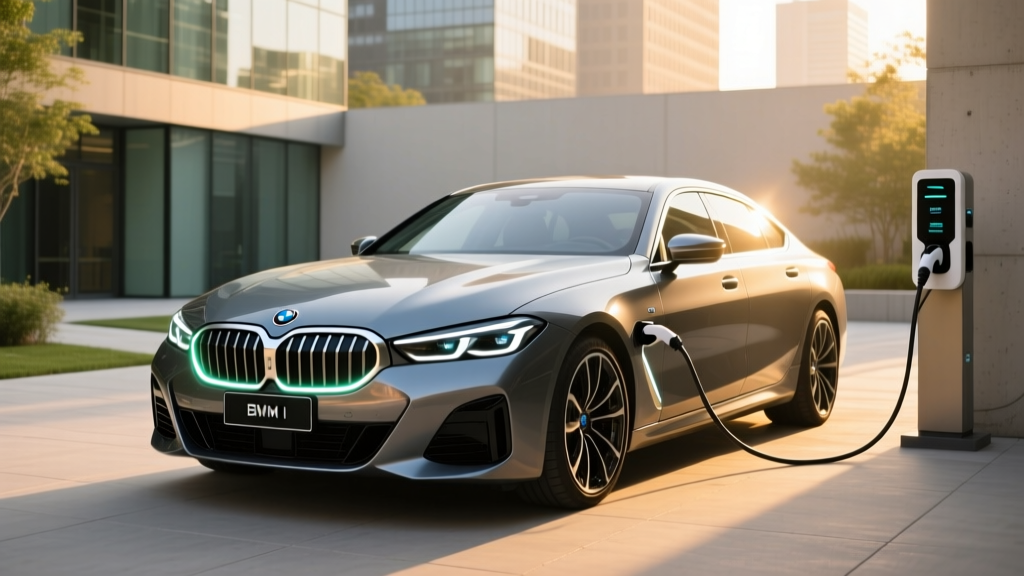
If you've been searching when did the i5 come out, the answer is straightforward: the BMW i5 launched in the United States as a 2024 model-year vehicle, with customer deliveries beginning in October 2023. BMW unveiled the all-electric 5 Series sedan globally in May 2023 alongside its combustion counterpart, positioning it as the executive EV to bridge the gap between the compact i4 and the flagship i7.
Now in its third model year for 2026, the i5 has matured with software updates, refined pricing, and continued competition from the Mercedes-Benz EQE, Tesla Model S, and Audi e-tron GT. Here's the complete ownership picture — range, charging, pricing, tax credits, and whether it's worth your garage space.
2026 BMW i5 Core Specifications at a Glance
| Specification | i5 eDrive40 | i5 xDrive40 | i5 M60 |
|---|---|---|---|
| Drivetrain | RWD (single motor) | AWD (dual motor) | AWD (dual motor) |
| Horsepower | 335 hp | 389 hp | 593 hp |
| 0-60 mph | 5.7 sec | 5.2 sec | 3.7 sec |
| Battery (usable) | 81.2 kWh (NMC) | 81.2 kWh (NMC) | 81.2 kWh (NMC) |
| EPA Range | 295 mi | 263 mi | 256 mi |
| MPGe (combined) | 99 MPGe | 89 MPGe | 86 MPGe |
| Efficiency | 34 kWh/100 mi | 38 kWh/100 mi | 39 kWh/100 mi |
| Max DC Charge Rate | 205 kW | 205 kW | 205 kW |
| 10-80% DC Time | ~30 min | ~30 min | ~30 min |
| Level 2 (11 kW) | ~30 mi/hr | ~30 mi/hr | ~30 mi/hr |
| Base MSRP | $71,200 | $74,200 | $88,200 |
Source: fueleconomy.gov and BMW USA specifications. Prices exclude $995 destination.
Real-World Range: What to Expect Beyond the EPA Sticker
Real-World Highway (70 mph, mild weather): ~245-265 miles (eDrive40)
Cold Weather (below 32°F, mixed driving): ~200-230 miles (eDrive40)
City/Commuter (regenerative braking, mild temps): ~280-300+ miles
The i5 eDrive40's 295-mile EPA rating is competitive for the luxury EV sedan segment, but real-world results depend heavily on your driving profile. The i5 uses an 81.2 kWh usable battery pack built with NMC (nickel manganese cobalt) chemistry — chosen for its higher energy density over LFP, though it requires more careful thermal management and benefits from the 10-80% daily charging recommendation for longevity.
On a 300-mile highway loop at 70-75 mph in 65°F conditions, expect the eDrive40 to deliver roughly 245-265 miles before needing a charge. The car's aerodynamic efficiency (0.23 Cd) helps, but highway speeds still penalize all EVs. In winter conditions, NMC chemistry combined with the i5's heat pump (standard equipment) limits cold-weather losses to roughly 20-25% — better than many competitors without heat pumps, but still meaningful on longer winter road trips.
For city commuters leveraging regenerative braking, the i5 can actually approach or slightly exceed its EPA number, as stop-and-go driving recaptures energy that highway driving cannot.
Charging Speed: DC Fast Charge and Home Level 2
The BMW i5 supports a peak DC fast-charge rate of 205 kW via its CCS1 connector (NACS adapter available through BMW for Tesla Supercharger access). Here's how that translates to real charging sessions:
| Charging Level | Power | Speed | Best Use Case |
|---|---|---|---|
| Level 1 (120V) | ~1.4 kW | ~4 mi/hr | Emergency/overnight trickle |
| Level 2 (240V, 48A) | 11 kW | ~30 mi/hr | Daily home charging |
| DC Fast Charge | Peak 205 kW | 10-80% in ~30 min | Road trips |
The 205 kW peak rate is strong but not class-leading — the Hyundai Ioniq 6 peaks at 240 kW, and Lucid Air exceeds 300 kW. However, BMW's charge curve management is disciplined: the i5 sustains above 150 kW through roughly 50% State of Charge before tapering. Preconditioning the battery (automatic when a DC fast charger is set as your navigation destination) is essential to achieving peak rates. Without preconditioning, a cold battery may peak at only 100-120 kW, adding 10-15 minutes to your stop.
For home Level 2 charging, the i5's onboard charger accepts up to 11 kW (48 amps on a 240V/60A circuit). A full 0-100% charge takes approximately 8.5 hours — ideal for overnight replenishment. Home installation of a Level 2 charger typically costs $500-$2,000 depending on panel capacity and run length; budget for a potential $1,500-$3,000 panel upgrade if your home has a 100A service.
Pricing, Trims, and Federal Tax Credit Eligibility
| Trim | Base MSRP | As-Tested (typical) | §30D Credit Eligible? |
|---|---|---|---|
| i5 eDrive40 | $71,200 | $76,000-$82,000 | No (MSRP cap) |
| i5 xDrive40 | $74,200 | $79,000-$85,000 | No (MSRP cap) |
| i5 M60 | $88,200 | $95,000-$105,000 | No (MSRP cap) |
The BMW i5 does not qualify for the $7,500 federal EV tax credit under IRS §30D. The reason: the federal credit imposes an MSRP cap of $55,000 for sedans (and $80,000 for SUVs/trucks/vans). Since the i5 is classified as a sedan and starts at $71,200, it exceeds the threshold across all trims. (IRS §30D rules.)
Additionally, §30D has buyer income caps ($150,000 single / $300,000 joint filers) and battery critical-mineral sourcing requirements — but the MSRP cap alone disqualifies the i5 regardless of income. Buyers should investigate state and local incentives (California's CVRP, Colorado's state credit, utility rebates) which may still apply. Some states offer credits up to $5,000-$7,500 that are not bound by the federal MSRP cap. Consult your state's energy office or a tax professional for current eligibility.
The i5 also qualifies for BMW's leasing programs, where the commercial clean vehicle credit (§45W) can sometimes be passed through as a lease discount — a workaround worth discussing with your local BMW dealer.
Performance and Driving Dynamics
The i5 rides on BMW's CLAR platform (shared with the 5 Series and i7), delivering the composed, planted ride quality BMW buyers expect. The eDrive40's rear-wheel-drive layout and 335 hp produce a 5.7-second 0-60 mph time — brisk but not thrilling. The xDrive40 adds a front motor for all-wheel drive and 389 hp, dropping to 5.2 seconds. The M60, with 593 hp and launch control, hits 60 mph in 3.7 seconds — firmly sports-sedan territory.
All trims feature adaptive suspension (standard on M60, optional on lower trims via the Dynamic Handling Package). Rear-axle air suspension is standard, keeping the ride level under load and absorbing highway imperfections effectively. The steering is precise if slightly numb — typical of modern BMW electric power steering — and the regenerative braking offers both adaptive and one-pedal driving modes.
Interior, Technology, and Cargo Space
The i5's cabin represents a significant tech leap over the previous-generation 5 Series:
- Curved Display: 12.3-inch digital instrument cluster merged with a 14.9-inch central touchscreen running BMW iDrive 8.5
- Interaction Bar: Crystalline ambient light strip spanning the dashboard with touch-sensitive climate controls
- Highway Assistant: BMW's Level 2 driver-assistance system (hands-free up to 85 mph on divided highways — eyes must remain on road)
- Connectivity: Wireless Apple CarPlay/Android Auto, 5G-capable Wi-Fi hotspot, over-the-air updates
Cargo and Passenger Dimensions:
- Trunk: 17.4 cu ft (competitive with the Mercedes EQE's 15 cu ft, trails the Tesla Model S's 28 cu ft hatch)
- Front legroom: 41.3 inches
- Rear legroom: 36.6 inches (generous for the segment; the Tesla Model S offers 35.4 inches)
- No front trunk (frunk) — the i5's CLAR platform architecture does not accommodate one
The absence of a frunk and the conventional trunk (rather than a hatchback/liftback) are notable drawbacks for buyers who prioritize cargo versatility. The Tesla Model S and Audi e-tron GT both offer hatchback or liftback designs with significantly more usable space.
Pros and Cons
Pros
- Excellent ride quality and cabin refinement
- Standard heat pump limits cold-weather range loss
- iDrive 8.5 is responsive and feature-rich
- Competitive 295-mile EPA range (eDrive40)
- Strong build quality and materials
- BMW Highway Assistant (hands-free Level 2) well-executed
Cons
- No federal §30D tax credit (MSRP exceeds sedan cap)
- No frunk; trunk-only cargo limits versatility
- Conventional sedan trunk opening (not a hatchback)
- 205 kW peak DC charge rate trails Ioniq 6 and Lucid Air
- Base price above $71,000 before options
- Heavy: ~5,300 lbs affects tire wear and handling agility
Who Should Buy the BMW i5?
The BMW i5 is best suited for:
- Executive commuters who prioritize cabin quietness, ride quality, and brand prestige over maximum range or cargo space
- BMW loyalists transitioning from a 5 Series who want an EV without learning a new interface or ecosystem
- Cold-climate buyers who benefit from the standard heat pump and preconditioning features
- Home chargers with reliable Level 2 access who rarely need public DC fast charging
It is not ideal for buyers who need maximum cargo space (look at the Tesla Model S or Genesis Electrified G80), who want the lowest possible price point (consider the Hyundai Ioniq 6), or who require federal tax credit eligibility to make the math work.
BMW i5 vs. Key Competitors
| Attribute | BMW i5 eDrive40 | Mercedes EQE 350+ | Tesla Model S LR |
|---|---|---|---|
| EPA Range | 295 mi | 305 mi | 402 mi |
| Base MSRP | $71,200 | $74,900 | $79,990 |
| Max DC Charge | 205 kW | 170 kW | 250 kW |
| Cargo Volume | 17.4 cu ft | 15.0 cu ft | 28.0 cu ft |
| 0-60 mph | 5.7 sec | 6.2 sec | 3.1 sec |
| §30D Eligible | No | No | No |
The Model S wins on range, cargo, and performance but costs more and has a polarizing interior. The EQE trails on charging speed and cargo but matches the i5 on luxury. The i5 occupies a strong middle ground — especially for buyers who value driving dynamics and BMW's dealer/service network.
Warranty Coverage
- New Vehicle: 4 years / 50,000 miles
- Battery Pack: 8 years / 100,000 miles (retains ≥70% capacity)
- Powertrain: 4 years / 50,000 miles
- Corrosion: 12 years / unlimited miles
- Complimentary Maintenance: 3 years / 36,000 miles
BMW's battery warranty is industry-standard. The 70% capacity retention threshold at 8 years/100,000 miles means that if your pack degrades below that benchmark within the warranty period, BMW will repair or replace it. Real-world NMC degradation data from similar BMW platforms (i4, iX) suggests typical loss of 8-12% over the first 100,000 miles under normal use — well within the warranty buffer.
Frequently Asked Questions
When did the BMW i5 first come out?
The BMW i5 was globally unveiled in May 2023 and went on sale in the US as a 2024 model year vehicle, with first customer deliveries in October 2023.
What is the real-world range of the BMW i5?
The eDrive40's EPA rating is 295 miles. In real-world highway driving at 70 mph, expect 245-265 miles. In cold weather (below freezing), expect 200-230 miles. City commuters using regenerative braking may approach or exceed 295 miles.
How fast does the BMW i5 charge?
On a DC fast charger, the i5 peaks at 205 kW and charges from 10-80% in approximately 30 minutes (with battery preconditioning). At home on a Level 2 charger (11 kW / 48A), it adds about 30 miles of range per hour, with a full charge taking ~8.5 hours.
Does the BMW i5 qualify for the federal EV tax credit?
No. The i5 exceeds the §30D MSRP cap of $55,000 for sedans (it starts at $71,200). It is ineligible for the $7,500 federal credit regardless of buyer income. State incentives and lease credit pass-throughs may still apply.
Is the BMW i5 worth buying over the Tesla Model S or Mercedes EQE?
The i5 is worth considering if you prioritize ride refinement, cabin quality, and BMW's dealer network over maximum range or cargo versatility. The Model S wins on range (402 mi) and cargo (28 cu ft hatchback) but costs more. The EQE is slightly less efficient and slower to charge. Test-drive all three — the i5's driving dynamics often win in person.
Does the BMW i5 have a frunk?
No. The i5 does not have a front trunk. All cargo space is in the rear trunk (17.4 cu ft). The CLAR platform's architecture, shared with combustion 5 Series models, does not provide space for a frunk.
What is the BMW i5's battery chemistry?
The i5 uses NMC (nickel manganese cobalt) lithium-ion cells with 81.2 kWh of usable capacity. NMC offers higher energy density than LFP but benefits from daily charging to 80-90% rather than 100% for optimal long-term health.
Sources: fueleconomy.gov, BMW USA, IRS.gov §30D