BMW i4 at a Glance: Warranty, Range, and Value
The BMW i4 slots into the luxury electric sedan segment as the automaker's answer to the Tesla Model 3 and Hyundai Ioniq 6 — a sporty, rear-wheel-drive-biased four-door built on BMW's CLAR platform (shared with the 4 Series Gran Coupe). For 2026, the i4 lineup carries over with meaningful battery and software updates, but the question many shoppers research before pulling the trigger is ownership security: What exactly does the BMW i4 warranty cover, and does the total package justify the premium price tag?
This review breaks down the 2026 BMW i4 across every metric that matters to EV buyers — from real-world range and DC fast-charging curves to the fine print of BMW's battery and bumper-to-bumper coverage, plus whether you can still capture the federal tax credit under current IRS §30D rules.
| Spec | eDrive40 | xDrive40 | M50 |
|---|---|---|---|
| EPA Range | 307 mi | 282 mi | 269 mi |
| Battery (gross / usable) | 83.9 kWh / ~81.5 kWh | 83.9 kWh / ~81.5 kWh | 83.9 kWh / ~81.5 kWh |
| Chemistry | NMC (Nickel Manganese Cobalt) | NMC | NMC |
| Drivetrain | RWD (single motor) | AWD (dual motor) | AWD (dual motor) |
| Horsepower | 335 hp | 396 hp | 536 hp |
| 0–60 mph | 5.5 sec | 4.6 sec | 3.7 sec |
| Max DC Fast Charge | 205 kW (CCS) | 205 kW (CCS) | 205 kW (CCS) |
| 10–80% DC Time | ~31 min | ~31 min | ~31 min |
| Level 2 AC Rate | 11 kW (~37 mi/hr) | 11 kW (~37 mi/hr) | 11 kW (~37 mi/hr) |
| MPGe (combined) | 109 MPGe | 98 MPGe | 89 MPGe |
| Base MSRP | $52,200 | $56,200 | $67,100 |
BMW i4 Warranty Coverage: What's Protected and for How Long
The search for "BMW i4 warranty" usually centers on one fear: battery replacement cost. Here's exactly what BMW covers on the 2026 i4, split by system.
High-Voltage Battery Warranty
BMW provides an 8-year / 100,000-mile limited warranty on the i4's high-voltage traction battery, whichever comes first. This is the federally mandated minimum for EV batteries and matches what most competitors offer (Tesla, Hyundai, Ford). The warranty guarantees that the battery will retain at least 70% of its original usable capacity during the coverage period. If degradation falls below that threshold under normal use, BMW will repair or replace the pack at no cost.
Important nuances: the warranty does not cover capacity loss from repeated DC fast charging at maximum rates exclusively, prolonged storage at 0% or 100% state of charge, or aftermarket modifications to the battery management system. BMW's battery management software includes a top and bottom buffer (roughly 2.4 kWh combined) to protect the NMC cells from deep cycling damage — a design choice that slightly reduces advertised capacity but meaningfully extends long-term cell health.
Powertrain & Bumper-to-Bumper Coverage
- New Vehicle Limited Warranty: 4 years / 50,000 miles (bumper-to-bumper). This is shorter than Hyundai's 5/60,000 or Genesis's 5/60,000, and matches the typical German luxury standard (Mercedes, Audi).
- Electric Drive Unit Warranty: Covered under the 8-year / 100,000-mile powertrain umbrella alongside the battery.
- Corrosion Perforation Warranty: 12 years / unlimited miles.
- Roadside Assistance: 4 years / unlimited miles, includes out-of-charge towing to the nearest charger or BMW dealer.
Maintenance & Service Programs
BMW includes 3 years / 36,000 miles of complimentary scheduled maintenance through BMW Ultimate Care. This covers brake fluid checks, cabin microfilter replacement, and vehicle inspections. Notably, this does not cover wear items like brake pads or tires — though EVs typically see extended brake pad life thanks to regenerative braking.
Range and Efficiency: EPA vs. the Real World
The 2026 BMW i4 eDrive40 earns an EPA-estimated 307 miles on a full charge when equipped with the standard 18-inch wheels. Opt for the larger 19- or 20-inch M Sport wheels and that number drops to approximately 270–280 miles due to increased rolling resistance and aerodynamic drag. The dual-motor xDrive40 and M50 trims sacrifice range for performance, landing at 282 and 269 miles respectively.
Efficiency figures from fueleconomy.gov show the eDrive40 achieving 109 MPGe combined (31 kWh/100mi), which trails the Tesla Model 3 Long Range (132 MPGe) and Hyundai Ioniq 6 (140 MPGe) due to the i4's heavier curb weight (~4,770 lbs) and less aerodynamically optimized body shape inherited from the 4 Series Gran Coupe.
Charging Speed: DC Fast Charge and Home Level 2
Charging speed remains one of the i4's weaker competitive points. The 2026 model peaks at 205 kW on a CCS DC fast charger — adequate, but behind the Hyundai Ioniq 5/6 (up to 240 kW on 800V architecture) and the Tesla Model 3 (250 kW on V3 Superchargers).
| Charging Method | Max Rate | Speed | Notes |
|---|---|---|---|
| Level 1 (120V household) | ~1.4 kW | ~4 mi/hr | Emergency/trickle only; full charge in ~60+ hrs |
| Level 2 (240V home) | 11 kW | ~37 mi/hr | Full charge in ~8.5 hrs; requires 48A circuit |
| DC Fast Charge (CCS) | 205 kW peak | 10–80% in ~31 min | Sustained rate ~130 kW avg; tapers sharply above 80% |
A critical detail on the DC charging curve: the i4 hits peak 205 kW only between roughly 10–30% state of charge. From 30–60%, it sustains around 150–165 kW, and from 60–80%, it drops to approximately 80–100 kW. This means the advertised 10–80% time of 31 minutes assumes optimal battery preconditioning (navigating to a charger via the iDrive system triggers thermal prep automatically). Without preconditioning — for instance, arriving at a charger after the car has been sitting cold — expect the 10–80% session to stretch to 40–45 minutes.
For home Level 2 charging, the i4's 11 kW onboard charger is a bright spot. On a properly installed 48-amp, 240-volt circuit (60-amp breaker), you'll add roughly 37 miles of range per hour, meaning an overnight session from 20% to full takes about 7–8 hours. BMW offers its Wallbox Plus charger, but any quality J1772 Level 2 unit (ChargePoint Home Flex, Emporia Vue, Tesla Universal Wall Connector with J1772 adapter) works identically.
Pricing, Trims, and Federal Tax Credit Eligibility
The 2026 BMW i4 starts at $52,200 for the eDrive40 (including destination), placing it squarely above the IRS §30D MSRP cap of $55,000 for sedans. This is the single biggest ownership-cost issue to understand before purchase.
| Trim | Base MSRP | §30D Credit Eligible? | Effective Price (if eligible) |
|---|---|---|---|
| eDrive40 | $52,200 | Yes (under $55K sedan cap) | ~$44,700 (if full $7,500 credit applies) |
| xDrive40 | $56,200 | No (exceeds $55K sedan cap) | $56,200 |
| M50 | $67,100 | No (exceeds $55K sedan cap) | $67,100 |
Under current IRS §30D rules, only the base eDrive40 has a path to the federal tax credit — and even then, eligibility depends on multiple factors:
- Vehicle MSRP must be ≤ $55,000 for sedans (eDrive40 qualifies at $52,200)
- Buyer AGI must not exceed $150,000 (single) / $300,000 (married filing jointly)
- Battery critical minerals and components must meet phased-in sourcing thresholds (check BMW's current compliance status at purchase — this changes by model year and production batch)
- Credit can now be transferred to the dealer at point of sale for an instant price reduction, per 2024+ rules
- Consult a tax professional — individual eligibility varies, and IRS sourcing requirements update periodically
A well-equipped eDrive40 with the Premium Package, larger wheels, and metallic paint will push past $55,000 — eliminating credit eligibility on your specific vehicle even if the base trim qualifies. Structure your build carefully if the credit is a deciding factor.
Interior, Cargo, and Daily Usability
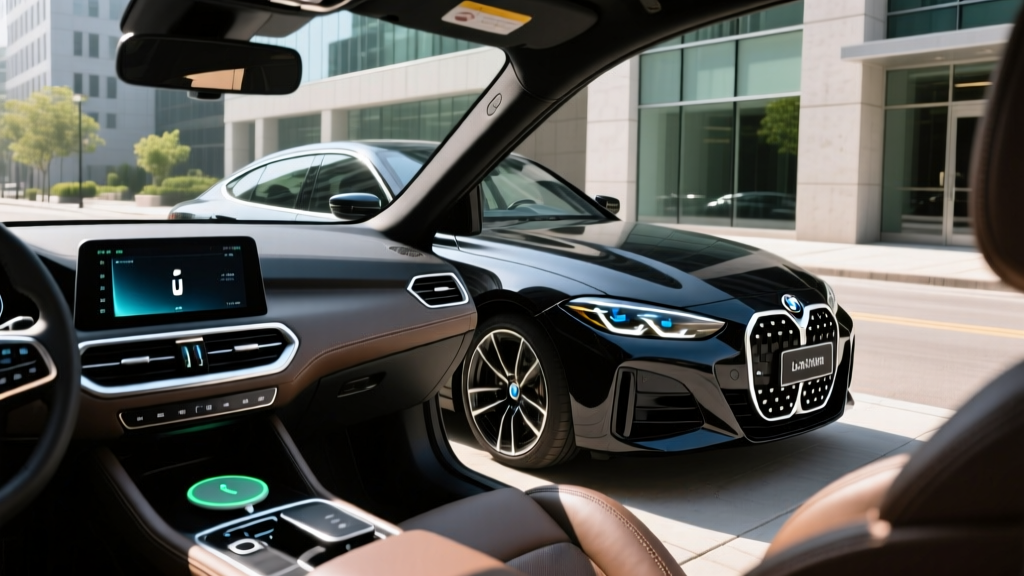
The i4 interior is a strong suit if you value traditional luxury over minimalist EV design. BMW's curved display merges a 12.3-inch instrument cluster with a 14.9-inch infotainment touchscreen running iDrive 8.5. Wireless Apple CarPlay and Android Auto are standard, along with a head-up display on most trims.
However, because the i4 rides on a modified ICE platform rather than a dedicated EV skateboard, packaging suffers compared to purpose-built rivals:
- Cargo volume: 16.6 cu ft (liftback hatch) — generous for a sportback, but less than the Tesla Model 3's combined trunk + frunk (23 cu ft total). The i4 has no front trunk (frunk).
- Rear legroom: 35.1 inches — adequate for adults on short trips, but tighter than the Hyundai Ioniq 6 (38.4 in) and noticeably less spacious than the Tesla Model 3 (35.3 in, but with a flatter floor).
- Center floor hump: A pronounced rear floor tunnel (a relic of the shared platform's driveshaft tunnel) makes the rear center seat uncomfortable for a fifth passenger.
Driver-assistance tech includes BMW's Driving Assistant Professional, which offers adaptive cruise control with stop-and-go, lane-keeping, and automatic lane-change assistance. This is a SAE Level 2 system — the driver must remain engaged with hands on the wheel at all times. It is not autonomous driving. BMW's Highway Assistant (hands-off up to 85 mph on divided highways, with eyes-on-camera monitoring) is available on higher trims and is competitive with GM's Super Cruise for highway commuting.
How Does the BMW i4 Compare to Key Competitors?
✅ Pros
- Excellent build quality, materials, and cabin quietness
- Engaging driving dynamics (RWD-biased, low center of gravity)
- Strong 205 kW DC charging with battery preconditioning
- Industry-standard 8-yr/100,000-mi battery warranty
- Familiar luxury sedan ergonomics — no EV learning curve
- Heat pump standard for better cold-weather efficiency
❌ Cons
- Base price above $52K; most builds exceed $55K tax credit cap
- No frunk; cargo and rear space trail dedicated EV platforms
- CCS-only charging (no native NACS); requires adapter for Tesla Superchargers
- Efficiency (MPGe) lags Tesla Model 3 and Hyundai Ioniq 6
- 4-year/50,000-mi bumper-to-bumper is short vs. Hyundai (5/60K) and Genesis (5/60K)
- Charging curve tapers hard above 80% SoC
Who Should Buy the 2026 BMW i4?
- Choose the BMW i4 if: You want a premium driving experience with traditional luxury sedan ergonomics, value cabin quality and brand cachet, primarily commute on highways, and can charge at home overnight. The eDrive40 is the value pick for credit eligibility.
- Choose the Tesla Model 3 Long Range instead if: Maximum efficiency, Supercharger network access (NACS native), lower starting price (~$42K), and stronger federal credit eligibility matter more than interior materials.
- Choose the Hyundai Ioniq 6 instead if: You want the fastest charging in class (800V architecture, ~18 min 10–80%), best-in-class MPGe (140), and a more affordable entry point (~$38K) — accepting a less premium badge.
- Choose the BMW i4 M50 if: You want 536 hp and M-car acceleration in an electric package and aren't concerned about tax credits or range maximization.
The BMW i4 warranty package — 8 years/100,000 miles on the high-voltage battery and drive unit — provides genuine peace of mind for long-term ownership, and BMW's NMC cells with conservative buffer management should deliver reliable capacity retention over 150,000+ miles. The car's weakness isn't reliability risk; it's value proposition. Between the $55K MSRP cap, battery-sourcing rules that may limit credit eligibility even on the base trim, and competitors offering more range, faster charging, and more interior space for less money, the i4 wins on driving feel and luxury execution rather than spec-sheet dominance.
Frequently Asked Questions
What is the real-world range of the 2026 BMW i4 eDrive40?
The EPA rates the eDrive40 at 307 miles (18-inch wheels). In real-world highway driving at 75 mph, expect 255–275 miles. In freezing temperatures, plan for 215–245 miles. The xDrive40 and M50 deliver less: roughly 235–260 miles highway and 195–225 miles in cold weather, respectively.
How fast does the BMW i4 charge at home and on DC fast chargers?
On a 48-amp Level 2 home charger (240V), the i4 charges at 11 kW, adding about 37 miles of range per hour — a full charge from empty takes roughly 8.5 hours. On a DC fast charger, it peaks at 205 kW and charges from 10–80% in approximately 31 minutes with battery preconditioning active.
Does the 2026 BMW i4 qualify for the $7,500 federal EV tax credit?
Only the base eDrive40 (MSRP $52,200) falls under the $55,000 sedan MSRP cap required by IRS §30D. The xDrive40 and M50 do not qualify regardless of buyer income. Even for the eDrive40, eligibility depends on buyer AGI limits ($150K single / $300K joint) and BMW's current battery component and critical mineral sourcing compliance. Always verify with a tax professional and the IRS clean vehicle credit page before purchase.
How long will the BMW i4 battery last before needing replacement?
BMW's NMC cells, managed with a conservative top/bottom buffer, are designed to retain above 70% capacity through the 8-year/100,000-mile warranty period. Industry data from similar NMC packs (Tesla Model 3, Hyundai Ioniq 5) suggests 85–92% capacity retention at 100,000 miles under normal mixed use. Full battery replacement outside warranty is estimated at $12,000–$18,000, though individual cell module repairs are often possible at lower cost.
Is the BMW i4 worth buying over the Tesla Model 3 or Hyundai Ioniq 6?
The i4 is worth buying if cabin luxury, brand prestige, and BMW's driving dynamics are your top priorities. If you optimize for efficiency, charging speed, range per dollar, or federal tax credit certainty, the Tesla Model 3 Long Range and Hyundai Ioniq 6 offer objectively stronger spec sheets at lower prices. The i4 is a luxury-first EV; its competitors are efficiency-first EVs.