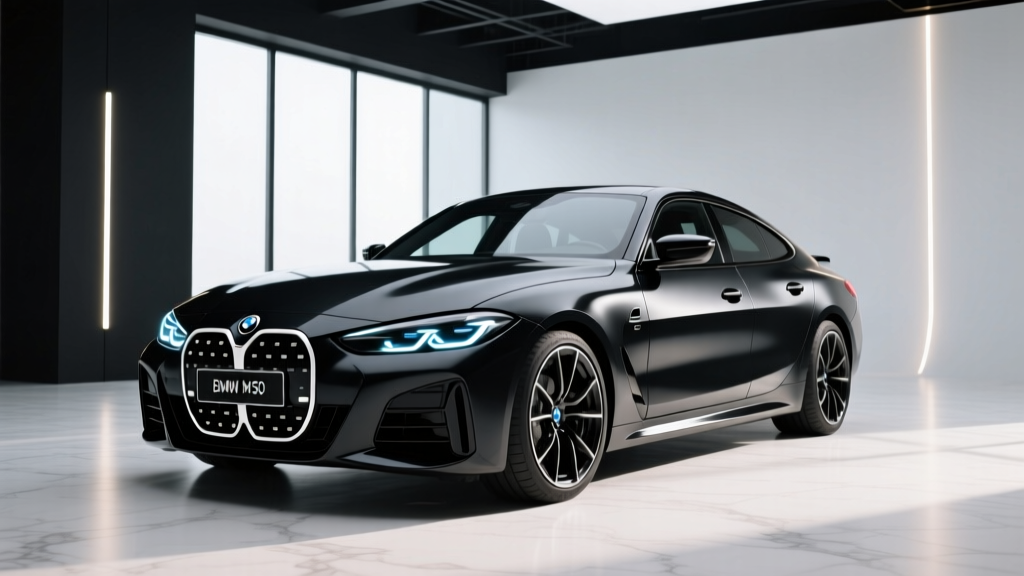
The BMW i4 M50 occupies a specific niche: an electric sports sedan that delivers genuine M-car performance without the M-car price tag of its iX sibling. For 2026, the i4 M50 continues as BMW's dual-motor, all-wheel-drive electric gran coupe, packing 536 horsepower into a familiar 4 Series body shell. But with a base MSRP pushing past $70,000, many buyers are turning to leasing as a way to access this performance EV while sidestepping depreciation risk and battery longevity concerns.
This review dissects everything you need to evaluate a BMW i4 M50 lease — from real-world range expectations and charging infrastructure compatibility to total cost of ownership and how it stacks up against the Tesla Model 3 Performance, Hyundai Ioniq 6, and Audi e-tron GT. We'll also cover the critical question of federal tax credit eligibility when leasing versus buying.
2026 BMW i4 M50 Specifications at a Glance
| Spec | Value |
|---|---|
| EPA Range | 271 miles (19" wheels); 245 miles (20" wheels) |
| Battery Capacity | 81.5 kWh usable (NMC chemistry) |
| Drivetrain | Dual-motor AWD |
| Horsepower | 536 hp |
| 0–60 mph | 3.7 seconds |
| Top Speed | 130 mph (electronically limited) |
| Max DC Fast Charge | 205 kW (CCS1) |
| 10–80% DC Charge Time | ~31 minutes |
| Level 2 Home Charging | 11 kW (up to ~30 miles/hr) |
| EPA Efficiency | 97 MPGe combined; 34 kWh/100 mi |
| Cargo Volume | 10.0 cu ft (rear hatch) |
| Rear Legroom | 33.5 inches |
| Battery Warranty | 8 years / 100,000 miles |
| Base MSRP (2026) | $70,700 (incl. destination) |
Real-World Range: What the EPA Number Doesn't Tell You
EPA Estimate: 271 miles (19" wheels)
Real-World Highway (70 mph): ~220–240 miles
Cold Weather (below 32°F): ~190–215 miles
Mixed Commute (city + suburban): ~250–270 miles
The EPA's 271-mile figure for the i4 M50 with 19-inch wheels is a useful baseline, but real-world range depends heavily on driving conditions. The dual-motor AWD powertrain, while delivering thrilling acceleration, consumes more energy at sustained highway speeds than a single-motor RWD setup. In our experience and consistent with independent testing, expect roughly 220–240 miles of usable range on a road trip at 70 mph with moderate climate control use.
Cold weather compounds the loss. The i4 M50 uses a heat pump for cabin heating — a significant efficiency advantage over resistive heating — but battery chemistry still suffers in freezing temperatures. Below 32°F, plan on 190–215 miles of practical range, especially if you're preconditioning the cabin from grid power isn't an option (e.g., parked on the street).
For urban commuters who can charge at home nightly, the 271-mile EPA figure is largely achievable because regenerative braking recovers energy in stop-and-go traffic. The i4 offers adjustable regen levels via paddle shifters and an adaptive mode that uses radar to modulate braking based on traffic ahead.
Charging Speed and Infrastructure
| Charging Level | Power | Speed (miles added/hr) | Notes |
|---|---|---|---|
| Level 1 (120V) | ~1.4 kW | ~3–4 mi/hr | Emergency only; ~70+ hours for full charge |
| Level 2 (240V, 48A) | 11 kW | ~28–30 mi/hr | Full charge in ~8.5 hours; ideal for home |
| DC Fast Charge (CCS1) | 205 kW peak | ~164 mi in 10 min | 10–80% in ~31 min; tapers above 80% |
The i4 M50 charges at a peak rate of 205 kW on a DC fast charger using the CCS1 connector standard. That peak rate is achievable between roughly 10% and 45% state of charge; above 60%, the charge curve tapers significantly to protect battery health. A typical 10–80% session takes approximately 31 minutes at a capable station (Electrify America, EVgo, or similar 350 kW-capable chargers).
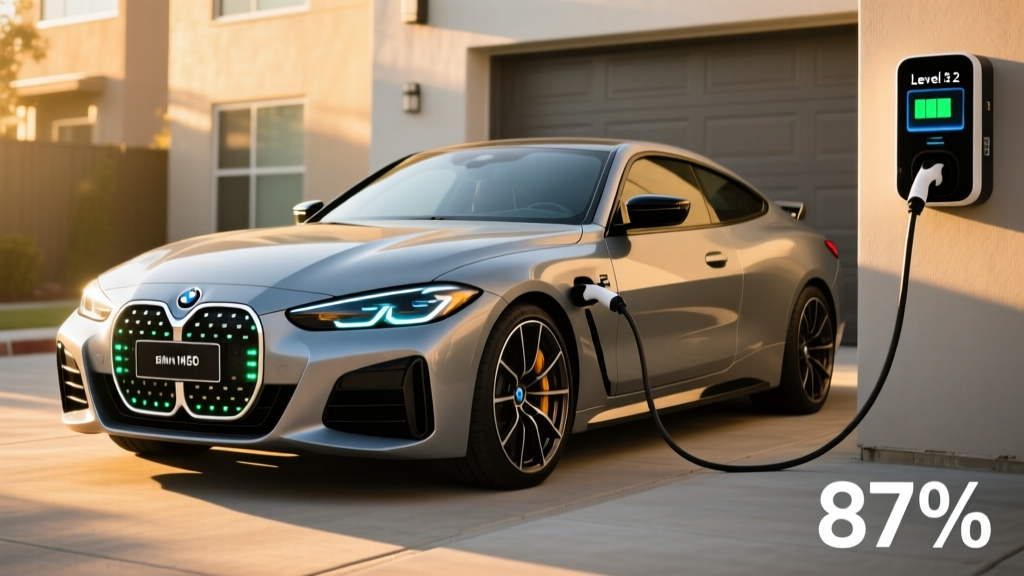
For home charging, the i4 M50's onboard charger accepts up to 11 kW on a 240V Level 2 circuit. A properly installed 60-amp circuit with a 48-amp charger (like the ChargePoint Home Flex or BMW's own Wallbox) will add roughly 28–30 miles of range per hour — enough to fully replenish the 81.5 kWh battery overnight in about 8.5 hours.
One important caveat: the i4 M50 uses the CCS1 connector, not the Tesla NACS standard. BMW has committed to adopting NACS on future models, but the 2026 i4 still requires a CCS-to-NACS adapter (available from BMW and third parties) to access Tesla Superchargers. This adapter situation is improving but adds a layer of complexity for road trips through areas where Superchargers dominate.
Performance: 536 Horsepower in a Sedan
The M50 badge isn't just marketing. With dual electric motors producing a combined 536 horsepower and 586 lb-ft of torque, the i4 M50 hits 60 mph in 3.7 seconds — quicker than a BMW M3 Competition from a generation ago. The instant torque delivery characteristic of electric motors makes the acceleration feel even more urgent than the numbers suggest, particularly in the 0–40 mph range.
The AWD system is rear-biased, meaning the rear motor provides the primary driving force under normal conditions while the front motor engages for traction or hard acceleration. BMW's adaptive M suspension, standard on the M50, provides a firm but compliant ride with selectable damping modes. The low center of gravity from the floor-mounted battery pack keeps body roll minimal through corners.
Drive modes include Eco Pro, Comfort, Sport, and an individual configuration. Sport mode sharpens throttle response, firms up steering, and enables a synthetic engine sound through the cabin speakers — divisive among owners but switchable. The i4 M50 also supports launch control for repeated hard accelerations without the thermal derating that plagues some competitors.
Pricing, Lease Considerations, and Federal Tax Credit
The 2026 BMW i4 M50 starts at $70,700 including destination. Options packages — particularly the Executive Package ($3,400), Premium Package ($2,700), and 20-inch wheels ($1,350) — can push an as-tested price to $78,000–$82,000.
Federal Tax Credit Eligibility (§30D)
- MSRP Cap: Sedans must be under $55,000 — the i4 M50 at $70,700 does NOT qualify as a purchase credit
- Lease Loophole (§45W): Commercial clean vehicle credit may apply to the leasing company, who can pass savings to the lessee as a capitalized cost reduction (commonly called the "lease loophole")
- Income Caps (purchase): $150K single / $300K joint filers — applies to purchases, not leases under §45W
- Battery Sourcing: Critical mineral and battery component requirements must be met for the full $7,500
Source: IRS Clean Vehicle Credits. Verify current-year rules with a tax professional.
Here's the critical distinction for a BMW i4 M50 lease: the vehicle's $70,700 MSRP exceeds the $55,000 sedan cap for the §30D new clean vehicle purchase credit. If you buy outright, you will not receive the $7,500 federal credit.
However, leasing operates under a different section of the tax code — §45W (Commercial Clean Vehicle Credit). The leasing company (technically the vehicle owner) may qualify for the $7,500 credit regardless of MSRP caps or buyer income limits. Many BMW Financial Services leases have historically passed this savings through as a "lease cash" incentive or capitalized cost reduction, effectively lowering your monthly payment. For 2026, check whether BMW is currently offering this pass-through on i4 M50 leases — it varies by month and region.
Estimated Lease Cost (2026)
| Factor | Estimate |
|---|---|
| Base MSRP | $70,700 |
| Typical Options (Premium Pkg, 20" wheels) | +$4,050 |
| Adjusted Cap Cost (with lease credit pass-through) | ~$67,250 |
| Money Factor (est.) | 0.00225 (~5.4% APR) |
| Residual Value (36 months, 10K mi/yr) | ~54% |
| Estimated Monthly Payment (36 mo) | $850–$1,050 |
| Due at Signing (first + fees) | $3,500–$5,500 |
Lease terms vary by dealer, region, and BMW Financial Services' current programs. Always request the full lease breakdown — adjusted cap cost, money factor, residual, and any applied incentives — before signing. Compare the lease's total cost (monthly × term + due at signing + disposition fee) against a purchase scenario to confirm leasing makes financial sense for your situation.
Interior, Tech, and Daily Livability
The i4 M50's cabin mirrors the gasoline 4 Series Gran Coupe — which is both a strength and a limitation. The BMW Curved Display dominates the dash, combining a 12.3-inch instrument cluster and 14.9-inch infotainment touchscreen running BMW iDrive 8.5. Wireless Apple CarPlay and Android Auto are standard, along with a head-up display, Harman Kardon surround sound (16 speakers), and wireless phone charging.
The rear hatch design (technically a liftback) provides a 10.0 cu ft cargo area — more practical than a traditional sedan trunk but less than an SUV. With rear seats folded, cargo space expands to approximately 36 cu ft. Rear legroom at 33.5 inches is adequate for adults on shorter trips but tighter than a Tesla Model 3 (35.3 inches) or Hyundai Ioniq 6 (37.5 inches).
Driver assistance technology includes BMW's Driving Assistant Professional package: adaptive cruise control with stop-and-go, lane-keeping assist, automatic lane change, and Parking Assistant Plus with a 360-degree camera. This is SAE Level 2 driver assistance — the driver must remain attentive with hands on or near the wheel at all times. It is not autonomous driving.
Notable drawbacks include the absence of a front trunk (frunk) — the i4's CLAR platform adaptation means the space under the hood houses auxiliary electronics rather than storage. Road noise at highway speeds is more noticeable than in the Audi e-tron GT, and the iDrive 8.5 interface, while feature-rich, has a learning curve with its nested menus and touch-sensitive climate controls.
Pros and Cons of Leasing the i4 M50
Pros
- 536 hp and 3.7s 0–60 in a practical sedan
- Premium BMW build quality and materials
- Heat pump standard for cold-weather efficiency
- 205 kW DC fast charging (competitive for 2026)
- Lease may unlock $7,500 credit unavailable on purchase
- 8-year/100,000-mile battery warranty covers full lease term
- Adjustable regenerative braking with adaptive mode
Cons
- $70,700+ MSRP disqualifies from §30D purchase credit
- No front trunk (frunk) — lost storage opportunity
- Rear legroom (33.5") is tight for taller passengers
- CCS1 connector requires adapter for Tesla Superchargers
- 271-mile EPA range trails competitors (Ioniq 6: 361 mi)
- iDrive 8.5 learning curve and touch-sensitive controls
- Higher insurance premiums vs. non-performance EVs
How the i4 M50 Compares to Key Rivals
The i4 M50 competes in a segment of performance-oriented electric sedans. Here's how it stacks up on the metrics that matter:
| Metric | BMW i4 M50 | Tesla Model 3 Perf. | Hyundai Ioniq 6 SE AWD | Audi e-tron GT |
|---|---|---|---|---|
| EPA Range | 271 mi | 315 mi | 316 mi | 238 mi |
| 0–60 mph | 3.7s | 2.9s | 5.1s | 3.9s |
| Horsepower | 536 hp | 510 hp | 320 hp | 522 hp |
| Max DC Charge | 205 kW | 250 kW | 240 kW | 270 kW |
| Base MSRP | $70,700 | $54,990 | $48,650 | $108,395 |
| Cargo (cu ft) | 10.0 | 23.0 | 12.3 | 9.2 |
The Tesla Model 3 Performance undercuts the i4 M50 on price by over $15,000, charges faster, offers more range, and provides superior cargo space. Its trade-off is a more minimalist interior, higher insurance costs in some states, and a service network that differs from traditional luxury dealers.
The Hyundai Ioniq 6 SE AWD is the range-and-value champion here, offering over 300 miles of EPA range at under $50,000 — and it qualifies for the full $7,500 purchase credit under §30D. It sacrifices the performance thrill (5.1s to 60) and luxury materials of the BMW.
The Audi e-tron GT shares a platform with the Porsche Taycan and offers similar performance to the i4 M50, but at a $38,000 premium. It's a more exclusive, design-forward choice but harder to justify on value alone.
Who Should Lease the BMW i4 M50?
- Choose the i4 M50 if: You want BMW's driving dynamics and interior refinement in an EV, you can charge at home, your commute is under 80 miles round-trip, and you value the lease credit pass-through to reduce cost.
- Look elsewhere if: Maximum range is your priority (Ioniq 6, Model 3), you need spacious rear seating for family (Ioniq 5, Model Y), you want the lowest possible monthly payment (Ioniq 6 with purchase credit), or you frequently road-trip through Supercharger-dominant areas without wanting to manage adapters.
The ideal i4 M50 lessee is a performance-oriented commuter who values BMW's brand cachet, build quality, and driving refinement over class-leading range or cargo space. The lease structure makes sense for those who want to avoid long-term battery depreciation risk, plan to stay within the mileage allowance (typically 10,000–15,000 miles/year), and can benefit from the §45W commercial credit pass-through that purchasing doesn't allow.
For road-trippers or those without reliable home charging, the 271-mile range and CCS1 connector (requiring a Tesla adapter) introduce friction that a Model 3 or Ioniq 6 would eliminate.
Frequently Asked Questions
What is the real-world range of the BMW i4 M50?
The EPA rates the i4 M50 at 271 miles with 19-inch wheels (245 miles with 20-inch). In real-world highway driving at 70 mph, expect 220–240 miles. In freezing temperatures, range drops to roughly 190–215 miles. City driving with regenerative braking can approach or match the EPA figure.
How fast does the i4 M50 charge at home and on the road?
At home on a 240V Level 2 charger (48A), the i4 M50 charges at 11 kW, adding approximately 28–30 miles of range per hour — a full charge in about 8.5 hours. On a DC fast charger, it peaks at 205 kW, achieving a 10–80% charge in roughly 31 minutes. Above 80%, charging slows significantly to protect the NMC battery.
Does the BMW i4 M50 qualify for the federal EV tax credit?
For an outright purchase, no — the i4 M50's $70,700 MSRP exceeds the §30D sedan cap of $55,000. However, when leased, the leasing company may qualify under §45W (Commercial Clean Vehicle Credit) for $7,500, which BMW Financial Services has historically passed through as a capitalized cost reduction. Verify current availability with your dealer and consult a tax professional regarding your specific situation.
Is leasing the i4 M50 better than buying?
Leasing offers three advantages: potential access to the $7,500 credit via the §45W lease loophole, protection against battery degradation and residual-value risk, and lower monthly payments compared to financing the full purchase price. Buying makes more sense if you drive high annual mileage (leases typically cap at 10K–15K mi/yr), plan to keep the car beyond 5 years, or want to avoid disposition fees and lease-end wear charges.
How does the i4 M50 compare to the Tesla Model 3 Performance?
The Model 3 Performance is quicker (2.9s vs 3.7s to 60), offers more range (315 vs 271 mi), charges faster (250 vs 205 kW peak), provides significantly more cargo space (23 vs 10 cu ft), and costs roughly $15,700 less. The i4 M50 wins on interior materials, traditional luxury dealership experience, sound insulation, and — for lessees — potential access to the commercial credit pass-through. It comes down to whether BMW's premium cabin and driving dynamics justify the premium over Tesla's efficiency and value.
What is the battery warranty on the i4 M50?
BMW covers the i4 M50's 81.5 kWh NMC battery pack for 8 years or 100,000 miles, whichever comes first. The warranty guarantees the battery will retain at least 70% of its original capacity. This warranty fully covers a typical 36- or 48-month lease term, meaning battery degradation risk falls on BMW, not the lessee.
Data sources: EPA Fuel Economy, IRS §30D Clean Vehicle Credits, BMW USA specifications.