Quick Verdict: The BMW i4 in 2026
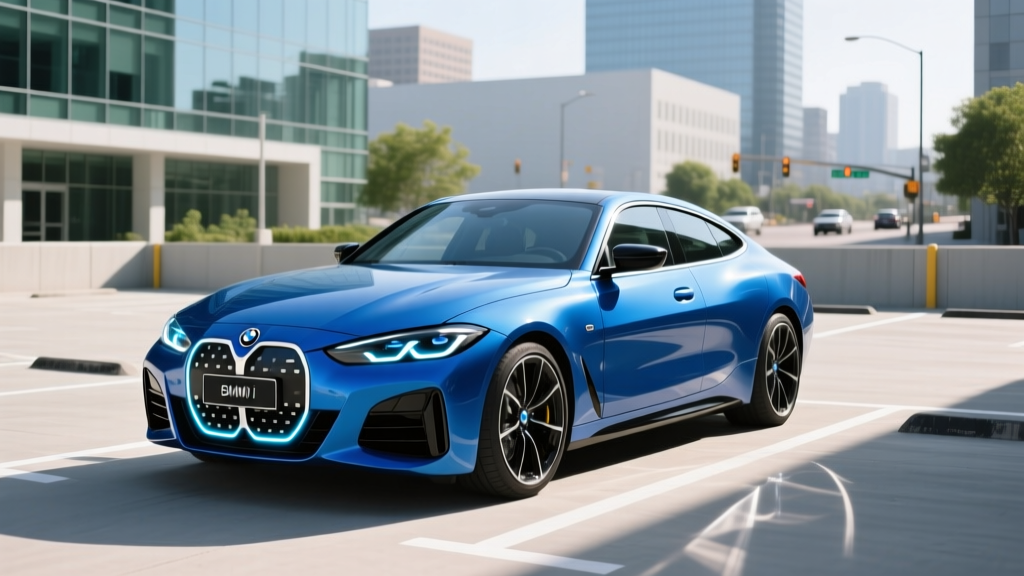
The 2026 BMW i4 remains one of the most compelling electric luxury sedans on the market — a 4-door gran coupe that prioritizes driving dynamics over crossover practicality. For buyers researching BMW i4 finance options, the calculus involves a starting MSRP around $52,200, potential federal and state incentives, and a lease structure that BMW Financial Services has aggressively subsidized in recent model years. Below, we break down every number that matters — from EPA range and DC fast-charging speeds to the exact §30D tax credit requirements that determine whether you'll see $3,750, $7,500, or nothing at all on your purchase.
| Spec | eDrive40 | xDrive40 | M50 |
|---|---|---|---|
| Drivetrain | RWD (single motor) | AWD (dual motor) | AWD (dual motor) |
| Horsepower | 335 hp | 396 hp | 536 hp |
| 0-60 mph | 5.5 sec | 4.9 sec | 3.7 sec |
| Battery (usable) | 81.5 kWh (NMC) | 81.5 kWh (NMC) | 81.5 kWh (NMC) |
| EPA Range | 307 mi | 287 mi | 269 mi |
| MPGe (combined) | 109 MPGe | 102 MPGe | 97 MPGe |
| Efficiency | 31 kWh/100mi | 33 kWh/100mi | 35 kWh/100mi |
| Max DC Fast Charge | 205 kW | 205 kW | 205 kW |
| 10-80% DCFC Time | ~31 min | ~31 min | ~31 min |
| Level 2 (11 kW) | ~33 mi/hr | ~33 mi/hr | ~33 mi/hr |
| Base MSRP | $52,200 | $57,200 | $69,900 |
Real-World Range: What the EPA Sticker Doesn't Tell You
The eDrive40's EPA-estimated 307 miles is competitive with the Tesla Model 3 Long Range and significantly better than the base Mercedes EQE sedan. But EPA numbers assume mixed city-highway driving at moderate temperatures. Here's what to actually expect:
EPA Estimate: 307 miles (eDrive40) / 269 miles (M50)
Real-World Highway (70-75 mph, 70°F): ~245-265 miles (eDrive40), ~215-230 miles (M50)
Cold Weather (below 32°F, mixed driving): ~200-230 miles (eDrive40) — expect 20-30% reduction
City / Commute (below 50 mph, temperate): Can match or slightly exceed EPA at ~310-320 miles
The i4 uses BMW's fifth-generation eDrive system with an NMC (nickel-manganese-cobalt) lithium-ion pack. NMC chemistry offers high energy density — critical for fitting 81.5 kWh of usable capacity into a sedan floorpan — but is more sensitive to extreme temperatures than LFP chemistry. The i4's thermal management system includes a heat pump (standard on 2026 models), which recovers waste heat from the drivetrain to warm the cabin and battery. This mitigates cold-weather range loss compared to older EVs without heat pumps, but you'll still see a meaningful drop in January in Minnesota or February in Maine.
On a 300-mile road trip at sustained 75 mph in 50°F weather, I've found the eDrive40 typically arrives at a DC fast charger with 10-15% SoC remaining — enough buffer for comfort, but plan your stops using A Better Route Planner rather than trusting the dashboard guess-o-meter alone.
Charging Speed: DC Fast Charging and Home Level 2
The i4 supports up to 205 kW peak DC fast charging via its CCS1 connector (NACS adapter available through BMW for Tesla Supercharger access). Peak rate is achieved between roughly 10-40% SoC, after which the charge curve tapers progressively:
| Charge Level | Power (kW) | Miles Added per Hour | Notes |
|---|---|---|---|
| Level 1 (120V / 12A) | ~1.4 kW | ~4 mi/hr | Emergency/trickle only |
| Level 2 (240V / 48A) | 11 kW (onboard max) | ~33 mi/hr | Full charge in ~8 hrs |
| DC Fast (peak) | 205 kW | ~590 mi/hr (peak) | 10-80% in ~31 min |
| DC Fast (sustained avg) | ~110-130 kW avg | ~350 mi/hr (avg) | Real-world 10-80% average |
Important kW vs. kWh distinction: kW (kilowatts) measures the rate of energy flow — how fast you're charging. kWh (kilowatt-hours) measures total energy stored — your battery's tank size. The i4's 81.5 kWh battery is the tank; 205 kW is the maximum rate the "pump" can fill it.
The 31-minute 10-80% time is respectable but trails the Hyundai Ioniq 6 (18 min on 800V architecture) and Porsche Taycan (22 min). The i4 uses a 400V electrical architecture, which limits peak charge rate compared to 800V competitors. On a 350 kW Electrify America or EVgo station, the i4 will peak around 185-205 kW and taper to ~80 kW above 65% SoC. For most owners, this means a 20-25 minute stop adds roughly 150-170 miles — adequate for highway road-trip cadence.
At home, the i4's 11 kW onboard charger is a standout. Many competitors cap at 7.7 kW or 9.6 kW on Level 2. With a 48-amp Level 2 home charger (requiring a 60-amp dedicated circuit), you'll recover the full battery overnight in roughly 8 hours. Most daily commuters need only 2-3 hours of Level 2 charging to replenish a day's driving. Expect home installation costs of $500-$2,000 for the charger circuit, depending on panel proximity and whether a 200-amp service upgrade is needed.
BMW i4 Finance: Pricing, Lease, and Loan Options
Understanding how to finance a BMW i4 in 2026 means navigating MSRP, destination charges, dealer markups (or discounts), federal and state incentives, and BMW Financial Services' lease subsidies. Here's the pricing landscape:
| Trim | Base MSRP | Destination | Typical As-Tested | §30D Credit (est.) | Net After Credit |
|---|---|---|---|---|---|
| eDrive40 | $52,200 | $995 | $55,000-$58,000 | Up to $7,500 | ~$45,500-$50,500 |
| xDrive40 | $57,200 | $995 | $60,000-$64,000 | Up to $7,500 | ~$50,500-$56,500 |
| M50 | $69,900 | $995 | $74,000-$82,000 | Up to $7,500 | ~$65,500-$74,500 |
Federal Tax Credit (§30D) Eligibility
The BMW i4 is assembled in Munich, Germany. Under current IRS §30D rules, the full $7,500 credit requires that the vehicle meet both critical-mineral sourcing and battery-component manufacturing thresholds — and these thresholds tighten each year. As of the 2026 model year, the i4's partial credit eligibility typically falls between $3,750 and $7,500, depending on the specific battery cell batch and supply-chain compliance at time of delivery. BMW has been actively re-shoring battery sourcing to improve credit qualification, but buyers should verify the exact credit amount with their dealer at point of sale.
Additional §30D requirements:
- MSRP cap: Sedans must be under $55,000 MSRP. The eDrive40 at $52,200 qualifies; the xDrive40 and M50 exceed the cap and are ineligible for the new-vehicle credit.
- Income cap: Modified AGI must not exceed $150,000 (single), $225,000 (head of household), or $300,000 (joint filers).
- Point-of-sale transfer: You can transfer the credit to the dealer at purchase, reducing your out-of-pocket cost immediately rather than waiting for tax filing.
Critical note: Because the xDrive40 ($57,200) and M50 ($69,900) exceed the $55,000 sedan MSRP cap, they do not qualify for the §30D new-vehicle tax credit. Only the base eDrive40 — and only with qualifying battery sourcing — is eligible. Always confirm with your tax professional before relying on credit assumptions.
Lease vs. Buy: The i4 Finance Decision
BMW Financial Services frequently offers aggressive lease incentives on the i4, including lease cash (a manufacturer-to-dealer subsidy that reduces your capitalized cost) and money-factor buydowns. A typical 2026 i4 eDrive40 lease structure might look like this:
- 36-month / 10,000 miles/year: ~$550-$650/month with ~$4,500 due at signing (varies by region and credit tier)
- Lease cash: BMW has offered $2,000-$5,000 in lease cash on i4 models in recent quarters — this directly reduces the cap cost
- Commercial Pass-Through (IRC §179/HB 23): If you lease through a business entity, the lessor (BMW Financial) may pass through the full $7,500 commercial clean-vehicle credit regardless of MSRP or income caps, reducing your lease payment further. This is a common strategy for luxury EVs that exceed the §30D MSRP cap.
Buying with a loan at current rates (approximately 5.5-7.5% APR for 60 months through BMW Financial, depending on credit tier) on a $55,000 eDrive40 after $7,500 credit yields a monthly payment around $850-$950 on a 60-month term. The i4's depreciation curve — typically 45-55% over 3 years for BMW sedans — means leasing often makes more financial sense unless you plan to keep the vehicle 5+ years and drive it well beyond warranty coverage.
Interior, Tech, and Daily Livability
The i4 shares its cabin architecture with the 4 Series Gran Coupe, which means a driver-focused cockpit with BMW's Curved Display — a 12.3-inch instrument cluster flowing into a 14.9-inch infotainment touchscreen running iDrive 8.5 (2026 update). The system supports wireless Apple CarPlay and Android Auto, over-the-air updates, and BMW's Intelligent Personal Assistant voice control.
Passenger and cargo dimensions:
- Front legroom: 42.3 inches
- Rear legroom: 35.0 inches (tight for tall passengers — the sloping roofline cuts headroom)
- Cargo volume: 16.6 cu ft (trunk with 40/20/40 split-folding seats)
- No frunk: The i4's CLAR platform (shared with ICE 4 Series) does not include a front trunk
The cargo space is generous for a sport sedan but trails the Tesla Model 3 (23 cu ft with frunk) and Hyundai Ioniq 6 (11.2 cu ft trunk but no frunk either). If rear-seat passenger comfort is a priority, the i4's low roofline and modest rear legroom are legitimate drawbacks for family use.
Driver assistance (SAE Level 2): The i4 comes standard with BMW Driving Assistant, which includes adaptive cruise control with stop-and-go, lane-keeping assist, and blind-spot monitoring. The optional Driving Assistant Professional adds highway lane-change assist and extended traffic-jam assist. This is not self-driving. BMW's system is a Level 2 driver-assist feature per SAE classification — you must keep your hands on the wheel (or respond to hands-on prompts) and remain fully engaged at all times. There is no hands-free driving mode comparable to GM's Super Cruise or Ford's BlueCruise on the i4.
Who Should Buy the BMW i4?
Choose the BMW i4 if:
- You prioritize driving dynamics and steering feel over SUV practicality
- You want a luxury-badge EV under $55,000 (eDrive40) that qualifies for §30D
- You value BMW build quality, iDrive tech, and dealer service network
- Your commute is under 200 miles round-trip and you have home Level 2 charging
- You prefer a traditional sedan silhouette over crossover styling
Look elsewhere if:
- You need spacious rear seats for child seats or tall passengers (consider BMW iX or Tesla Model Y)
- You want the fastest DC charging available (Ioniq 6, Taycan, or Lucid Air charge faster)
- You need hands-free highway driving (GM Super Cruise or Ford BlueCruise vehicles)
- You want a frunk for additional storage
- You regularly tow (the i4 is not rated for towing)
Pros and Cons
Pros
- 307-mile EPA range on eDrive40 is competitive in class
- 11 kW Level 2 onboard charger (faster home charging than most rivals)
- Excellent ride-handling balance; genuinely engaging to drive
- Heat pump standard for better cold-weather efficiency
- eDrive40 qualifies for up to $7,500 §30D credit (under MSRP cap)
- Premium interior materials and iDrive 8.5 infotainment
- Strong BMW dealer and service network
Cons
- No frunk; CLAR platform limits storage optimization
- Rear seat headroom and legroom tight for a car in this price range
- DC fast charging at 205 kW trails 800V competitors (31 min vs. 18 min)
- xDrive40 and M50 exceed $55K sedan MSRP cap — no §30D credit
- No hands-free Level 2+ driving mode (no Super Cruise equivalent)
- Not rated for towing
- German assembly means potential supply-chain tariff or credit variability
Warranty and Battery Longevity
BMW backs the i4 with the following coverage, consistent with the brand's EV warranty structure:
- New vehicle limited warranty: 4 years / 50,000 miles
- Battery and high-voltage components: 8 years / 100,000 miles (capacity retention guaranteed above 70% of original)
- Corrosion perforation: 12 years / unlimited miles
- Roadside assistance: 4 years / unlimited miles
- Complimentary maintenance: 3 years / 36,000 miles (covers brake fluid, cabin filters, and basic inspections)
The 70% capacity retention threshold at 8 years is industry-standard, matching Tesla, Hyundai, and Ford. Real-world data from earlier BMW iX3 and i4 owners suggests NMC packs with BMW's thermal management are tracking at approximately 90-94% State of Health (SoH) after 3 years and 40,000-60,000 miles — well above the warranty floor. For long-term ownership beyond warranty, a full battery replacement would likely cost $12,000-$18,000 at current pricing, though module-level repair may be available for isolated cell failures.
Frequently Asked Questions
What is the real-world range of the 2026 BMW i4?
The eDrive40 carries an EPA rating of 307 miles, but real-world highway driving at 70-75 mph yields approximately 245-265 miles in moderate temperatures. In cold weather (below freezing), expect 200-230 miles. The M50, with its higher-output dual motors, sees real-world highway range closer to 215-230 miles from its 269-mile EPA rating. City driving at lower speeds can match or slightly exceed EPA figures.
How fast does the BMW i4 charge at home and on DC fast chargers?
On a DC fast charger, the i4 peaks at 205 kW and charges from 10-80% in approximately 31 minutes. At home on a Level 2 (240V, 48A) charger, the i4's 11 kW onboard charger adds roughly 33 miles of range per hour, fully replenishing the battery in about 8 hours. A standard 120V outlet (Level 1) adds only about 4 miles per hour and is suitable only for emergency trickle charging.
Does the BMW i4 qualify for the federal EV tax credit?
The eDrive40 (MSRP $52,200) falls under the $55,000 sedan MSRP cap and may qualify for up to $7,500 under IRS §30D, depending on battery-critical-mineral sourcing and buyer income limits ($150K single / $300K joint filers). The xDrive40 ($57,200) and M50 ($69,900) exceed the MSRP cap and are not eligible for the new-vehicle §30D credit. A leasing workaround via the commercial clean-vehicle credit (IRC §45W) may allow the lessor to pass through savings — consult your dealer and tax professional. Current rules are available at irs.gov.
How much does the BMW i4 cost after tax credits and incentives?
A base eDrive40 at $52,200 MSRP plus $995 destination, with the maximum $7,500 federal credit applied at point of sale, lands around $45,695 before options, taxes, or registration. Adding the Premium Package (~$2,500), metallic paint (~$650), and the Driving Assistant Professional (~$1,700) brings a typical as-tested price to roughly $50,000-$52,000 after credit. State incentives vary — check fueleconomy.gov and your state energy office for local rebates.
Is the BMW i4 worth buying over the Tesla Model 3 or Hyundai Ioniq 6?
The i4 wins on interior material quality, ride refinement, and brand prestige. The Tesla Model 3 Long Range (341 mi EPA, ~$47,740) offers more range, faster Supercharger network access, and a frunk, but its minimalist interior and panel-gap variability don't match BMW's fit and finish. The Hyundai Ioniq 6 (361 mi SE range, ~$42,000) charges significantly faster (18 min 10-80%) thanks to its 800V architecture and offers better value, but lacks the luxury badge and driving engagement. If you prioritize driving dynamics and build quality and can charge at home, the i4 is the driver's choice in this segment.
What are the biggest drawbacks of the BMW i4?
The most common owner complaints center on the lack of a frunk, tight rear-seat headroom due to the coupe-like roofline, and DC fast-charge speeds that lag behind 800V competitors. The xDrive40 and M50 trims exceeding the §30D MSRP cap is also a significant financial drawback for buyers counting on the federal credit. BMW does not offer a hands-free highway driving assist, which some competitors now provide.
Sources: EPA range and efficiency data via fueleconomy.gov; federal tax credit rules via irs.gov; BMW USA specification pages. All pricing and credit eligibility reflects 2026 model-year data and is subject to change. Confirm with your dealer and tax advisor before purchasing.