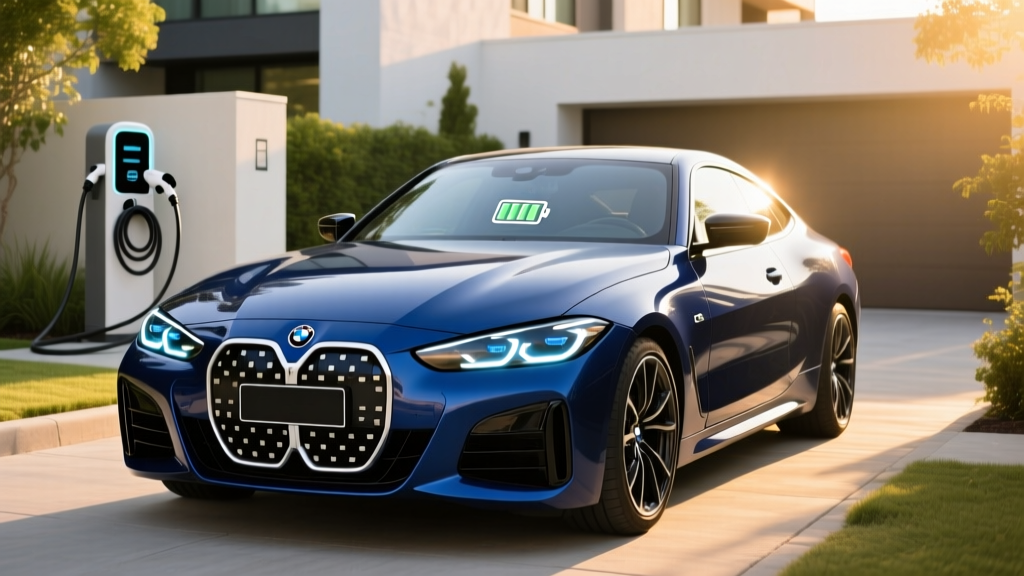
The BMW i4 has carved out a specific niche since its 2022 debut: an electric luxury sport sedan that looks, drives, and feels like a conventional BMW — because it essentially is one, with a battery pack bolted into the CLAR platform shared with the 4 Series Gran Coupe. For the 2026 model year, the i4 lineup has been refreshed with updated styling, a revised iDrive 8.5 infotainment system, and slightly improved efficiency. But with rivals like the Tesla Model 3, Hyundai Ioniq 6, and Polestar 2 pressing hard on price and range, the question is whether BMW's driving-dynamics-first approach still justifies the premium.
I've spent time with multiple i4 variants across seasons and road trips. Here's what the numbers actually look like when you leave the showroom floor.
Range, Battery, and Real-World Efficiency
The 2026 BMW i4 uses an 83.9 kWh gross (80.7 kWh usable) lithium-ion battery pack with NMC (nickel manganese cobalt) chemistry — BMW's fifth-generation eDrive system. Unlike some competitors that have shifted to LFP (lithium iron phosphate) for cost savings, BMW sticks with NMC for its higher energy density, which is critical in a sedan platform where packaging space is tight.
| Trim | Drivetrain | EPA Range | MPGe (Combined) | kWh/100 mi |
|---|---|---|---|---|
| eDrive40 | RWD | 318 mi | 109 MPGe | 31 |
| xDrive40 | AWD | 287 mi | 100 MPGe | 34 |
| M50 | AWD | 274 mi | 91 MPGe | 37 |
Efficiency figures from fueleconomy.gov confirm the eDrive40 as one of the more efficient luxury EVs in its class, though the Hyundai Ioniq 6 SE Long Range (140 MPGe combined) and Tesla Model 3 Long Range (132 MPGe) still edge it out on pure efficiency thanks to lower weight and more aerodynamic profiles.
Charging Speed: DC Fast and Home Level 2
The i4 supports DC fast charging at a peak rate of 205 kW via its CCS1 connector (NACS adapter available from BMW for Tesla Supercharger access). On a 350 kW Electrify America or Ionity station, the charge curve is respectable but not class-leading.
| Charging Level | Max Rate | Speed / Time |
|---|---|---|
| DC Fast Charge (CCS) | 205 kW peak | 10–80% in ~31 minutes |
| DC Fast (Sustained Avg.) | ~130 kW avg (10-80%) | ~180 mi added in 30 min |
| Level 2 (Home/Public AC) | 11 kW (48A) | ~32 mi/hr / 0–100% in ~8.25 hrs |
| Level 1 (120V outlet) | 1.4 kW (12A) | ~4 mi/hr |
The 205 kW peak is useful but only sustained briefly — typically between 10% and 35% SoC. Above 50%, the curve tapers significantly, dropping below 100 kW by roughly 70% SoC. This is why the 10–80% time of 31 minutes, while competitive, trails the Hyundai Ioniq 5/6 (800V architecture, 10–80% in ~18 minutes) and the Porsche Taycan (~22 minutes at 270 kW). For road trips, this means slightly longer stops, but for the vast majority of owners who charge at home overnight, the 11 kW Level 2 rate is the number that matters — and at that rate, a full overnight replenishment is easy.
BMW includes a complimentary 2 years of 30-minute DC fast charging sessions at Electrify America stations for new i4 buyers, which helps offset the public-charging cost premium during the initial ownership period.
Performance and Driving Dynamics
| Trim | Horsepower | Torque (lb-ft) | 0–60 mph | Drivetrain |
|---|---|---|---|---|
| eDrive40 | 335 hp | 317 | 5.5 sec | RWD (single motor) |
| xDrive40 | 396 hp | 435 | 4.6 sec | AWD (dual motor) |
| M50 | 536 hp | 586 | 3.7 sec | AWD (dual motor) |
The eDrive40 is the sweet spot for most buyers. Its 335 hp rear-mounted motor delivers the kind of linear, immediate torque that makes merging and passing effortless, and the rear-drive layout gives it a more natural, balanced feel through corners than many EV competitors. The steering is communicative — a rarity in the electric luxury segment — and the adaptive M suspension (optional) lets you dial between comfortable grand touring and firm sport modes.
The M50 is genuinely fast. Its 3.7-second 0–60 time puts it in M3 territory, and the dual-motor AWD system provides tenacious grip off the line. But at a roughly $15,000 premium over the eDrive40, with a corresponding range penalty (274 vs. 318 miles EPA), it's a choice driven by passion rather than pragmatism. The xDrive40 splits the difference competently for those who need all-wheel-drive traction in snow-belt states.
One note on regenerative braking: the i4 offers adjustable regen levels via steering-wheel paddles and a true one-pedal driving mode (B mode). The adaptive regen setting uses radar and navigation data to automatically modulate regeneration based on traffic and upcoming turns — it's one of the better implementations in the segment.
Interior, Tech, and Practicality
The i4's cabin is essentially the same as the 4 Series Gran Coupe, which means premium materials, solid build quality, and BMW's curved display running iDrive 8.5 — a 12.3-inch instrument cluster fused with a 14.9-inch central touchscreen angled toward the driver. Wireless Apple CarPlay and Android Auto are standard, along with a head-up display, Harman Kardon surround sound (optional), and BMW's Digital Key Plus (UWB-based phone-as-key).
Cargo and Passenger Space
| Measurement | Value |
|---|---|
| Front Legroom | 42.4 in |
| Rear Legroom | 33.6 in |
| Cargo Volume (rear seats up) | 16.6 cu ft |
| Cargo Volume (rear seats folded) | 45.6 cu ft |
| Frunk | None |
The Gran Coupe hatchback design gives the i4 a practical advantage over traditional sedans — the rear liftgate opens wide, and 16.6 cu ft behind the rear seats beats the Tesla Model 3's 23 cu ft trunk in usable shape if not raw volume, thanks to the hatch opening. Folding the 40/20/40 rear seats yields a flat 45.6 cu ft load floor.
The drawbacks are real, though. Rear legroom at 33.6 inches is tight for adults on longer trips — the Tesla Model 3 offers 35.3 inches, and the Hyundai Ioniq 6 offers 35.7. There's no front trunk (frunk), because the CLAR platform wasn't designed as EV-first; the space where a frunk would go houses ancillary components. And the center rear seat is best reserved for children, given the pronounced drivetrain tunnel hump (a leftover from the platform's ICE roots).
Driver Assistance (SAE Level 2)
BMW's Driving Assistant Professional package includes adaptive cruise control with stop-and-go, lane-keeping assist, lane-change assist, and Highway Assistant — which allows hands-off driving at speeds up to 85 mph on divided highways, provided the driver keeps their eyes on the road (monitored via a driver-facing camera). This is an SAE Level 2 system: you are the driver at all times, and the car will issue escalating warnings if your gaze drifts.
Pricing, Trims, and Federal Tax Credit Eligibility
| Trim | Base MSRP | As-Tested (Typical Options) |
|---|---|---|
| eDrive40 | $52,575 | $58,000–$63,000 |
| xDrive40 | $56,575 | $62,000–$68,000 |
| M50 | $68,575 | $75,000–$82,000 |
Does the BMW i4 Qualify for the §30D Federal Tax Credit?
This is where the i4 hits a wall for many buyers. Under current IRS §30D rules (irs.gov), the new clean vehicle credit of up to $7,500 has several eligibility gates:
- MSRP Cap: Sedans must have an MSRP at or below $55,000. The i4 eDrive40 starts at $52,575 — technically under the cap — but any factory options that push the sticker above $55,000 disqualify it. The xDrive40 and M50 exceed the cap at base.
- Buyer Income Cap: Modified adjusted gross income must not exceed $150,000 (single), $225,000 (head of household), or $300,000 (joint filing).
- Battery Sourcing: The battery's critical minerals and components must meet phased-in percentages of US/FTA-country sourcing and assembly. BMW's battery supply chain for the i4 (cells from CATL and Samsung SDI) has historically struggled to meet the critical-minerals threshold, which can reduce the credit to $3,750 or eliminate it entirely depending on the model year's requirements.
- Point-of-Sale Transfer: If eligible, the credit can be transferred to the dealer at purchase, reducing the out-of-pocket price immediately rather than waiting for a tax refund.
For buyers who don't qualify — or who option the car past the $55,000 MSRP cap — the effective purchase price is the full MSRP. This makes the i4 significantly more expensive than a Tesla Model 3 Long Range (~$47,000, often eligible for the full $7,500) or a Hyundai Ioniq 6 (~$42,000 base).
Warranty and Long-Term Ownership
| Coverage | Term |
|---|---|
| Limited Vehicle Warranty | 4 years / 50,000 miles |
| Battery & Powertrain | 8 years / 100,000 miles |
| Battery Capacity Guarantee | ≥70% of original capacity within warranty period |
| Complimentary Maintenance | 3 years / 36,000 miles |
| Roadside Assistance | 4 years / unlimited miles |
The 8-year/100,000-mile battery warranty with a 70% capacity-retention threshold is industry-standard, matching Tesla, Hyundai, and most others. BMW's NMC cells have demonstrated moderate degradation in real-world use — owners reporting approximately 5–8% capacity loss over the first 50,000 miles, which is within expected norms for liquid-cooled NMC packs. The complimentary maintenance program (covering brake fluid, cabin filters, and scheduled inspections) is a genuine perk that offsets the higher service costs at BMW dealerships.
How the BMW i4 Stacks Up Against Competitors
| Attribute | BMW i4 eDrive40 | Tesla Model 3 LR | Hyundai Ioniq 6 SEL | Polestar 2 LRSM |
|---|---|---|---|---|
| EPA Range | 318 mi | 363 mi | 361 mi | 320 mi |
| Base MSRP | $52,575 | $47,130 | $42,750 | $50,400 |
| DC Fast Charge (10–80%) | ~31 min (205 kW) | ~27 min (250 kW) | ~18 min (350 kW) | ~30 min (205 kW) |
| 0–60 mph | 5.5 sec | 4.2 sec | 6.2 sec | 4.5 sec |
| Rear Legroom | 33.6 in | 35.3 in | 35.7 in | 33.5 in |
| Cargo (seats up) | 16.6 cu ft | 23 cu ft | 12.3 cu ft | 14.4 cu ft |
| §30D Credit (est.) | $0–$3,750 | $7,500 | $7,500 | $0–$7,500 |
The i4's advantages are interior material quality, steering feel, ride refinement, and the BMW badge. Its disadvantages are price, rear-seat space, and charging speed relative to the Ioniq 6's 800V architecture. The Model 3 remains the efficiency and range leader; the Ioniq 6 is the value and fast-charging champion; the Polestar 2 matches the i4 in Scandinavian-minimalist luxury but with similar space constraints.
Decision Framework
Choose the BMW i4 if: You prioritize driving dynamics, interior build quality, and brand prestige; you mostly charge at home; you want a luxury sport sedan that doesn't scream "EV"; and rear-seat space is a secondary concern.
Look elsewhere if: You need maximum range per dollar (Model 3 or Ioniq 6); you frequently carry rear-seat adults; you want the fastest possible DC charging for road trips (Ioniq 6); or you require the full $7,500 federal tax credit to make the math work.
Pros and Cons at a Glance
Pros
- Best-in-class steering feel and ride composure
- Premium interior materials and build quality
- Hatchback practicality with 16.6 cu ft cargo
- Strong 318-mile EPA range (eDrive40)
- 11 kW Level 2 charging fills overnight easily
- Highway Assistant (hands-off L2) is well-calibrated
- Complimentary maintenance and EA charging included
Cons
- High starting price; most trims exceed §30D MSRP cap
- Partial or no federal tax credit eligibility
- Cramped rear legroom (33.6 in) vs. competitors
- No front trunk (frunk)
- DC charging speed trails 800V rivals significantly
- Heavy CLAR platform limits efficiency vs. EV-native designs
- Options quickly push eDrive40 past $55K credit cap
Frequently Asked Questions
What is the real-world range of the BMW i4?
The eDrive40's EPA-estimated 318 miles translates to roughly 260–280 miles at sustained highway speeds (70–75 mph) in mild weather. In cold conditions (below 32°F), expect 220–250 miles. The M50 delivers approximately 220–240 miles real-world in mixed driving.
How fast does the BMW i4 charge at home and on the road?
At home on a Level 2 charger (11 kW / 48A), the i4 adds approximately 32 miles of range per hour, fully replenishing overnight in about 8 hours. On DC fast chargers, it peaks at 205 kW and charges from 10–80% in roughly 31 minutes — adequate but slower than 800V competitors like the Ioniq 6 (~18 minutes).
Does the BMW i4 qualify for the $7,500 federal EV tax credit?
Partially, and only in specific configurations. The base eDrive40 at $52,575 clears the $55,000 MSRP cap for sedans, but battery-sourcing requirements under IRS §30D may limit the credit to $3,750 or zero, depending on the current critical-minerals threshold. The xDrive40 and M50 exceed the MSRP cap and do not qualify. Buyer income caps also apply. Always verify at fueleconomy.gov before purchasing.
Is the BMW i4 worth buying over the Tesla Model 3 or Ioniq 6?
If your priorities are driving engagement, cabin refinement, and luxury branding, the i4 delivers a driving experience neither the Model 3 nor Ioniq 6 can match. If your priorities are range-per-dollar, fast public charging, rear-seat space, or maximizing the federal tax credit, the Model 3 Long Range or Ioniq 6 are stronger value propositions.
Does the BMW i4 have a frunk?
No. The i4 is built on BMW's CLAR platform, which was designed to accommodate both ICE and electric powertrains. The space under the hood houses power electronics and ancillary components, leaving no room for a front trunk.
How long will the BMW i4 battery last?
BMW warranties the battery for 8 years or 100,000 miles against capacity loss below 70%. Real-world data from earlier i4 model years suggests approximately 5–8% degradation over 50,000 miles with normal charging habits. With proper care (avoiding frequent 100% charges, minimizing DC fast charging in extreme heat), the pack should comfortably last 150,000+ miles before approaching the warranty threshold.
Sources: fueleconomy.gov (EPA range and efficiency data), irs.gov (§30D tax credit rules), BMW Group PressClub (manufacturer specifications).