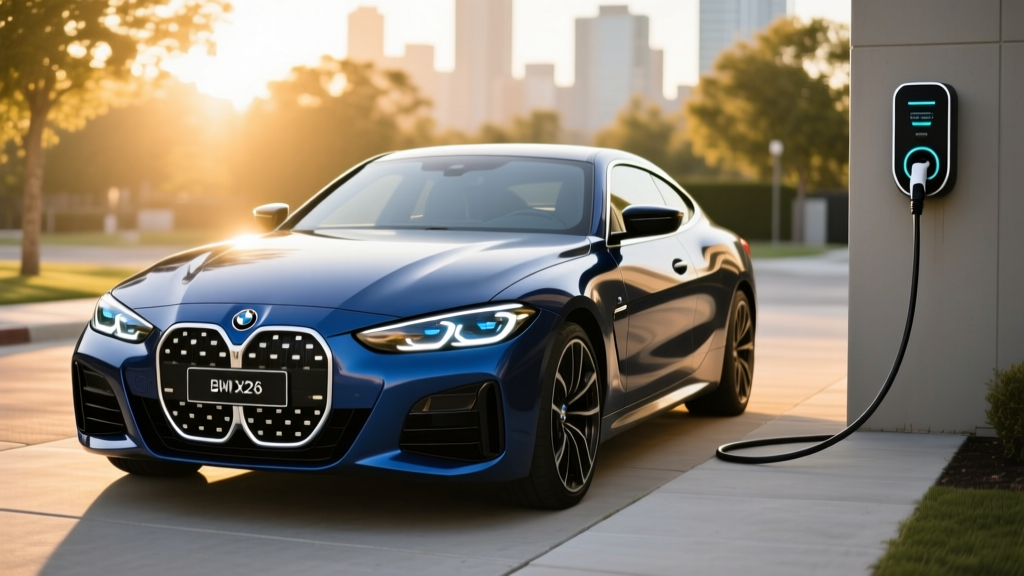
The BMW i4 has occupied a distinct niche since its debut: an electric sports sedan that prioritizes driving dynamics over SUV practicality, wrapped in a Gran Coupe silhouette that splits the difference between a traditional sedan and a hatchback. For 2026, BMW has updated the i4 with revised styling, the latest iDrive 8.5 infotainment, and minor efficiency tweaks — while keeping the core formula intact. If you're cross-shopping the Tesla Model 3, Hyundai Ioniq 6, or Porsche Taycan, this review gives you the exact numbers you need to decide.
2026 BMW i4 Electric Gran Coupe: Quick Verdict
The 2026 BMW i4 is the driver's choice in the premium electric sedan segment. Its steering feel, chassis balance, and cabin refinement outclass the Tesla Model 3 and rival the Porsche Taycan at a lower entry price. The trade-off is a rear-seat and cargo layout constrained by its CLAR-platform origins — this is an EV adapted from a combustion chassis, not a ground-up electric skateboard design. Range and charging are competitive, and federal tax credit eligibility remains a moving target depending on your income and the vehicle's battery sourcing.
| Spec | eDrive40 | xDrive40 | M50 |
|---|---|---|---|
| Drivetrain | RWD (single motor) | AWD (dual motor) | AWD (dual motor, M-tuned) |
| Horsepower | 335 hp | 396 hp | 536 hp |
| 0-60 mph | 5.5 sec | 4.4 sec | 3.7 sec |
| Battery (usable) | 81.5 kWh (NMC) | 81.5 kWh (NMC) | 81.5 kWh (NMC) |
| EPA Range | 318 mi | 289 mi | 245 mi (20" wheels) |
| MPGe (combined) | 109 MPGe | 98 MPGe | 87 MPGe |
| Efficiency | 31 kWh/100mi | 34 kWh/100mi | 39 kWh/100mi |
| Max DC Charge Rate | 205 kW | 205 kW | 205 kW |
| 10-80% DCFC Time | ~31 min | ~31 min | ~31 min |
| Level 2 Charge Rate | 11 kW (~33 mi/hr) | 11 kW (~33 mi/hr) | 11 kW (~33 mi/hr) |
| Base MSRP | $57,900 | $62,900 | $70,700 |
Range and Efficiency: EPA vs. Real-World
The eDrive40's EPA-estimated 318 miles is among the best in its class, edging out the Hyundai Ioniq 6 Long Range (361 mi EPA but with RWD and a smaller sedan footprint) and sitting comfortably ahead of the Polestar 2 Long Range. But the EPA sticker tells only part of the story.
- Mixed city/suburban driving (65-75°F): ~290-310 miles — regenerative braking recovers energy in stop-and-go traffic, and the i4's efficiency is strong at lower speeds.
- Sustained highway driving (70-80 mph): ~245-270 miles — aerodynamic drag dominates, and the Gran Coupe's sleek profile still can't match the Ioniq 6's 0.21 Cd.
- Cold weather (below 32°F, cabin heat on): ~220-255 miles — expect a 20-30% range reduction. The i4 uses a heat pump (standard on 2026 models), which mitigates some loss, but NMC chemistry is more temperature-sensitive than LFP in extreme cold.
The xDrive40 sacrifices about 29 miles of range for all-wheel-drive traction, while the M50 drops to 245 miles on 20-inch wheels (270 mi with the optional 19-inch setup). If range is your priority, the eDrive40 with 18-inch wheels is the clear pick.
Efficiency-wise, the eDrive40 returns 31 kWh per 100 miles, which translates to roughly $0.04-$0.06 per mile on a home Level 2 charger (depending on your electricity rate) versus $0.12-$0.15 per mile at public DC fast chargers. For reference, a comparable gas-powered BMW 430i Gran Coupe at 28 MPG combined costs about $0.13-$0.16 per mile at $3.50/gallon.
Charging Speed: DC Fast and Home Level 2
The i4 charges at up to 205 kW on a DC fast charger via its CCS1 port (NACS adapter availability has expanded for 2026, enabling Tesla Supercharger access in many regions). Here's what that looks like in practice:
| Charging Level | Power | Speed (approx.) | Notes |
|---|---|---|---|
| Level 1 (120V household) | ~1.4 kW | ~4 mi/hr | Emergency/trickle only; full charge in ~60+ hours |
| Level 2 (240V home/public) | 11 kW (max onboard) | ~33 mi/hr | 0-100% in ~8.5 hours; ideal overnight charging |
| DC Fast Charge (CCS1/NACS) | Peak 205 kW | ~200 mi in 20 min (10-80%) | Peak rate sustained to ~30% SoC, then tapers; 31 min 10-80% |
Charging curve reality check: The 205 kW peak is not sustained across the entire session. The i4 holds peak rate from roughly 10% to 30% State of Charge, then progressively tapers — dropping to around 150 kW by 50% SoC and below 80 kW past 70%. This is typical for NMC battery packs with this capacity. The 31-minute 10-80% time is competitive with the Tesla Model 3 Long Range (~27 min at 250 kW) but trails the Hyundai Ioniq 6's 800V architecture (~18 min at 350 kW on compatible chargers).
For home charging, the 11 kW onboard charger is a strong point — it's faster than the Model 3's 11.5 kW (comparable) and significantly faster than some older EVs limited to 7.2 kW. A full overnight charge from 20% to 100% takes about 7.5 hours on a 48-amp Level 2 home charger. If your home electrical panel supports a 60-amp circuit, you'll extract the full 11 kW. On a 40-amp circuit, expect ~9.6 kW (~29 mi/hr).
Performance and Driving Dynamics
This is where the i4 earns its BMW badge. The CLAR platform — shared with the gas-powered 4 Series Gran Coupe — gives the i4 a near-50/50 weight distribution, multi-link rear suspension, and a low center of gravity thanks to the underfloor battery pack.
The eDrive40 (335 hp, RWD) delivers brisk acceleration and the kind of rear-drive poise that's increasingly rare in the EV space. The xDrive40 adds a front motor for 396 hp and all-weather confidence, while the M50 (536 hp) is a genuine sports sedan — its 3.7-second 0-60 time puts it within striking distance of a Porsche Taycan 4S, at a significantly lower price.
Adaptive M Suspension is standard on the M50 and optional on other trims. The steering is weighted and communicative by EV standards — not quite E46 M3 levels of feedback, but a clear step above the numb electric power steering in the Model 3. Brake feel is a highlight: BMW has tuned the regen-to-friction brake handoff seamlessly, and one-pedal driving is available via a dedicated "B" mode on the shifter.
According to NHTSA and IIHS, the i4 carries strong safety ratings, with standard Active Driving Assistant (frontal collision warning, automatic emergency braking, lane departure warning, blind-spot monitoring). The optional Driving Assistance Professional package adds adaptive cruise control with stop-and-go, lane-keeping assist, and evasive steering assist — this is an SAE Level 2 system requiring full driver engagement, not autonomous driving.
Interior, Tech, and Cargo Space
The 2026 i4 features BMW's Curved Display: a 12.3-inch digital instrument cluster merged with a 14.9-inch infotainment touchscreen running iDrive 8.5. The system supports wireless Apple CarPlay and Android Auto, over-the-air updates, and BMW's latest voice assistant. A head-up display, Harman Kardon surround sound, and a panoramic glass roof are available across trims.
The cabin materials are a clear step above Tesla's minimalist approach — soft-touch surfaces, real aluminum or wood trim, and well-bolstered sport seats (Sensatec synthetic leather standard, Vernasca and Merino leather optional). Build quality is excellent, with tight panel gaps and minimal road noise at highway speeds.
Space is the compromise:
- Front legroom: 42.3 inches — generous for a compact executive sedan.
- Rear legroom: 35.1 inches — adequate for average-height adults but tight for tall passengers on long trips. The sloping roofline cuts headroom.
- Cargo (rear hatch): 16.6 cu ft (seats up), 45.6 cu ft (rear seats folded) — the liftback design gives better access than a traditional trunk, but total volume trails the Model 3 (23 cu ft trunk + frunk) and Ioniq 6 (12.3 cu ft trunk + 0.5 cu ft frunk, though the Ioniq 6 is narrower overall).
- Frunk: None. The CLAR platform's front subframe houses HVAC and power electronics, eliminating front-trunk storage. This is a notable miss for EV shoppers expecting under-hood cargo space.
Pricing, Trims, and Federal Tax Credit
The 2026 BMW i4 lineup starts at $57,900 for the eDrive40 and climbs to $70,700 for the M50 before destination charges ($995) and options. A well-equipped xDrive40 with the Premium Package, Driving Assistance Professional, and 19-inch wheels typically lands around $67,000-$69,000 before incentives.
| Trim | Base MSRP | As-Tested (typical) | Potential §30D Credit | Effective Price (est.) |
|---|---|---|---|---|
| eDrive40 | $57,900 | $61,000 | Up to $7,500* | ~$53,500 |
| xDrive40 | $62,900 | $67,500 | Up to $7,500* | ~$60,000 |
| M50 | $70,700 | $76,000 | Up to $7,500* | ~$68,500 |
*Federal §30D tax credit eligibility depends on battery component and critical mineral sourcing requirements, buyer income caps ($150K single / $300K joint MAGI), and the vehicle's MSRP falling under the $55,000 sedan cap. See IRS §30D guidelines for current rules. Point-of-sale transfer is available at participating dealers, converting the credit to an upfront discount. Eligibility shifts as BMW adjusts battery supply chains — verify with your dealer and a tax professional before purchase.
Critical MSRP cap note: The IRS §30D credit caps eligible sedans at $55,000 MSRP. The base eDrive40 at $57,900 exceeds this threshold, meaning it may not qualify for the federal credit unless BMW restructures pricing or the buyer leverages a state-level incentive instead. The M50 at $70,700 is clearly above the cap. Always verify current eligibility on fueleconomy.gov before committing to a purchase.
State incentives may still apply — California's CVRP, Colorado's innovative motor vehicle credit, and various utility rebates can offset $2,000-$7,500 depending on your jurisdiction. Check your state's energy office and local utility for specifics.
Warranty and Long-Term Ownership
BMW backs the i4 with the following coverage:
- Limited vehicle warranty: 4 years / 50,000 miles
- Battery and electric powertrain warranty: 8 years / 100,000 miles (covers battery capacity below 70% of original)
- Complimentary maintenance: 3 years / 36,000 miles (covers brake fluid, cabin air filters, vehicle checks — a genuine value-add that Tesla does not match)
- Roadside assistance: 4 years / unlimited miles
The 8-year/100,000-mile battery warranty with a 70% capacity retention floor is industry-standard, matching Tesla, Hyundai, and Ford. Real-world degradation data from earlier i4 model years (2022-2024) suggests NMC cells in BMW's thermal management system lose approximately 5-8% capacity over the first 100,000 miles under normal use — well within the warranty threshold. The i4's liquid-cooled battery pack includes preconditioning for DC fast charging, which reduces thermal stress and extends long-term cell health.
Insurance costs are worth budgeting for: the i4 typically runs 15-25% higher premiums than a gas-powered 4 Series due to repair costs for the battery pack and specialized body panels. Get quotes from your insurer before ordering.
BMW i4 vs. Key Competitors
The i4 doesn't exist in a vacuum. Here's how it stacks up against its three most cross-shopped rivals:
| Attribute | BMW i4 eDrive40 | Tesla Model 3 LR | Hyundai Ioniq 6 LR | Porsche Taycan (base) |
|---|---|---|---|---|
| Base MSRP | $57,900 | $44,990 | $42,950 | $92,000 |
| EPA Range | 318 mi | 363 mi | 361 mi | 225 mi |
| 0-60 mph | 5.5 sec | 4.8 sec | 5.1 sec | 4.5 sec |
| Max DCFC | 205 kW | 250 kW | 350 kW (800V) | 270 kW (800V) |
| 10-80% Time | ~31 min | ~27 min | ~18 min | ~23 min |
| Frunk | No | Yes (3.1 cu ft) | Yes (0.5 cu ft) | Yes (3.0 cu ft) |
| Build Quality | Excellent | Good (improved) | Very Good | Excellent |
| Tax Credit (§30D) | Unlikely (MSRP cap) | Likely eligible | Likely eligible | No (MSRP cap) |
Where the i4 wins: Driving dynamics, interior refinement, dealership service network, and brand cachet. The steering, suspension tuning, and cabin isolation are a tier above the Model 3 and Ioniq 6.
Where the i4 loses: Price-to-range ratio, charging speed (the Ioniq 6's 800V architecture is meaningfully faster), lack of a frunk, and federal tax credit eligibility. If you're optimizing for value-per-mile-of-range, the Model 3 and Ioniq 6 are objectively better deals.
- You prioritize driving feel and chassis feedback over maximum range
- You want a premium interior with traditional luxury materials
- You prefer a dealership service experience over mobile ranger visits
- You don't need a frunk and rear-seat space is secondary
- Federal tax credit eligibility is critical to your budget (Model 3, Ioniq 6)
- You take frequent road trips and want the fastest DC charging (Ioniq 6)
- You need maximum range per dollar (Model 3 Long Range)
- Frunk storage matters for your use case
Pros, Cons, and Who Should Buy
- Class-leading driving dynamics and steering feedback
- Premium interior with high-quality materials and excellent NVH
- Competitive 318-mi EPA range (eDrive40)
- Strong 11 kW Level 2 onboard charging
- Heat pump standard for cold-weather efficiency
- Complimentary maintenance program (3yr/36K mi)
- BMW's dealer network for service and warranty work
- Base MSRP exceeds $55K sedan cap for federal §30D tax credit
- No frunk — a significant omission for an EV
- DC fast charging slower than 800V rivals (Ioniq 6, Taycan)
- Rear-seat headroom limited by sloping roofline
- Higher insurance premiums than gas 4 Series
- Adaptive cruise and lane-keeping require expensive option package
Best use case: The i4 is ideal for the daily commuter who values a premium driving experience — someone with a 30-80 mile round trip, home Level 2 charging access, and a preference for a driver-focused sedan over a crossover. It's a strong pick as a second car in a two-EV household, or as a primary vehicle for singles and couples without rear-seat-heavy needs. It's less suited as a family hauler (rear space is tight), a road-trip champion (charging speed and range trail rivals), or a budget-conscious buyer (the tax credit gap and premium pricing add up).
Frequently Asked Questions
What is the real-world range of the 2026 BMW i4?
The eDrive40 achieves 318 miles EPA-estimated. In real-world mixed driving at moderate temperatures, expect 290-310 miles. Sustained highway driving at 75+ mph drops this to roughly 245-270 miles. In cold weather below freezing with cabin heat active, plan for 220-255 miles — a 20-30% reduction typical of NMC battery chemistry even with the standard heat pump.
How fast does the BMW i4 charge at home and on DC fast chargers?
On a DC fast charger, the i4 peaks at 205 kW and charges from 10-80% in approximately 31 minutes. On a Level 2 home charger (240V, 48-amp circuit), it charges at up to 11 kW, adding roughly 33 miles of range per hour — a full 0-100% charge takes about 8.5 hours. Level 1 (120V) is limited to ~4 miles per hour and is only practical for emergency or trickle charging.
Does the 2026 BMW i4 qualify for the $7,500 federal EV tax credit?
Likely not for most trims. The IRS §30D credit caps eligible sedans at $55,000 MSRP, and the base eDrive40 starts at $57,900 — above the threshold. Additionally, the credit requires meeting battery component and critical mineral sourcing requirements that shift annually. Even if pricing were adjusted, buyer income caps ($150K single / $300K joint modified AGI) apply. Verify current eligibility at fueleconomy.gov and consult a tax professional. State-level incentives may still apply regardless of federal eligibility.
Is the BMW i4 worth buying over a Tesla Model 3 or Hyundai Ioniq 6?
It depends on your priorities. The i4 offers superior driving dynamics, a more refined interior, and a traditional dealership experience — but at a significantly higher price, with less range, slower DC charging, and likely no federal tax credit. The Model 3 Long Range is the range-and-value leader. The Ioniq 6 is the charging-speed champion. The i4 is the driver's car. If driving feel and build quality matter more to you than cost-per-mile optimization, the i4 justifies its premium.
Does the BMW i4 have a frunk (front trunk)?
No. The i4 is built on BMW's CLAR platform (shared with the gas 4 Series), and the front compartment houses power electronics and HVAC components. There is no front trunk storage. Total cargo capacity is 16.6 cu ft behind the rear seats (45.6 cu ft with seats folded), accessed via a rear liftback hatch.
What is the battery chemistry and how long will it last?
The i4 uses an NMC (nickel-manganese-cobalt) lithium-ion battery pack with 81.5 kWh of usable capacity, liquid-cooled with active thermal management. BMW warranties the battery for 8 years or 100,000 miles against capacity loss below 70%. Real-world data from 2022-2024 i4 owners suggests approximately 5-8% degradation over the first 100,000 miles under normal charging habits (avoiding frequent 100% charges and excessive DC fast charging in extreme heat). NMC offers higher energy density than LFP but is more sensitive to thermal extremes.
Can the BMW i4 use Tesla Superchargers?
Yes, with an adapter. BMW has expanded NACS (North American Charging Standard) compatibility for 2026, and a CCS-to-NACS adapter enables access to Tesla's Supercharger network in most regions. The i4 charges at the Supercharger's available rate up to its 205 kW peak. Check BMW's official adapter compatibility list for your specific model year and region.