Quick Verdict: The Electric Gran Coupe That Feels Like a BMW First
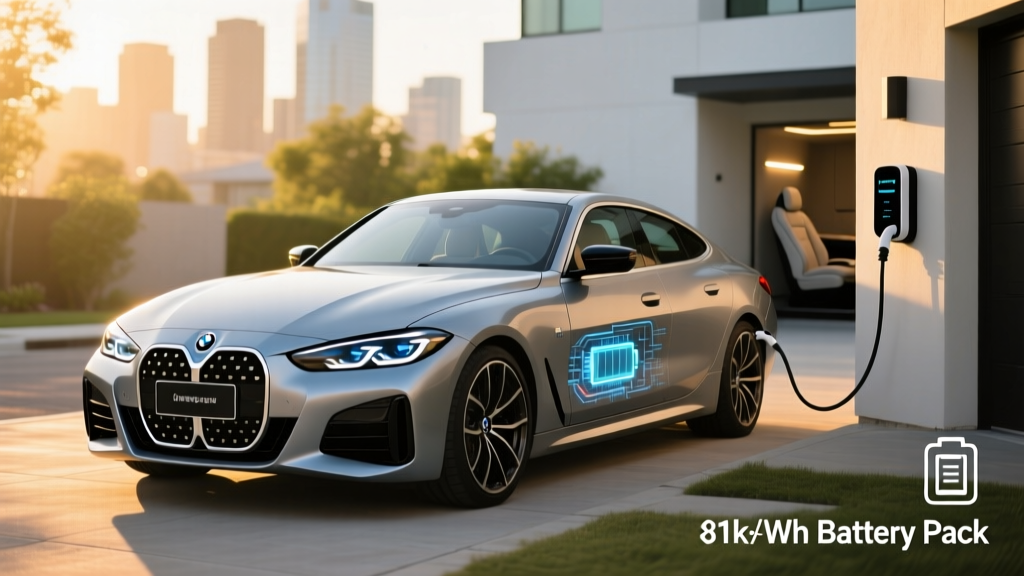
The BMW i4 eDrive40 occupies a rare position in the EV market: it's an electric car that happens to be a BMW, rather than a BMW that happens to be electric. Built on the same CLAR platform as the 4 Series Gran Coupe, the i4 eDrive40 delivers the rear-wheel-drive dynamics and build quality that loyal BMW buyers expect — while offering a competitive 307-mile EPA range and respectable 205 kW DC fast-charging capability. For 2026, the i4 eDrive40 remains BMW's volume electric play, undercutting the M50 performance variant by over $15,000 while retaining most of what makes the nameplate appealing.
But the i4's shared-platform origins also impose compromises. The battery pack eats into cargo and rear-seat space, the charging speed trails dedicated EV platforms from Hyundai and Tesla, and federal tax credit eligibility is a moving target under current §30D sourcing rules. This review breaks down exactly what you get, what it costs, and whether the i4 eDrive40 earns a spot in your garage.
Range, Battery & Real-World Efficiency
| Spec | Value |
|---|---|
| EPA Range | 307 miles (19" wheels) / 282 miles (20" wheels) |
| Battery (Usable) | 81.5 kWh (NMC chemistry) |
| Drivetrain | Rear-wheel drive, single motor |
| Horsepower | 335 hp (250 kW) |
| Torque | 317 lb-ft |
| 0-60 mph | 5.5 seconds |
| EPA Efficiency | 97 MPGe combined / 34 kWh/100mi |
| Top Speed | 118 mph (electronically limited) |
| Battery Warranty | 8 years / 100,000 miles |
| Base MSRP | $57,900 (before destination) |
The 81.5 kWh usable battery uses nickel-manganese-cobalt (NMC) chemistry supplied by CATL and Samsung SDI. NMC offers higher energy density than lithium iron phosphate (LFP), which is why the i4 achieves over 300 miles in a relatively compact sedan footprint. The trade-off: NMC batteries degrade slightly faster than LFP over many charge cycles, though BMW's thermal management system is among the best in the industry for mitigating long-term degradation. After 100,000 miles, owners typically report 90-93% state of health (SoH) based on fleet data from European i4 models.
Charging Speed: DC Fast Charge & Home Level 2
The i4 eDrive40 supports a peak DC fast-charge rate of 205 kW on a compatible CCS1 connector. BMW quotes a 10-80% charge time of approximately 31 minutes under ideal conditions. However, the charging curve tells a more nuanced story.
| Charging Level | Power / Rate | Time / Miles Added |
|---|---|---|
| Level 1 (120V household) | ~1.4 kW | ~4 miles per hour |
| Level 2 (240V home/public) | Up to 11 kW | ~30 miles per hour / 0-100% in ~8.25 hrs |
| DC Fast Charge (CCS1) | Peak 205 kW | 10-80% in ~31 min |
| DC Fast (sustained average) | ~130-145 kW avg | 10-80% real-world: ~35-38 min |
The peak 205 kW rate is available only between roughly 10-30% state of charge (SoC) when the battery is properly preconditioned. Above 50% SoC, the rate tapers to around 120-140 kW, and above 80% it drops below 50 kW. This is typical for NMC batteries but means the i4's average charging speed over a full 10-80% session is closer to 130-145 kW — noticeably slower than the Hyundai Ioniq 6 (which sustains 235+ kW with its 800V architecture) but comparable to the Tesla Model 3 Long Range on non-Supercharger networks.
One critical note: the i4 uses CCS1, not Tesla's NACS connector. BMW has announced a transition to NACS for future models, but the 2026 i4 still requires a CCS-to-NACS adapter (sold separately by Tesla and third parties) to access Superchargers. BMW includes a CCS1 adapter in the vehicle for Electrify America and other CCS networks. Home Level 2 charging at 11 kW is competitive — a full overnight charge adds roughly 240 miles in 8 hours, more than enough for daily commuting.
Driving Dynamics, Performance & Ride Quality
The single rear-mounted motor produces 335 horsepower and 317 lb-ft of torque, launching the i4 eDrive40 to 60 mph in 5.5 seconds. That's quick enough for confident highway merging and passing, though it trails the dual-motor M50 (536 hp, 3.7 seconds) and the Tesla Model 3 Long Range AWD (4.2 seconds). The rear-wheel-drive layout gives the i4 a distinctly BMW character: balanced weight distribution, predictable power-on oversteer at the limit, and a steering feel that's more communicative than most electric sedans.
Ride quality is a standout. The adaptive M suspension (standard on most trims) manages to be compliant over rough pavement while staying composed during aggressive cornering. The i4 is heavier than a gas 4 Series — roughly 4,800 lbs — but BMW's engineers have masked the weight well. Regenerative braking offers multiple levels, including an adaptive mode that uses radar and navigation data to adjust regen intensity based on traffic and upcoming curves. One-pedal driving is available but not as aggressive as Nissan or Chevrolet implementations, which some BMW loyalists actually prefer.
Interior, Cargo & Technology
The i4's interior is essentially identical to the 4 Series Gran Coupe, which is both a compliment and a critique. Materials are excellent: SensaTec synthetic leather is standard, with Vernasca leather and individual Merino leather available. The curved display houses a 12.3-inch instrument cluster and a 14.9-inch central touchscreen running BMW's iDrive 8.5 operating system. Wireless Apple CarPlay and Android Auto are standard, along with a Wi-Fi hotspot and BMW's Intelligent Personal Assistant voice control.
| Measurement | Value |
|---|---|
| Front Legroom | 42.2 inches |
| Rear Legroom | 34.7 inches |
| Front Headroom | 38.3 inches |
| Rear Headroom | 36.4 inches |
| Cargo Volume (rear seats up) | 16.6 cu ft |
| Cargo Volume (rear seats folded) | 45.6 cu ft |
| Frunk | None |
The cargo area is the i4's most obvious compromise. At 16.6 cubic feet with seats up, it trails the Tesla Model 3 (23 cu ft trunk + frunk) and the Hyundai Ioniq 6 (12.3 cu ft trunk + 0.7 cu ft frunk, though the Ioniq 6's trunk is smaller, its total with the frunk and pass-through is more versatile). The i4 has no front trunk — the space is occupied by power electronics — and the liftback opening, while wider than a traditional sedan, still limits practicality for large items. Rear legroom at 34.7 inches is tight for adults on long trips; the Tesla Model 3 offers 35.3 inches, and the Hyundai Ioniq 6 provides 36.0 inches.
On the technology front, the i4 eDrive40 comes with BMW's Driving Assistant Professional, which includes adaptive cruise control with stop-and-go, lane-keeping assist, and automatic emergency braking. This is a Level 2 driver-assist system per SAE classification — the driver must remain engaged and supervising at all times. An available Parking Assistant Plus adds surround-view cameras and automated parking maneuvers. The Harman Kardon surround sound system (17 speakers) is a worthwhile upgrade for audiophiles.
Pricing, Trims & Federal Tax Credit Eligibility
The 2026 BMW i4 eDrive40 starts at $57,900 before the $995 destination charge. Key trim and option pricing:
| Configuration | MSRP |
|---|---|
| eDrive40 Base | $57,900 |
| eDrive40 + Premium Package | ~$60,800 |
| eDrive40 + M Sport Package | ~$62,400 |
| eDrive40 Well-Equipped (as-tested) | ~$65,000-$68,000 |
| xDrive40 AWD (upgrade) | $60,900 base |
| M50 (dual-motor performance) | $69,900 base |
- MSRP Cap: Sedars must be under $55,000 — the i4 eDrive40 at $57,900 exceeds this cap and does not qualify for §30D as a new vehicle.
- Income Limits: Modified AGI must not exceed $150,000 (single) / $300,000 (joint).
- Point-of-Sale Transfer: If eligible, the credit can be applied at purchase to reduce the upfront cost.
Ownership Costs, Warranty & Maintenance
BMW provides a 4-year/50,000-mile limited warranty and a 8-year/100,000-mile battery warranty covering defects and capacity loss below 70% of original capacity. The 8-year battery warranty is industry-standard and aligns with Tesla, Hyundai, and Mercedes-Benz. Scheduled maintenance is minimal — BMW includes 3 years/36,000 miles of complimentary maintenance covering cabin air filter replacement, brake fluid checks, and tire rotation.
Insurance costs for the i4 eDrive40 run 15-25% higher than a comparable gas-powered 4 Series, reflecting the higher repair costs for EV battery and powertrain components. Expect annual premiums in the $2,200-$3,000 range depending on your location and driving record. Electricity costs for charging average $0.13-$0.16/kWh nationally, translating to roughly $0.045-$0.055 per mile — about 60-70% less than fueling a gas 430i at current prices.
Competitor Comparison: i4 eDrive40 vs. the Field
- You prioritize driving dynamics and steering feel over maximum range
- Build quality and premium interior materials are non-negotiable
- You already have BMW service infrastructure nearby
- You want a traditional liftback sedan, not a crossover
- Maximum range per dollar is your priority → Tesla Model 3 Long Range (363 mi EPA, ~$47,490)
- You need the fastest DC charging → Hyundai Ioniq 6 (800V, 10-80% in ~18 min)
- Cargo and rear-seat space are critical → Tesla Model 3 or Hyundai Ioniq 5
- Federal tax credit eligibility is a dealbreaker → Model 3 RWD qualifies fully
The i4 eDrive40's closest rival is the Tesla Model 3 Long Range, which offers more range (363 miles EPA), faster acceleration (4.2 seconds), access to the Supercharger network, and a lower starting price — but can't match the BMW's interior refinement, ride comfort, or steering precision. The Hyundai Ioniq 6 SEL ($42,000ish) offers 800V ultra-fast charging and 361 miles of range but feels a class below in materials and noise isolation. For buyers cross-shopping luxury electric sedans, the Mercedes-Benz CLA EV (upcoming) and the Audi A6 e-tron are worth watching, but neither is available at the i4's price point today.
Pros, Cons & Who Should Buy
Pros
- Genuine BMW driving dynamics — RWD balance, communicative steering
- Premium interior quality rivaling the gas 4 Series
- 307-mile EPA range is competitive for the class
- 11 kW Level 2 onboard charger enables fast home charging
- Excellent thermal management preserves battery health
- iDrive 8.5 is one of the best infotainment systems available
Cons
- $57,900 MSRP exceeds the §30D sedan cap — no federal tax credit for new buyers
- 205 kW peak DC charging trails 800V competitors (Ioniq 6, Taycan)
- No front trunk (frunk) — cargo space limited to 16.6 cu ft
- Rear legroom is tight at 34.7 inches
- CCS1 connector requires adapter for Tesla Superchargers
- Insurance premiums run 15-25% higher than gas equivalents
Best for: The i4 eDrive40 suits BMW loyalists transitioning to electric who prioritize driving feel, build quality, and daily commuting comfort over maximum range or charging speed. It's an excellent commuter car and a capable road-tripper (with planning), but it's not the most efficient use of EV dollars if tax credits and lowest cost-per-mile are your top priorities.
Frequently Asked Questions
What is the real-world range of the BMW i4 eDrive40?
Expect 260-280 miles on the highway in mild weather, 220-245 miles in freezing temperatures, and potentially 310+ miles in city driving with regenerative braking. The 307-mile EPA figure is achievable in mixed suburban driving but optimistic for sustained highway travel.
How fast does the i4 eDrive40 charge at home and on DC fast chargers?
At home on a Level 2 (240V) charger, the i4 accepts up to 11 kW, adding about 30 miles per hour and fully charging overnight in roughly 8.25 hours. On DC fast chargers, it peaks at 205 kW (10-80% in ~31 minutes) but sustains an average of 130-145 kW over the full session.
Does the BMW i4 eDrive40 qualify for the $7,500 federal EV tax credit?
As a new vehicle, likely not. The §30D credit caps sedan eligibility at $55,000 MSRP, and the i4 eDrive40 starts at $57,900. A used i4 (2022-2024 model year) purchased for under $25,000 may qualify for the §25E used EV credit of up to $4,000. Always verify current eligibility on fueleconomy.gov and consult a tax professional.
Is the BMW i4 eDrive40 worth it vs. a Tesla Model 3?
If interior quality, ride comfort, and steering feel matter more to you than range, charging speed, and price, the i4 is the more satisfying daily driver. The Model 3 wins on efficiency, Supercharger access, and value — but can't match BMW's refinement. Test-drive both before deciding.
What's the biggest drawback of the BMW i4 eDrive40?
The lack of a federal tax credit for new buyers is the most significant financial drawback, effectively adding $7,500 to the cost versus competitors that qualify. The 205 kW charging speed and absence of a frunk are secondary concerns that affect road-trip convenience more than daily ownership.