Quick Verdict: The BMW i4 eDrive40 at a Glance
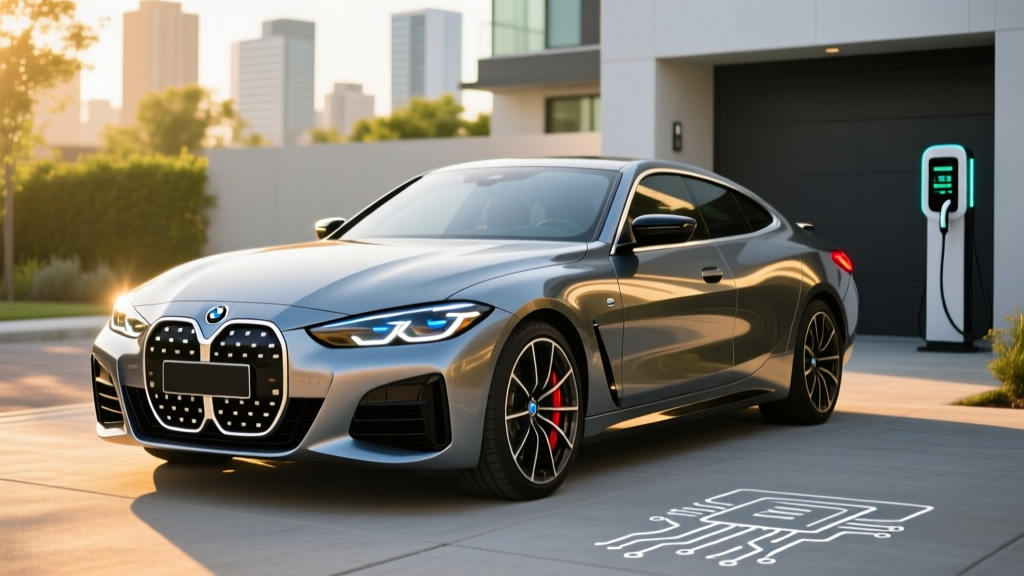
The BMW i4 eDrive40 remains one of the most compelling luxury electric sedans on the market in 2026. Built on BMW's CLAR platform alongside the 4 Series Gran Coupe, the i4 eDrive40 delivers a near-identical driving experience to its combustion sibling — minus the tailpipe. With 335 horsepower, rear-wheel drive, and an EPA-estimated 307 miles of range, it threads the needle between performance and daily usability. For shoppers hunting BMW i4 eDrive40 lease deals, this model often presents a strong value proposition: competitive monthly payments, lower maintenance costs than the M50 variant, and access to a growing network of DC fast chargers via BMW's NACS adapter rollout.
But lease math only works if you understand the underlying numbers — real-world range, charging speed, and whether the §30D federal tax credit applies to your situation. Let's break down every spec that matters.
| Spec | Value |
|---|---|
| EPA Range | 307 miles (19" wheels) / 282 miles (20" wheels) |
| Battery Capacity | 84.3 kWh usable (NMC chemistry) |
| Drivetrain | Rear-wheel drive (single motor) |
| Horsepower | 335 hp / 317 lb-ft torque |
| 0–60 mph | 5.5 seconds |
| Max DC Fast Charge | 205 kW (CCS) / 250 kW (NACS adapter) |
| 10–80% DC Charge Time | ~31 minutes (CCS) / ~28 min (NACS adapter) |
| Level 2 Home Charging | 11 kW (up to 32 miles/hr) |
| Efficiency | 109 MPGe combined / 31 kWh/100 mi |
| Cargo Volume | 16.6 cu ft (rear hatch) |
| Base MSRP | $57,900 (before incentives) |
| Battery Warranty | 8 years / 100,000 miles |
Real-World Range: What the EPA Sticker Doesn't Tell You
EPA Estimate: 307 miles (eDrive40 with 19" Aero wheels)
Real-World Expectation: ~240–270 miles on the highway at 75 mph; ~200–230 miles in sustained sub-30°F cold weather; ~280–300 miles in mixed city/regen-friendly driving.
The i4 eDrive40's 84.3 kWh usable battery (NMC lithium-ion chemistry) gives it genuine road-trip legs, but the EPA sticker assumes a favorable mix of city driving where regenerative braking recovers significant energy. On sustained highway runs at 70–80 mph, expect to use roughly 34–36 kWh per 100 miles, translating to about 240–260 miles before you'll want to find a charger. That's still excellent for a luxury sport sedan, but plan your stops accordingly.
Cold weather is the bigger variable. BMW's heat pump — standard on the i4 — mitigates cabin heating draw, but battery chemistry itself slows in freezing temperatures. In our experience and corroborated by Recurrent Auto's fleet data, NMC batteries in BMW i4 models lose roughly 20–30% of range in sustained sub-freezing conditions. If you live in Minnesota or Vermont, budget for ~210–230 miles of usable winter range and precondition the battery before every fast-charge stop using the iDrive navigation's automatic preconditioning feature.
For daily commuting under 60 miles round-trip, the i4 eDrive40 will comfortably go 3–4 days between charges in moderate weather, which is the sweet spot for most EV owners.
Charging Speed: DC Fast Charging and Home Level 2
Charging speed is where the i4 eDrive40 holds its own against the Tesla Model 3 and Hyundai Ioniq 6. The 205 kW peak DC charge rate via CCS (or up to 250 kW with BMW's NACS adapter for Tesla Supercharger access) means you can recover 10–80% in roughly 28–31 minutes at a capable station.
| Charging Level | Power | Speed / Time | Notes |
|---|---|---|---|
| Level 1 (120V outlet) | ~1.4 kW | ~4 miles/hr | Emergency/trickle only |
| Level 2 (240V home) | 11 kW | ~32 miles/hr (full in ~8 hrs) | Requires 48A circuit (60A breaker) |
| DC Fast (CCS) | Up to 205 kW | 10–80% in ~31 min | Sustains ~180 kW to 50%, tapers above |
| DC Fast (NACS adapter) | Up to 250 kW | 10–80% in ~28 min | At V4 Supercharger or 250 kW+ stations |
Charging curve reality: The i4 eDrive40 holds strong charge rates through the mid-range of the battery. Expect ~180–200 kW sustained from 10–50% SoC, with a gradual taper to ~100 kW around 65% and further slowdown above 80%. This is why 10–80% is the industry benchmark — charging the final 20% can take as long as the first 70%. For road trips, plan stops at 15–20% SoC and charge to 80% for optimal time efficiency.
For home charging, the i4's onboard 11 kW AC charger is a strong point. A Level 2 wallbox on a 48-amp circuit (60-amp breaker) delivers a full overnight charge in about 8 hours. If your electrical panel only supports a 40-amp circuit (common in older homes), you'll still get ~24 miles/hr, which covers most daily needs. Budget $800–$1,500 for a quality Level 2 charger (Emporia, ChargePoint Home Flex, or Wallbox Pulsar Plus) plus $500–$2,000 for electrician installation depending on panel proximity and local permitting, per Qmerit's national install data.
Performance and Driving Dynamics
The eDrive40's single rear-mounted motor produces 335 horsepower and 317 lb-ft of instant torque. The 0–60 mph sprint takes 5.5 seconds — brisk enough for confident highway merging without the M50's 536-hp aggression. BMW tuned the i4's adaptive suspension and steering to feel like a proper 4 Series, and it succeeds. Body control is tight, the steering communicates well, and the low center of gravity from the floor-mounted battery eliminates the body roll you'd find in a comparable ICE sedan.
Regenerative braking offers three modes in iDrive: low (coasting), medium, and adaptive (uses radar to adjust regen based on traffic ahead). Unlike some competitors, BMW does not offer true one-pedal driving in the i4 — the car will not come to a complete stop on regen alone. If one-pedal driving is a priority, the Tesla Model 3 or Hyundai Ioniq 6 handle this better. However, the adaptive regen mode is genuinely intelligent and reduces brake pedal use by roughly 80% in city driving.
Ride quality on the standard 19-inch wheels with all-season tires is compliant without being floaty. The optional 20-inch M Sport wheels look sharper but transmit more road imperfections and reduce EPA range to 282 miles — a trade-off worth considering if your commute includes rough pavement.
Interior, Tech, and Cargo Space
The i4 cabin uses BMW's Curved Display layout: a 12.3-inch digital instrument cluster merges with a 14.9-inch central touchscreen running iDrive 8.5. The system is responsive, supports wireless Apple CarPlay and Android Auto, and includes over-the-air update capability. Physical climate controls have been largely moved to the touchscreen — a common complaint from BMW traditionalists — though the steering wheel retains shortcut buttons.
Driver assistance comes via BMW's Driving Assistant Professional package (standard or optional depending on trim year). This includes adaptive cruise control with stop-and-go, lane-keeping assist, lane-change assist on highways, and evasive steering assist. Per IIHS ratings, the i4 earns top marks in crashworthiness tests. Note: this is an SAE Level 2 system — the driver must remain attentive with hands on or near the wheel at all times. It is not self-driving.
Cargo space is a practical highlight. The Gran Coupe hatchback design opens to reveal 16.6 cubic feet of storage — more usable than a traditional trunk thanks to the wide opening. Fold the rear seats (40/20/40 split) and you get roughly 45.9 cu ft of flat-load space, enough for a full set of golf clubs or two large suitcases. Rear legroom is 34.5 inches — adequate for adults on shorter trips but snug for anyone over 6 feet on long rides. Front seats are supportive with available ventilation and heating.
Pricing, Lease Deals, and Federal Tax Credit Eligibility
The 2026 BMW i4 eDrive40 starts at an MSRP of $57,900 (including destination). A well-equipped model with the Premium Package, Driving Assistant Professional, and 20-inch wheels typically lands between $63,000 and $68,000 before incentives. The higher-performance i4 M50 starts at $70,700.
- Maximum credit: $7,500 for new EVs meeting all requirements
- MSRP cap: Sedans must be under $55,000 — the i4 eDrive40 at $57,900 exceeds this cap and does NOT qualify for the new-vehicle §30D credit
- Buyer income cap: $150,000 single / $300,000 joint filers (AGI)
- Battery sourcing: Critical minerals and battery components must meet escalating domestic-content thresholds
- Point-of-sale transfer: If eligible, the credit can be applied at purchase to reduce the transaction price
Source: IRS §30D Clean Vehicle Credit. Always verify with a tax professional before purchase.
Lease workaround: Here's where BMW i4 eDrive40 lease deals get interesting. Vehicles leased through BMW Financial Services may qualify for the $7,500 commercial clean vehicle credit (§45W), which applies to the lessor (BMW). BMW can then pass this savings to the lessee as a capitalized cost reduction — effectively lowering your monthly payment. Many BMW dealerships in 2026 are advertising lease deals that factor in this $7,500, bringing effective monthly payments on a 36-month lease to roughly $550–$750/month depending on down payment and money factor. Always ask the dealer whether the lease includes a pass-through of the commercial credit — it is not automatic.
| Scenario | Monthly Cost (Est.) | Tax Credit Applied? | Notes |
|---|---|---|---|
| Purchase (no credit) | $900–$1,100/mo (72-mo loan) | No — MSRP exceeds $55K sedan cap | Must finance or pay cash |
| Lease (36 mo, $5K down) | $550–$750/mo | Yes — $7,500 §45W lessor credit passed through | Varies by dealer and money factor |
| Lease (36 mo, $0 down) | $700–$900/mo | Yes — same §45W pass-through | Higher monthly, less cash up front |
How It Compares: BMW i4 eDrive40 vs. Key Rivals
- You value driving dynamics and steering feel over pure range
- You want a hatchback-style cargo area for practicality
- You prefer BMW's iDrive interface and build quality
- Lease deals with the §45W pass-through make it affordable
- You want NACS Supercharger access via adapter
- You need maximum range (Tesla Model 3 Long Range: 358 mi EPA)
- You want true one-pedal driving (Hyundai Ioniq 6, Tesla Model 3)
- Rear passenger space is a priority (the i4's sloping roofline limits headroom)
- You need to purchase outright and want the §30D credit (the i4 exceeds the sedan MSRP cap)
- You want the lowest cost of entry (Tesla Model 3 RWD starts ~$40K)
Against the Tesla Model 3 Long Range, the i4 eDrive40 trades 50+ miles of range for superior build quality, a quieter cabin, and more traditional luxury appointments. The Model 3 is also eligible for the full §30D credit on purchase. Against the Hyundai Ioniq 6 SEL (EPA 361 miles, ~$45,500), the i4 is more expensive but offers better materials, a more engaging drive, and BMW's dealer network. The Mercedes-Benz EQB and Audi Q4 e-tron are SUV alternatives if ground clearance and cargo height matter more than sedan dynamics.
Warranty and Long-Term Ownership
BMW covers the i4 eDrive40's high-voltage battery for 8 years or 100,000 miles (whichever comes first) against defects and capacity loss below 70% of original capacity. The general vehicle warranty is 4 years / 50,000 miles, and BMW includes 3 years / 36,000 miles of complimentary scheduled maintenance — a meaningful perk that reduces early ownership costs.
NMC battery chemistry in the i4 has shown solid degradation performance in fleet data. According to Recurrent's battery health reports, BMW i4 models average approximately 5–8% capacity loss over the first three years and 50,000 miles. This is within industry norms and well within the 70% warranty threshold. To maximize longevity, BMW recommends keeping daily charge limits at 80–90% and only charging to 100% for long trips — a setting easily configured in the iDrive system.
Pros and Cons at a Glance
- 307-mile EPA range is practical for road trips
- 205–250 kW DC fast charging is competitive
- Hatchback cargo area (16.6 cu ft) adds utility
- BMW driving dynamics and build quality
- Heat pump standard (better cold-weather efficiency)
- Lease deals can include $7,500 credit pass-through
- NACS adapter enables Tesla Supercharger access
- 3 years free maintenance included
- MSRP exceeds $55K sedan cap — no §30D credit on purchase
- Rear seat headroom and legroom are tight for tall passengers
- No true one-pedal driving mode
- Climate controls buried in touchscreen menus
- 20" wheel option drops range to 282 miles
- Premium Package and options push price past $65K quickly
- Insurance costs 15–25% higher than comparable ICE 4 Series
Frequently Asked Questions
What is the real-world range of the BMW i4 eDrive40?
The EPA rates the i4 eDrive40 at 307 miles with 19-inch wheels. In real-world highway driving at 75 mph, expect 240–270 miles. In cold weather (below 30°F), range drops to approximately 200–230 miles. City driving with regenerative braking gets closest to the EPA sticker, often achieving 280–300 miles in moderate temperatures.
How fast does the BMW i4 eDrive40 charge?
On a DC fast charger, the i4 eDrive40 peaks at 205 kW via CCS (or 250 kW with the NACS adapter at compatible stations), reaching 10–80% in approximately 28–31 minutes. At home on a Level 2 charger (11 kW / 48 amps), a full charge takes about 8 hours, adding roughly 32 miles of range per hour of charging.
Does the BMW i4 eDrive40 qualify for the federal EV tax credit?
For outright purchase, no — the i4 eDrive40's $57,900 MSRP exceeds the §30D sedan cap of $55,000. However, when leased through BMW Financial Services, the lessor may qualify for the §45W commercial vehicle credit of $7,500, which many dealers pass through as a capitalized cost reduction. Always confirm the credit pass-through with your dealer before signing. Income limits ($150K single / $300K joint) and battery-sourcing rules still apply. Consult IRS guidelines or a tax professional.
Is the BMW i4 eDrive40 worth it compared to the Tesla Model 3?
It depends on your priorities. The Tesla Model 3 Long Range offers more EPA range (358 miles), full §30D purchase eligibility, and a lower starting price. The i4 eDrive40 counters with superior interior materials, a quieter ride, hatchback practicality, more engaging driving dynamics, and BMW's dealer/service network. If lease deals are competitive and you value luxury over maximum efficiency, the i4 is a strong choice.
What are the biggest drawbacks of the BMW i4 eDrive40?
The main trade-offs are the inability to claim the §30D credit on purchase (due to MSRP), limited rear-seat space, the absence of one-pedal driving, and the rapid price escalation once you add the Premium Package and larger wheels. Insurance premiums also run 15–25% higher than the gas-powered 4 Series, per industry averages.
Who is the BMW i4 eDrive40 best suited for?
The i4 eDrive40 is ideal for luxury-minded commuters and couples who want a sporty electric sedan with road-trip capability. It fits professionals with a home Level 2 charger, daily commutes under 80 miles, and occasional 200–300 mile weekend trips. It's less suited for families needing spacious rear seats, buyers who must purchase outright and want the federal credit, or drivers in extreme-cold regions who would benefit from a larger battery buffer.