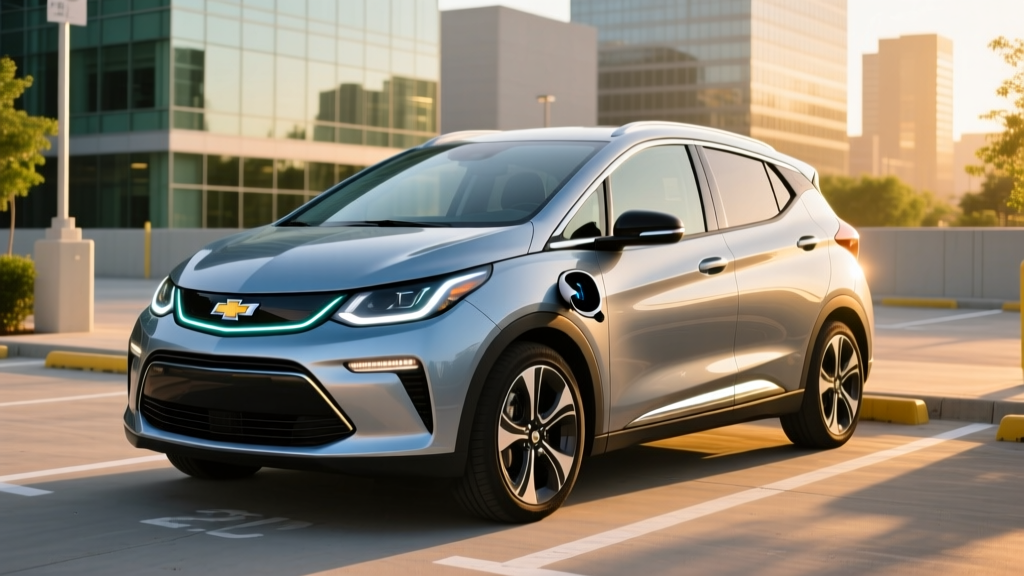
The 2023 Chevrolet Bolt EV occupies a strange space in the electric vehicle landscape. General Motors slashed its MSRP by $5,900 for the 2023 model year, positioning it as the most affordable new EV in America at $26,500. But the Bolt carries over the same platform, battery, and charging hardware that debuted in 2017. For buyers researching the 2023 Chevrolet Bolt EV MPGe and efficiency figures, the story is one of excellent energy economy undermined by painfully slow DC fast charging. Now that production has ended and the Ultium-based next-generation Bolt is still forthcoming, the 2023 model exists as a value play on dealer lots and the used market. Here's every number that matters.
Range, Efficiency, and the 120 MPGe Question
The EPA rates the 2023 Bolt EV at 120 MPGe combined (131 MPGe city / 109 MPGe highway) and 28 kWh per 100 miles. That efficiency figure is genuinely competitive — it sits in the same ballpark as a Tesla Model 3 RWD and beats most similarly priced crossovers. The 65 kWh (usable) lithium-ion battery pack delivers an EPA-estimated 259 miles of range, which remains impressive for a sub-$30,000 hatchback.
EPA estimate: 259 miles. In practice, expect 230–250 miles in mixed city/highway driving at moderate temperatures. Sustained highway speeds above 70 mph drop efficiency to roughly 31–33 kWh/100mi, cutting range to approximately 200–220 miles. In freezing weather (below 32°F), range loss of 20–30% is typical, meaning winter highway range may dip to 160–180 miles. The Bolt lacks a heat pump, relying on resistive cabin heating that draws heavily from the battery.
City drivers who lean on regenerative braking will see the best results. The Bolt's one-pedal driving mode is effective and well-calibrated, allowing most commuters to rarely touch the brake pedal. In stop-and-go traffic, hitting or even exceeding the 131 MPGe city rating is realistic.
| Metric | Value |
|---|---|
| MPGe (combined) | 120 MPGe |
| MPGe (city) | 131 MPGe |
| MPGe (highway) | 109 MPGe |
| Energy consumption | 28 kWh / 100 mi |
| EPA range | 259 miles |
| Battery (usable) | 65 kWh |
| Battery chemistry | NMC (Nickel Manganese Cobalt) |
The Bolt uses an NMC (nickel manganese cobalt) battery supplied by LG Energy Solution. NMC packs offer higher energy density than LFP (lithium iron phosphate) alternatives, which is how Chevrolet fits 65 usable kWh into a compact hatchback. The trade-off is that NMC chemistry prefers you avoid routinely charging to 100% or discharging to near-zero — daily charging to 80% is recommended for longevity, with full charges reserved for road trips.
Charging Speed: The Bolt's Biggest Weakness
If the Bolt EV has a dealbreaker, this is it. The 2023 model maxes out at 55 kW on DC fast charging — a figure that was acceptable in 2017 but is severely outclassed by 2023-era competitors pulling 150–250 kW. A 10–80% charge takes approximately 47 minutes under ideal conditions, and that's at peak rate, which the Bolt only sustains briefly below 50% state of charge before tapering significantly.
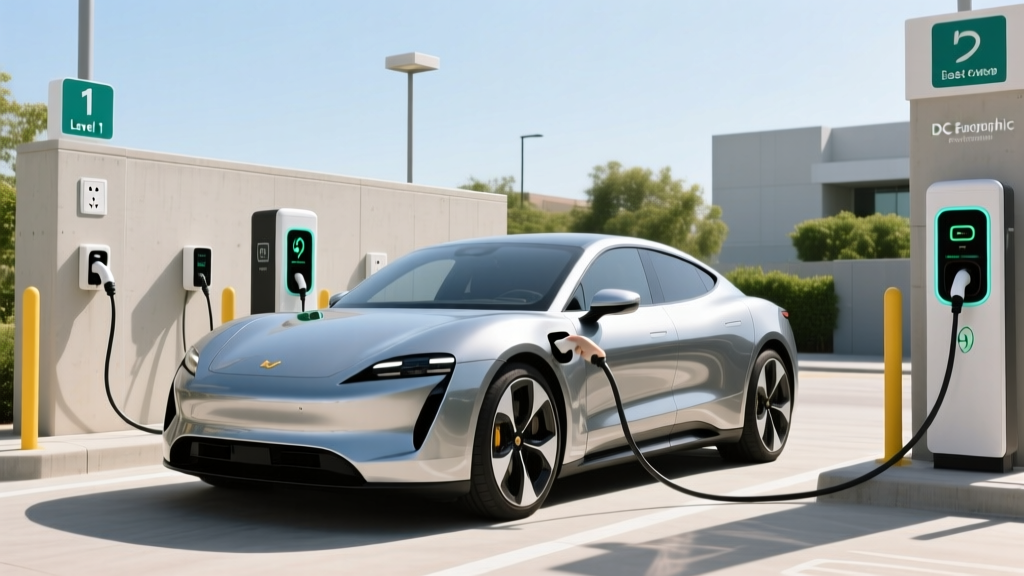
| Level | Power | Speed / Time | Connector |
|---|---|---|---|
| Level 1 (120V) | ~1.4 kW | ~4 mi/hr | J1772 (NACS adapter available) |
| Level 2 (240V) | 11.5 kW (max) | ~39 mi/hr; full charge in ~7 hr | J1772 |
| DC Fast Charge | 55 kW (peak) | 10–80% in ~47 min | CCS1 |
Level 2 home charging is where the Bolt actually performs well. The onboard charger accepts up to 11.5 kW on a 48-amp Level 2 circuit, which is better than many competitors that cap at 7.2 or 9.6 kW. A full charge from empty takes roughly seven hours — easily achievable overnight. For a commuter who charges at home every night and rarely road-trips, the Bolt's home charging capability is more than adequate.
The critical issue is road trips. On a 300-mile journey, you'll need at least one DC fast-charge stop, and that stop will take nearly an hour — roughly double or triple what you'd spend in a Hyundai Ioniq 5 or Tesla Model 3 at a comparable charger. The charging curve tapers hard above 80% state of charge, so charging past 80% on a road trip is painfully slow. Plan to charge to 80% and go.
According to fueleconomy.gov, the Bolt's charge rate reflects its older-generation thermal management system. The battery pack lacks active liquid cooling during DC fast charging, which limits how aggressively the car can accept current without overheating the cells.
Performance and Drivetrain
The 2023 Bolt EV is motivated by a single front-mounted permanent-magnet electric motor producing 200 horsepower and 266 lb-ft of torque. That's front-wheel drive only — no all-wheel-drive option exists. The instant torque delivery makes the Bolt feel punchy around town, and Chevrolet quotes a 0–60 mph time of approximately 6.5 seconds. That's quick enough for confident highway merging and passing, though it trails the Tesla Model 3 RWD (5.8 seconds) and Hyundai Kona Electric (6.4 seconds).
Ride quality is compliant for a compact hatchback, and the low center of gravity (thanks to the under-floor battery pack) keeps body roll reasonable in corners. The steering is light and numb, which suits city driving but feels less engaging on twisty roads. Road noise is noticeable at highway speeds — a reminder that this platform was engineered to a budget.
| Spec | Value |
|---|---|
| Horsepower | 200 hp |
| Torque | 266 lb-ft |
| 0–60 mph | ~6.5 seconds |
| Drivetrain | FWD (single motor) |
| Top speed | ~93 mph (electronically limited) |
Pricing, Trims, and Federal Tax Credit Eligibility
The 2023 Bolt EV launched with a dramatic price cut that made headlines across the auto industry. Two trims were offered:
| Trim | Base MSRP | §30D Credit (if eligible) | Effective Price |
|---|---|---|---|
| 1LT | $26,500 | Up to $7,500 | As low as $19,000 |
| 2LT | $29,700 | Up to $7,500 | As low as $22,200 |
Does the 2023 Bolt EV qualify for the federal tax credit? For the 2023 tax year, the Bolt EV was eligible for the full $7,500 under IRS §30D because its battery cells and modules were manufactured in the U.S. (by LG Energy Solution in Ohio), and it met the critical-minerals sourcing requirements in place at that time. However, eligibility depends on several buyer-specific factors:
- MSRP cap: The Bolt's MSRP is well below the $55,000 cap for cars/hatchbacks — no issue here.
- Income cap: Modified adjusted gross income must not exceed $150,000 (single), $225,000 (head of household), or $300,000 (joint filing). Check IRS.gov for current rules.
- Battery sourcing: Sourcing requirements tightened significantly in 2024 and beyond. For 2023 purchases, the Bolt met the requirements. For used Bolt purchases now, the separate used-EV credit (§25E, up to $4,000) may apply with different rules.
- Point-of-sale transfer: Beginning in 2024, buyers can transfer the credit to the dealer at purchase for an immediate price reduction. For 2023 purchases, the credit was claimed on your tax return.
Since the Bolt is no longer in production (GM ended assembly in late 2023 to retool for the next-generation model), remaining new inventory is limited. Most buyers today are looking at the used market, where the §25E used-EV credit (up to $4,000 or 30% of sale price, whichever is less) may apply to purchases from licensed dealers, subject to a $25,000 sale-price cap and lower income limits ($75,000 single / $150,000 joint). Consult a tax professional for your specific situation.
Interior, Cargo Space, and Technology
The Bolt EV's cabin is functional but unmistakably budget-oriented. Hard plastics dominate the dashboard and door panels, though the 2023 refresh added a larger 10.2-inch touchscreen running Chevrolet's Infotainment 3 Plus system with wireless Apple CarPlay and Android Auto. A 10.2-inch digital driver display replaces the older instrument cluster and provides clear readouts for range, energy flow, and regen levels.
Passenger space is surprisingly generous for a subcompact hatchback:
| Dimension | Measurement |
|---|---|
| Front legroom | 42.8 inches |
| Rear legroom | 35.6 inches |
| Cargo (behind rear seats) | 16.6 cu ft |
| Cargo (rear seats folded) | 57.0 cu ft |
| Curb weight | ~3,563 lbs |
Front seats are comfortable for long drives, but the rear bench is flat and firm — fine for kids or short trips, less ideal for tall adults on longer journeys. The 16.6 cubic feet of cargo space behind the rear seats is adequate for groceries and a couple of suitcases, and folding the 60/40 split rear bench opens up 57 cubic feet for larger hauls. There is no frunk (front trunk); the space under the hood houses the motor and power electronics.
On the driver-assistance front, the 2023 Bolt includes Chevy Safety Assist as standard: automatic emergency braking, forward collision alert, lane-keeping assist, lane-departure warning, following-distance indicator, and automatic high beams. Adaptive cruise control is available on the 2LT trim. Notably, the Bolt does not offer GM's Super Cruise hands-free driving system — that's reserved for higher-tier GM vehicles. This is an SAE Level 1 system at best; the driver must remain fully engaged at all times.
Warranty and Battery Longevity
Chevrolet backs the 2023 Bolt EV with a competitive warranty package:
| Component | Coverage |
|---|---|
| Bumper-to-bumper | 3 years / 36,000 miles |
| Powertrain | 5 years / 60,000 miles |
| Battery & EV components | 8 years / 100,000 miles |
The 8-year/100,000-mile battery warranty guarantees that the pack will retain at least 60% of its original capacity during the coverage period. In practice, NMC batteries from LG have shown moderate degradation in Bolt owners — typically 5–10% loss over the first 50,000 miles, with the curve flattening afterward. The Bolt's passive thermal management (air-cooled with limited liquid cooling) means degradation may accelerate in extremely hot climates if the car is frequently DC fast-charged.
An important note for prospective used buyers: GM issued a recall for 2017–2019 Bolt EVs related to battery fire risk, which was addressed through software updates and, in some cases, battery module replacements. The 2023 model year was not affected by this recall, but it's worth verifying recall status via NHTSA.gov using the VIN before purchasing any Bolt.
Pros and Cons at a Glance
Pros
- 259-mile EPA range at a bargain price point
- 120 MPGe combined — excellent energy efficiency
- Strong 11.5 kW Level 2 onboard charging
- Spacious front seats and generous cargo area for a subcompact
- Standard wireless Apple CarPlay and Android Auto
- Eligible for full $7,500 federal credit (2023 purchase) or used-EV credit
- One-pedal driving mode is smooth and effective
Cons
- 55 kW DC fast charging is painfully slow for road trips
- No heat pump — significant winter range loss
- Dated platform with budget interior materials
- No AWD option available
- No Super Cruise or advanced Level 2 driver assist
- No frunk for additional storage
- Discontinued — no new production; limited remaining inventory
Who Should Buy the 2023 Bolt EV?
Choose the 2023 Bolt EV if: You're a daily commuter with reliable home Level 2 charging, your round-trip commute is under 150 miles, you rarely take road trips over 250 miles, and you want maximum range per dollar. It's ideal as a second car, a budget-conscious first EV, or an Uber/Lyft vehicle in metro areas where overnight home charging covers daily needs.
Look elsewhere if: You take frequent road trips and need fast DC charging (consider a Hyundai Ioniq 5 or Tesla Model 3), you live in a cold climate without a garage (the lack of a heat pump hurts), you need AWD for snow, or you want the latest driver-assistance tech.
The Bolt's best use case is a home-charging commuter who values low running costs over road-trip convenience. At $0.04–$0.05 per mile on home electricity (depending on your utility rate), the Bolt is one of the cheapest vehicles to "fuel" in America. For buyers who can find remaining new stock or a low-mileage used example, the value proposition remains strong — just go in with eyes open about the charging limitations.
Frequently Asked Questions
What is the real-world range of the 2023 Chevrolet Bolt EV?
The EPA rates it at 259 miles. In real-world mixed driving at moderate temperatures, expect 230–250 miles. Highway-only driving at 75+ mph reduces range to roughly 200–220 miles. In freezing weather, range can drop to 160–180 miles due to the lack of a heat pump and resistive cabin heating.
How fast does the 2023 Bolt EV charge?
On DC fast charging, it peaks at 55 kW, taking approximately 47 minutes from 10–80%. On Level 2 home charging (240V, 48-amp circuit), it accepts up to 11.5 kW, adding roughly 39 miles of range per hour and fully charging in about 7 hours. Level 1 (standard 120V outlet) adds about 4 miles per hour — fine for emergency top-ups but not practical as a primary charging method.
Does the 2023 Bolt EV qualify for the federal EV tax credit?
For new purchases made in 2023, the Bolt EV qualified for the full $7,500 §30D credit, subject to buyer income caps ($150K single / $300K joint). For used purchases today, the §25E used-EV credit (up to $4,000) may apply if the sale price is $25,000 or less and buyer income is under $75,000 (single) or $150,000 (joint). Always verify current eligibility on IRS.gov or with a tax professional.
Is the 2023 Bolt EV worth buying vs. competitors?
Against the Hyundai Kona Electric (258-mile range, ~100 kW DC charging), the Bolt wins on price but loses on charging speed. Against the Tesla Model 3 RWD (272-mile range, ~170 kW DC charging), the Bolt is far cheaper but offers less range, slower charging, no Supercharger access (without adapters), and a less refined platform. If road trips are rare, the Bolt's value is hard to beat. If you need fast charging, spend more.
What battery chemistry does the Bolt EV use?
The 2023 Bolt EV uses an NMC (nickel manganese cobalt) lithium-ion battery pack manufactured by LG Energy Solution. NMC offers higher energy density than LFP, enabling 65 usable kWh in a compact package. For longevity, charge to 80% for daily use and reserve 100% charges for road trips.
Is the 2023 Bolt EV still in production?
No. GM ended production of this generation Bolt EV in late 2023. A next-generation Bolt based on GM's Ultium platform has been announced but is not yet available. Remaining 2023 models may be found as new old-stock at dealers or on the used market.