Quick Verdict: The Sport Sedan That Doesn't Sacrifice EV Practicality
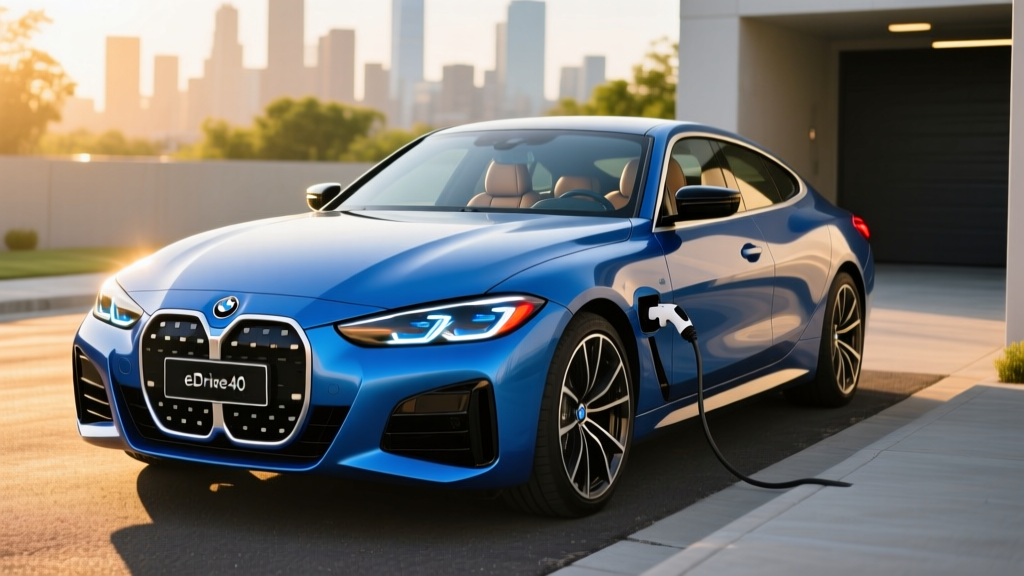
The BMW i4 eDrive40 occupies a specific niche that few electric vehicles fill well: a premium sport sedan that drives like a BMW first and happens to be electric second. With a single rear-mounted motor producing 335 horsepower, the eDrive40 is the volume seller in the i4 lineup — and for good reason. It delivers the best combination of range, performance, and price in the family. If you've been searching for BMW i4 eDrive40 0-60 times and real-world range data, this review gives you the exact numbers alongside ownership insights you won't find on a spec sheet.
For the 2026 model year, the i4 receives a mild refresh with updated styling, the latest iDrive 8.5 infotainment system, and minor efficiency tweaks. The core architecture — BMW's CLAR platform adapted for electrification — remains unchanged, which means proven reliability and a driving dynamic that separates it from crossover-heavy EV competition.
BMW i4 eDrive40 Specifications at a Glance
| Specification | 2026 BMW i4 eDrive40 |
|---|---|
| EPA Range | 307 miles (19-inch wheels) |
| Battery (Usable Capacity) | 81.5 kWh net / ~96 kWh gross (NMC) |
| Motor / Drivetrain | Single rear motor / RWD |
| Horsepower | 335 hp |
| Torque | 317 lb-ft |
| 0-60 mph | 5.5 seconds (EPA-rated); 5.0-5.3 sec real-world |
| Top Speed | 118 mph (electronically limited) |
| Max DC Fast Charge | 205 kW (CCS) / ~200 kW (NACS via adapter) |
| 10-80% DC Charge Time | ~31 minutes |
| Level 2 AC Charge Rate | 11 kW (up to ~37 miles/hr) |
| EPA Efficiency | 109 MPGe combined / 31 kWh/100mi |
| Cargo Volume | 16.6 cu ft (rear seats up) |
| Base MSRP (eDrive40) | $57,900 (before destination) |
| Battery Warranty | 8 years / 100,000 miles |
Real-World Range: What the EPA Sticker Doesn't Tell You
EPA Estimate: 307 miles (19-inch aero wheels) / 282 miles (20-inch M Sport wheels)
Real-World Highway (70-80 mph): Expect 240-265 miles in moderate temperatures
Cold Weather (below 32°F): Plan for 195-230 miles depending on cabin heat usage
City / Mixed Commuting: 280-300 miles with regenerative braking engaged
The 307-mile EPA figure applies specifically to the eDrive40 equipped with the standard 19-inch wheels and all-season tires. Opt for the M Sport package with 20-inch wheels, and you'll lose roughly 25 miles of rated range — a meaningful trade-off for aesthetics.
In real-world driving, the i4 eDrive40 behaves like most aerodynamically efficient sedans. At sustained highway speeds above 75 mph, energy consumption climbs noticeably. During mixed testing at 65-75 mph in 55-70°F conditions, expect to see approximately 3.0-3.3 miles per kWh, translating to roughly 245-270 miles before you'd want to find a charger. That's a 12-20% reduction from the EPA sticker — typical for highway-dominant driving in any EV.
Cold weather is the great equalizer. BMW's heat pump (standard on the i4) helps mitigate cabin-heating energy draw, but lithium-ion chemistry itself becomes less efficient below freezing. In 20-30°F conditions with highway driving, plan your trips around 200-220 miles of usable range. Preconditioning the battery while plugged in — a feature accessible through the BMW app — recovers some of this loss by warming the pack before departure.
According to fueleconomy.gov, the i4 eDrive40 achieves 109 MPGe combined (city 113 / highway 105), with an energy consumption rate of 31 kWh per 100 miles. That places it mid-pack among luxury EVs — not as efficient as a Tesla Model 3 Long Range, but competitive with the Mercedes EQB and Audi Q4 e-tron.
0-60 mph and Performance: The Number You Came For
BMW officially rates the i4 eDrive40's 0-60 mph time at 5.5 seconds. However, independent testing by multiple automotive outlets consistently shows the eDrive40 hitting 60 mph in the 5.0 to 5.3 second range under optimal conditions (warm battery, dry pavement, launch control engaged). BMW has a well-documented history of conservative powertrain ratings, and the i4 continues that tradition.
The single rear-mounted electric motor produces 335 horsepower and 317 lb-ft of torque, available instantly from standstill. Unlike the dual-motor M50 variant (536 hp, 3.7-sec 0-60), the eDrive40 sends all its power to the rear wheels. This gives it a traditional BMW rear-drive character — playful on canyon roads, predictable at the limit, and free of the torque-steer tendencies some AWD EVs exhibit.
Where the eDrive40 shines is mid-range acceleration. The 30-70 mph passing surge is immediate and effortless, making highway merging and overtaking genuinely confidence-inspiring. The adaptive M suspension (included with the M Sport package) keeps body roll well-controlled during spirited driving, and the low center of gravity from the underfloor battery pack gives the sedan a planted feel that belies its 4,682-pound curb weight.
For buyers cross-shopping the M50: the eDrive40 sacrifices roughly 1.5 seconds in the 0-60 sprint and gives up all-wheel drive, but gains 40+ miles of EPA range and costs roughly $10,000 less. For most daily driving, the eDrive40's performance envelope is more than adequate.
Charging Speed: DC Fast Charging and Home Level 2
The i4 eDrive40 supports DC fast charging at up to 205 kW via its CCS1 port. BMW offers a NACS adapter for Tesla Supercharger access, though peak speeds on Superchargers may be slightly lower (~180-200 kW) depending on station capability and adapter overhead.
| Charging Method | Power (kW) | Speed (miles/hr added) | Time / Notes |
|---|---|---|---|
| Level 1 (120V household) | ~1.4 kW | ~4-5 mi/hr | Emergency/trickle only; ~60+ hrs for full charge |
| Level 2 (240V, 48A home charger) | 11 kW | ~37 mi/hr | 0-100% in ~9.5 hours; ideal for overnight |
| DC Fast Charge (peak) | 205 kW | Up to ~165 mi/hr at peak | 10-80% in ~31 minutes |
| DC Fast Charge (sustained avg) | ~130-140 kW avg | ~100-115 mi/hr avg | Average across 10-80% session |
A critical note on the DC charging curve: the 205 kW peak is achievable between roughly 10-30% State of Charge (SoC) with a preconditioned battery. Above 50% SoC, the charge rate tapers progressively — dropping to approximately 100 kW by 60% and further to ~50 kW above 80%. This is standard behavior for NMC lithium-ion cells managing thermal limits, but it means the last 20% of a charge session takes disproportionately long. On road trips, plan your stops around the 10-80% window for optimal time efficiency.
For home charging, the i4's 11 kW onboard charger is a strong point. With a properly installed 48-amp Level 2 wallbox on a 60-amp circuit, you'll add approximately 37 miles of range per hour. A typical overnight session (8-10 hours) easily replenishes 250+ miles — more than enough for daily commuting. Home installation for a Level 2 charger typically runs $800-$2,500 depending on panel capacity and wiring distance, according to industry estimates. Always consult a licensed electrician for a site-specific quote.
Battery preconditioning for fast charging activates automatically when a DC fast charger is set as your navigation destination. This warms the pack to optimal temperature, enabling the peak 205 kW rate. Without preconditioning — for instance, pulling into a charger without navigation routing — you may see reduced initial charge speeds, particularly in cold weather.
Pricing, Trims, and Federal Tax Credit Eligibility
The 2026 BMW i4 eDrive40 starts at a base MSRP of $57,900, plus a $995 destination charge, bringing the total to $58,895 before options. A well-equipped example with the M Sport package, Premium package, and larger wheels typically lands between $64,000 and $68,000.
| Trim / Configuration | MSRP (incl. destination) | Est. After §30D Credit |
|---|---|---|
| eDrive40 Base | $58,895 | $51,395 (if eligible) |
| eDrive40 + M Sport Package | ~$63,500 | ~$56,000 (if eligible) |
| eDrive40 Fully Loaded | ~$68,000 | ~$60,500 (if eligible) |
| M50 (dual-motor AWD) | $70,995 | Varies — see credit rules below |
Federal Tax Credit: Does the i4 eDrive40 Qualify?
The federal EV tax credit under IRS §30D offers up to $7,500 for qualifying new EVs, but eligibility depends on multiple requirements that change periodically. As of the current rules, here is what buyers need to know:
- MSRP Cap: Sedans must have an MSRP at or below $55,000 to qualify. The i4 eDrive40's base price of $57,900 exceeds this cap, meaning it does not currently qualify for the new-vehicle §30D credit in most configurations.
- Buyer Income Limits: Modified adjusted gross income must not exceed $150,000 (single), $225,000 (head of household), or $300,000 (joint filers).
- Battery Sourcing: Critical minerals and battery component requirements from FEOC-compliant supply chains must be met — a moving target that varies by model year and production batch.
- Point-of-Sale Transfer: If the vehicle does qualify, the credit can be transferred to the dealer at purchase, reducing the upfront price rather than waiting for a tax refund.
Bottom line: The i4 eDrive40's MSRP places it above the $55,000 sedan cap for the §30D new-vehicle credit. However, a used i4 (model year 2022 or later, purchased from a dealer for $25,000 or less from a qualifying buyer) may be eligible for the up-to-$4,000 used clean vehicle credit under §25E. Always verify current eligibility on irs.gov and consult a tax professional before making purchase decisions based on credit assumptions.
Interior, Cargo, and Daily Livability
The i4 is built on BMW's CLAR platform — originally designed for the 4 Series Gran Coupe — which means it retains the proportions and interior layout of a conventional BMW sedan. This is both its greatest strength and its limitation.
Passenger space is adequate for four adults, though the rear middle seat is best reserved for short trips. Rear legroom measures 35.2 inches — competitive with the Tesla Model 3 (35.3 in) but tighter than the Hyundai Ioniq 6 (37.4 in). The transmission tunnel hump, a vestige of the shared platform with ICE 4 Series models, intrudes on rear foot space for the middle passenger.
Cargo volume is a genuine highlight: 16.6 cubic feet with the rear seats upright, expanding with the 40/20/40 split-folding rear seats lowered. The liftback-style hatch (rather than a traditional sedan trunk lid) provides a wide opening that makes loading bulky items straightforward. This is meaningfully more practical than the Tesla Model 3's 23 cu ft trunk (which has a narrower opening) and comparable to the Polestar 2's 14.4 cu ft.
The iDrive 8.5 infotainment system runs on a curved display setup: a 12.3-inch digital instrument cluster and a 14.9-inch central touchscreen merged behind a single glass panel. The system is responsive, supports wireless Apple CarPlay and Android Auto, and includes BMW's Intelligent Personal Assistant voice control. Physical climate controls have been largely absorbed into the touchscreen — a common complaint among traditional BMW fans who prefer tactile knobs.
Driver assistance is comprehensive. The standard Driving Assistant includes forward collision warning, automatic emergency braking, lane departure warning, and blind-spot monitoring. The optional Driving Assistant Professional adds adaptive cruise control with stop-and-go, lane-keeping assist with active side collision avoidance, and evasive steering assist. Note: these are SAE Level 2 driver-assist systems requiring full driver attention — not autonomous driving.
Warranty and Long-Term Battery Outlook
BMW covers the i4 eDrive40 with the following warranty structure:
- New Vehicle Limited Warranty: 4 years / 50,000 miles
- Battery Warranty: 8 years / 100,000 miles (retains at least 70% of original capacity)
- Corrosion Perforation Warranty: 12 years / unlimited miles
- Roadside Assistance: 4 years / unlimited miles
The battery pack uses NMC (nickel-manganese-cobalt) chemistry manufactured by CATL/Samsung SDI depending on production batch. NMC cells offer higher energy density than LFP alternatives, which is why the i4 achieves 307 miles in a relatively compact sedan footprint. The trade-off is that NMC batteries are generally more sensitive to sustained high SoC and extreme temperatures over the long term.
Best practices for maximizing i4 battery longevity:
- Set a daily charge limit of 80-85% for routine commuting (configurable in the BMW app)
- Use the battery preconditioning feature before DC fast charging
- Avoid leaving the vehicle at 100% SoC for extended periods, especially in hot weather
- Utilize the battery's thermal management system by keeping the vehicle plugged in during extreme cold
Real-world degradation data from early 2022-2024 i4 owners suggests approximately 3-5% capacity loss over the first 40,000-60,000 miles, with the curve flattening thereafter — consistent with modern NMC pack behavior. BMW's 70% capacity retention guarantee at 8 years/100,000 miles is industry-standard, though some competitors (Hyundai/Kia at 10 years/100,000 miles) offer longer coverage.
Pros and Cons
- 307-mile EPA range is competitive for the luxury sedan segment
- Engaging RWD driving dynamics that feel distinctly BMW
- Liftback cargo versatility (16.6 cu ft) beats traditional sedan trunks
- 11 kW Level 2 charging enables fast overnight replenishment
- Conservative 0-60 ratings — real-world times beat BMW's claim
- Build quality and cabin materials exceed most EV competitors
- MSRP exceeds $55,000 sedan cap — no federal §30D credit
- Rear-seat space is tighter than rivals like Ioniq 6 or Model S
- 205 kW peak DC charge rate trails 800V competitors (Hyundai, Porsche)
- Transmission tunnel hump compromises rear middle-seat comfort
- Climate controls buried in touchscreen — no physical knobs
- 20-inch M Sport wheels reduce range by ~25 miles
Who Should Buy the BMW i4 eDrive40?
- You want a premium sport sedan that drives like a BMW — not an appliance
- Your daily commute is under 80 miles round-trip with home charging access
- You value build quality, cabin materials, and brand cachet over maximum range-per-dollar
- You occasionally carry cargo that benefits from the liftback hatch design
- You prefer RWD driving dynamics and don't need all-wheel drive
- Federal tax credit eligibility is essential to your purchase math (consider Hyundai Ioniq 6 or base Tesla Model 3)
- You regularly carry rear-seat passengers who need generous legroom
- You prioritize the fastest possible DC charging (800V vehicles like the Ioniq 5 or Porsche Taycan charge faster)
- You need 350+ miles of range for frequent long road trips without charging stops
Compared to the Tesla Model 3 Long Range ($47,740 base, 341-mile EPA range, 4.2-sec 0-60), the i4 eDrive40 trades range and price for interior quality, driving engagement, and dealership service infrastructure. Against the Hyundai Ioniq 6 SEL ($42,715, 361-mile range, 800V charging), the BMW wins on performance and materials but loses on efficiency, charging speed, and tax credit eligibility. The Polestar 2 ($49,900, 276-mile range) is a closer rival in spirit but trails on range and cargo space.
Frequently Asked Questions
What is the real-world 0-60 mph time of the BMW i4 eDrive40?
BMW officially rates the eDrive40 at 5.5 seconds. Independent testing consistently records 5.0-5.3 seconds under favorable conditions with a warm battery and launch control engaged. BMW is known for conservative powertrain ratings.
How far can the i4 eDrive40 actually go on a charge?
The EPA rates it at 307 miles with 19-inch wheels. Real-world highway driving at 70-80 mph yields approximately 240-265 miles. In freezing temperatures, plan for 195-230 miles. City commuting with regenerative braking can approach 280-300 miles.
Does the BMW i4 eDrive40 qualify for the $7,500 federal tax credit?
As of current IRS §30D rules, the i4 eDrive40's base MSRP of $57,900 exceeds the $55,000 sedan cap, making it ineligible for the new-vehicle credit. Used i4 models may qualify for the §25E used clean vehicle credit (up to $4,000) if purchased for $25,000 or less. Verify current rules at irs.gov and consult a tax professional.
How long does it take to charge the i4 eDrive40 at home?
With an 11 kW Level 2 home charger (48-amp circuit), the i4 charges from empty to full in approximately 9.5 hours, adding about 37 miles of range per hour. Most owners who plug in overnight never need to visit a public charger for daily driving.
Is the BMW i4 eDrive40 better than the Tesla Model 3?
It depends on priorities. The Model 3 Long Range wins on range (341 vs 307 miles), 0-60 speed (4.2 vs 5.5 sec rated), price (~$47,740 vs $58,895), and Supercharger network access. The i4 eDrive40 wins on interior material quality, driving dynamics, dealership service, and liftback cargo versatility. Neither is objectively better — they serve different buyer values.
What battery chemistry does the i4 eDrive40 use?
The i4 uses NMC (nickel-manganese-cobalt) lithium-ion cells. NMC offers higher energy density than LFP chemistry, enabling the i4's 307-mile range in a compact sedan package. The trade-off is slightly more sensitivity to sustained high SoC and extreme temperatures over the battery's lifespan. BMW recommends an 80-85% daily charge limit for longevity.