Quick Verdict: The Entry Point to BMW's Electric Gran Coupe
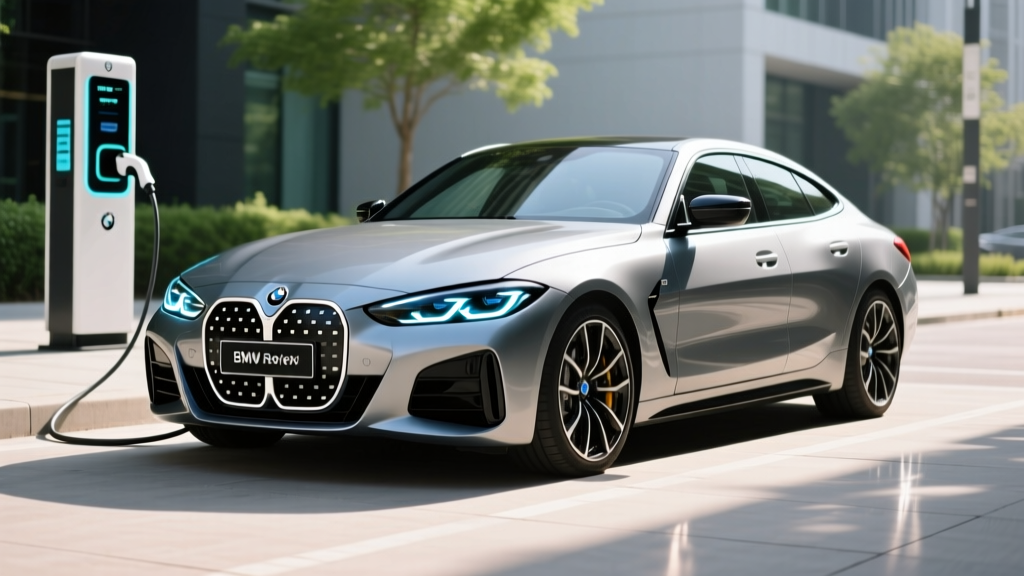
The 2026 BMW i4 eDrive35 sits at the base of the i4 lineup, offering a more accessible price point while retaining the Gran Coupe's practicality and BMW's driving dynamics. With 282 miles of EPA-estimated range and rear-wheel-drive simplicity, it targets buyers who want premium EV ownership without the M50's performance premium. But does the eDrive35's single-motor setup and smaller battery deliver enough value in a competitive luxury EV segment?
| Specification | Value |
|---|---|
| EPA Range | 282 miles (19" wheels) |
| Battery Capacity | 70.2 kWh usable (81.5 kWh gross), NMC chemistry |
| Drivetrain | Rear-wheel drive, single motor |
| Horsepower | 281 hp |
| 0-60 mph | 5.8 seconds |
| Max DC Fast Charge | 200 kW peak |
| 10-80% DC Charge Time | ~31 minutes |
| Level 2 Charge Rate | 11 kW (30 miles per hour) |
| EPA Efficiency | 99 MPGe combined / 34 kWh/100mi |
| Cargo Volume | 16.6 cu ft (rear seats up), 45.6 cu ft (folded) |
| Base MSRP | $52,575 (including destination) |
| Battery Warranty | 8 years / 100,000 miles |
Real-World Range: What to Expect Beyond the EPA Sticker
EPA Estimate: 282 miles (with 19-inch wheels)
Real-World Expectation: 240-260 miles highway driving; 220-240 miles in cold weather (below 40°F)
The i4 eDrive35's 282-mile EPA rating applies specifically to the 19-inch wheel configuration. Opt for the available 20-inch wheels, and you'll see that drop to approximately 252 miles due to increased rolling resistance and aerodynamic drag.
In real-world highway testing at 70-75 mph, expect range to fall 8-15% below the EPA sticker. This is typical for EVs, as the EPA cycle includes substantial city driving where regenerative braking recovers energy. On a 200-mile highway trip in moderate temperatures (60-75°F), you'll likely arrive with 40-60 miles of range remaining.
Cold weather presents a more significant challenge. Lithium-ion batteries lose efficiency in freezing temperatures, and cabin heating draws substantial power. In sustained sub-40°F conditions, plan for 20-25% range reduction. The i4's heat pump (standard on 2026 models) mitigates this somewhat, but physics wins—you'll see closer to 220-240 miles in winter highway driving. Preconditioning the battery while plugged in helps preserve range and improves charging speed at cold DC fast chargers.
For context, the average American drives 37 miles per day according to FHWA data. Even with range loss, the eDrive35 covers a week of commuting with range to spare, provided you have home charging access.
Charging Speed: DC Fast Charging and Home Setup
| Charging Method | Power | Time/Rate | Notes |
|---|---|---|---|
| DC Fast Charge (peak) | 200 kW | 10-80% in ~31 minutes | CCS2 connector; curve tapers above 80% |
| DC Fast Charge (sustained avg) | ~150 kW | 10-80% realistic average | Peak 200 kW not sustained full session |
| Level 2 (240V, 48A) | 11 kW | ~7 hours 0-100% / 30 mi/hr | Requires 60A circuit |
| Level 2 (240V, 32A) | 7.7 kW | ~10 hours 0-100% / 21 mi/hr | Common on 40A circuits |
| Level 1 (120V) | 1.4 kW | ~50 hours 0-100% / 4 mi/hr | Emergency/trickle only |
The i4 eDrive35 peaks at 200 kW on DC fast chargers, but like all EVs, it doesn't sustain that rate throughout the session. BMW's charge curve holds near peak power from 10-40% state of charge, then progressively tapers to protect battery longevity. Expect an average rate closer to 150 kW across a full 10-80% session, translating to roughly 31 minutes at a properly functioning 350 kW Electrify America or EVgo station.
One practical note: the i4 uses the CCS2 connector standard. With BMW transitioning to NACS (Tesla's connector) for 2025+ models, 2026 i4 vehicles ship with a CCS port but include access to Tesla Superchargers via an included adapter. This unlocks 15,000+ additional fast-charging locations, though charge speed is limited by the adapter's ~150 kW ceiling.
For home charging, the i4's 11 kW onboard charger is a strong point. With a proper 60-amp circuit and 48-amp Level 2 wallbox (like the ChargePoint Home Flex or BMW Wallbox), you'll add 30 miles of range per hour—enough to fully replenish overnight. Most eDrive35 owners driving 40-60 miles daily will wake up to a full battery every morning without ever visiting a public charger.
Installation costs for a 60-amp circuit typically run $800-2,000 depending on panel proximity and local permitting. If your electrical panel is at capacity, a 200-amp service upgrade adds $1,500-3,000. Consult a licensed electrician for a site-specific quote.
Performance and Driving Dynamics
The eDrive35's single rear-mounted motor produces 281 horsepower and 295 lb-ft of torque, delivering a 5.8-second 0-60 mph time. That's comfortably quick for daily driving—merge onto highways with confidence, and you'll leave most traffic behind. The instant torque delivery characteristic of electric motors makes the eDrive35 feel quicker than the numbers suggest, particularly in city driving.
Rear-wheel drive gives the i4 a balanced, engaging character that BMW enthusiasts will recognize. The low center of gravity (battery pack mounted under the floor) minimizes body roll, and the 50:50 weight distribution contributes to predictable handling. The steering is precise if slightly numb—a common trait in electric BMWs with their heavy curb weight (4,621 lbs).
Regenerative braking offers multiple modes: adaptive (uses navigation and radar to adjust regen based on traffic ahead), high (near one-pedal driving), and low (coasting). The adaptive mode is particularly well-executed, reducing brake pedal use in stop-and-go traffic while maximizing efficiency.
Compared to the dual-motor xDrive40 (335 hp, 5.3s 0-60) or the M50 (536 hp, 3.7s 0-60), the eDrive35 sacrifices straight-line speed but gains efficiency and a lower price. Unless you regularly tackle mountain passes or need all-wheel-drive traction in snow, the rear-drive setup handles most conditions capably.
Pricing, Tax Credits, and Value Proposition
| Configuration | MSRP | After Potential Credits |
|---|---|---|
| eDrive35 base | $52,575 | $45,075 (with $7,500 federal credit) |
| eDrive35 with Premium Package | $57,875 | $50,375 |
| eDrive35 as-tested (loaded) | $64,200 | $56,700 |
The 2026 i4 eDrive35 starts at $52,575 including destination charges. That positions it $8,000 below the xDrive40 and $18,000 below the M50, making it the value play in the i4 lineup.
Federal tax credit eligibility under IRS §30D is complex for the i4. The vehicle qualifies on MSRP grounds (under the $55,000 sedan cap), but battery component and critical mineral sourcing requirements determine whether you receive the full $7,500, partial $3,750, or no credit. As of 2026, BMW's battery supply chain partially meets these requirements—check the EPA's credit tracker for current eligibility before purchasing. Income caps also apply: $150,000 single / $300,000 joint modified adjusted gross income.
The 2026 i4 can transfer the tax credit to the dealer at point of sale, reducing your purchase price directly rather than waiting for tax refund. This requires completing IRS Form 8936 at the dealership.
Popular options that push the as-tested price higher include the Premium Package ($3,400: heated steering wheel, surround-view camera, premium audio), M Sport Package ($4,100: sport suspension, M wheels, aerodynamic kit), and Executive Package ($3,750: adaptive LED headlights, parking assistant, gesture control). A well-equipped eDrive35 easily reaches $60,000-65,000.
Interior Space, Technology, and Daily Livability
The i4's Gran Coupe body style delivers practicality that sedans can't match. The liftback design opens to reveal 16.6 cubic feet of cargo space with rear seats upright—larger than a 3 Series trunk—and 45.6 cubic feet with the 40/20/40 split rear seats folded. That accommodates four suitcases or a week's groceries for a family of four without resorting to a roof box.
Passenger space is adequate but not generous. Front legroom measures 41.5 inches (comfortable for tall drivers), while rear legroom is 35.2 inches—tight for adults on long trips. The sloping roofline cuts headroom in the back, making the i4 better suited for two adults plus children than four full-size passengers.
BMW's iDrive 8.5 infotainment system runs on a curved display combining a 12.3-inch instrument cluster and 14.9-inch touchscreen. The system is responsive, with wireless Apple CarPlay and Android Auto, over-the-air updates, and a capable voice assistant. Physical climate controls have been largely absorbed into the touchscreen—a frustration for some users, though the system learns your preferences.
Driver assistance features include BMW's Active Driving Assistant Professional (adaptive cruise control with stop-and-go, lane keeping, automatic emergency braking). This is a Level 2 system per SAE definitions, meaning you must remain engaged with hands on the wheel and eyes on the road. It's competent for highway cruising but not autonomous driving.
Notable drawbacks: the i4's regenerative braking can be grabby in high mode until you acclimate. Rear visibility is compromised by the sloping rear window (the surround-view camera helps). And while build quality is excellent, the cabin materials don't quite match the Mercedes EQB or Audi Q4 e-tron in perceived luxury at this price point.
Pros, Cons, and Who Should Buy
Pros
- 282-mile EPA range covers most daily needs with margin
- 11 kW Level 2 charging enables fast home replenishment
- Liftback cargo versatility (16.6 cu ft) beats traditional sedans
- Rear-wheel-drive dynamics feel engaging and balanced
- Strong build quality and iDrive 8.5 tech suite
- Tesla Supercharger access via included NACS adapter
Cons
- Real-world range drops significantly in cold weather (220-240 mi)
- Rear seat headroom and legroom tight for adults
- Federal tax credit eligibility uncertain due to battery sourcing rules
- Options quickly push price past $60,000
- Single-motor RWD limits traction in heavy snow vs AWD competitors
- DC fast-charge curve tapers early; 10-80% takes 31 min (slower than Hyundai Ioniq 6)
Best for: Daily commuters with home charging who want a premium badge, liftback practicality, and don't need all-wheel drive. The eDrive35 excels as a 40-60 mile round-trip commuter with occasional 200-mile road trips.
Consider alternatives if: You regularly carry four adults (rear space is tight), live in heavy snow regions (AWD competitors like the Tesla Model 3 Long Range or Ford Mustang Mach-E offer better traction), or need maximum range for frequent 300+ mile trips (the xDrive40's larger battery or Tesla Model 3's 341-mile EPA rating may serve better).
Competitive Comparison: How the i4 eDrive35 Stacks Up
| Model | EPA Range | 0-60 mph | Base MSRP | DC Fast Charge |
|---|---|---|---|---|
| BMW i4 eDrive35 | 282 mi | 5.8s | $52,575 | 200 kW |
| Tesla Model 3 Long Range RWD | 341 mi | 5.8s | $47,740 | 250 kW |
| Mercedes EQB 300 4MATIC | 245 mi | 7.7s | $54,500 | 100 kW |
| Audi Q4 e-tron Premium | 265 mi | 7.3s | $50,900 | 175 kW |
| Hyundai Ioniq 6 SEL | 305 mi | 5.1s | $45,500 | 240 kW |
The i4 eDrive35 occupies a middle ground: more premium than the Ioniq 6, more practical than the EQB, but with less range than the Model 3. Its 200 kW charging is competitive but not class-leading—the Ioniq 6's 240 kW capability and 800V architecture deliver faster 10-80% sessions (~18 minutes vs the i4's 31).
Where the i4 wins is build quality, driving dynamics, and brand cachet. The chassis feels more substantial than the Hyundai, and the interior materials surpass the Tesla's minimalist approach. If those intangibles matter, the i4 justifies its price premium. If pure specs-per-dollar drive your decision, the Ioniq 6 or Model 3 offer more range and faster charging for less money.
Frequently Asked Questions
What is the real-world range of the BMW i4 eDrive35?
The EPA estimates 282 miles with 19-inch wheels, but expect 240-260 miles in real-world highway driving and 220-240 miles in cold weather (below 40°F). The 20-inch wheel option reduces EPA range to approximately 252 miles.
How fast does the i4 eDrive35 charge?
On DC fast chargers, it peaks at 200 kW and completes a 10-80% session in roughly 31 minutes. At home on a 48-amp Level 2 charger (11 kW), it adds 30 miles of range per hour, fully charging in about 7 hours.
Does the 2026 BMW i4 eDrive35 qualify for the federal EV tax credit?
Possibly, but it depends on battery sourcing compliance and your income. The vehicle meets the MSRP cap (under $55,000 for sedans), but IRS §30D requires specific battery component and critical mineral sourcing thresholds that change annually. Check the EPA's official credit tracker and consult a tax professional before assuming eligibility. Income caps apply: $150,000 single / $300,000 joint.
How much does the i4 eDrive35 cost after tax credits?
If you qualify for the full $7,500 federal credit and can transfer it at point of sale, the base eDrive35 drops from $52,575 to $45,075. State incentives (like California's $2,000 CVRP or Colorado's $5,000 credit) may stack on top, though eligibility varies by jurisdiction.
Is the BMW i4 eDrive35 worth buying vs competitors?
It depends on your priorities. The i4 offers superior build quality, engaging rear-drive dynamics, and liftback practicality. But the Tesla Model 3 Long Range delivers 59 more miles of EPA range for $5,000 less, and the Hyundai Ioniq 6 charges faster. Choose the i4 if premium feel and BMW's driving character matter; choose competitors if you maximize specs-per-dollar.
What are the biggest pros and cons?
Pros: 282-mile range, 11 kW home charging, liftback cargo space, balanced RWD handling, premium interior. Cons: cold-weather range loss, tight rear seats, uncertain tax credit eligibility, options inflate price quickly, 31-minute DC charge time slower than some rivals.
Does the i4 eDrive35 have all-wheel drive?
No. The eDrive35 is rear-wheel drive only. If you need AWD for snow or performance, step up to the xDrive40 (dual-motor, 335 hp) or M50.
What is the battery warranty?
BMW covers the high-voltage battery for 8 years or 100,000 miles, whichever comes first. The warranty guarantees the battery will retain at least 70% of its original capacity during that period.