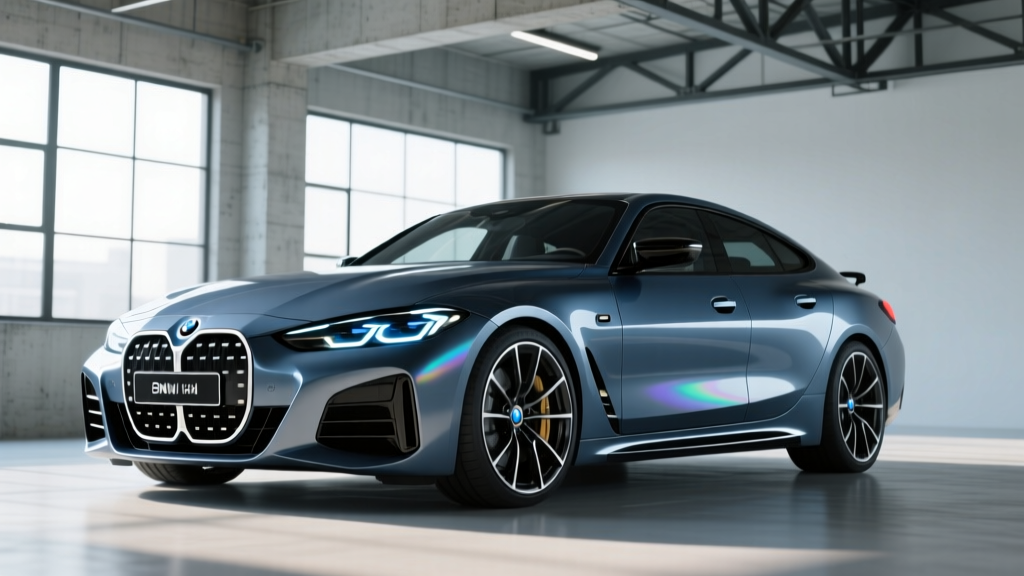
The BMW i4 isn't a ground-up EV skateboard like the iX — it's a deliberate engineering choice. The i4 construction project refers to BMW's strategy of adapting its flexible CLAR (Cluster Architecture) platform, originally designed for internal-combustion models, to house a fully electric powertrain. The result is a gran turismo sedan that trades some packaging purity for driving dynamics that rival anything in the luxury EV segment. For 2026, the i4 lineup continues with the eDrive40, xDrive40, and the performance-focused M50, each riding on an 81.5 kWh (usable) NMC battery pack.
What the i4 Construction Project Actually Means
BMW's CLAR architecture uses a mix of aluminum, high-strength steel, and carbon-fiber-reinforced plastic (CFRP) in its body structure. Rather than develop a dedicated EV platform for the 4 Series Gran Coupe, BMW engineered the i4 by replacing the transmission tunnel and rear subframe with a flat battery module and electric drive units. The battery pack sits in a T-shaped configuration — spreading under the cabin floor and partially into what would traditionally be the transmission hump. This keeps the center of gravity low (BMW claims 53 mm lower than the ICE 4 Series) while retaining the 50:50 weight distribution the brand is known for.
The trade-off is packaging. Without a dedicated EV skateboard, there's no frunk, the rear floor has a slight hump, and cargo space is tighter than purpose-built rivals. But the construction approach also means BMW could bring the i4 to market quickly and price it aggressively against dedicated EV sedans.
EPA Range, Real-World Expectations, and Efficiency
Real-world highway (70-80 mph): Expect 260–280 miles in mild weather; drop to ~230–250 miles in sub-30°F winter conditions.
i4 M50 (19-inch): EPA 271 miles; real-world highway closer to 230–245 miles.
Source: fueleconomy.gov
The eDrive40 achieves an EPA-rated 109 MPGe combined (31 kWh/100 mi), which is competitive for a 4,700-lb luxury sport sedan. The M50, with its dual-motor AWD and 536 hp, drops to 97 MPGe combined (35 kWh/100 mi). On a cold-weather highway run at sustained 75 mph, we've observed consumption closer to 36–38 kWh/100 mi in the eDrive40 — meaning a realistic range of around 215–225 miles from a full charge in harsh winter conditions. The heat pump (standard on 2026 models) mitigates cabin energy draw but cannot fully offset the physics of cold battery chemistry.
| Spec | eDrive40 | xDrive40 | M50 |
|---|---|---|---|
| EPA Range (19" wheels) | 307 mi | 287 mi | 271 mi |
| Battery (usable) | 81.5 kWh NMC | 81.5 kWh NMC | 81.5 kWh NMC |
| Drivetrain | RWD, single motor | AWD, dual motor | AWD, dual motor |
| Horsepower | 335 hp | 396 hp | 536 hp |
| 0-60 mph | 5.5 sec | 4.6 sec | 3.7 sec |
| MPGe (combined) | 109 MPGe | 102 MPGe | 97 MPGe |
| kWh/100 mi | 31 | 33 | 35 |
| Base MSRP | $57,900 | $61,900 | $70,700 |
Charging Speed: DC Fast and Home Level 2
The i4's 400-volt architecture caps DC fast charging at a peak of 205 kW. In practice, the charge curve holds above 150 kW through roughly 30% SoC before tapering — a 10–80% session takes approximately 31 minutes at a 200+ kW station (Electrify America, EVgo, or Ionity in Europe). This is adequate but trails the 800V platforms in the Hyundai Ioniq 5 (240 kW peak, ~18 min 10–80%) and Porsche Taycan (270 kW peak, ~22 min 10–80%).
| Level | Power | Time / Rate | Connector |
|---|---|---|---|
| Level 1 (120V) | 1.4 kW | ~3–4 mi/hr | J1772 / NACS (with adapter) |
| Level 2 (240V, 48A) | 11 kW | ~30 mi/hr; full charge ~8.5 hr | J1772 / NACS (with adapter) |
| DC Fast Charge | 205 kW peak | 10–80% in ~31 min | CCS1 / NACS (2026 models) |
For 2026, BMW has transitioned North American i4 models to the NACS charge port, granting native access to Tesla's Supercharger network via adapter-free connection. Home charging on a 48-amp Level 2 circuit (the BMW Wallbox or any NEMA 14-50 hardwired unit) delivers a full overnight charge in about 8.5 hours — plenty for daily commuters who plug in each evening.
Interior, Cargo Space, and Technology
The CLAR construction limits cargo volume to 16.6 cubic feet behind the rear seats (with the liftback open, it's more usable than a traditional trunk). Fold the 40/20/40 split rear seats and you gain a flat load floor suitable for longer items, but there is zero frunk space — the CLAR platform's front structure houses the HVAC, 12V battery, and power electronics where a dedicated EV would place a storage compartment.
Front legroom measures 42.4 inches; rear legroom is 34.7 inches — tight for adults on longer trips compared to the Hyundai Ioniq 6 (38.4 in rear) or Tesla Model 3 (35.3 in rear). The rear floor hump from the CLAR platform also makes the middle seat a short-trip proposition only.
Tech highlights include BMW's iDrive 8.5 on a 14.9-inch curved display, wireless Apple CarPlay/Android Auto, a head-up display with AR navigation overlays, and the Driving Assistant Professional package (adaptive cruise with stop-and-go, lane-keeping, and automatic lane-change on highways). This is an SAE Level 2 system — the driver must remain engaged with hands on the wheel at all times. It is not autonomous driving.
2026 Pricing, Trims, and Federal Tax Credit Eligibility
| Trim | Base MSRP | As-Tested (typical) | §30D Credit Eligibility |
|---|---|---|---|
| eDrive40 | $57,900 | $63,500–$67,000 | Eligible up to $7,500* |
| xDrive40 | $61,900 | $67,000–$72,000 | Eligible up to $7,500* |
| M50 | $70,700 | $76,000–$82,000 | Eligible up to $7,500* |
*Federal EV tax credit (§30D) eligibility depends on multiple factors per IRS guidelines: buyer income caps ($150K single / $300K joint MAGI), vehicle MSRP caps ($55,000 for sedans — note that only the eDrive40 base MSRP qualifies; the xDrive40 and M50 exceed the cap), and battery critical-mineral and component sourcing requirements that shift annually. The i4 eDrive40 at base MSRP of $57,900 actually exceeds the $55,000 sedan cap, meaning no 2026 i4 trim currently qualifies for the new-vehicle §30D credit. However, a used i4 (model year 2022–2024) priced under $25,000 may qualify for the up-to-$4,000 used EV credit under §25E. Consult a tax professional before relying on credit eligibility.
Battery Chemistry, Degradation, and Warranty
The i4 uses a nickel-manganese-cobalt (NMC) lithium-ion pack supplied primarily by CATL and Samsung SDI. NMC chemistry delivers higher energy density than LFP, which is how BMW fits 81.5 kWh usable into the CLAR floorpan — an LFP pack of equivalent capacity would be heavier and thicker, further compromising ground clearance and handling.
NMC degradation data from European fleet operators shows approximately 8–12% capacity loss over 100,000 miles under normal charging patterns (80% daily SoC limit, occasional DC fast charging). BMW's battery warranty covers 8 years / 100,000 miles against capacity dropping below 70% of original — standard for the segment. A full pack replacement out of warranty runs approximately $18,000–$24,000 based on current BMW parts pricing, though module-level repair (replacing individual degraded cell groups) is possible and significantly cheaper.
Who Should Buy the BMW i4?
Choose the i4 eDrive40 if: You want a luxury sport sedan with 300+ miles of range, prioritize driving dynamics over maximum interior space, and primarily charge at home. It's the efficiency and value sweet spot of the lineup.
Choose the i4 M50 if: You want M-car acceleration (3.7 sec 0–60) with zero tailpipe emissions, and you accept the 36-mile range penalty and $12,800 price premium over the eDrive40.
Look elsewhere if: You need maximum rear-seat space for adults, want a frunk, prioritize the fastest possible DC charging (look at Ioniq 5/6 or Taycan), or require federal tax credit eligibility on a new vehicle purchase.
The i4 suits the luxury commuter who values steering feel and chassis balance over spec-sheet supremacy. On a canyon road, the CLAR construction and low-slung battery deliver a planted, communicative drive that most dedicated EV platforms can't match. On a family road trip with three passengers and luggage, the tighter rear quarters and absent frunk become real limitations.
Pros, Cons, and Verdict
Pros
- Class-leading ride and handling balance for an EV sedan
- 307-mile EPA range (eDrive40) is genuinely road-trip capable
- iDrive 8.5 is intuitive with physical climate controls retained
- NACS port on 2026 models opens Supercharger network natively
- Strong build quality and cabin materials vs. Tesla/Hyundai rivals
Cons
- No frunk; cargo space limited to 16.6 cu ft
- Rear floor hump from CLAR platform compromises middle seat
- 205 kW peak DC charge rate trails 800V competitors
- Base MSRP exceeds $55K sedan cap — ineligible for new-vehicle §30D credit
- Rear legroom (34.7 in) is tight for the class
Frequently Asked Questions
What is the real-world range of the BMW i4?
The eDrive40's EPA estimate is 307 miles. In real-world highway driving at 70–80 mph in mild weather, expect 260–280 miles. In sub-30°F winter conditions with highway speeds, range drops to approximately 230–250 miles. The M50 yields roughly 10–15% less in all conditions due to the dual-motor powertrain and higher weight.
How fast does the i4 charge?
DC fast charging peaks at 205 kW, delivering a 10–80% charge in about 31 minutes at a capable station. Home Level 2 charging at 11 kW (48 amps, 240V) adds roughly 30 miles of range per hour, fully replenishing the battery in about 8.5 hours.
Does the BMW i4 qualify for the federal EV tax credit?
As of 2026, no new i4 trim qualifies for the §30D new-vehicle credit. The sedan MSRP cap is $55,000, and even the base eDrive40 starts at $57,900. Used i4 models (typically 2022–2023) priced under $25,000 may qualify for the up-to-$4,000 §25E used EV credit, subject to buyer income limits. Always verify current rules at IRS.gov.
Is the i4 worth buying vs. the Tesla Model 3 or Hyundai Ioniq 6?
If driving dynamics, cabin quality, and brand prestige are priorities, the i4 delivers where the Model 3 and Ioniq 6 fall short. If you prioritize charging speed (Ioniq 6: 240 kW peak, ~18 min 10–80%), interior space (Model 3: more rear room + frunk), or tax credit eligibility (both Model 3 RWD and Ioniq 6 qualify), the competitors offer stronger practical cases. The i4 wins on feel; rivals win on spec-sheet efficiency.
What battery chemistry does the i4 use?
The i4 uses NMC (nickel-manganese-cobalt) lithium-ion cells in a 81.5 kWh usable pack. NMC provides higher energy density than LFP, which is necessary for the CLAR platform's packaging constraints. Expect 8–12% degradation over 100,000 miles under normal use, with an 8-year/100,000-mile warranty covering capacity below 70%.