Quick Verdict: The i4 Is BMW's Best Electric Daily Driver
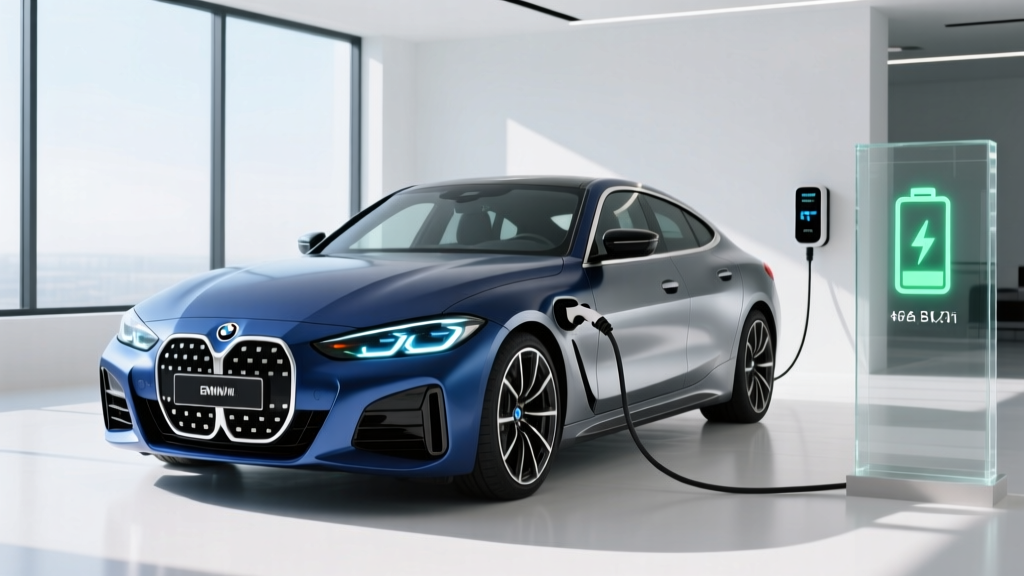
The 2026 BMW i4 remains one of the most convincing luxury electric sedans on the market. Built on BMW's CLAR platform alongside the 4 Series Gran Coupe, it delivers near-identical driving dynamics to its gas counterpart while offering up to 307 miles of EPA-rated range in the eDrive40 trim. For buyers who want a premium EV without the SUV silhouette dominating today's market, the i4 is a compelling sedan alternative to the Tesla Model 3 and Hyundai Ioniq 6.
Whether you're evaluating the i4 for its driving refinement, its tech-forward cabin, or the full palette of BMW i4 colors available this year, this guide covers every spec, charging figure, and ownership cost you need to make an informed decision.
2026 BMW i4 Colors and Exterior Options
BMW offers the 2026 i4 in a curated selection of standard and metallic paints, plus exclusive Individual finishes for the M50 performance variant. Here's the full color lineup:
- Alpine White (standard, no-cost) — a crisp, classic BMW white
- Black Sapphire Metallic — deep metallic black with blue undertone in direct light
- Mineral White Metallic — pearlescent white with subtle warm flake
- Portimao Blue Metallic — vibrant mid-blue, popular on M Sport trims
- Skyscraper Grey Metallic — modern neutral grey replacing the former Brooklyn Grey
- Tanzanite Blue II Metallic — dark navy-blue with a near-black appearance in shade
- San Remo Green Metallic — rich forest green, a standout heritage color
- Vegas Red Metallic — deep red with copper metallic flake
- Brooklyn Grey Metallic — flat-cement grey, M50-exclusive
- Frozen Portimao Blue Metallic — matte finish, BMW Individual option (~$1,500)
- Frozen Pure Grey Metallic — matte grey, BMW Individual option (~$1,500)
M Sport packages add high-gloss Shadowline trim and M-specific wheel designs (19" or 20"). The eDrive40 and xDrive40 trims share the same standard palette, while the M50 unlocks Brooklyn Grey and the Individual Frozen finishes. Interior upholstery choices include Sensatec (standard), Vernasca leather (mid-tier), and full Merino leather (Individual), available in Black, Cognac, Tacora Red, and Oyster.
Range, Battery, and Real-World Efficiency
The 2026 i4 uses BMW's fifth-generation eDrive technology with a floor-mounted lithium-ion battery pack. BMW specifies an NMC (nickel-manganese-cobalt) cell chemistry across the lineup, prioritizing energy density and sustained performance over the cycle-life advantages of LFP.
| Spec | eDrive40 | xDrive40 | M50 |
|---|---|---|---|
| Battery (gross / usable) | 83.9 kWh / 81.5 kWh | 83.9 kWh / 81.5 kWh | 83.9 kWh / 81.5 kWh |
| Chemistry | NMC | NMC | NMC |
| EPA Range | 307 mi | 287 mi | 245 mi (w/ 20" wheels) |
| EPA MPGe (combined) | 109 MPGe | 100 MPGe | 89 MPGe |
| Efficiency (kWh/100 mi) | 31 kWh | 34 kWh | 38 kWh |
| Drivetrain | RWD (single motor) | AWD (dual motor) | AWD (dual motor, M-tuned) |
| Horsepower | 335 hp | 396 hp | 536 hp |
| 0-60 mph | 5.5 sec | 4.6 sec | 3.7 sec |
BMW's thermal management system includes a heat pump (standard on all 2026 trims), which recovers waste heat from the motors and power electronics to warm the cabin. This reduces winter range loss compared to vehicles using resistive PTC heaters, though it doesn't eliminate it entirely.
Charging Speed: DC Fast, Level 2, and Home Setup
Charging capability is where the i4 holds its own against the best in class. The 2026 model retains BMW's 205 kW peak DC fast-charge rate via the CCS1 connector (with the industry-wide shift to NACS, BMW offers a NACS adapter for Tesla Supercharger access).
| Charging Level | Power | Speed / Time | Notes |
|---|---|---|---|
| Level 1 (120V household) | ~1.4 kW | ~3–4 mi/hr | Emergency/trickle only |
| Level 2 (240V home) | 11 kW (onboard charger max) | ~32 mi/hr; full charge ~8.5 hr | Requires 48A+ circuit |
| DC Fast Charge | 205 kW peak | 10–80% in ~31 min | Tapers above 80%; 20–80% avg ~140 kW |
Charging curve reality: The i4 hits its 205 kW peak between roughly 10–35% state of charge, then progressively tapers. From 35–60%, expect ~150–170 kW. From 60–80%, speeds drop to ~90–110 kW. This is typical for NMC packs with active thermal management, but it means the "31 minutes to 80%" figure is an average, not a sustained rate. Charging past 80% slows dramatically — BMW caps the final 80–100% top-up at roughly 40 kW to protect cell longevity.
At home on a Level 2 charger, the i4's 11 kW onboard charger is among the fastest in its class (the Tesla Model 3 offers 11.5 kW; the Ioniq 6 is limited to 10.9 kW). A full overnight charge from near-empty takes about 8.5 hours. For most owners who plug in nightly and arrive home at 30–50% SoC, a full charge completes in 4–5 hours.
Home installation note: To get the full 11 kW, you'll need a hardwired Level 2 charger rated for at least 48 amps on a 60-amp dedicated circuit. Expect installation costs of $800–$2,000 depending on your electrical panel's capacity and the run distance from panel to garage. Homes with older 100-amp panels may need a $2,000–$4,000 panel upgrade. Always get a quote from a licensed electrician before purchasing equipment.
Pricing, Trims, and Federal Tax Credit Eligibility
The 2026 BMW i4 lineup starts at $52,200 for the eDrive40 and climbs to $68,100 for the M50 before destination ($995). Here's the trim breakdown:
| Trim | Base MSRP | Key Features | Federal §30D Credit |
|---|---|---|---|
| eDrive40 | $52,200 | RWD, 307 mi range, 14.9" curved display, Driving Assistant | Up to $7,500 (see below) |
| xDrive40 | $55,900 | AWD, 287 mi range, dual-motor, same tech package | Up to $7,500 |
| M50 | $68,100 | 536 hp M-tuned AWD, M Sport suspension, M-specific colors | Likely ineligible (see below) |
- MSRP cap: Sedans must be under $55,000. The eDrive40 ($52,200) qualifies; the xDrive40 ($55,900) may be classified as an SUV by the IRS (check the fueleconomy.gov credit lookup); the M50 exceeds the cap regardless.
- Income caps: AGI must not exceed $150,000 (single), $225,000 (head of household), or $300,000 (married filing jointly).
- Battery sourcing: Critical minerals and battery component sourcing requirements phase in stricter thresholds each year. BMW has improved North American sourcing, but confirm current-year eligibility on IRS.gov before relying on the credit.
- Point-of-sale transfer: You can transfer the credit to the dealer at purchase to reduce the upfront price, rather than waiting to claim it on your tax return.
Consult a tax professional to confirm your personal eligibility. Rules are subject to change.
A well-equipped eDrive40 with the Premium Package ($1,700), Harman Kardon audio ($875), and metallic paint ($650) lands around $55,425 before incentives. After the $7,500 federal credit (if eligible) and any applicable state rebates, the effective price can drop into the mid-$40,000s — competitive with a similarly optioned Tesla Model 3 Long Range.
Interior, Tech, and Cargo Practicality
The i4's cabin is one of its strongest selling points. BMW's Curved Display pairs a 12.3-inch digital instrument cluster with a 14.9-inch central touchscreen running iDrive 8.5. The system supports wireless Apple CarPlay and Android Auto, over-the-air updates, and BMW's Intelligent Personal Assistant voice control.
Driver assistance: The standard Driving Assistant includes adaptive cruise control with stop-and-go, lane-keeping assist, front collision warning with automatic emergency braking, and rear cross-traffic alert. The optional Driving Assistant Professional ($1,700) adds lane-change assist, extended traffic jam assist, and evasive steering assist. This is an SAE Level 2 system — the driver must remain attentive with hands on or near the wheel at all times. It is not self-driving.
| Dimension | Measurement |
|---|---|
| Cargo volume (rear seats up) | 16.6 cu ft |
| Cargo volume (rear seats folded) | 45.4 cu ft |
| Front legroom | 42.1 in |
| Rear legroom | 35.0 in |
| Front headroom | 39.0 in |
| Rear headroom | 37.1 in |
| Frunk | None (motor occupies front axle area) |
The Gran Coupe hatchback design gives the i4 a practical advantage over traditional sedans. The rear liftgate opens wide for easy loading, and the 45.4 cu ft maximum cargo space rivals compact SUVs. Rear-seat legroom (35.0 in) is adequate for adults on shorter trips but tighter than a Tesla Model 3 (35.3 in) or Hyundai Ioniq 6 (37.4 in). The absence of a frunk is a trade-off of the shared CLAR platform, which was designed to accommodate both electric and combustion powertrains.
Pros, Cons, and Who Should Buy the i4
Pros
- Class-leading driving dynamics and steering feel
- Up to 307 miles EPA range (eDrive40)
- 205 kW DC fast charging with CCS/NACS adapter access
- 11 kW Level 2 onboard charger (faster than many rivals)
- Premium interior with iDrive 8.5 and curved display
- Hatchback cargo versatility (45.4 cu ft max)
- Heat pump standard for better winter efficiency
- Wide color and trim personalization palette
Cons
- No front trunk (frunk)
- Rear seat tighter than key competitors
- MSRP cap may disqualify AWD/M50 trims from §30D credit
- Charging tapers significantly above 80% SoC
- Base price higher than Model 3 or Ioniq 6 equivalents
- M50 range drops to 245 mi on 20" wheels
- Some iDrive 8.5 menus require more taps than iDrive 7
Who the i4 suits best: The eDrive40 is ideal for commuters and professionals who want a refined electric sedan with 300+ miles of range, premium materials, and BMW driving dynamics. It works well for two-adult households with occasional rear passengers. The xDrive40 is the pick for all-weather climates where AWD traction matters. The M50 targets enthusiasts who prioritize acceleration (3.7 sec 0-60) over maximum range and are willing to forgo the federal credit.
Who should look elsewhere: Families needing generous rear-seat space should consider the Hyundai Ioniq 5 or Tesla Model Y. Budget-focused buyers will find better value in the Tesla Model 3 Long Range (~$42,990) or Chevrolet Equinox EV (~$33,000). Those who need 350+ miles of range should look at the Lucid Air Pure or Tesla Model 3 Long Range.
Battery Warranty and Long-Term Ownership
BMW covers the i4's high-voltage battery with an 8-year / 100,000-mile warranty against defects and excessive capacity loss (defined as dropping below 70% of original capacity). The powertrain and electric motors carry the same 8-year/100,000-mile coverage. The basic vehicle warranty is 4 years / 50,000 miles, and BMW includes 3 years / 36,000 miles of complimentary scheduled maintenance.
NMC batteries in BMW's fifth-generation eDrive system have shown strong longevity in real-world fleet data. Based on degradation patterns from earlier i4 model years, owners can expect roughly 5–8% capacity loss over the first 100,000 miles with normal use. BMW recommends avoiding frequent DC fast-charging above 90% SoC and using the "gentle" charge setting in the iDrive menu for daily home charging (limits rate to reduce cell stress).
Insurance costs for the i4 are moderately above average for the luxury EV segment. Expect annual premiums of $2,200–$3,400 depending on your state, driving record, and coverage level. Get quotes before purchasing — the M50 in particular can command premiums 20–30% higher than the eDrive40.
Frequently Asked Questions
What is the real-world range of the 2026 BMW i4?
The eDrive40 achieves 307 miles EPA, but plan for 250–270 miles on sustained highway drives and 200–230 miles in freezing weather. The xDrive40 delivers roughly 240–260 miles highway, and the M50 returns 190–210 miles in cold highway conditions.
How fast does the BMW i4 charge at home and on the road?
On a Level 2 home charger, the i4 adds about 32 miles of range per hour at its 11 kW onboard maximum, fully charging overnight in ~8.5 hours. On DC fast chargers, it peaks at 205 kW and reaches 10–80% in approximately 31 minutes under ideal conditions.
Does the 2026 BMW i4 qualify for the $7,500 federal tax credit?
The eDrive40 at $52,200 MSRP falls under the $55,000 sedan cap and is likely eligible, pending battery sourcing and buyer income requirements. The xDrive40 and M50 may be disqualified due to MSRP limits. Always verify current eligibility on IRS.gov and consult a tax professional.
Is the BMW i4 worth buying over the Tesla Model 3 or Ioniq 6?
The i4 wins on interior quality, driving refinement, and build materials. The Model 3 offers more range (363 mi Long Range), faster Supercharger access, and a lower starting price. The Ioniq 6 provides competitive range (361 mi) and a more spacious rear seat at a lower price point. Choose the i4 if premium driving experience matters more than maximizing range-per-dollar.
What BMW i4 colors are available in 2026?
Standard options include Alpine White, Black Sapphire Metallic, Mineral White Metallic, Portimao Blue Metallic, Skyscraper Grey Metallic, Tanzanite Blue II Metallic, San Remo Green Metallic, and Vegas Red Metallic. The M50 adds Brooklyn Grey. BMW Individual offers Frozen Portimao Blue and Frozen Pure Grey matte finishes for approximately $1,500 extra.
Does the i4 have a frunk?
No. Because the i4 shares BMW's CLAR platform with the combustion 4 Series, the front axle area houses electric motor components rather than offering a front trunk. All cargo goes in the rear hatch area (16.6 cu ft, expanding to 45.4 cu ft with seats folded).