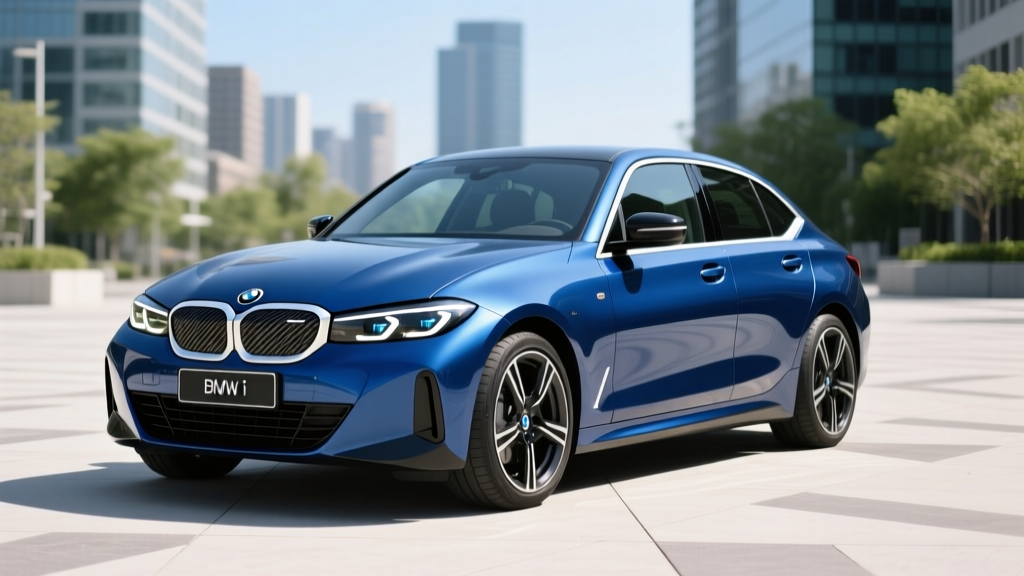
The BMW i3 remains one of the most distinctive electric vehicles ever sold in the United States. Originally launched for the 2014 model year and produced through July 2022, the i3's carbon-fiber-reinforced plastic (CFRP) passenger cell and aluminum chassis gave it an exceptionally low curb weight — a figure that continues to attract buyers on the used-EV market. If you're researching the BMW i3 weight and wondering how it affects range, efficiency, and everyday drivability, this profile covers every spec that matters.
Because BMW discontinued the i3 after the 2022 model year, this review covers the final-production 120 Ah variant (the most relevant version for today's used-EV shoppers) and frames ownership through a 2026 lens — including current used-EV tax credit eligibility under IRS §25E.
BMW i3 Weight and Why It Matters for EV Efficiency
The BMW i3's headline engineering achievement was always mass reduction. The final 120 Ah model carries an EPA-listed curb weight of approximately 2,886 pounds (BEV) and 3,130 pounds for the Range Extender (REx) variant with its two-cylinder gasoline engine. For context, a current Chevrolet Bolt EV weighs roughly 3,563 pounds, and the Tesla Model 3 RWD tips the scales at about 3,862 pounds.
That 700-to-1,000-pound weight advantage over comparable EVs translates directly into efficiency. Less mass means less energy required for acceleration and hill climbing, which is why the i3 achieves strong MPGe figures despite a relatively small battery pack. The CFRP structure — the same material used in Formula 1 monocoques — allowed BMW to offset the weight of the battery while maintaining a rigid, safe passenger cell.
| Spec | BEV (Pure Electric) | REx (Range Extender) |
|---|---|---|
| Curb Weight | 2,886 lbs | 3,130 lbs |
| Battery (Usable) | 42.2 kWh (NMC) | 42.2 kWh (NMC) |
| EPA Range (Electric) | 153 miles | 126 miles (electric) + ~70 mi (gas) |
| Motor Output | 170 hp / 184 lb-ft | 170 hp / 184 lb-ft |
| 0–60 mph | 6.9 seconds | 7.6 seconds |
| Drivetrain | RWD (single motor) | RWD (single motor + 2-cyl gen) |
| MPGe (Combined) | 113 MPGe | 100 MPGe (electric) / 31 mpg (gas) |
| Efficiency | 30 kWh/100 mi | 34 kWh/100 mi |
| Base MSRP (2022) | $44,450 | $48,300 |
Real-World Range: What 153 EPA Miles Actually Delivers
EPA Estimated Range: 153 miles (BEV 120 Ah)
Real-World Expectation: Expect 130–145 miles in mixed city/highway driving at moderate temperatures. Sustained highway speeds above 70 mph can drop range to 110–125 miles. In freezing conditions (below 32°F), plan for a 20–30% reduction, yielding roughly 105–120 miles without preconditioning.
The i3's 42.2 kWh battery pack uses Samsung SDI NMC (nickel-manganese-cobalt) cells arranged in eight modules. BMW quotes 42.2 kWh total capacity with approximately 37.9 kWh usable — the remainder is a top-and-bottom buffer designed to protect long-term battery health.
The low BMW i3 weight helps the car punch above its battery size. At 30 kWh per 100 miles (combined), the i3 is one of the most efficient EVs sold in the U.S. market. For comparison, a Tesla Model 3 RWD achieves roughly 25–27 kWh/100 mi, but carries a much larger 57.5 kWh usable battery to deliver its 272-mile EPA range. Efficiency per pound is where the i3 truly shines.
For buyers shopping the used market in 2026, battery degradation is a legitimate consideration. Owner reports and EPA data via fueleconomy.gov suggest most 2019–2022 120 Ah models retain 85–92% of original capacity at 50,000–80,000 miles. Always request a battery State of Health (SoH) reading from the seller or a BMW dealer before purchase.
Charging Speeds: DC Fast Charge and Home Level 2
| Charging Level | Power / Rate | Time / Miles Added | Connector |
|---|---|---|---|
| Level 1 (120V household) | ~1.4 kW | ~5 miles per hour | J1772 |
| Level 2 (240V home/public) | 7.4 kW (single-phase onboard charger) | ~25 miles per hour; full charge in ~6 hours | J1772 |
| DC Fast Charge | 50 kW peak (CCS Combo 1) | 10–80% in ~45 minutes | CCS1 |
The i3's 50 kW DC fast-charge peak is its most significant limitation by 2026 standards. Modern EVs routinely peak at 150–250 kW, and the i3's CCS1 inlet caps charge sessions well below what newer rivals manage. On a 50 kW charger, the i3's charge curve holds relatively steady from 10–60% before tapering sharply above 80%. A 10–80% session takes approximately 45 minutes — adequate for a meal break but noticeably slower than current competition.
Level 2 home charging at 7.4 kW is perfectly adequate for overnight replenishment. A full charge from near-empty takes roughly six hours, meaning any standard 240V/40A home circuit refills the i3 while you sleep. Because the battery is small (42.2 kWh), you'll rarely need a full zero-to-100% cycle — most daily top-ups are 30–60 minutes.
One note for used buyers: earlier 2014–2018 i3 models with the 60 Ah or 94 Ah battery packs have even smaller capacities (18.8 kWh and 27.2 kWh usable, respectively) and correspondingly shorter range. The 120 Ah model introduced for 2019 is the version to target.
Performance, Driving Dynamics, and the Lightweight Advantage
The i3's rear-mounted electric motor produces 170 horsepower and 184 lb-ft of instant torque, delivered to the rear wheels through a single-speed transmission. The 0–60 mph sprint takes 6.9 seconds in the BEV — not sports-car quick, but brisk for a compact hatchback and perfectly adequate for highway merging.
Where the low BMW i3 weight truly transforms the driving experience is in cornering and city maneuverability. At 2,886 pounds with a low center of gravity (battery mounted beneath the floor), the i3 changes direction with an agility that heavier EVs simply cannot match. The skinny 155/70R19 tires are optimized for low rolling resistance, and the steering is quick and direct. The turning circle is just 32.7 feet, making the i3 exceptional in tight urban environments.
The single-pedal driving experience — achieved through aggressive regenerative braking that brings the car to a full stop — is one of the best implementations in the EV world. Many i3 owners report rarely touching the brake pedal in daily driving, which also reduces brake wear to near-zero.
Pricing, Tax Credits, and Used-EV Value in 2026
Because the BMW i3 is discontinued, new-vehicle purchase is no longer an option. However, the used-EV market offers compelling value, and the federal used-EV tax credit (§25E) can significantly reduce effective cost.
| Item | Amount |
|---|---|
| Typical used price (2019–2022, 40k–70k mi) | $18,000–$28,000 |
| Federal used-EV credit (§25E, 30% up to $4,000) | Up to $4,000 |
| Estimated price after credit | $14,000–$24,000 |
| Dealer/doc fees (estimate) | $500–$1,200 |
§25E Used-EV Credit Rules (2026): The credit equals 30% of the sale price, capped at $4,000. The vehicle must be purchased from a licensed dealer, priced at or below $25,000, and be at least two model years old. Buyer income caps apply: $75,000 single / $112,500 head of household / $150,000 joint filers (modified AGI). The credit is non-refundable but can be transferred to the dealer at point of sale for an upfront price reduction. See IRS.gov §25E guidelines for current eligibility details and consult a tax professional for your specific situation.
The $25,000 sale-price cap is the critical constraint for i3 shoppers. Many 2021–2022 120 Ah models with low mileage list above $25,000 on dealer lots, which disqualifies them from the credit. Targeting higher-mileage examples or 2019–2020 model years improves your chances of staying under the cap.
Interior, Cargo, and Daily Practicality
The i3's interior is genuinely unlike any other BMW. Sustainable materials — eucalyptus wood trim, recycled-plastic dash surfaces, and optional wool-blend upholstery — give the cabin a modern, airy feel that ages well. The tall, upright seating position provides excellent outward visibility, and the rear-hinged "coach doors" create a wide opening for rear-seat access.
Practical dimensions matter for daily use:
- Cargo volume (rear seats up): 15.1 cu ft
- Cargo volume (rear seats folded): 36.0 cu ft
- Front headroom: 39.6 inches
- Rear headroom: 37.2 inches
- Rear legroom: 31.9 inches (tight for adults on long trips)
The 15.1 cu ft trunk is sufficient for weekly groceries or two carry-on bags, but it's noticeably smaller than a Bolt EV (16.6 cu ft) or Model 3 (23 cu ft). The rear seats fold flat, and the lack of a transmission tunnel creates a usable pass-through for longer items. There is no front trunk (frunk) — the space beneath the hood houses the charge port electronics and the REx engine in Range Extender models.
Tech, Safety, and Driver-Assist Features
The final-generation i3 features BMW's iDrive 6.0 infotainment system with a 10.25-inch display, wireless Apple CarPlay (added for 2019+), navigation with EV-specific routing, and a 360-watt Harman Kardon audio system on higher trims. The system is responsive and logical, though it lacks the large touchscreen interfaces found in newer EVs.
Driver-assist technology is modest by 2026 standards:
- Standard: Automatic emergency braking (frontal collision warning with city braking), daytime pedestrian detection, lane departure warning, rear park distance control
- Available (Driver Assistance Plus package): Adaptive cruise control with stop-and-go, lane keeping assistant, surround-view camera, traffic jam assistant
Important context: These are SAE Level 1–2 driver-assist features, not autonomous driving. The driver must remain fully engaged at all times. The i3 does not offer hands-free driving capability like GM's Super Cruise or Ford's BlueCruise.
The i3 earned an IIHS Top Safety Pick designation in its final years, with "Good" ratings in most crash tests. The CFRP passenger cell provides exceptional structural rigidity. See IIHS ratings for the BMW i3 for full crash-test details.
Battery Warranty and Long-Term Ownership Costs
BMW's original high-voltage battery warranty covers 8 years or 80,000 miles (whichever comes first) against capacity loss below 70% of original. For a 2022 model, this warranty remains active through 2030 or 80,000 miles — valuable protection for used buyers.
If out-of-warranty replacement becomes necessary, BMW dealer quotes for a full i3 battery pack typically range from $12,000 to $18,000 depending on parts availability and labor. Independent EV shops may offer module-level repair for $3,000–$6,000 if only specific cells have degraded. Third-party refurbished packs are an emerging option as the i3 ages.
Ownership costs are otherwise favorable. The i3 requires no oil changes, minimal brake service (thanks to regen), and tire replacement intervals similar to any compact car. Insurance premiums tend to run 10–15% higher than comparable gas hatchbacks due to repair-cost considerations for the CFRP structure.
Who the BMW i3 Suits Best — and Who Should Look Elsewhere
Choose the BMW i3 if:
- You need a nimble, efficient city commuter with under-40-mile daily round trips
- You have reliable home Level 2 charging and rarely need DC fast charging
- You value unique design, sustainable materials, and lightweight driving dynamics
- You want a premium-badge used EV at a budget price (under $25,000 with credit)
Look elsewhere if:
- You regularly drive more than 100 miles per day or take frequent road trips
- You need fast DC charging for highway travel (50 kW is slow by modern standards)
- You carry rear-seat adults regularly (legroom is tight)
- You need more than 15 cu ft of cargo space without folding seats
Pros
- Exceptional efficiency (113 MPGe, 30 kWh/100 mi) thanks to low 2,886-lb weight
- Agile, fun-to-drive handling unique in the EV segment
- Excellent single-pedal regenerative braking
- Distinctive, premium interior with sustainable materials
- Strong used-EV value with potential $4,000 federal credit
- CFRP structure provides outstanding crash safety
Cons
- Only 153 miles EPA range — limiting for road trips
- 50 kW DC fast-charge peak is painfully slow by 2026 standards
- Tight rear legroom and modest cargo space
- Discontinued — no new models, parts availability may narrow over time
- CCS1 connector only — no native NACS/Tesla Supercharger access without adapter
- Insurance can be pricier due to carbon-fiber repair costs
Frequently Asked Questions
What is the curb weight of the BMW i3?
The 2022 BMW i3 BEV (120 Ah) has a curb weight of approximately 2,886 pounds. The Range Extender (REx) variant weighs about 3,130 pounds due to the added two-cylinder gasoline generator. This lightweight design — achieved through a carbon-fiber passenger cell and aluminum chassis — is central to the i3's class-leading efficiency.
What is the real-world range of the BMW i3?
The EPA rates the 120 Ah i3 BEV at 153 miles. In real-world mixed driving, expect 130–145 miles. Highway driving at 70+ mph reduces range to roughly 110–125 miles, and freezing temperatures can cut range by 20–30% without battery preconditioning. The i3's navigation system includes EV range prediction that accounts for terrain and temperature.
How fast does the BMW i3 charge?
On a DC fast charger, the i3 peaks at 50 kW (CCS1), reaching 10–80% in approximately 45 minutes. At home on a 240V Level 2 charger, the 7.4 kW onboard charger adds about 25 miles per hour, with a full charge taking roughly 6 hours. Level 1 (120V) trickle charging adds about 5 miles per hour.
Does the used BMW i3 qualify for a federal tax credit?
Yes, under the §25E used clean vehicle credit. If purchased from a dealer for $25,000 or less, and the buyer meets income caps ($75K single / $150K joint), the credit provides 30% of the sale price up to $4,000. Many 2019–2020 i3 models fall under the $25,000 threshold. Always verify current IRS rules and consult a tax professional.
Is the BMW i3 worth buying in 2026 vs. a Chevrolet Bolt or Nissan LEAF?
The i3 wins on efficiency, driving dynamics, and interior quality. The Bolt EV offers more range (259 mi EPA) and cargo space at a similar used price. The LEAF provides more range (up to 212 mi for the Plus) but uses the CHAdeMO connector, which is losing infrastructure support to CCS and NACS. If your commute is short and you value driving feel, the i3 is a compelling used-EV pick. If range is your priority, the Bolt or a used Model 3 are stronger choices.
What battery chemistry does the BMW i3 use?
The i3 uses NMC (nickel-manganese-cobalt) lithium-ion cells manufactured by Samsung SDI. The 120 Ah pack contains eight modules with a total capacity of 42.2 kWh (approximately 37.9 kWh usable). NMC chemistry offers a strong energy-density-to-weight ratio, which aligns with the i3's lightweight design philosophy.