Quick Verdict: The i3's Legacy in 2026
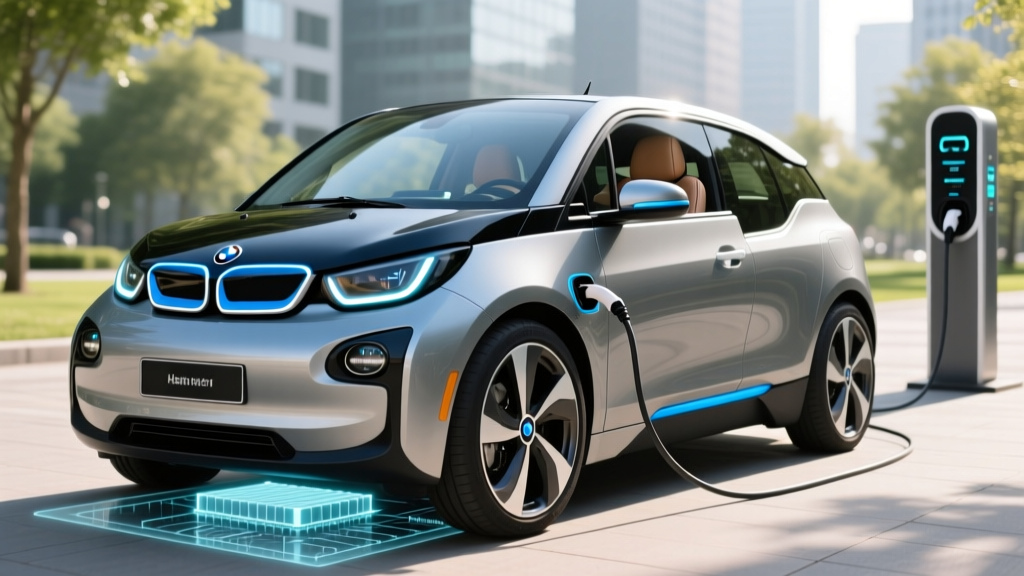
The BMW i3 ended production in 2022, but thousands remain on the road and in the used-EV market. For buyers evaluating a pre-owned i3, understanding its real-world performance envelope — including the BMW i3 top speed of 93 mph (electronically limited) — is essential before signing on the dotted line. This city-focused EV was never designed for highway dominance, but its carbon-fiber construction, tight turning radius, and distinctive urban efficiency still hold appeal for the right buyer.
EPA Estimated Range: 153 miles (120 Ah battery, 2019–2022 models)
Real-World Expectation: 125–135 miles in mixed driving; 110–120 miles sustained highway at 70+ mph; 100–115 miles in sub-30°F cold weather. The i3's narrow, tall profile creates aerodynamic drag that punishes highway efficiency far more than city stop-and-go driving, where regenerative braking recaptures energy.
BMW i3 Top Speed and Performance Specs
The BMW i3 top speed is electronically governed at 93 mph (150 km/h). BMW limited the i3's velocity to preserve its modest 42.2 kWh (usable) battery pack and to align with the vehicle's urban-first engineering philosophy. Removing the limiter is technically possible through third-party software, but doing so voids any remaining powertrain warranty and accelerates battery degradation.
| Specification | BMW i3 (120 Ah, 2019–2022) |
|---|---|
| Top Speed (Electronically Limited) | 93 mph (150 km/h) |
| 0–60 mph | 6.9 seconds |
| Horsepower | 170 hp (125 kW) |
| Torque | 184 lb-ft |
| Drivetrain | Rear-wheel drive (single motor) |
| Battery Usable Capacity | 42.2 kWh (NMC chemistry) |
| EPA Range | 153 miles |
| EPA Efficiency | 113 MPGe combined (30 kWh/100 mi) |
| Curb Weight | 2,961 lbs |
The i3's 170-hp electric motor delivers instant torque that makes it surprisingly quick off the line — the 6.9-second 0–60 time beats many gas-powered compacts. Where it struggles is passing at highway speeds. Above 65 mph, acceleration tapers noticeably, and the 93-mph ceiling means merging onto fast-moving freeways requires planning. According to fueleconomy.gov, the i3's combined 113 MPGe translates to roughly $550 in annual electricity costs at 15,000 miles per year and $0.14/kWh.
Charging Speed: DC Fast and Home Level 2
Charging speed was the i3's most criticized limitation even when new, and it remains a deal-breaker for buyers who road-trip regularly.
| Charging Level | Power (kW) | Charge Time | Miles Added per Hour |
|---|---|---|---|
| Level 1 (120V, 12A) | 1.4 kW | ~30 hours (0–100%) | ~5 mi/hr |
| Level 2 (240V, 32A) | 7.4 kW | ~6.5 hours (0–100%) | ~25 mi/hr |
| DC Fast Charge (CCS) | 50 kW peak | ~38 minutes (10–80%) | ~90 mi in 30 min |
The i3's 50 kW DC fast-charging ceiling was conservative even by 2018 standards and looks dated against modern EVs accepting 150–250 kW. The charge curve is relatively flat, however — the i3 sustains close to 50 kW from 10% to about 65% state of charge before tapering to ~25 kW above 80%. That means the 10–80% time of roughly 38 minutes is achievable at any 50 kW CCS station in good conditions.
Home Level 2 charging at 7.4 kW is adequate for overnight replenishment. A full charge from empty takes about 6.5 hours, meaning a 10–80% top-up requires roughly 4.5 hours on a 240V/32A home charger. For daily commuters covering 30–50 miles round-trip, this is perfectly sufficient — plug in at night, wake up fully charged.
Connector note: The i3 uses CCS1 for DC fast charging and J1772 for Level 2 AC. If you're charging at Tesla Superchargers, you'll need a third-party CCS-to-NACS adapter or stick with Electrify America, EVgo, and ChargePoint networks.
Range Anxiety Reality Check
The 153-mile EPA rating applies to the final-generation 120 Ah battery pack (2019–2022). Earlier i3 models with the 94 Ah pack (2017–2018) deliver only 114 miles EPA, and the original 60 Ah versions (2014–2016) manage just 81 miles. If you're shopping used, confirming the battery generation is critical.
Highway driving: At sustained 70–75 mph speeds, expect 110–120 miles of real range. The i3's boxy shape and narrow 155/70 R19 tires prioritize low rolling resistance over high-speed stability, and aerodynamic drag saps efficiency above 60 mph.
Cold weather: The i3 uses a heat pump (standard on later models, optional earlier) that mitigates winter range loss better than resistive cabin heating. Even so, expect 20–25% range reduction in temperatures below 30°F — that drops real-world range to roughly 100–115 miles. Battery preconditioning is not available on the i3, so cold-soaked DC fast charging will be slower until the pack warms through use.
City driving: This is the i3's sweet spot. Stop-and-go traffic maximizes regenerative braking, and you can approach or even exceed the 153-mile EPA figure in warm weather urban driving at 25–45 mph average speeds.
Pricing, Tax Credits, and Used-EV Value
Since the BMW i3 is no longer in production, all purchases are pre-owned. The federal used clean vehicle credit (§25E) is the relevant incentive — not the new-vehicle §30D credit.
| Cost Factor | Amount |
|---|---|
| Used 2019–2022 i3 Market Price (2026) | $18,000–$26,000 |
| Federal Used EV Tax Credit (§25E) | Up to $4,000 (30% of sale price, capped) |
| Adjusted Price After Credit | $14,000–$22,000 |
| Income Cap (Modified AGI) | $75K single / $150K married filing jointly |
| Vehicle Price Cap | $25,000 sale price maximum |
| Dealer Requirement | Must be purchased from a licensed dealer |
The §25E used-EV credit is 30% of the sale price up to a $4,000 maximum, and the vehicle must sell for $25,000 or less. Many 2019–2021 i3 models fall within this window, making the credit accessible. However, the buyer must meet income caps ($75,000 single filer, $150,000 married filing jointly), and the vehicle must be at least two model years old — which all i3 models now satisfy. Verify current eligibility rules on IRS.gov, as regulations evolve.
Point-of-sale transfer is available for §25E through participating dealers, meaning the $4,000 credit can reduce your purchase price at signing rather than waiting for tax filing. Confirm your dealer is registered with the IRS Energy Credits Online system before finalizing the transaction.
Interior, Cargo, and Daily Livability
The i3's interior is a study in contrasts — genuinely innovative materials paired with tight packaging.
Passenger space: Front-seat headroom and legroom are generous thanks to the tall roofline. Rear seats accommodate adults for short trips, but the rear doors are rear-hinged "coach doors" that require the front doors to open first — awkward in tight parking spots. Rear legroom measures approximately 31.9 inches, adequate for children or occasional adult passengers.
Cargo volume: 15.1 cubic feet behind the rear seats, expanding to 36.9 cubic feet with the rear seats folded. That's enough for a week's groceries or two carry-on suitcases, but the high load floor (the battery sits beneath) makes loading heavy items less convenient than a hatchback like the Chevrolet Bolt EUV.
Standout tech features:
- Carbon-fiber-reinforced plastic (CFRP) passenger cell — the i3 was the first mass-produced EV with a carbon-fiber monocoque, reducing weight to offset the battery
- BMW iDrive infotainment with 10.25-inch display (later models) and wireless Apple CarPlay
- One-pedal driving with aggressive regen that brings the car to a complete stop
- Optional Range Extender (REx) — a 647cc two-cylinder gasoline engine that acts as a generator, adding ~80 miles of range when the battery is depleted (available on 2014–2018 models only)
Notable drawbacks:
- Narrow tires and tall body create noticeable body roll and crosswind sensitivity at highway speeds
- No battery preconditioning — cold-weather DC fast charging is slower than rated
- 50 kW DC charging ceiling limits road-trip practicality
- Run-flat tires (no spare) are expensive to replace and limit tire-choice options
- Rear coach doors are impractical in tight spaces
Battery Warranty and Longevity
BMW provided an 8-year/100,000-mile battery warranty covering defects and capacity loss below 70% of original capacity. For 2014–2017 models, that warranty window is closing or has closed. For 2019–2022 models, factory coverage may still apply depending on mileage and in-service date.
The i3's NMC (nickel-manganese-cobalt) battery pack has demonstrated solid longevity in real-world use. High-mileage i3 owners report 8–12% degradation over 80,000–100,000 miles, which is respectable for the chemistry. The i3's conservative battery management system (BMS) maintains a large buffer — the 42.2 kWh usable capacity is drawn from a ~45 kWh gross pack, reducing stress on individual cells.
If you're buying used, request a battery health report from a BMW dealer or use an OBD2 dongle with the "BimmerLink" app to check current capacity. A pack retaining above 85% of original capacity at 60,000+ miles is a strong sign.
Battery replacement cost for the i3 runs $12,000–$16,000 at a BMW dealer — a significant expense relative to the vehicle's value. Third-party refurbishment services are emerging but remain limited.
Pros and Cons at a Glance
- Carbon-fiber construction keeps weight low (2,961 lbs) — efficiency and handling benefit
- Tight 32.3-foot turning radius makes it an exceptional city car
- One-pedal driving with strong regen reduces brake wear
- Unique, futuristic styling stands out in any parking lot
- Eligible for up to $4,000 federal used-EV tax credit
- Strong regenerative braking and city efficiency (can exceed EPA range in urban driving)
- 93-mph top speed limits highway merging and passing confidence
- 50 kW DC fast charging is slow by 2026 standards
- 153-mile EPA range is tight for road trips or long commutes
- No battery preconditioning hurts cold-weather charging
- Rear coach doors are impractical in tight parking
- Run-flat tires are costly and limit replacement options
- Factory battery warranty may be expired on older models
Who Should Buy the BMW i3 in 2026?
Best for: Urban commuters with home Level 2 charging, daily round-trips under 60 miles, and a second vehicle for longer trips. The i3 excels as a city runabout — its tight turning radius, instant torque, and one-pedal driving make stop-and-go traffic effortless. At $14,000–$22,000 after the used-EV credit, it's one of the most affordable ways into a carbon-fiber EV.
Skip it if: You regularly drive highway miles above 65 mph, need to road-trip more than 120 miles one-way, carry rear passengers frequently, or live in an area without reliable DC fast charging. The 93-mph top speed and 50 kW charging ceiling make the i3 a poor fit for freeway-heavy commutes or intercity travel.
Key competitors to cross-shop:
- Chevrolet Bolt EV (used): 259-mile EPA range, 55 kW DC charging, similar pricing after credit, far more practical cargo space
- Nissan LEAF (used): 149–226 mile range depending on battery, CHAdeMO connector (shrinking network), lower starting price
- Hyundai Kona Electric (used): 258-mile EPA range, 100 kW DC charging, more conventional styling and packaging
Frequently Asked Questions
What is the BMW i3 top speed?
The BMW i3 top speed is electronically limited to 93 mph (150 km/h). This limiter is set by BMW to preserve battery life and align with the i3's urban-focused design. The car is physically capable of higher speeds, but removing the limiter voids warranty coverage and accelerates battery degradation.
What is the real-world range of the BMW i3?
The EPA rates the 120 Ah (2019–2022) i3 at 153 miles. In real-world mixed driving, expect 125–135 miles. Sustained highway driving at 70+ mph reduces range to 110–120 miles, and cold weather below 30°F can drop it to 100–115 miles. City driving in warm weather can match or slightly exceed the EPA figure thanks to regenerative braking.
How fast does the BMW i3 charge?
The i3 accepts up to 50 kW on DC fast chargers, achieving 10–80% in approximately 38 minutes. On a Level 2 home charger at 7.4 kW (240V/32A), a full charge takes about 6.5 hours. Level 1 charging on a standard 120V outlet adds roughly 5 miles per hour — suitable only for emergency top-ups.
Does the BMW i3 qualify for a federal tax credit?
The new-vehicle §30D credit no longer applies since the i3 is discontinued. However, the §25E used clean vehicle credit provides up to $4,000 (30% of sale price) if the vehicle sells for $25,000 or less, the buyer meets income caps ($75K single / $150K married), and the purchase is made through a licensed dealer. Point-of-sale transfer is available.
Is the BMW i3 worth buying in 2026?
For urban commuters with home charging and short daily drives, the i3 offers unique value — carbon-fiber construction, distinctive design, and strong city efficiency at $14,000–$22,000 after tax credits. For buyers needing highway range, road-trip capability, or family practicality, the Chevrolet Bolt EV or Hyundai Kona Electric are stronger choices at similar price points.
How long will the BMW i3 battery last?
The i3's NMC battery pack demonstrates 8–12% degradation over 80,000–100,000 miles based on owner reports. BMW's 8-year/100,000-mile warranty covers capacity loss below 70%, though this window has closed for 2014–2017 models. Battery replacement costs $12,000–$16,000 at a BMW dealer — a major expense relative to the vehicle's used value.