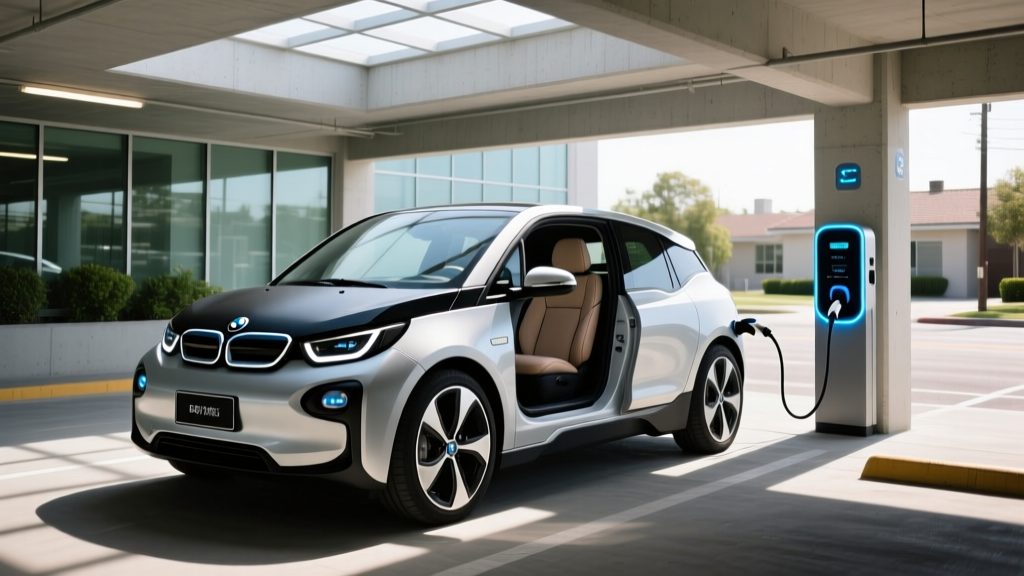
The BMW i3 REx (Range Extender) occupies a singular place in electric-vehicle history. Produced from 2014 through 2021, this carbon-fiber-reinforced-plastic (CFRP) city car paired a modest battery with a tiny two-cylinder gasoline generator — a bridge technology that let early EV adopters drive electric daily while eliminating range anxiety on longer trips. With production ending years ago, the i3 REx is now exclusively a used-market proposition in 2026, but it remains one of the most interesting, efficient, and well-built compact EVs ever sold.
This review covers the final-generation i3 REx (2019–2021 model years with the 42.2 kWh battery pack), which is the version most buyers should target on the used market today. We'll break down its real-world range, charging behavior, ownership economics, and whether it still makes sense in 2026.
Spec Overview: 2019–2021 BMW i3 REx at a Glance
| Specification | Value |
|---|---|
| EPA Electric-Only Range | 126 miles |
| Total Range (EV + REx) | ~200 miles (EPA combined) |
| Battery Capacity (Gross / Usable) | 42.2 kWh / 37.9 kWh |
| Battery Chemistry | NMC (Nickel Manganese Cobalt), Samsung SDI cells |
| Electric Motor Output | 170 hp / 184 lb-ft torque |
| Range Extender Engine | 647 cc twin-cylinder gasoline (38 hp generator) |
| Drivetrain | Rear-wheel drive (single-speed reduction gear) |
| 0–60 mph | 7.6 seconds (EV mode) |
| EPA MPGe (Electric) | 113 MPGe combined |
| EPA MPG (REx Gas Mode) | 31 MPG combined |
| DC Fast Charge (CCS) | 50 kW peak |
| Level 2 Charge Rate | 7.4 kW onboard charger |
| Cargo Volume | 15.1 cu ft (rear seats folded) |
| Seating | 4 passengers (2+2 coach-door layout) |
| Curb Weight | ~3,230 lbs |
| Battery Warranty (Original) | 8 years / 80,000 miles (70% capacity retention) |
| Original MSRP (2021 Base) | $48,345 (before incentives) |
Electric-Only Range and the Range Extender Reality
Real-world expectation: 95–115 miles in mixed driving. Highway cruising at 70+ mph drops this to roughly 80–95 miles. In cold weather (below 30°F), expect 65–85 miles of usable electric range before the REx engages.
Total Range (REx Engaged): ~200 miles EPA combined. The 2.4-gallon fuel tank adds roughly 70–80 miles of gasoline range at 31 MPG combined.
The i3 REx's 126-mile EPA electric-only rating applies to the 2019–2021 models with the 42.2 kWh pack. Earlier generations (2014–2016 with the 22 kWh pack, 2017–2018 with the 33 kWh pack) offer substantially less — 72 and 114 miles respectively — making the final generation the clear target for used buyers.
In practice, the i3 REx operates as a pure EV until the battery depletes to roughly 5–6% state of charge, at which point the 647 cc BMW Motorrad-derived twin-cylinder engine fires up to generate electricity. This is not a hybrid powertrain in the traditional sense — the gas engine never drives the wheels directly. It functions strictly as a series-generator, maintaining battery charge so the electric motor continues to propel the car.
The transition is mostly seamless, though you'll hear the twin-cylinder buzz under hard acceleration when the REx is running. At steady highway speeds, it's a subdued background hum. On the freeway, the REx can struggle to maintain battery charge on sustained steep grades — BMW actually implemented a "Hold Mode" in later model years that lets you preserve battery charge for later use (useful if you're approaching a city zone after a highway stint).
According to fueleconomy.gov, the i3 REx achieves 113 MPGe combined in electric mode and 31 MPG combined when the range extender is active. Those are strong numbers for a vehicle of its era, though the 31 MPG gas figure reflects the inefficiency of converting gasoline to electricity to motion.
Charging Speed: DC Fast, Level 2, and Level 1
Charging is where the i3 REx shows its age most clearly. BMW equipped the car with a CCS1 connector for DC fast charging, but the peak rate is limited to 50 kW — modest by 2026 standards where many new EVs accept 150–350 kW.
| Charging Level | Power | Time (10–80% or Full) | Miles of EV Range Added |
|---|---|---|---|
| Level 1 (120V household) | ~1.4 kW | ~26 hours (full) | ~3 miles/hour |
| Level 2 (240V, 32A) | 7.4 kW | ~4.5 hours (full) | ~20 miles/hour |
| DC Fast Charge (CCS) | 50 kW peak | ~35–40 min (10–80%) | ~100+ miles in 30 min |
The 50 kW DC fast-charge peak is only sustained briefly — typically between 10–30% state of charge. Above 50% SoC, the charge curve tapers significantly, dropping to 20–25 kW and then lower as you approach 80%. A realistic 10–80% session takes roughly 35–40 minutes at a 50 kW station. If you plug into a 150 kW or 350 kW charger (Electrify America, EVgo, etc.), the i3 will still only draw 50 kW max — the car is the bottleneck, not the station.
For home charging, the 7.4 kW onboard charger is adequate. A full overnight charge on a Level 2 home station (such as a ChargePoint Home Flex or Wallbox Pulsar Plus) takes about 4.5 hours from near-empty. This is perfectly practical for daily use — plug in when you get home, and you're full by morning.
Critical note for used buyers: Verify that the i3 you're considering has the DC fast-charging option. BMW sold some early i3 models without the CCS DC port — it was a $750 option on base trims. Without it, you're limited to Level 2 charging, which severely restricts road-trip usability.
Performance, Driving Dynamics, and Daily Usability
The i3 REx delivers 170 horsepower and 184 lb-ft of instant torque to the rear wheels through a single-speed reduction gear. The 0–60 mph time of 7.6 seconds in electric mode is quick enough for confident highway merging and satisfying city driving. When the REx is running and the battery is depleted, performance drops noticeably — expect 0–60 in the 9-second range under those conditions.
What makes the i3 genuinely special is its construction. The passenger cell is a carbon-fiber-reinforced plastic (CFRP) monocoque — the same material used in BMW's M-series supercars. This makes the i3 remarkably light for an EV (roughly 3,230 lbs with the REx) and gives it a nimble, tossable character that no other compact EV has matched. The 19-inch narrow tires (155/70R19) minimize rolling resistance while the short wheelbase and rear-wheel-drive layout deliver genuinely engaging handling.
The regenerative braking is aggressive enough for true one-pedal driving in most city conditions. Lift off the accelerator and the i3 decelerates briskly — many owners rarely touch the brake pedal in urban traffic.
Interior Space and Practicality
The i3's coach-door (suicide door) configuration creates a wide, pillarless opening that makes rear-seat access surprisingly easy. However, the rear seats are best suited for children or occasional adult use on short trips — legroom is tight at 31.9 inches, and the upright seatback isn't ideal for long rides.
Cargo space measures 15.1 cubic feet with the rear seats folded flat — enough for a week's groceries or a couple of carry-on bags, but not competitive with a crossover. The front "frunk" area is minimal, housing the REx engine's air intake and some charge cables.
Interior materials were ahead of their time: BMW offered sustainable options like eucalyptus wood trim, wool-blend upholstery, and recycled-plastic dashboard surfaces. The iDrive infotainment system (with a 10.25-inch display on later models) supports Apple CarPlay but not Android Auto on most model years — a notable omission.
2026 Used Pricing and Federal Tax Credit Eligibility
The BMW i3 REx ended production in 2021, so all purchases in 2026 are on the used market. Pricing varies significantly by mileage, condition, battery state of health, and model year:
| Model Year | Battery | Typical Used Price | Used EV Tax Credit (§25E) | Effective Price |
|---|---|---|---|---|
| 2019 | 42.2 kWh | $18,000–$23,000 | Up to $4,000 | $14,000–$19,000 |
| 2020 | 42.2 kWh | $20,000–$26,000 | Up to $4,000 | $16,000–$22,000 |
| 2021 | 42.2 kWh | $24,000–$30,000 | Up to $4,000 | $20,000–$26,000 |
Federal tax credit note: Since the i3 REx is no longer sold new, the §30D new-vehicle credit does not apply. However, the §25E Used Clean Vehicle Credit may apply. This credit provides up to $4,000 or 30% of the sale price (whichever is less) for qualifying used EVs sold by a licensed dealer for $25,000 or less. Buyer income caps apply: $75,000 single / $112,500 head of household / $150,000 joint filers. The vehicle must be at least two model years old, and the credit is limited to one use per vehicle. Check current eligibility rules at IRS.gov §25E, as regulations continue to evolve.
Many i3 REx models will fall near or above the $25,000 sale-price cap, so only lower-mileage 2019 examples or higher-mileage 2020–2021 models may qualify. This is a critical factor — work with a knowledgeable tax professional before assuming credit eligibility.
Battery Longevity, Degradation, and Warranty Status
The i3 REx's Samsung SDI NMC battery pack was engineered with robust thermal management — an active liquid cooling/heating system that has proven effective at limiting degradation. Real-world data from high-mileage i3 owners shows typical capacity loss of 8–15% over 5–7 years, depending on climate and charging habits.
BMW's original battery warranty guaranteed 70% capacity retention for 8 years or 80,000 miles. For a 2019 model, that warranty expires in 2027. For 2017–2018 models (33 kWh), the warranty is expiring or already expired in 2026. This is a key used-buying consideration — prioritize 2019–2021 models that still carry some factory battery coverage.
Before purchasing, request a battery state-of-health (SoH) reading. The i3's onboard diagnostics can display this, and any BMW dealer can pull a detailed report. A healthy 2019–2021 i3 REx should show 88–95% SoH in 2026. Anything below 80% is a negotiation point — battery replacement, while rare, can cost $10,000–$16,000.
The NMC chemistry in the i3 is less cycle-durable than modern LFP (lithium iron phosphate) packs found in some 2026 EVs, but the i3's conservative usable-capacity buffer (37.9 kWh usable from a 42.2 kWh gross pack) helps protect long-term health by avoiding deep charge/discharge extremes.
Pros, Cons, and Who the i3 REx Suits Best
Pros
- Unique CFRP construction — lightweight, rigid, corrosion-resistant
- Genuine one-pedal driving with strong regen
- Excellent city efficiency (113 MPGe combined)
- Range extender eliminates range anxiety on longer trips
- Tight turning radius (32.3 ft) — ideal urban parking
- Premium interior materials and build quality
- Low running costs when driven primarily on electricity
- Distinctive, still-modern design
Cons
- Limited DC fast-charge speed (50 kW peak)
- Only 126 miles of electric range (real-world often less)
- Small cargo area and cramped rear seats
- No Android Auto on most model years
- Expensive proprietary tires (narrow 19-inch)
- REx engine requires oil changes and fuel-system maintenance
- Out of production — no new-vehicle warranty or updates
- Limited availability of replacement body panels (CFRP)
Who Should Buy the i3 REx in 2026?
Ideal for: Urban commuters with home charging who drive 40–80 miles daily and occasionally need to make 150–200 mile trips without planning charging stops. The i3 REx is a superb daily electric driver with a gasoline safety net. If you're a two-car household and want an EV for commuting but aren't ready to commit to a full BEV for your only vehicle, the REx configuration is compelling at used-market prices.
Not ideal for: Families needing more than two practical seats, road-trippers who want fast DC charging, or buyers in very cold climates where the 126-mile EV range shrinks below 70 miles in winter. If you regularly drive more than 100 miles one-way, you'll spend significant time on the range extender at 31 MPG — at that point, a used Chevrolet Bolt EV (259-mile range) or a newer long-range BEV may serve you better.
How the i3 REx Compares to Alternatives
The i3 REx has no direct successor and few true competitors. The closest used-market alternatives include:
- Chevrolet Volt (2016–2019): A plug-in hybrid with 53 miles of EV range and 42 MPG on gas. More practical (5 seats, larger cargo), but less engaging to drive and less efficient in EV mode.
- Chevrolet Bolt EV (2017–2023): A pure BEV with 259 miles of EPA range. No range extender, but far more range and faster DC charging (up to 55 kW on early models, 115 kW on 2022+). Better value if you have reliable charging access.
- Toyota Prius Prime (2017–2022): PHEV with 25 miles EV range and 54 MPG on gas. More practical and efficient on gas, but far less electric range and a less premium experience.
- Fiat 500e (2013–2019): Pure EV with 84–87 miles of range. Cheaper on the used market, but significantly less range and no REx option.
The i3 REx's combination of premium build, lightweight construction, and series-hybrid architecture remains unique. No other automaker has replicated this exact formula, which is precisely why it retains a devoted owner community.
Frequently Asked Questions
What is the real-world range of the BMW i3 REx?
Expect 95–115 miles of electric-only range in mild weather with mixed city/highway driving. Highway-only driving at 70 mph reduces this to roughly 80–95 miles. In cold weather below freezing, plan for 65–85 miles before the range extender activates. Total range with the REx running is approximately 200 miles.
How fast does the BMW i3 REx charge?
DC fast charging peaks at 50 kW, delivering a 10–80% charge in roughly 35–40 minutes. Home Level 2 charging at 7.4 kW fully replenishes the battery in about 4.5 hours. Level 1 (120V) adds roughly 3 miles of range per hour and is suitable only for emergency or supplemental use.
Does the BMW i3 REx qualify for any federal tax credit in 2026?
The i3 REx is no longer sold new, so the §30D new-vehicle credit does not apply. However, the §25E used clean vehicle credit may provide up to $4,000 if the vehicle sells for $25,000 or less through a licensed dealer and you meet income requirements ($75K single / $150K joint). Verify current rules at IRS.gov and consult a tax professional.
Is the BMW i3 REx worth buying in 2026 vs. a newer used EV?
It depends on your use case. If you want a premium, engaging city commuter with a gas backup and can find a healthy example for under $22,000, the i3 REx is a compelling choice. If you need more range, faster charging, more space, or modern driver-assist tech, a used Chevrolet Bolt EV, Hyundai Kona Electric, or Tesla Model 3 may be a better fit.
What are the biggest maintenance concerns with a used i3 REx?
The range extender engine requires standard gasoline maintenance — oil changes, fuel filter, spark plugs — which many pure-EV owners aren't accustomed to. The narrow 19-inch tires are expensive ($200–$300 each) and wear faster than standard tires. CFRP body repairs require specialized shops and can be costly. Battery degradation has generally been modest, but always verify SoH before purchase.
Can the BMW i3 REx drive on gasoline alone?
Yes, but it's not designed for it. The range extender generates electricity to maintain the battery — it doesn't drive the wheels. If you run the battery very low and rely entirely on the REx, performance drops significantly and you'll achieve roughly 31 MPG. The car is designed to be charged daily and use the REx only as a backup.