The BMW i3 in 2026: A Used-EV Bargain or a Relic?
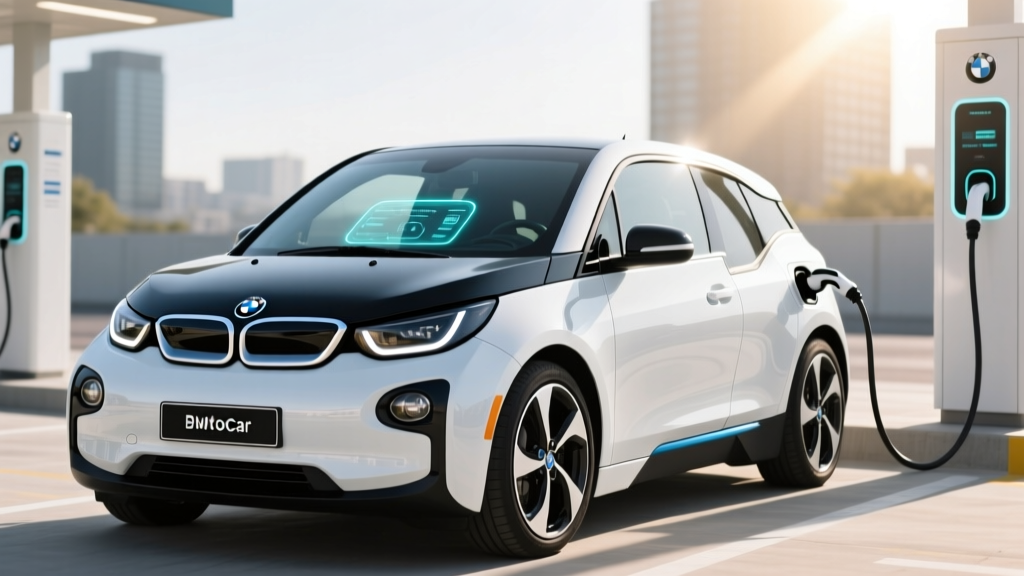
The BMW i3 occupies a strange place in the electric vehicle landscape. Originally launched for the 2014 model year and discontinued after the 2021 model year in the United States, the i3 was BMW's first ground-up battery-electric production car — a carbon-fiber-reinforced plastic (CFRP) pod with a futuristic interior, rear-wheel drive, and a driving character that punched well above its modest power output. Today, in 2026, the i3 exists exclusively on the used and certified pre-owned market, where it has become one of the most interesting value propositions for urban EV buyers willing to accept its limitations.
This review focuses primarily on the final and most capable iteration: the 2021 BMW i3 with the 42.2 kWh battery pack (often called the 120 Ah model). If you're cross-shopping a used i3 against newer budget EVs, a Chevy Bolt, or a Nissan Leaf, here's every number you need to make the call.
Range, Battery, and Real-World Efficiency
The 2019–2021 BMW i3 BEV (pure electric, no range extender) carries a 42.2 kWh gross battery pack (37.9 kWh usable) using Samsung SDI NMC (nickel-manganese-cobalt) lithium-ion cells arranged in eight modules. The EPA rated the 2021 i3 at 153 miles of combined range.
EPA sticker: 153 miles combined
Real-world city/commute: 140–155 miles (the i3's light weight and strong regen favor stop-and-go driving)
Real-world highway (70 mph): 115–130 miles (the blunt aerodynamic profile and narrow tires hurt at speed)
Cold weather (below 32°F): 100–120 miles (the i3 lacks a heat pump; resistive cabin heating draws significant energy)
Efficiency is where the i3 genuinely shines. The EPA rates it at 113 MPGe combined, which translates to roughly 30 kWh per 100 miles — among the best of any EV sold in the U.S. That lightweight CFRP and aluminum construction (curb weight around 2,900 lbs) means you're moving less mass, so each kilowatt-hour goes further. On the EPA's fueleconomy.gov listing, the 2021 i3 scores 119 MPGe city and 106 MPGe highway.
| Specification | Value |
|---|---|
| EPA Range | 153 miles |
| Battery (Gross / Usable) | 42.2 kWh / 37.9 kWh |
| Battery Chemistry | NMC (Samsung SDI) |
| Efficiency | 113 MPGe / ~30 kWh/100 mi |
| Motor | 170 hp / 184 lb-ft (RWD) |
| 0–60 mph | 6.9 seconds |
| DC Fast Charge (Peak) | 50 kW (CCS) |
| 10–80% DC Charge Time | ~36 minutes |
| Level 2 AC Charge Rate | 7.4 kW |
| Curb Weight | ~2,900 lbs |
| Original MSRP (2021 base) | $44,450 |
Charging Speed: DC Fast and Home Level 2
The i3's charging profile reflects its era. DC fast charging uses the CCS1 connector and peaks at 50 kW — competitive when the car launched, but modest by 2026 standards where 150–250 kW is common. BMW quotes a 10–80% DC fast-charge time of approximately 36 minutes. The charge curve is fairly flat up to around 60% SoC before tapering, so you won't see sustained 50 kW rates above 80%. In practical terms, a 30-minute DC stop adds roughly 80–90 miles of range — enough for a quick top-up but not a road-trip-friendly experience.
| Level | Power | Connector | Time / Rate |
|---|---|---|---|
| Level 1 (120V) | ~1.4 kW | J1772 | ~2.5 mi/hr (full charge: ~27 hrs) |
| Level 2 (240V) | 7.4 kW | J1772 | ~25 mi/hr (0–100%: ~6 hrs) |
| DC Fast Charge | 50 kW peak | CCS1 | 10–80% in ~36 min |
At home on a Level 2 charger, the 7.4 kW onboard charger replenishes the pack in about six hours from empty — perfectly adequate for overnight charging. If you're installing a home Level 2 station, any quality 32-amp or 40-amp unit (such as a ChargePoint Home Flex or Emporia Vue) will max out the i3's onboard charger. Expect a full home charging installation to cost $500–$1,500 depending on panel proximity and local permitting, with the charger hardware running $400–$700.
Performance and Driving Dynamics
The 2021 i3 uses a single rear-mounted electric motor producing 170 horsepower and 184 lb-ft of torque. The 0–60 mph sprint takes 6.9 seconds — brisk enough for confident highway merging and genuinely quick off the line thanks to instant electric torque. The earlier i3s (the "s" variant, discontinued after 2020) bumped output to 184 hp and hit 60 in 6.2 seconds.
What sets the i3 apart dynamically is its extraordinary lightness and tight turning circle (32.3 feet). At roughly 2,900 pounds, the i3 feels nimble in urban environments in a way that heavier EVs simply cannot match. The skinny 155/70R19 tires prioritize efficiency over grip, but the low center of gravity and responsive steering make the car genuinely entertaining on twisty roads. Regenerative braking is aggressive and consistent — lift off the accelerator and the i3 decelerates strongly, enabling effective one-pedal driving in most conditions.
The i3 is strictly a city and suburban car. There is no all-wheel-drive option, no towing capacity to speak of, and highway stability is merely adequate due to the short wheelbase and narrow track.
Interior, Cargo, and Technology
The i3's cabin remains one of the most distinctive in the EV world. BMW used sustainable materials extensively: eucalyptus wood trim, recycled-plastic dash surfaces, and wool-blend upholstery on higher trims. The "coach doors" (rear-hinged back doors) create a wide opening but require the front doors to be open first — a quirk that frustrates parents with car seats.
Cargo and passenger dimensions:
- Rear cargo volume: 15.1 cu ft (behind rear seats)
- Cargo with rear seats folded: 36.0 cu ft
- Front headroom: 39.6 inches
- Rear headroom: 37.2 inches
- Rear legroom: 31.9 inches (tight for adults on longer trips)
- Seating capacity: 4 passengers
The infotainment system in the 2021 model is BMW's iDrive 6.0 with a 10.25-inch display, wireless Apple CarPlay (added for 2019+), and a rotary controller. It's functional but dated compared to 2026 EVs. The digital instrument cluster shows range, efficiency, and navigation but lacks the configurability of newer systems.
Driver assistance: The 2021 i3 offers Active Driving Assistant (SAE Level 2), which includes forward collision warning, automatic emergency braking, lane departure warning, and adaptive cruise control on equipped models. This is a basic Level 2 system — it requires hands-on-wheel engagement at all times and does not offer lane-centering steering assist on most U.S. trims. It is not a "self-driving" feature by any definition.
Pricing, Tax Credits, and Used-EV Value
The 2021 BMW i3 had an original MSRP of $44,450 (base) to approximately $51,000 for a well-equipped model with the Technology + Driving Assistance Package and S trim. The earlier Range Extender (REx) models, which paired the electric motor with a small two-cylinder gasoline generator for an additional ~80 miles of range, commanded a ~$3,800 premium.
Since the i3 is discontinued, you cannot buy one new in 2026. However, the IRS §25E Used Clean Vehicle Credit is highly relevant. This credit offers up to $4,000 (or 30% of the sale price, whichever is less) for qualifying used EVs purchased from a licensed dealer. Key eligibility rules, per IRS guidelines:
- Sale price must be $25,000 or less
- Buyer income cap: $75,000 single / $112,500 head of household / $150,000 joint
- Vehicle must be at least 2 model years old (i3 qualifies)
- Must purchase from a licensed dealer (private-party sales excluded)
- Credit is non-refundable; point-of-sale transfer available
- Can only claim a used-vehicle credit once every 3 years
Used 2021 i3 prices in early 2026 typically range from $16,000 to $24,000 depending on mileage, condition, and trim — putting most examples squarely under the $25,000 cap. That means many buyers can claim the full $4,000 credit, effectively bringing a solid-condition 2021 i3 down to $12,000–$20,000 after the credit. That's extraordinary value for a BMW with a carbon-fiber chassis.
| Scenario | Dealer Price | §25E Credit | Effective Cost |
|---|---|---|---|
| 2019 i3, 55k miles, base | $16,500 | $4,000 | $12,500 |
| 2021 i3, 30k miles, base | $21,000 | $4,000 | $17,000 |
| 2021 i3s, 20k miles, loaded | $24,500 | Not eligible (over $25k cap) | $24,500 |
Battery Longevity, Warranty, and Ownership Costs
BMW's original battery warranty for the i3 was 8 years or 100,000 miles (whichever comes first) against defects and capacity loss below 70% of original capacity. For a 2021 model, that factory coverage extends through 2029 — meaning many used i3s still carry active battery warranty in 2026. Earlier models (2014–2018) have mostly aged out of the 8-year window, so battery condition is a more critical inspection item for those years.
Real-world battery degradation data for the 42.2 kWh pack is encouraging. Owner reports and fleet data suggest most 2019–2021 i3s retain 90–95% of original capacity after 50,000–60,000 miles, thanks to BMW's conservative buffer management and active liquid thermal management system. The NMC chemistry is proven but does degrade faster than LFP if routinely charged to 100% and stored in high heat — standard best practices (charge to 80–90% for daily use, precondition before DC fast charging) apply.
If a battery replacement were needed out of warranty, expect a cost in the range of $10,000–$16,000 for parts and labor at a BMW dealer — a significant sum relative to the car's value. Third-party EV battery repair shops can sometimes replace individual modules for $2,000–$4,000, which is a more realistic scenario since full-pack failure is rare.
Ongoing ownership costs are low. The i3 requires no oil changes, no transmission fluid, and brake pads last well beyond 80,000 miles thanks to regenerative braking. Electricity cost to "fill up" the 37.9 kWh usable pack at the U.S. average residential rate of ~$0.16/kWh is about $6.06 — yielding a fuel cost of roughly $0.04 per mile compared to $0.12–$0.15/mile for a comparable gas-powered compact car. Insurance runs slightly higher than average for the segment due to BMW parts pricing and the carbon-fiber body structure, typically $1,400–$1,800/year depending on your profile.
Pros, Cons, and Who Should Buy the BMW i3
- Exceptional efficiency (113 MPGe, ~30 kWh/100 mi)
- Ultra-lightweight CFRP construction — unique in the segment
- Quick off the line (170 hp, 6.9-sec 0–60) with one-pedal driving
- Tight turning circle, ideal for city parking
- Used prices + §25E credit = outstanding value ($12k–$20k effective)
- Premium interior materials and build quality
- Active battery thermal management preserves longevity
- Limited range (153 mi EPA; ~115–130 highway)
- Slow DC fast charging (50 kW peak) — not road-trip friendly
- Rear coach doors are impractical for car seats
- Only seats 4; rear legroom is tight (31.9 in)
- Small cargo area (15.1 cu ft)
- No heat pump — cold-weather range suffers significantly
- Dated infotainment and driver-assist tech
- Carbon-fiber body repairs are expensive and specialist-only
Who the BMW i3 suits best: The i3 is an outstanding choice for urban and suburban commuters who drive fewer than 60 miles round-trip daily, have reliable home Level 2 charging, and rarely take road trips longer than 100 miles one-way. It's ideal as a second car in a two-vehicle household, a solo commuter, or a city dweller who values efficiency and driving fun over cargo space. It is not a family hauler, a road-trip vehicle, or a practical sole car for anyone regularly covering more than 120 miles between charges.
BMW i3 vs. Key Used-EV Competitors
At the $15,000–$24,000 used price point (before credits), the i3 competes with several other discontinued or older EVs:
- Chevrolet Bolt EV (2017–2022): Far more range (238–259 mi EPA), seats 5, more cargo space, but less premium feel and no DC fast charging on 2017–2019 models without the optional package. The Bolt wins on practicality; the i3 wins on efficiency and driving character.
- Nissan Leaf (2018–2023, 40 kWh): 149–150 mi EPA range, similar to the i3, but lacks active battery thermal management (passive air cooling only), leading to faster degradation in hot climates and slower repeat DC charging. The i3's liquid-cooled battery is a meaningful advantage.
- Volkswagen e-Golf (2017–2019): 125 mi EPA, conventional hatchback practicality, but significantly less range and no fast-charge advantage.
- You prioritize efficiency, urban agility, and premium build over maximum range
- Your daily commute is under 60 miles round-trip
- You have home Level 2 charging and rarely road-trip
- You want a BMW at a fraction of the original price after the used-EV credit
- You need 238+ miles of range for occasional longer trips
- You need 5 seats and more cargo space
- You want a more conventional hatchback form factor
Frequently Asked Questions
What is the real-world range of the BMW i3?
The EPA rates the 2021 BMW i3 (42.2 kWh) at 153 miles combined. In real-world driving, expect 140–155 miles in city and suburban conditions, 115–130 miles at sustained highway speeds (70+ mph), and as low as 100–120 miles in freezing weather due to the lack of a heat pump.
How fast does the BMW i3 charge?
On DC fast charging (CCS1), the i3 peaks at 50 kW and reaches 10–80% in approximately 36 minutes. On a Level 2 home charger (240V), the 7.4 kW onboard charger delivers about 25 miles of range per hour, with a full charge taking roughly 6 hours.
Does the BMW i3 qualify for any tax credit in 2026?
The i3 is discontinued, so the new-vehicle §30D credit does not apply. However, the §25E Used Clean Vehicle Credit offers up to $4,000 (or 30% of the sale price) if the dealer price is $25,000 or less, your income is within IRS limits ($75k single / $150k joint), and you purchase from a licensed dealer. Verify current rules at irs.gov.
Is the BMW i3 worth buying vs. a newer, cheaper EV?
At $12,000–$20,000 after the used-EV credit, the i3 offers premium materials, exceptional efficiency, and fun driving dynamics that no new budget EV matches at that price. The trade-off is limited range (153 mi), slow DC charging, and a 4-seat layout. If those limitations fit your use case, it's one of the best values in the used EV market.
How long will the BMW i3 battery last?
The 42.2 kWh NMC pack in the 2019–2021 i3 shows strong longevity: most owner data indicates 90–95% capacity retention at 50,000–60,000 miles. BMW's original battery warranty covers 8 years/100,000 miles against degradation below 70%. A 2021 model retains factory battery coverage through 2029.
Does the BMW i3 have a range extender option?
Yes — the i3 REx (Range Extender) pairs the electric drivetrain with a 647cc two-cylinder BMW motorcycle engine that acts as a generator, adding approximately 80 miles of range once the battery is depleted. The REx was available through the 2021 model year. However, REx models have a smaller fuel tank in later years (2.4 gallons) and require gasoline maintenance. The pure BEV version is simpler and sufficient for most buyers with home charging.