The BMW i3 in 2026: An Honest Assessment of BMW's Quirky EV Pioneer
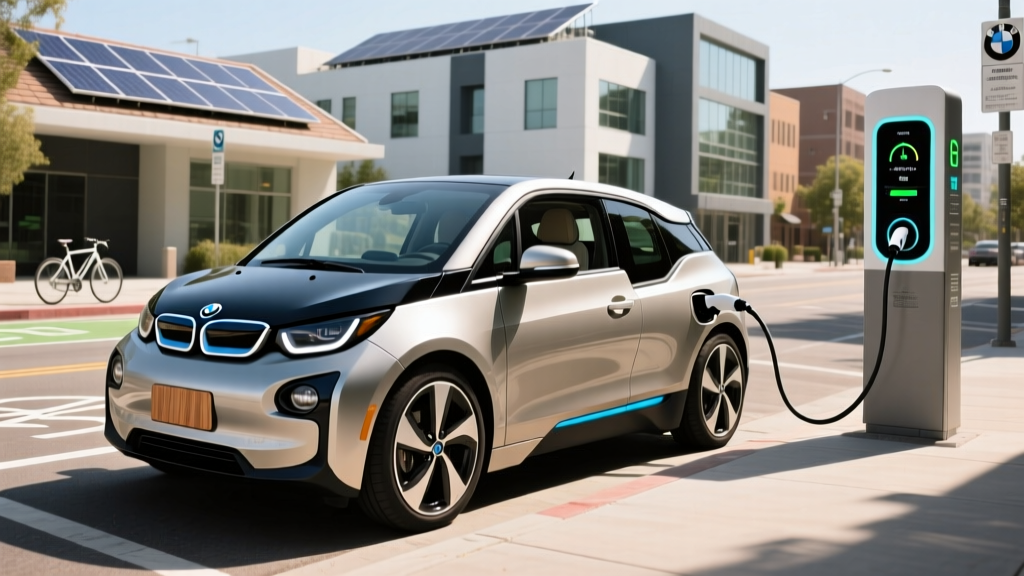
The BMW i3 was never a conventional electric car, and that's precisely what made it one of the most talked-about EVs of its generation. Built on a carbon-fiber-reinforced plastic (CFRP) passenger cell with an aluminum chassis, the i3 delivered a driving experience no competitor matched in its class. As of the 2026 model year, BMW has officially ended i3 production (final units were the 2022 model year), but the used EV market remains flooded with well-maintained examples — and the i3 continues to serve as a compelling urban commuter for buyers who understand its trade-offs.
This review covers the final-generation BMW i3 (the 120 Ah model produced from 2019 through 2022), which represents the most capable and widely available version on the used market. If you're searching "bmw i3 bmw" to evaluate whether this car fits your daily driving needs, here's every number that matters.
Battery, Range, and Efficiency: The Numbers That Define the i3
| Specification | BMW i3 120 Ah (Final Gen) |
|---|---|
| Battery Capacity (Gross) | 42.2 kWh |
| Battery Capacity (Usable) | ~37.9 kWh |
| Battery Chemistry | NMC (Nickel Manganese Cobalt) |
| EPA Estimated Range | 153 miles |
| EPA MPGe (Combined) | 113 MPGe |
| Energy Consumption | 30 kWh / 100 miles |
| Battery Warranty (Original) | 8 years / 100,000 miles |
The 42.2 kWh NMC pack was a significant upgrade from the original 22 kWh (2014–2016) and 33 kWh (2017–2018) batteries. BMW's NMC chemistry delivers strong energy density for the i3's lightweight platform (curb weight around 2,970 lbs), but it also means the pack is more sensitive to sustained high state-of-charge storage than an LFP battery would be. For used buyers, checking the battery's State of Health (SoH) via the iDrive hidden service menu or an OBD2 reader is essential — most well-maintained 120 Ah examples show 88–95% SoH after 40,000–60,000 miles.
According to fueleconomy.gov, the i3 120 Ah achieves 113 MPGe combined, placing it among the most efficient EVs ever sold in the U.S. Its 30 kWh/100-mile consumption figure is notably better than heavier crossovers like the Tesla Model Y (28–30 kWh/100mi) despite the i3's smaller size, a testament to its carbon-fiber construction and narrow, low-rolling-resistance tires.
Charging Speed: DC Fast Charge, Level 2, and the CCS Reality
| Charging Level | Power / Rate | Time or Miles Added | Connector |
|---|---|---|---|
| Level 1 (120V household) | ~1.4 kW | ~4–5 miles per hour | J1772 |
| Level 2 (240V home/public) | 7.4 kW (max) | ~25 miles per hour; 0–100% in ~5 hours | J1772 (Type 1) |
| DC Fast Charge | 50 kW peak | 10–80% in ~36 minutes | CCS1 (Combo) |
Charging is where the i3 shows its age most clearly. The 50 kW DC fast-charging ceiling was adequate in 2019 but feels slow against modern EVs pulling 150–250 kW. At a CCS-equipped station (Electrify America, EVgo, or ChargePoint DC), the i3 will peak near 47–50 kW up to about 50% state of charge, then taper to roughly 30 kW through 80%, and drop further to under 15 kW above 80%. A 10–80% session takes approximately 36 minutes — functional for a lunch stop but not for efficient road-trip charging.
Level 2 home charging at 7.4 kW is the i3's sweet spot. A full overnight charge from near-empty takes about 5 hours on a dedicated 32-amp Level 2 wallbox. Most i3 owners charge exclusively at home and rarely touch DC fast charging, which makes sense: with 153 miles of range, the i3 is a city and suburban commuter first. If your daily round trip is under 80 miles, Level 2 replenishment overnight is more than sufficient.
A critical note for used buyers: early i3 models (2014–2018) used a proprietary BMW DC fast-charge connector in some markets. U.S.-spec 120 Ah models (2019–2022) use the CCS1 standard, which is compatible with the growing national charging network. However, the i3 does not have a NACS (Tesla Supercharger) port. Adapters exist (CCS-to-NACS), but verify compatibility before relying on Supercharger access.
Performance and Driving Dynamics
| Performance Metric | BMW i3 120 Ah | BMW i3s 120 Ah |
|---|---|---|
| Horsepower | 170 hp | 184 hp |
| Torque | 184 lb-ft | 199 lb-ft |
| 0–60 mph | 6.9 seconds | 6.2 seconds |
| Drivetrain | RWD (single motor) | RWD (single motor) |
| Top Speed | 93 mph (governed) | 99 mph (governed) |
The i3's electric motor sits at the rear axle, driving the rear wheels through a single-speed transmission. Instant torque delivery makes the i3 feel far quicker in urban stoplight-to-stoplight driving than its 6.9-second 0–60 time suggests. The sportier i3s variant adds wider tires, a lowered suspension, and a retuned motor for marginally sharper handling, though the standard i3 is already one of the most engaging small EVs to drive thanks to its ultra-low center of gravity and remarkably light weight.
The narrow 155/70R19 tires (standard i3) prioritize efficiency over grip, and you'll feel their limits on aggressive cornering or wet roads. The i3s upgrades to 175/60R20 rubber for better traction. Neither variant offers all-wheel drive — this is strictly a rear-wheel-drive car, which is worth considering if you live in a region with heavy snow. That said, the i3's low weight and instant torque management make it reasonably capable in light winter conditions with proper winter tires.
One-pedal driving is a highlight. The i3's regenerative braking is aggressive enough to bring the car to a full stop without touching the brake pedal in most city driving, which reduces brake wear significantly. Many i3 owners report original brake pads lasting 80,000+ miles.
Interior, Cargo, and Practicality
The i3's interior is unlike anything else in the BMW lineup — or any mainstream car, for that matter. The dashboard uses eucalyptus wood or recycled fiber trim, the door panels incorporate kenaf plant fibers, and the seat upholstery options include wool blends and recycled PET materials. It's an interior designed around sustainability, and it feels genuinely premium in an unconventional way.
Front passengers enjoy generous headroom (39.6 inches) and legroom (40.5 inches), with an airy, open cabin feel aided by the thin A-pillars and large windshield. The rear seats are accessed via rear-hinged "coach doors" that open opposite the front doors — there is no B-pillar, which creates a wide opening but means the front door must be opened before the rear door can be used.
Cargo space is the i3's most practical limitation. With rear seats up, you get just 8.7 cubic feet behind the back row — enough for a few grocery bags or a carry-on suitcase. Fold the rear seats flat, and cargo volume expands to approximately 50 cubic feet, which is surprisingly useful for a car this size. There is no frunk (front trunk); the space under the hood houses the motor and electronics.
For families with young children, the coach doors and tight rear quarters make car-seat installation awkward. The i3 is best suited as a one- or two-person commuter vehicle with occasional rear-seat use.
Pricing, Tax Credits, and Used-EV Value
| Cost Factor | Details |
|---|---|
| Original MSRP (2022 base i3) | ~$44,450 (before destination) |
| Original MSRP (2022 i3s) | ~$47,900 (before destination) |
| Typical Used Price (2026 market) | $18,000–$28,000 depending on mileage/condition |
| Federal Used EV Credit (§25E) | Up to $4,000 (30% of sale price, capped) |
| Federal New EV Credit (§30D) | Not applicable — production ended |
| Income Cap (§25E used credit) | $75k single / $112.5k HOH / $150k joint |
| Vehicle Price Cap (§25E) | Sale price must be ≤ $25,000 |
Because the i3 is no longer in production, the new-vehicle §30D federal tax credit does not apply. However, the IRS §25E Used Clean Vehicle Credit can provide up to $4,000 (or 30% of the sale price, whichever is lower) for qualifying used EV purchases from a licensed dealer. Key eligibility requirements include:
- The vehicle must be at least two model years old (all i3s qualify)
- Sale price must not exceed $25,000 — this means many lower-mileage i3s priced above this threshold will not qualify for the credit
- Buyer adjusted gross income must fall under $75,000 (single), $112,500 (head of household), or $150,000 (joint filing)
- The vehicle must be purchased from a licensed dealer (private-party sales do not qualify)
- The credit can be transferred to the dealer at point of sale for an immediate price reduction
This creates an interesting arbitrage: a well-maintained 2020–2022 i3 listed at $24,500 from a qualifying dealer could effectively cost $20,500 after the §25E credit, making it one of the most affordable premium-branded EVs available. Consult a tax professional to verify your personal eligibility, as rules are subject to change.
Technology, Safety, and Driver Assistance
The i3 runs BMW's iDrive infotainment system on a 10.25-inch display (final-generation models). Wireless Apple CarPlay is standard; Android Auto was added in later model years but is not available on all 2019 units — verify before purchasing. Navigation, a 360-watt Harman Kardon audio system, and a Wi-Fi hotspot were available as options.
Driver assistance is basic by 2026 standards. The i3 offers:
- Active Cruise Control with Stop & Go (optional)
- Driving Assistant Plus: lane-keeping assist, forward collision warning, automatic emergency braking (SAE Level 2 — driver must remain fully engaged)
- Park Distance Control (front/rear sensors)
- Automatic high beams
What the i3 does not have: hands-free driving, automatic lane changes, or any Level 3+ autonomy. The Driving Assistant Plus system is a conventional Level 2 driver-assist suite, comparable to early Toyota Safety Sense or Honda Sensing. It works well for highway cruising but requires constant steering input and attention.
Safety ratings were mixed. The IIHS gave the i3 acceptable ratings in several crash tests, but the small overlap front test revealed limitations of the compact platform. NHTSA did not comprehensively rate the i3. For buyers prioritizing top crash-test scores, larger EVs like the Hyundai Ioniq 5 or Tesla Model 3 score higher.
Pros, Cons, and the Bottom Line
- Exceptional efficiency: 113 MPGe combined, 30 kWh/100mi
- Ultra-light CFRP construction delivers engaging handling
- Strong one-pedal driving with aggressive regen
- Premium, sustainable interior materials
- Tight turning radius (32.3 ft) — ideal for city parking
- Used pricing + §25E credit = exceptional value under $21k
- Minimal brake wear thanks to regenerative braking
- 153-mile EPA range is limiting for road trips
- 50 kW DC fast charging is slow by 2026 standards
- Rear coach doors are impractical for car seats
- Only 8.7 cu ft cargo space with seats up
- No NACS port — Tesla Supercharger access requires adapter
- Discontinued — no new units, limited future parts support
- Cold-weather range drops below 100 miles
Who the i3 is best for: Urban and suburban commuters with home charging access, a daily round trip under 80 miles, and a desire for a premium badge at a used-EV price point. It excels as a second car for errands and commuting, or as a primary vehicle for singles and couples without children who rarely drive more than 100 miles in a day.
Who should look elsewhere: Families needing rear-seat practicality, road-trippers, cold-climate drivers without garage parking, or anyone who needs DC fast charging above 100 kW for frequent long-distance travel. For those buyers, a used Chevrolet Bolt EUV (259-mile range, faster charging) or a new Hyundai Kona Electric (261-mile range, NACS adapter available) are more practical choices.
Frequently Asked Questions
What is the real-world range of the BMW i3?
The EPA rates the 120 Ah i3 at 153 miles. In real-world mixed driving at moderate temperatures, expect 135–150 miles. Highway driving at 70+ mph reduces this to 110–125 miles. In sub-freezing weather, plan for 90–110 miles. The small battery leaves little margin for range loss.
How fast does the BMW i3 charge at home and on DC fast chargers?
On a Level 2 home charger (240V, 32A), the i3 charges at up to 7.4 kW, adding about 25 miles per hour and reaching a full charge in roughly 5 hours. On a DC fast charger, it peaks at 50 kW and takes approximately 36 minutes from 10–80% state of charge.
Does the BMW i3 qualify for any federal tax credit?
The new-vehicle §30D credit is not applicable since production ended. However, the §25E Used Clean Vehicle Credit can provide up to $4,000 when purchasing from a licensed dealer at a sale price of $25,000 or less, subject to buyer income limits. Check irs.gov for current rules.
Is the BMW i3 worth buying in 2026 vs. competitors?
At used prices of $18,000–$25,000 (potentially $14,000–$21,000 after the §25E credit), the i3 offers premium build quality, outstanding efficiency, and a unique driving experience that no competitor matches at this price. However, competitors like the used Chevrolet Bolt EV/EUV offer significantly more range (238–259 miles) and faster charging for similar money. The i3 wins for urban commuters who value build quality and efficiency; the Bolt wins for versatility.
What is the battery warranty and replacement cost for the i3?
BMW's original battery warranty covers 8 years or 100,000 miles against capacity loss below 70% of original. For a 2020 model, that warranty extends through 2028. Out-of-warranty battery replacement has been reported in the $10,000–$16,000 range, though most 120 Ah packs show minimal degradation (5–12% loss) at typical used-mileage levels.
Can I charge a BMW i3 at a Tesla Supercharger?
Not natively. The i3 uses a CCS1/J1772 connector. Tesla's Supercharger network is transitioning to NACS, and CCS-to-NACS adapters are available from third-party manufacturers. However, verify adapter compatibility and Tesla's terms of service before relying on this for regular charging.