The BMW i3 Hatch in 2026: Still the Quirkiest Urban EV?
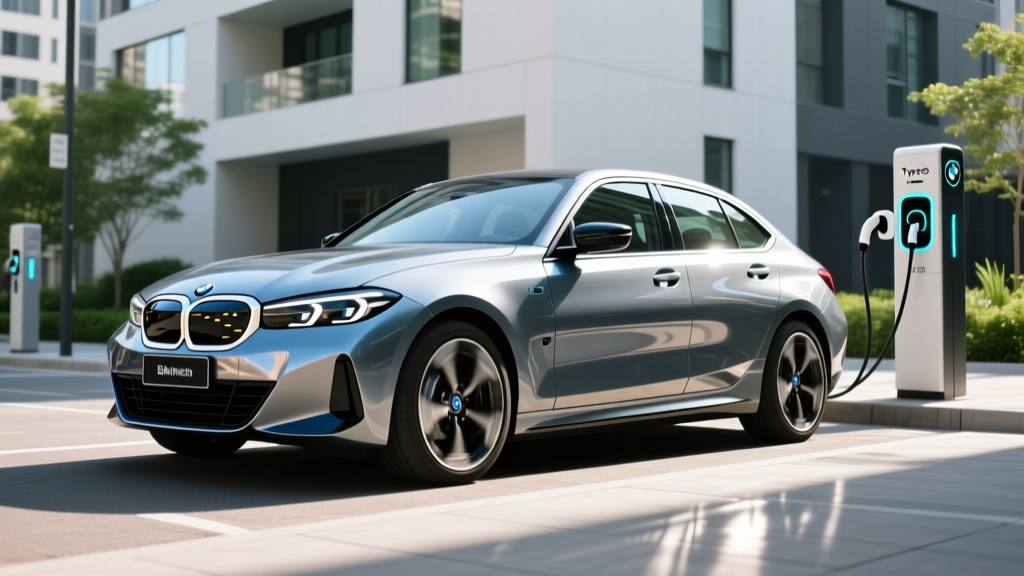
The BMW i3 hatch remains one of the most unconventional electric vehicles ever sold in the United States. With its carbon-fiber-reinforced plastic (CFRP) passenger cell, optional range-extender engine, and coach-style rear doors, it was years ahead of its time when it launched in 2014 — and it still commands attention in the used EV market today. Note: BMW ended U.S. i3 sales after the 2021 model year, so this review covers the final-generation specs (2019–2021 120 Ah model) and what buyers need to know when shopping the pre-owned market in 2026.
If you're cross-shopping the BMW i3 hatch against newer compact EVs like the Chevrolet Bolt EV, Nissan Leaf, or Hyundai Kona Electric, this profile gives you the exact numbers — range, charging speed, efficiency, and ownership costs — to make an informed decision.
Range, Battery, and Real-World Efficiency
The final-generation BMW i3 (120 Ah) carries a 42.2 kWh total battery capacity, with approximately 37.9 kWh usable. BMW uses Samsung SDI NMC (nickel manganese cobalt) lithium-ion cells — not LFP chemistry — packaged in a flat underfloor arrangement between the axles.
- EPA estimated range: 153 miles (BEV-only model, per fueleconomy.gov)
- Real-world highway (65–70 mph): Expect ~120–135 miles, especially above 65 mph where the tall, narrow body creates aerodynamic drag
- City/regenerative driving: 150–160 miles is achievable thanks to aggressive one-pedal regen that recovers energy in stop-and-go traffic
- Cold-weather impact: At 20°F, expect a 25–35% reduction — real-world range drops to roughly 100–115 miles without preconditioning
Efficiency is rated at 113 MPGe combined (119 city / 106 highway) for the pure BEV variant, translating to roughly 30 kWh per 100 miles. That's competitive with modern compact EVs, though the i3's relatively small battery limits total distance. The i3 REx (range-extender) model pairs the battery with a 647cc two-cylinder gasoline engine that acts as a generator, extending total range to approximately 200 miles combined — but the REx sacrifices the full federal EV tax credit and adds maintenance complexity.
| Spec | BEV (Pure Electric) | REx (Range Extender) |
|---|---|---|
| EPA Electric Range | 153 miles | 126 miles (EV) + ~74 mi (gas) |
| Battery Capacity | 42.2 kWh total / ~37.9 usable | 42.2 kWh total / ~37.9 usable |
| Chemistry | NMC (Samsung SDI) | NMC (Samsung SDI) |
| MPGe (Combined) | 113 MPGe | 100 MPGe (EV mode) |
| Motor Output | 170 hp / 184 lb-ft torque | 170 hp / 184 lb-ft torque |
| 0–60 mph | 6.9 seconds | 7.5 seconds |
| Drivetrain | RWD (single rear motor) | RWD (single rear motor) |
| Curb Weight | 2,961 lbs | 3,295 lbs |
Charging Speed: DC Fast and Home Level 2
Charging is where the BMW i3 hatch shows its age most clearly. The vehicle's DC fast-charging capability tops out at 50 kW via CCS1 connector — a figure that was adequate in 2014 but falls well behind modern competitors capable of 150–250 kW peaks. The onboard AC charger is rated at 11 kW (three-phase) or 7.4 kW (single-phase, U.S. standard).
| Charging Method | Power (kW) | Time / Rate |
|---|---|---|
| Level 1 (120V household) | ~1.3 kW | ~3–4 miles per hour of charging |
| Level 2 (240V, 32A home) | 7.4 kW | ~25 miles per hour; 0–100% in ~5 hours |
| DC Fast Charge (CCS1) | 50 kW peak | 10–80% in ~38–42 minutes |
Charging-curve reality: The i3's 50 kW peak is only sustained between roughly 10–50% State of Charge. Above 60% SoC, the curve tapers significantly — dropping to 25 kW and eventually under 10 kW above 85%. This means a 10–80% session takes around 40 minutes, while pushing to 95%+ adds another 30–40 minutes. On a road trip, plan for 40-minute stops every 100–110 miles of highway driving.
For daily home charging, the 7.4 kW Level 2 rate is excellent. A full recharge from near-empty takes about 5 hours on a standard 240V/32A home station — more than enough for overnight replenishment. The i3 uses a CCS1 / J1772 inlet, so it's compatible with the vast majority of U.S. public charging networks including Electrify America, ChargePoint, and EVgo (with appropriate adapters for Tesla destination chargers).
Performance, Driving Dynamics, and Cargo Space
The i3's 170-horsepower rear-mounted electric motor delivers the instant torque characteristic of EVs, launching the lightweight (under 3,000 lbs for the BEV) hatch to 60 mph in 6.9 seconds. That's brisk for urban merging and passing, though it trails the Chevrolet Bolt's 6.5-second time and feels modest against sportier modern EVs.
Where the i3 truly excels is maneuverability. Its 37.1-foot turning circle and ultra-light steering make it arguably the easiest EV to park in tight urban environments. The tall, narrow 155/70R19 tires are designed for low rolling resistance rather than grip, so spirited cornering isn't the i3's forte — but the low center of gravity (battery mounted under the floor) keeps it planted and composed in normal driving.
Interior and cargo dimensions:
- Front legroom: 40.5 inches
- Rear legroom: 31.9 inches (tight for adults on longer trips)
- Cargo volume behind rear seats: 15.1 cu ft
- Cargo volume with rear seats folded: 39.2 cu ft
- Front trunk (frunk): None — the front hood houses the power electronics and, on REx models, the range-extender engine
The coach-style rear half-doors (no B-pillar) create an open, airy feel but require the front doors to be open before rear passengers can exit. This design choice is charming in a parking lot but impractical in tight spaces where you can't fully swing the front doors open.
Pricing, Tax Credits, and Used Market Value
Because BMW discontinued the i3 after 2021, there is no new-vehicle MSRP for 2026. However, the used EV market has settled into predictable pricing tiers. The federal used EV tax credit (§25E) provides up to $4,000 or 30% of the sale price (whichever is less) for qualifying pre-owned EVs purchased from a dealer, subject to income caps and a $25,000 maximum vehicle sale price.
| Model Year / Trim | Typical Dealer Price | §25E Credit Eligibility | Net Cost After Credit |
|---|---|---|---|
| 2019 i3 120 Ah BEV | $18,000–$22,000 | Up to $4,000 (if ≤$25,000) | $14,000–$18,000 |
| 2020 i3 120 Ah BEV | $20,000–$25,000 | Up to $4,000 (if ≤$25,000) | $16,000–$21,000 |
| 2021 i3 120 Ah BEV | $22,000–$28,000 | Eligible if ≤$25,000 | $18,000–$24,000 |
| 2021 i3s (sport) | $24,000–$30,000 | Often exceeds $25K cap | $24,000–$30,000 |
§25E used-EV credit requirements (per IRS.gov):
- Vehicle sale price must not exceed $25,000
- Buyer income caps: $75,000 single / $112,500 head of household / $150,000 joint
- Vehicle must be at least 2 model years old
- Must purchase from a licensed dealer (private-party sales excluded)
- Credit is 30% of sale price, capped at $4,000
- Available as a point-of-sale transfer starting 2024
The i3 REx (range-extender) models generally do not qualify for the used EV credit because the presence of the gasoline generator classifies them differently under IRS rules — consult a tax professional to confirm eligibility for specific VINs.
Warranty, Battery Health, and Long-Term Ownership
BMW provided a 8-year/80,000-mile high-voltage battery warranty covering capacity loss below 70% of original capacity. For 2019–2021 models, this warranty window extends through 2027–2029, meaning many used i3s still carry active battery coverage in 2026.
Real-world battery degradation data: Owner reports and fleet data suggest the 120 Ah (42.2 kWh) Samsung SDI cells degrade gracefully — most examples show 8–12% capacity loss at 60,000–80,000 miles, retaining roughly 33–35 kWh usable. The i3's robust thermal management system (liquid cooling with active heating) helps preserve cell health, though frequent DC fast-charging in extreme heat accelerates wear modestly.
Out-of-warranty battery replacement is a significant expense: BMW dealers typically quote $12,000–$16,000 for a new pack, though third-party refurbishment shops offer replacements for $6,000–$9,000. Given the i3's current market value, a battery failure outside warranty could total the vehicle economically.
The standard vehicle warranty was 4 years/50,000 miles bumper-to-bumper — fully expired on all used examples by 2026. Budget for maintenance: the i3's unique carbon-fiber body panels and specialized tires (155/70R19 is an uncommon size) can be costly to replace after collisions or wear.
Technology, Driver Assists, and Standout Features
The i3's technology suite reflects its 2014–2021 design era:
- Infotainment: 10.25-inch iDrive display (later models) with navigation, Apple CarPlay (wired), and BMW ConnectedDrive services. No Android Auto on most model years.
- Driver assistance: Active Driving Assistant (forward collision warning, automatic emergency braking, lane departure warning). Adaptive cruise control available on higher trims. Note: this is SAE Level 1 assistance — the driver must remain fully engaged at all times.
- One-pedal driving: Strong regenerative braking allows near-complete stops without touching the brake pedal — a feature that was pioneering in 2014 and remains satisfying in 2026 urban traffic.
- Preconditioning: Programmable cabin and battery preheating/cooling via the BMW Connected app, critical for maximizing range and charging speed in cold weather.
- Unique materials: Interior trim options include eucalyptus wood, kenaf (natural fiber) door panels, and recycled-plastic textiles — reflecting BMW's sustainability focus.
- Exceptional urban maneuverability (37.1-ft turning circle)
- Lightweight CFRP construction — unique in the EV market
- Strong one-pedal regen for city commuting
- Eco-friendly interior materials
- Still-covered battery warranty on 2019–2021 models
- Qualifies for up to $4,000 used EV tax credit
- 153-mile EPA range limits road-trip utility
- 50 kW DC fast-charging is slow by 2026 standards
- Coach doors are impractical in tight parking spots
- Rear seat legroom is tight (31.9 inches)
- No frunk for additional storage
- Discontinued — no new-vehicle availability or updates
- Specialized tires and body panels increase repair costs
Who Should Buy the BMW i3 Hatch?
Choose the BMW i3 hatch if:
- You commute under 60 miles round-trip and charge at home nightly
- You want a premium-brand EV at a used-market price under $20,000
- Urban parking and tight-city maneuverability are top priorities
- You value unique design and sustainable materials
- You have access to Level 2 home charging and rarely drive over 120 miles between stops
Look at competitors instead if:
- You need 250+ miles of range for highway road trips (consider a used Tesla Model 3 or Chevrolet Bolt)
- You regularly carry adult rear-seat passengers
- You want DC fast-charging above 100 kW for quick road-trip stops
- You need a frunk or maximum cargo versatility
- You want a new vehicle with current-year warranty and technology
Frequently Asked Questions
What is the real-world range of the BMW i3 hatch?
The EPA rates the 2019–2021 BMW i3 120 Ah at 153 miles. In real-world driving, expect 120–135 miles on the highway at 65–70 mph, up to 160 miles in city traffic with regenerative braking, and roughly 100–115 miles in sub-freezing temperatures without preconditioning.
How fast does the BMW i3 charge?
On a Level 2 home charger (240V, 7.4 kW), the i3 gains about 25 miles of range per hour and fully recharges in approximately 5 hours. On a 50 kW DC fast charger, a 10–80% session takes roughly 38–42 minutes, with significant tapering above 60% SoC.
Does the BMW i3 qualify for a federal tax credit?
New-vehicle credits (§30D) are no longer applicable since the i3 is discontinued. However, qualifying used i3s purchased from a dealer for $25,000 or less may be eligible for the §25E used clean vehicle credit — up to $4,000 or 30% of the sale price, subject to buyer income caps. Confirm eligibility with a tax professional per IRS guidelines.
Is the BMW i3 worth buying in 2026 vs. competitors?
The i3 is worth considering if your budget is under $20,000, your commute is short, and you value premium build quality and unique design. Against a used Chevrolet Bolt EV (259-mile range, faster DC charging) or a used Nissan Leaf (149–226 miles depending on battery), the i3 trades range and charging speed for urban agility and BMW engineering. For road trips or family duty, competitors offer more practicality.
What is the biggest concern with owning a used BMW i3?
Long-term battery replacement cost ($12,000–$16,000 out of warranty) and the vehicle's discontinuation — meaning no future software updates, limited new parts availability, and specialized repair needs for the carbon-fiber body. Buy from a dealer that can provide battery State of Health (SoH) documentation, and prioritize models with remaining battery warranty coverage.