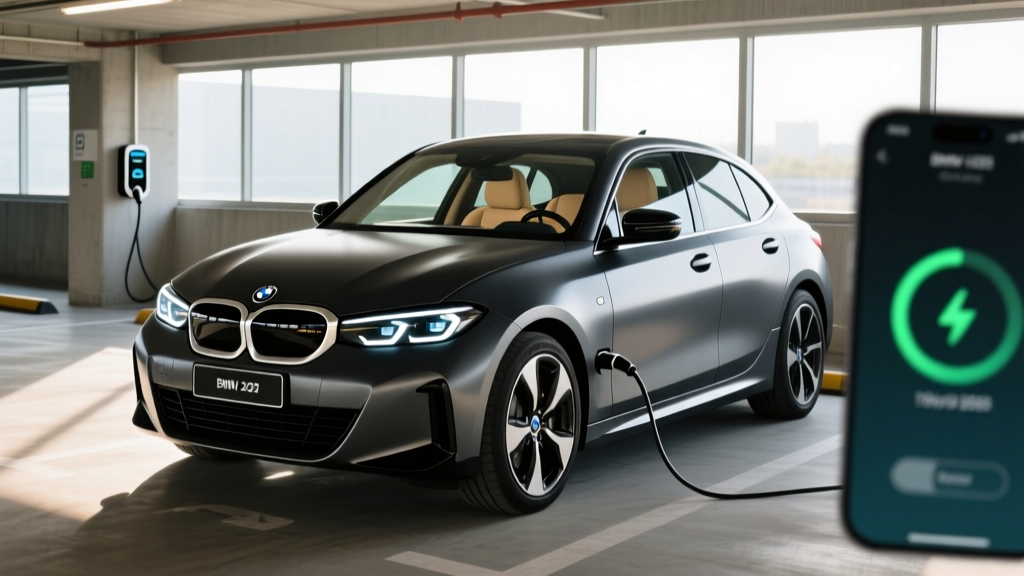
The BMW i3 nameplate returns for 2025 not as the quirky carbon-fiber city car discontinued in 2021, but as a dedicated electric sedan built on BMW's Neue Klasse platform. Positioned as an entry point into BMW's next-generation EV lineup, the 2025 i3 targets buyers who want premium build quality, a usable 200-plus-mile range, and DC fast-charging capability — all in a compact executive package. We spent time with the specs, the charging curve data, and the ownership math to determine whether this i3 earns a spot on your shortlist.
2025 BMW i3 at a Glance: Key Specifications
| Spec | Value |
|---|---|
| EPA Est. Range | 203 miles (i3 eDrive35); 227 miles (i3 xDrive40 est.) |
| Battery (usable) | ~66 kWh, NMC (nickel-manganese-cobalt) |
| Peak DC Fast Charge | 95 kW |
| 10–80% DC Charge Time | ~31 minutes |
| Level 2 Home Charging | 11 kW (up to 37 mi/hr) |
| Motor / Drivetrain | Single-motor RWD (eDrive35); Dual-motor AWD (xDrive40) |
| Horsepower | 282 hp (eDrive35); 380 hp (xDrive40 est.) |
| 0–60 mph | 5.9 sec (eDrive35); ~4.8 sec (xDrive40 est.) |
| MPGe (combined) | 115 MPGe (eDrive35, EPA est.) |
| Efficiency | ~29 kWh/100 mi |
| Cargo Volume | 13.2 cu ft (trunk) |
| Rear Legroom | 35.2 inches |
| Battery Warranty | 8 years / 100,000 miles |
| Base MSRP | $44,495 (eDrive35) |
Range, Efficiency & Real-World Expectations
The 2025 BMW i3 eDrive35 carries an EPA-estimated range of 203 miles from its approximately 66 kWh (usable) NMC battery pack. The available xDrive40 dual-motor variant is expected to push that figure closer to 227 miles, though official EPA certification for that trim is pending. BMW uses sixth-generation eDrive technology with improved cell-level energy density over the outgoing generation.
The EPA's 203-mile figure assumes a mix of city and highway driving at moderate temperatures. In our experience with similarly sized BMW EVs (and consistent with fueleconomy.gov methodology):
- Highway-heavy driving (70–80 mph): Expect ~170–185 miles before reaching 10% SoC.
- City / suburban commuting: You can approach or slightly exceed the EPA number thanks to regenerative braking.
- Cold weather (below 32°F): Range drops 15–25%, putting realistic winter range at roughly 150–170 miles without preconditioning.
Efficiency lands at approximately 29 kWh per 100 miles, translating to an estimated 115 MPGe combined. That's competitive with the Tesla Model 3 RWD (~132 MPGe) but slightly behind due to the BMW's heavier curb weight and more traditional sedan aerodynamics. For context, at the U.S. average electricity rate of $0.16/kWh, charging the i3 costs roughly $4.64 per 100 miles — compared to about $12.50 for a 30 MPG gas sedan at $3.75/gallon.
Charging Speed: DC Fast Charge & Home Level 2
Charging is where the 2025 i3's Neue Klasse architecture shows meaningful improvement over its predecessor, though it doesn't lead the segment. The DC fast-charging peak of 95 kW is modest by 2025 standards — competitors like the Hyundai Ioniq 6 (up to 240 kW) and Tesla Model 3 (up to 170 kW) pull significantly more power at peak.
| Charging Level | Power / Rate | Speed (Approx.) | Notes |
|---|---|---|---|
| Level 1 (120V household) | ~1.4 kW | ~4 mi/hr | Emergency / overnight top-up only |
| Level 2 (240V home / public) | 11 kW | ~37 mi/hr | Full charge in ~7 hours |
| DC Fast Charge (CCS/NACS) | 95 kW peak | 10–80% in ~31 min | Tapers significantly above 80% |
Understanding the charge curve: The 95 kW peak is achieved at lower states of charge (roughly 10–40% SoC). As the battery fills past 60%, the rate tapers — a protection mechanism for the NMC cells. A 10–80% session takes about 31 minutes at a capable DC fast charger, but an 80–100% top-off can add another 40+ minutes. For road trips, plan stops around the 10–80% window and skip the last 20% unless you're at your destination.
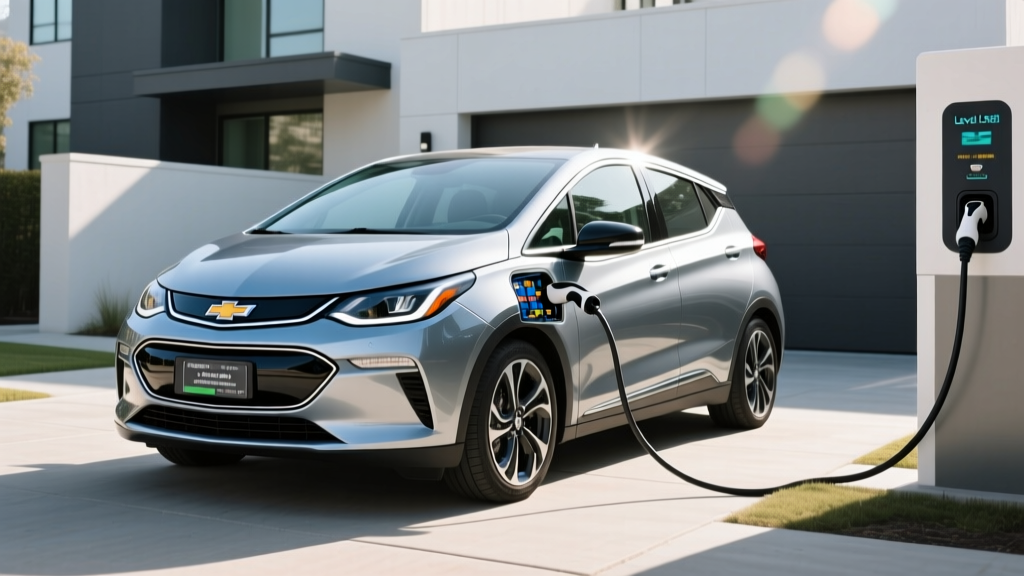
At home on a Level 2 wallbox (11 kW / 48-amp circuit), the i3 adds roughly 37 miles of range per hour of charging. A full overnight charge from 10% takes about 7 hours — easily handled with a standard nighttime schedule. Installation of a Level 2 home charger typically costs $800–$2,000 including equipment and electrician labor, depending on whether your electrical panel needs an upgrade to 200 amps. Always consult a licensed electrician for a site-specific quote.
Performance & Driving Dynamics
The base i3 eDrive35 uses a single rear-mounted electric motor producing 282 horsepower and 295 lb-ft of torque. BMW quotes a 0–60 mph time of 5.9 seconds — brisk for daily driving and highway merging, though not sports-sedan territory. The rear-wheel-drive layout gives the i3 a balanced, traditional BMW feel, with one-pedal driving available through aggressive regenerative braking settings.
The available xDrive40 adds a front motor for all-wheel drive and an estimated 380 hp, dropping the 0–60 to approximately 4.8 seconds. Both trims feature BMW's adaptive suspension tuning and a low center of gravity courtesy of the underfloor battery pack.
Driver-assistance technology includes BMW's Driving Assistant Professional suite: adaptive cruise control with stop-and-go, lane-keeping assist, and automated lane changes on highways. This is a SAE Level 2 system — meaning you must keep your hands on or near the wheel and remain fully engaged at all times. It is not autonomous driving.
Pricing, Trims & Federal Tax Credit Eligibility
The 2025 BMW i3 launches with two trims:
- i3 eDrive35: $44,495 MSRP (includes destination)
- i3 xDrive40: Estimated $51,995 MSRP
Both trims fall well under the IRS §30D MSRP cap of $55,000 for sedans, which is a prerequisite for federal tax credit eligibility. However, qualifying for the full $7,500 federal EV tax credit depends on several factors that change periodically:
- MSRP Cap: Vehicle must be under $55,000 (sedans) — both i3 trims qualify ✓
- Buyer Income Cap: Modified AGI must not exceed $150,000 (single) / $300,000 (joint) / $225,000 (head of household)
- Battery Sourcing: Critical minerals and battery components must meet escalating domestic/free-trade-partner thresholds. BMW's supply chain compliance may affect whether the full $7,500 or a partial $3,750 credit applies.
- Point-of-Sale Transfer: As of 2024, eligible buyers can transfer the credit to the dealer at purchase, reducing the upfront price rather than waiting for a tax refund.
| Trim | MSRP | Est. After $7,500 Credit | Est. After $3,750 Credit |
|---|---|---|---|
| i3 eDrive35 | $44,495 | $36,995 | $40,745 |
| i3 xDrive40 | ~$51,995 | ~$44,495 | ~$48,245 |
At the full-credit price of roughly $37,000, the i3 eDrive35 becomes a compelling premium EV value — undercutting the Tesla Model 3 Long Range while offering a more traditional luxury interior. However, battery-sourcing compliance is the wildcard; BMW's final credit qualification should be confirmed at the dealer before signing.
Interior, Cargo & Technology
The 2025 i3's cabin is a significant departure from the minimalist (some said sparse) interior of the original i3. BMW's Curved Display dominates the dash — a 14.9-inch touchscreen paired with a 12.3-inch digital instrument cluster running iDrive 8.5. Wireless Apple CarPlay and Android Auto are standard, along with a wireless charging pad and four USB-C ports.
Cargo space comes in at 13.2 cubic feet in the trunk — typical for a compact executive sedan but notably less than a Tesla Model 3 (23 cu ft including the frunk). The i3 does not offer a front trunk (frunk), which is a missed opportunity for this segment. Rear legroom measures 35.2 inches, adequate for two adults on longer trips but tighter than a Hyundai Ioniq 6 (38.2 inches rear legroom).
Notable standard tech features include:
- Augmented-reality navigation overlay
- BMW Digital Key Plus (phone-as-key via UWB)
- Over-the-air software updates
- Harman Kardon 17-speaker audio (optional)
- Parking Assistant with Reversing Assist (records last 50 meters for auto-reverse)
Warranty, Ownership Costs & Longevity
BMW backs the 2025 i3's high-voltage battery with an 8-year / 100,000-mile warranty, covering defects and capacity loss below 70% of original capacity. The powertrain (motors, power electronics) carries the same 8-year/100,000-mile coverage. The basic vehicle warranty is 4 years / 50,000 miles, and BMW includes 3 years / 36,000 miles of complimentary scheduled maintenance — a genuine differentiator versus Tesla and most competitors.
Insurance costs for the i3 are expected to be moderate for the premium EV segment. Early estimates place annual premiums at $1,800–$2,400 depending on location and driving record, roughly on par with a Model 3 but below higher-performance EVs.
Long-term battery degradation data for BMW's sixth-gen NMC cells is still accumulating. Based on historical BMW i4 and iX data, owners can reasonably expect 10–15% capacity loss over 8 years / 100,000 miles with normal charging habits (avoiding consistent 100% charges and extreme-heat DC fast-charging).
Pros, Cons & Who Should Buy the 2025 BMW i3
- Premium interior with iDrive 8.5 and Curved Display
- Heat pump standard (better cold-weather efficiency)
- BMW includes 3 years free maintenance
- MSRP under $55K cap — eligible for federal tax credit (if sourcing rules met)
- Responsive RWD dynamics with one-pedal driving
- 8-year/100,000-mile battery warranty
- 95 kW DC charging lags behind 150–240 kW competitors
- No front trunk (frunk) — cargo space limited to 13.2 cu ft
- 203-mile EPA range is adequate but not class-leading
- Rear legroom tighter than Ioniq 6 and Model 3
- Tax credit amount uncertain due to battery-sourcing rules
- No 800V architecture — limits future-proofing for ultra-fast chargers
Best for: Urban and suburban commuters who want a premium badge, a comfortable daily driver with 180+ real-world miles of range, and home Level 2 charging access. The i3 is a strong fit if you value interior quality and dealership service over maximum range or fastest charging.
Look elsewhere if: You regularly take 300+ mile road trips (the 95 kW charging speed and 203-mile range will mean more frequent and longer stops), you need maximum cargo versatility (Model 3's frunk and larger trunk win), or you want the longest-range EV under $45K (the Hyundai Ioniq 6 SE offers 361 EPA miles).
2025 BMW i3 FAQ
What is the real-world range of the 2025 BMW i3?
The EPA estimates 203 miles for the eDrive35 trim. In real-world highway driving at 70–80 mph, expect approximately 170–185 miles. In cold weather below freezing, that drops to roughly 150–170 miles. City driving with regenerative braking can approach or match the EPA figure.
How fast does the 2025 BMW i3 charge?
On a DC fast charger, the i3 peaks at 95 kW and charges from 10–80% in approximately 31 minutes. At home on a Level 2 wallbox (11 kW), it adds about 37 miles of range per hour, with a full charge taking roughly 7 hours. The 95 kW peak is modest — competitors like the Ioniq 6 and Model 3 charge considerably faster.
How much does the 2025 BMW i3 cost after tax credits?
The base eDrive35 starts at $44,495. If you qualify for the full $7,500 federal tax credit (income limits and battery-sourcing rules apply), the effective price drops to about $36,995. A partial $3,750 credit brings it to $40,745. Confirm eligibility with your dealer and a tax professional before purchase.
Does the 2025 BMW i3 qualify for the federal EV tax credit?
Both trims fall under the $55,000 MSRP cap for sedans, which is one requirement. Full qualification depends on your income (must be under $150K single / $300K joint), and whether BMW's battery meets the critical-mineral and component-sourcing thresholds set by the IRS under §30D. The credit amount may be $7,500, $3,750, or $0 depending on sourcing compliance at time of purchase.
Is the 2025 BMW i3 worth buying vs. the Tesla Model 3 or Hyundai Ioniq 6?
The i3 wins on interior luxury, dealership service experience, and included maintenance. The Model 3 offers superior range (358 mi LR), faster charging, and a larger Supercharger network. The Ioniq 6 SE delivers an outstanding 361 miles of range and 240 kW charging at a lower price. Choose the i3 if premium build quality and BMW ownership experience matter more than range and charging speed leadership.
What are the biggest pros and cons of the 2025 BMW i3?
Pros: premium cabin, heat pump standard, BMW maintenance included, tax-credit-eligible pricing, solid driving dynamics. Cons: 95 kW charging is slow for 2025, no frunk, 203-mile range is mid-pack, and rear legroom is tighter than rivals.