Quick Answer: Is a BMW EV Car Worth It in 2026?
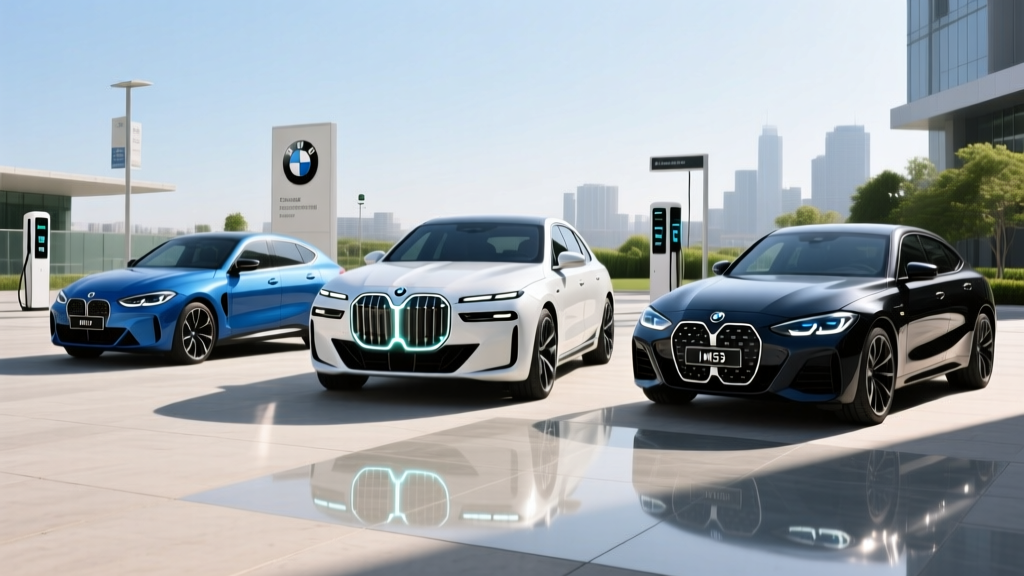
BMW's 2026 electric lineup — the i4, i5, i7, iX, and the newly launched iX3 (Neue Klasse) — covers sedans, SUVs, and a flagship luxury option starting at $52,200 to $124,200 MSRP. EPA ranges span 260 to 345 miles, with DC fast-charging peaks from 180 kW to 350 kW depending on platform. The i4 and i5 remain the strongest value plays for most buyers, while the iX3 on the new 800-volt Neue Klasse architecture offers the fastest charging in the lineup. However, most BMW EVs do not qualify for the full federal §30D tax credit due to battery-sourcing rules — plan your budget accordingly and verify eligibility on IRS.gov.
The 2026 BMW EV Car Lineup at a Glance
BMW currently sells five battery-electric models in the United States. Unlike some competitors that build EVs on dedicated skateboard platforms, BMW has historically used flexible architectures shared with ICE models. That changes with the 2026 iX3, the first production Neue Klasse vehicle featuring an 800-volt system and next-generation cylindrical cells. Here's how the full lineup stacks up by the numbers:
| Model | Body Style | EPA Range | Battery (usable kWh) | Peak DC kW | 10–80% Time | 0–60 mph | Base MSRP |
|---|---|---|---|---|---|---|---|
| i4 eDrive40 | Gran Coupe | 318 mi | 81.5 (NMC) | 205 kW | ~31 min | 5.5 sec | $52,200 |
| i4 M50 | Gran Coupe | 270 mi | 81.5 (NMC) | 205 kW | ~31 min | 3.7 sec | $67,300 |
| i5 eDrive40 | Sedan | 295 mi | 81.2 (NMC) | 205 kW | ~30 min | 5.7 sec | $57,900 |
| i5 M60 | Sedan | 260 mi | 81.2 (NMC) | 205 kW | ~30 min | 3.7 sec | $84,100 |
| i7 eDrive50 | Flagship Sedan | 318 mi | 101.7 (NMC) | 195 kW | ~34 min | 4.5 sec | $99,300 |
| iX xDrive50 | Mid-Size SUV | 324 mi | 111.5 (NMC) | 200 kW | ~35 min | 4.4 sec | $87,250 |
| iX M60 | Mid-Size SUV | 296 mi | 111.5 (NMC) | 200 kW | ~35 min | 3.6 sec | $111,500 |
| iX3 (Neue Klasse) | Compact SUV | ~345 mi (est.) | ~95 (NMC cyl.) | 350 kW | ~18 min | ~4.8 sec | $59,900 (est.) |
Sources: EPA / fueleconomy.gov, BMW USA product pages. iX3 figures are manufacturer-estimated and subject to EPA certification. All MSRP figures exclude destination charges.
Real-World Range: What the EPA Sticker Doesn't Tell You
EPA estimates assume a mix of city and moderate-speed driving at moderate temperatures. In practice, your experience with any BMW EV car will vary based on three factors:
Real-World Range Expectations
EPA Sticker: i4 eDrive40 — 318 miles
Sustained highway (70–75 mph): ~255–275 miles
Cold weather (below 32°F, highway): ~210–240 miles
City / moderate driving (65°F): ~290–310 miles
All BMW EVs use NMC chemistry, which is more sensitive to cold-weather capacity loss than LFP. BMW's heat pump (standard on i5, i7, iX; optional on i4) recovers 15–20% of cold-weather range compared to resistive heating.
On a 250-mile road trip in the i5 eDrive40 at 72 mph with two passengers and climate control at 70°F, expect to arrive at your destination with roughly 15–20% state of charge remaining — enough buffer for a detour, but not enough to skip a charge stop on longer routes. The iX xDrive50's larger 111.5 kWh pack provides the most comfortable highway buffer in the lineup.
Charging Speed and the Neue Klasse Advantage
Most current BMW EVs ride on a 400-volt architecture and peak at around 200 kW on DC fast chargers. That's adequate — you'll add roughly 130–150 miles of range in 15 minutes at a 150+ kW station — but it trails the 250–350 kW peaks of Hyundai/Kia's E-GMP platform and the new iX3.
| Charging Level | Power | Miles Added Per Hour | Use Case |
|---|---|---|---|
| Level 1 (120V household) | ~1.4 kW | ~4–5 mi/hr | Emergency / overnight trickle |
| Level 2 (240V home) | 7.4–11.5 kW | ~25–40 mi/hr | Daily home charging (full overnight) |
| DC Fast (400V BMW) | Up to 205 kW | ~600+ mi/hr (peak) | Road trips, 10–80% in ~30 min |
| DC Fast (800V iX3) | Up to 350 kW | ~900+ mi/hr (peak) | Road trips, 10–80% in ~18 min |
Charging-curve reality: No BMW EV sustains its peak kW rate for the full session. The i4/i5, for example, peak at 205 kW up to roughly 40% SoC, then taper to ~150 kW through 60%, and drop below 80 kW past 80%. The 10–80% time of 30–31 minutes reflects this taper. If you regularly charge to 100% on DC fast chargers, expect sessions to last 45–55 minutes total.
The Neue Klasse iX3 changes the calculus for road-trippers. Its 800-volt system and cylindrical cells sustain higher charge rates longer, making 18-minute 10–80% stops realistic at 350 kW chargers like Electrify America's newest stations. If highway travel is a priority, the iX3 is the BMW EV car to watch.
BMW EV vs. Gas BMW: 5-Year Cost Breakdown
Let's compare the i5 eDrive40 against its closest gas sibling, the 530i sedan, over five years and 75,000 miles. This assumes $3.50/gallon gas, $0.14/kWh home electricity (national average), and 80% home / 20% public charging.
| Category | BMW i5 eDrive40 | BMW 530i (Gas) | 5-Year Difference |
|---|---|---|---|
| Base MSRP | $57,900 | $58,900 | −$1,000 (EV) |
| Federal Tax Credit (§30D) | $0–$3,750* | $0 | Up to −$3,750 (EV) |
| Fuel / Energy (75k mi) | $4,830 | $9,190 | −$4,360 (EV) |
| Maintenance (5 yr) | $1,800 | $3,900 | −$2,100 (EV) |
| Insurance (5 yr avg.) | $12,500 | $10,800 | +$1,700 (EV) |
| Estimated Depreciation | $28,950 (50%) | $26,500 (45%) | +$2,450 (EV) |
| 5-Year Total | ~$78,080 | ~$82,790 | ~$4,710 savings (EV) |
*Most BMW EVs qualify for $0 or partial credit under 2026 §30D rules due to battery component and critical-mineral sourcing requirements. Check the latest eligible-vehicle list at fueleconomy.gov. Insurance premiums for EVs average 10–18% higher due to repair-cost data; get quotes before purchasing.
The i5 saves roughly $4,700 over five years in this scenario — driven primarily by fuel and maintenance reductions. However, higher insurance premiums and steeper depreciation partially offset those gains. If you lack home charging and rely entirely on public DC fast charging at $0.35–$0.50/kWh, the energy cost advantage shrinks to $1,500–$2,000, and the gas car may break even.
Federal Tax Credit Reality for BMW EVs
This is where BMW buyers encounter the most confusion. Under the Inflation Reduction Act's §30D rules, the full $7,500 credit requires meeting both battery-component and critical-mineral sourcing thresholds. As of 2026:
- MSRP cap: Sedans ≤ $55,000; SUVs/pickups/vans ≤ $80,000
- Income cap: $150K single / $225K head of household / $300K joint (modified AGI)
- Battery component manufacturing: Must meet escalating North American assembly thresholds
- Critical minerals sourcing: Must meet escalating US/FTA-partner sourcing thresholds
- Point-of-sale transfer: Eligible buyers can apply the credit as a down-payment reduction at the dealer
Because BMW sources battery cells primarily from CATL (China) and Samsung SDI (South Korea), most BMW EV models fail one or both sourcing tests. The i4 eDrive40 (MSRP $52,200) may qualify for $3,750 if it meets one of the two thresholds. The iX xDrive50 (MSRP $87,250) exceeds the SUV cap and is ineligible regardless. Always confirm current eligibility on IRS.gov before finalizing a purchase — these rules shift annually.
Common BMW EV Misconceptions — Addressed with Data
| Myth | Fact |
|---|---|
| "BMW EV batteries need replacing after 100K miles" | BMW warranties cover the high-voltage battery for 8 years / 100,000 miles against capacity loss below 70%. Real-world degradation data from i4/iX owners shows ~8–12% loss at 100K miles, well within warranty thresholds. NMC cells in BMW's thermal-managed packs typically retain 80%+ capacity at 150K miles. |
| "You can't road-trip in a BMW EV" | With 260–345 miles of EPA range and 200+ kW DC charging, a BMW EV adds 130+ miles in a 15-minute stop. A 500-mile trip requires one charge stop. The iX3's 350 kW capability cuts that to a ~10-minute stop. |
| "All BMW EVs get the $7,500 tax credit" | Most don't. Battery-sourcing rules and MSRP caps disqualify many models. Verify per-vehicle eligibility before purchase. |
| "BMW's driver-assist is self-driving" | BMW's Driving Assistant Professional is SAE Level 2 — it requires continuous driver supervision, hands on or eyes on the road. It is not autonomous. |
| "Cold weather makes BMW EVs unusable" | Cold reduces range by 20–30% below freezing. Preconditioning the battery while plugged in (using the BMW app) mitigates charging-speed loss. A garage-parked iX in Minneapolis still delivers 220+ usable winter miles. |
Decision Framework: Which BMW EV Car Is Right for You?
If... Then...
If you commute under 40 miles round-trip and want the best value: Choose the i4 eDrive40. At $52,200, it offers 318 EPA miles, comfortable daily driving, and the lowest entry price. Home Level 2 charging covers your needs entirely.
If you want a mid-size luxury sedan with strong range: Choose the i5 eDrive40. The 295-mile range, spacious cabin, and 205 kW charging make it the most balanced daily driver. It competes directly with the Mercedes EQE and Tesla Model S.
If you need SUV cargo space and all-weather confidence: Choose the iX xDrive50. Standard AWD, 324 miles of range, and 111.5 kWh of usable battery provide the best road-trip buffer. The $87,250 price exceeds the §30D SUV cap, so plan without the credit.
If fast charging on road trips is your top priority: Wait for or order the iX3 (Neue Klasse). Its 350 kW 800-volt architecture delivers 10–80% in ~18 minutes — the fastest in BMW's lineup. Availability begins late 2026 in the US.
If you want flagship luxury and don't mind the price: The i7 eDrive50 offers 318 miles, a theater screen, and executive rear seating at $99,300. It's a technology showcase, not a value play.
If you lack home charging access: Reconsider any BMW EV. Public DC charging at $0.40/kWh costs roughly $0.12–$0.15/mile — comparable to a 30 MPG gas car. The cost advantage of electrification depends heavily on cheap home electrons.
First-Time BMW EV Buyer Checklist
Before signing a purchase agreement, work through these practical steps:
- Confirm home charging feasibility. A Level 2 home charger (240V, 40–48 amp) costs $800–$2,500 installed, depending on panel capacity and run length. Have a licensed electrician assess your 200-amp panel headroom.
- Check §30D eligibility for your exact VIN. Use the IRS tool and the dealer's point-of-sale transfer process if eligible.
- Get insurance quotes before buying. BMW EV premiums run 10–18% above equivalent gas models. Shop at least three carriers.
- Download the BMW app and test preconditioning. Scheduling battery preconditioning before a DC fast-charge stop (or before morning departure in winter) meaningfully improves charge speed and range.
- Plan your first road trip. Use BMW's built-in navigation or A Better Route Planner to map charge stops. Confirm charger availability and connector type — all US-market BMW EVs currently use CCS1, though BMW has announced a future NACS transition.
Do BMW EVs use NACS or CCS connectors?
As of 2026, all US-market BMW EVs use the CCS1 connector for DC fast charging and J1772 for Level 2. BMW has announced plans to adopt the NACS (Tesla-style) connector on future models, and adapters for Tesla Supercharger access are expected. The Neue Klasse iX3 may launch with NACS in the US — BMW has not confirmed final connector spec at publication.
How long does a BMW EV battery last?
BMW's high-voltage battery warranty covers 8 years or 100,000 miles against degradation below 70% of original capacity. Real-world data from 2022–2025 i4 and iX owners suggests 8–12% degradation at 100,000 miles with normal use. Full battery replacement (rare) costs $15,000–$25,000 depending on the model, though individual module replacement is often possible at lower cost.
Is the BMW i4 or i5 better for daily driving?
The i4 offers more range (318 vs. 295 miles EPA) and a lower starting price ($52,200 vs. $57,900). The i5 provides more rear-seat space, a quieter cabin, and a more premium feel. If budget matters, the i4 is the stronger value. If you regularly carry rear passengers or want a true 5 Series experience, the i5 justifies the premium.
Can I charge a BMW EV at Tesla Superchargers?
Not natively in 2026, since BMW uses CCS1 and Tesla uses NACS. However, BMW is expected to offer a NACS adapter, and some third-party CCS-to-NACS adapters are becoming available. Confirm adapter compatibility with your specific model before relying on Supercharger access.
What's the cheapest BMW EV car available?
The i4 eDrive40 at $52,200 MSRP (before destination). With a potential $3,750 partial tax credit and state incentives (which vary by jurisdiction), the effective price can drop below $48,000. It remains one of the most affordable luxury electric sedans on the market.