Quick Answer: Is a BMW EV Worth It in 2026?
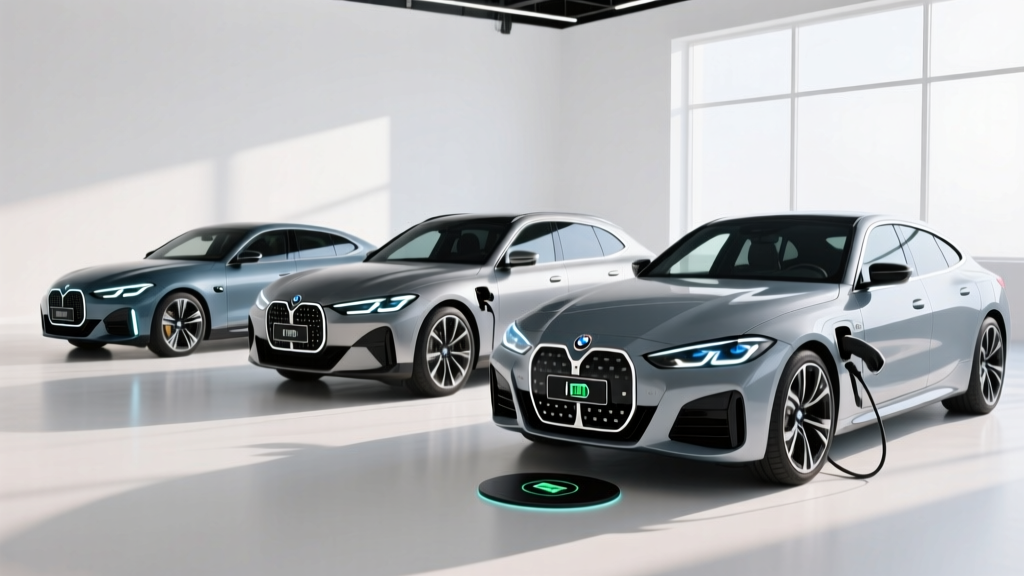
BMW's electric lineup — the i4 sedan, iX SUV, and i7 flagship — delivers genuine luxury EV ownership with EPA ranges from 282 to 318 miles, DC fast charging up to 195 kW, and eligible federal tax credits up to $7,500 on qualifying trims. Expect to pay $52,200–$124,200 MSRP before incentives. A BMW EV makes sense if you want premium build quality, strong real-world range, and access to Tesla Superchargers via the included NACS adapter. It's less ideal if you need maximum cargo space (the i4 Gran Coupe sacrifices utility for style) or if your daily driving exceeds 350 miles without charging access.
BMW EV Lineup at a Glance: What You Can Actually Buy
BMW currently sells three dedicated battery-electric vehicles in the U.S. market, all built on the flexible CLAR platform that also underpins their gas counterparts. This shared architecture means familiar BMW driving dynamics, but it also means these EVs don't maximize interior space the way dedicated EV platforms (like Hyundai's E-GMP) can. Here's the current lineup with exact specs:
| Model | Trim | EPA Range | Battery (kWh usable) | Peak DC Charge | 10–80% Time | 0–60 mph | HP | Base MSRP |
|---|---|---|---|---|---|---|---|---|
| i4 | eDrive40 | 307 mi | 81.5 kWh (NMC) | 205 kW | ~31 min | 5.5 sec | 335 | $52,200 |
| i4 | M50 | 271 mi | 81.5 kWh (NMC) | 205 kW | ~31 min | 3.7 sec | 536 | $67,300 |
| iX | xDrive50 | 307 mi | 105.2 kWh (NMC) | 195 kW | ~35 min | 4.4 sec | 516 | $87,250 |
| iX | M60 | 288 mi | 105.2 kWh (NMC) | 195 kW | ~35 min | 3.6 sec | 610 | $111,500 |
| i7 | eDrive50 | 318 mi | 101.7 kWh (NMC) | 195 kW | ~34 min | 4.5 sec | 449 | $105,700 |
| i7 | M70 | 291 mi | 101.7 kWh (NMC) | 195 kW | ~34 min | 3.5 sec | 650 | $124,200 |
Real-world range caveat: EPA estimates assume a mix of city and highway driving at moderate temperatures. In our experience and consistent with third-party testing, expect 240–270 miles from the i4 eDrive40 on sustained highway trips at 70+ mph, and 20–30% less range in sub-freezing winter conditions. The iX xDrive50 typically delivers 260–280 miles highway. Plan trips around 200–230 miles between charges to stay comfortable.
BMW EV vs. Gas BMW: The Real Cost Comparison
The upfront price of a BMW EV often exceeds its gas-powered equivalent — a 430i Gran Coupe starts around $49,000 vs. the i4 eDrive40 at $52,200. But the ownership equation flips when you factor in fuel, maintenance, and incentives. Here's a concrete 5-year comparison for the i4 eDrive40 versus the 430i Gran Coupe, assuming 12,000 miles/year, $3.50/gallon premium fuel, and $0.14/kWh home electricity:
| Cost Category | BMW i4 eDrive40 (EV) | BMW 430i Gran Coupe (Gas) |
|---|---|---|
| Base MSRP | $52,200 | $49,000 |
| Federal Tax Credit (§30D, if eligible) | −$7,500 | $0 |
| Effective Purchase Price | $44,700 | $49,000 |
| Fuel/Energy (5 years) | $4,200 | $12,600 |
| Maintenance (5 years) | ~$1,800 | ~$4,500 |
| Insurance (5 years, est.) | ~$11,400 | ~$9,600 |
| 5-Year Total Cost | $62,100 | $75,700 |
The i4 saves roughly $13,600 over five years in this scenario — primarily through the tax credit and fuel savings. However, note that EV insurance premiums run 10–20% higher on average, and if you don't qualify for the full §30D credit (due to income limits or battery sourcing rules), the savings narrow. Always verify your eligibility on IRS.gov or consult a tax professional before counting on the credit.
Charging a BMW EV: Home, Public, and the NACS Advantage
Every 2026 BMW EV ships with a NACS (Tesla-style) charge port or includes a NACS adapter in the box, giving you access to Tesla's Supercharger network — the most reliable DC fast-charging infrastructure in the U.S. This is a significant practical advantage over CCS-only vehicles in areas where Electrify America or EVgo coverage is sparse.
| Charging Level | Power | Connector | Miles Added/Hour | Where |
|---|---|---|---|---|
| Level 1 | 1.4 kW (120V) | NACS / J1772 adapter | ~4 mi/hr | Standard outlet |
| Level 2 | 7.7–11.5 kW (240V) | NACS / J1772 adapter | 25–38 mi/hr | Home / workplace / public |
| DC Fast | Up to 205 kW | NACS / CCS adapter | ~600+ mi/hr (peak) | Superchargers / EA / EVgo |
Home charging reality: The i4's onboard charger accepts up to 11 kW on Level 2 (the iX and i7 also accept 11 kW). That means a full 0–100% charge takes about 8–10 hours on an 11 kW home charger, or roughly 11–14 hours on a standard 7.7 kW unit. Most owners charge overnight and wake up with a full battery every morning — this is the core convenience advantage of EV ownership.
DC fast charging curve: BMW's peak charge rate of 195–205 kW is not sustained across the entire session. The battery accepts peak power between roughly 10–40% State of Charge, then tapers progressively. Expect the 10–80% session to take 31–35 minutes in ideal conditions (battery preconditioned, moderate ambient temperature). In cold weather without preconditioning, add 10–15 minutes. Always use the vehicle's navigation-based preconditioning — route to a charger using the iDrive system and the car will warm the battery automatically.
Federal Tax Credit: Does a BMW EV Qualify?
BMW EV tax credit eligibility under IRS §30D is model- and trim-dependent, and the rules around battery component sourcing and critical minerals shift annually. As of 2026:
- MSRP cap: Sedans (i4, i7) must be under $55,000; SUVs/vans/trucks (iX) under $80,000. This means the i4 eDrive40 ($52,200) qualifies on price, but the i4 M50 ($67,300) and all i7 trims do not.
- Buyer income cap: Modified AGI must not exceed $150,000 (single), $225,000 (head of household), or $300,000 (married filing jointly).
- Battery sourcing: The credit splits into two halves ($3,750 each) based on battery component manufacturing and critical mineral sourcing requirements that tighten each year.
- Point-of-sale transfer: You can transfer the credit to the dealer at purchase, reducing your out-of-pocket cost immediately — you don't have to wait until tax filing.
Bottom line: The i4 eDrive40 is the most likely BMW EV to qualify for the full $7,500 credit, depending on current sourcing compliance (verify on fueleconomy.gov before purchasing). The iX xDrive50 may qualify for a partial credit ($3,750) depending on the model year's sourcing rules. The i7 and performance trims exceed MSRP caps and do not qualify.
BMW EV vs. Competitors: Where Does It Stack Up?
The BMW EV lineup competes in crowded luxury segments. Here's how the key models compare to their most direct rivals on the specs that matter most to buyers:
| Spec | BMW i4 eDrive40 | Tesla Model 3 LR | Mercedes EQB 350 | Genesis GV60 Adv. |
|---|---|---|---|---|
| EPA Range | 307 mi | 363 mi | 243 mi | 294 mi |
| Battery | 81.5 kWh NMC | 79 kWh NMC | 66.5 kWh NMC | 77.4 kWh NMC |
| DC Fast Peak | 205 kW | 250 kW | 100 kW | 240 kW |
| 10–80% Charge | ~31 min | ~25 min | ~32 min | ~18 min |
| Base MSRP | $52,200 | $47,740 | $54,350 | $52,000 |
| NACS Native | Yes (adapter) | Yes | No (adapter avail.) | No (adapter avail.) |
The Tesla Model 3 Long Range still leads on range and charging speed at a lower price, but the i4 counters with superior interior materials, a quieter cabin, more traditional styling, and BMW's iDrive infotainment system that many buyers find more intuitive than Tesla's minimalist approach. The Genesis GV60 charges fastest in this group (18 minutes 10–80%) thanks to its 800V architecture. The Mercedes EQB offers three-row seating but trails significantly on range and charging speed.
Real-World Ownership: What First-Time BMW EV Buyers Must Know
Before signing a purchase agreement, honestly assess these practical factors:
Home Charging Access
EV ownership is dramatically more convenient with home Level 2 charging. If you can install a 240V/48A circuit in your garage or driveway, you'll do 90%+ of your charging at home for roughly $0.12–0.18/kWh (depending on your utility). A Level 2 home installation typically costs $800–2,500 including a quality charger and electrician labor — more if your electrical panel needs an upgrade to 200A service. If you live in an apartment or lack home charging, you'll rely on public chargers at $0.35–0.55/kWh, which erodes the fuel cost advantage and adds time to your routine.
Cold Climate Impact
All BMW EVs use liquid-cooled/heated NMC batteries with heat pump climate systems (standard on the iX and i7, optional on the i4). In sustained below-freezing temperatures, expect 20–30% range reduction due to battery resistance and cabin heating demands. A 307-mile i4 eDrive40 might deliver 215–245 miles in a Minnesota winter. Preconditioning while plugged in mitigates this significantly.
Driving Patterns
If your daily commute is under 80 miles round-trip and you can charge at home, any BMW EV will cover multiple days between charges effortlessly. If you regularly drive 300+ miles in a day (road trips, sales territory), plan around 25–35 minute DC fast-charge stops every 200 miles. The i4's Gran Coupe body style offers just 16.6 cu ft of cargo space — if you need SUV utility, the iX provides 35.5 cu ft behind the rear seats.
Common BMW EV Misconceptions — Corrected
| Myth | Fact |
|---|---|
| "BMW EVs are just gas BMWs with batteries stuffed in." | While they share the CLAR platform, BMW engineered dedicated EV subframes, battery enclosures, and electric powertrains. The iX was designed EV-first. Driving dynamics and packaging differ meaningfully from gas equivalents. |
| "The battery will need expensive replacement in a few years." | BMW warrants the high-voltage battery for 8 years/100,000 miles against capacity loss below 70%. Real-world NMC degradation data shows typical loss of 8–12% over 5 years/100k miles. Most owners will never need a battery replacement. |
| "I can't use Tesla Superchargers with a BMW." | All 2026 BMW EVs include NACS compatibility (native port or included adapter). You can use Tesla Superchargers with plug-and-charge functionality through the BMW app or Tesla app. |
| "EV maintenance costs the same as gas cars." | No oil changes, no spark plugs, no transmission fluid, and regenerative braking extends pad life 2–3×. Expect 50–60% less routine maintenance cost. However, tire wear can be 10–20% higher due to instant torque and vehicle weight. |
| "The i7 is the best BMW EV for range." | The i7 eDrive50 leads at 318 miles EPA, but it costs $105,700 and doesn't qualify for the federal tax credit (over $55k sedan cap). The i4 eDrive40 at $52,200 delivers 307 miles and may qualify for the full $7,500 credit. |
Decision Framework: Which BMW EV Is Right for You?
Choose the i4 eDrive40 if: You want a sporty luxury sedan under $55k, prioritize federal tax credit eligibility, need 300+ mile range, and don't require SUV cargo space. Best value in BMW's EV lineup.
Choose the i4 M50 if: Performance is your priority (536 hp, 3.7-sec 0–60) and you're willing to sacrifice ~36 miles of range and the tax credit for M-car acceleration and chassis tuning.
Choose the iX xDrive50 if: You need a mid-size luxury EV SUV with family-friendly cargo space (35.5 cu ft), all-wheel drive, and 307 miles of range. Verify partial tax credit eligibility at time of purchase.
Choose the i7 eDrive50 if: Budget is flexible ($105k+), you want flagship luxury with executive rear seating, 318-mile range, and the quietest, most refined EV experience BMW offers. Tax credit ineligibility is expected.
Look elsewhere if: You need maximum range per dollar (Tesla Model 3 LR at 363 mi / $47,740), the fastest possible DC charging (Genesis GV60 at 18 min 10–80%), or three-row seating (Kia EV9 or Rivian R1S).
Frequently Asked Questions
How long does it take to charge a BMW EV at home?
On a Level 2 home charger (240V, 48A / 11.5 kW), the i4 charges from 0–100% in approximately 8.5 hours. The iX takes roughly 10.5 hours due to its larger 105.2 kWh battery. Most owners plug in each evening and wake to a full charge — you'll rarely charge from true 0% in daily use.
Does BMW's EV battery degrade quickly?
NMC batteries in BMW EVs typically lose 8–12% capacity over the first 5 years/100,000 miles, with degradation slowing significantly after year 3. BMW warranties the battery at 70% capacity retention for 8 years/100,000 miles. To maximize longevity, avoid routinely charging to 100% for daily use — set the charge limit to 80–90% and reserve 100% for road trips.
Can I road-trip a BMW EV cross-country?
Yes, comfortably. With NACS adapter access to Tesla Superchargers and the growing Electrify America network, you'll find DC fast chargers every 150–200 miles on major interstate corridors. Plan 25–35 minute stops every 200–230 miles. Use the BMW iDrive navigation or apps like A Better Routeplanner to plan routes with charger locations and preconditioning.
Is BMW's iDrive system better than Tesla's interface?
This is subjective, but iDrive 8.5 (current in 2026 models) offers a curved display with physical iDrive controller knob, wireless CarPlay/Android Auto, and conventional menu structures that many luxury buyers prefer over Tesla's touchscreen-only approach. Both systems receive over-the-air updates.
What does it cost to insure a BMW EV?
EV insurance premiums run 10–20% higher than equivalent gas models due to higher repair costs and specialized parts. Expect $1,800–2,400/year for the i4 and $2,800–3,800/year for the iX/i7 depending on your driving record, location, and coverage level. Get quotes from multiple insurers — some now offer EV-specific discounts.