The Quick Answer: Is the BMW Electric iX3 Worth It in 2026?
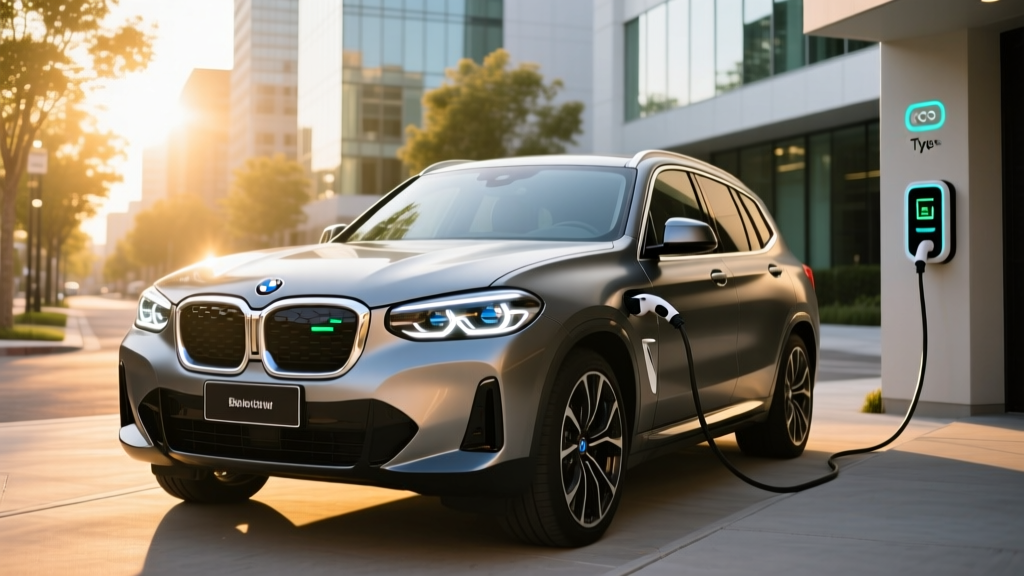
The BMW electric iX3 (2026 facelift, built on the Neuen Klasse platform with a sixth-generation eDrive powertrain) delivers an EPA-estimated 296 miles of range from an 80 kWh usable NMC battery. It peaks at 205 kW DC fast charging (10–80% in approximately 26 minutes) and starts around $58,000 in the U.S. It is a strong luxury compact EV SUV for buyers who want BMW driving dynamics without the iX's price tag. However, federal §30D tax credit eligibility is uncertain due to battery-sourcing and critical-mineral requirements — always verify current-year rules on irs.gov before purchasing. Real-world highway range drops to roughly 250–265 miles, and cold-weather driving can shave another 15–25% off that figure.
BMW iX3 vs. Gas X3: The Numbers That Matter
The most common cross-shopping question: how does the electric iX3 stack up against the gas-powered BMW X3 xDrive30? Here's a spec-driven comparison based on 2026 model-year data.
| Spec | BMW iX3 (2026 EV) | BMW X3 xDrive30 (Gas) |
|---|---|---|
| Powertrain | Single/Dual motor EV | 2.0L turbo I4 + 8AT |
| Horsepower | ~282 hp (RWD) / ~402 hp (AWD) | 248 hp |
| 0–60 mph | 6.2 sec (RWD) / 4.8 sec (AWD) | 6.0 sec |
| Range / Tank | 296 mi (EPA) | ~430 mi (17.2 gal × 25 mpg combined) |
| Efficiency | ~98 MPGe (est.) | 25 mpg combined |
| "Fuel" cost per mile | ~$0.045 (home) / ~$0.13 (DCFC) | ~$0.14 ($3.50/gal gas) |
| Base MSRP | ~$58,000 | ~$49,700 |
| Fed. tax credit (§30D) | Up to $7,500 (eligibility varies) | None |
| Maintenance (5-yr est.) | ~$1,800 | ~$4,200 |
The iX3 carries an ~$8,300 higher sticker price, but when you factor in potential tax credits, lower fueling costs, and reduced maintenance (no oil changes, fewer brake replacements thanks to regenerative braking), the five-year total cost of ownership can break even or favor the EV — especially if you charge at home.
Real-World Range: What the EPA Sticker Doesn't Tell You
The EPA's 296-mile estimate assumes a mix of city and highway driving at moderate temperatures. In practice, several factors compress that number:
EPA Range: 296 miles
Real-world highway (70 mph, 75°F): ~255–270 miles
Cold-weather (30°F, mixed driving): ~220–250 miles
Worst-case (cold + highway + hills): ~200–215 miles
BMW's sixth-generation eDrive system includes a heat pump as standard equipment, which mitigates cold-weather losses compared to older EVs that relied solely on resistive cabin heating. Still, any lithium-ion battery loses efficiency below ~40°F, and cabin heating draws directly from the traction battery. If your daily commute is under 60 miles round-trip, even worst-case range leaves a massive buffer. If you regularly drive 200+ miles between charging stops, plan conservatively.
Charging the iX3: Speeds, Connectors, and Real Costs
Understanding charging is where most first-time EV buyers get confused. The key distinction: kW (kilowatts) measures power — how fast energy flows into the battery. kWh (kilowatt-hours) measures energy — the battery's total capacity, like gallons in a gas tank. The iX3's 80 kWh battery at a 205 kW peak charger doesn't fill in 23 minutes because charging speed tapers as the battery approaches full.
| Level | Power | Connector | Speed (mi/hr) | Use Case |
|---|---|---|---|---|
| Level 1 | 1.4 kW (120V) | NACS (standard) | ~3–4 mi/hr | Emergency / overnight trickle |
| Level 2 | 11.5 kW (240V) | NACS | ~30–35 mi/hr | Home daily charging |
| DC Fast | Up to 205 kW | NACS | ~700+ mi/hr (peak) | Road trips |
The iX3 uses the NACS (North American Charging Standard) connector, giving it native access to the Tesla Supercharger network — the most reliable public fast-charging infrastructure in the U.S. At a V4 Supercharger or comparable 200+ kW station, expect a 10–80% charge in roughly 26 minutes. Above 80% SoC, the charge curve tapers sharply to protect battery health, adding another 15–20 minutes to reach 100%. For road trips, plan stops at 80% to keep moving.
Home charging cost: At the U.S. average residential electricity rate of ~$0.16/kWh, a full 80 kWh charge costs about $12.80 — roughly equivalent to 3.7 gallons of gas but delivering 296 miles vs. ~93 miles in the gas X3. Over 15,000 miles/year, home charging saves approximately $1,400–$1,600 annually compared to fueling the X3 at $3.50/gallon.
Five-Year Total Cost of Ownership Breakdown
Here's a realistic five-year cost comparison assuming 15,000 miles/year, $3.50/gallon gas, $0.16/kWh home electricity, and no state-level incentives:
| Cost Category | BMW iX3 (EV) | BMW X3 xDrive30 (Gas) |
|---|---|---|
| Purchase price (MSRP) | $58,000 | $49,700 |
| Federal tax credit (§30D) | −$7,500 (if eligible) | $0 |
| Net purchase | $50,500 | $49,700 |
| Fuel/electricity (5 yr) | $9,600 | $21,000 |
| Maintenance (5 yr) | $1,800 | $4,200 |
| Insurance (5 yr, avg.) | $10,500 | $8,800 |
| Total 5-yr cost | $72,400 | $83,700 |
| Cost per mile | $0.48 | $0.56 |
Key caveats: Insurance premiums for the iX3 tend to run 15–20% higher than the gas X3 due to higher repair costs after collisions. The §30D tax credit is subject to income caps ($300k joint / $150k single), MSRP caps ($80k for SUVs), and critical-mineral/battery-component sourcing rules that change annually. Always confirm eligibility via the IRS qualified vehicles list before signing paperwork. Point-of-sale transfer is available if you qualify, reducing your drive-off price directly.
First-Time EV Buyer: What You Must Know Before Committing
Home Charging Is Non-Negotiable for Most Owners
Over 80% of EV charging happens at home. If you have a garage or dedicated parking spot with access to a 240V outlet (or the ability to install one), the iX3 integrates seamlessly into daily life — plug in at night, wake up to a full battery. A Level 2 home charger installation typically costs $800–$2,500 depending on your electrical panel's capacity and the run length from panel to parking spot. If your panel is maxed out at 100A, a panel upgrade to 200A can add $1,500–$3,000. Always get a quote from a licensed electrician before purchasing.
If you cannot charge at home (apartment, street parking), you'll rely on public DC fast chargers and workplace charging. This is viable but adds 20–40 minutes per week to your routine and increases fueling costs to ~$0.13/mile on commercial networks like Electrify America or EVgo.
Battery Longevity and Warranty
BMW provides an 8-year / 100,000-mile battery warranty covering defects and capacity loss below 70% of original capacity. The iX3's NMC chemistry offers high energy density but is slightly more susceptible to long-term degradation than LFP (lithium iron phosphate) packs. Real-world data from similar BMW eDrive systems suggests ~8–12% capacity loss over 100,000 miles under normal use. Avoid routinely DC fast-charging to 100% or letting the battery sit at extreme SoC levels (below 10% or above 90%) for extended periods to maximize longevity.
The Charging-Desert Reality
While the Supercharger network is robust along major highways, rural routes in parts of the Mountain West, Great Plains, and rural South still have gaps exceeding 100 miles between chargers. If your typical road trips take you through these areas, the iX3's 250-mile real-world range requires more careful planning than the gas X3's 430-mile range. Use tools like A Better Routeplanner (ABRP) to simulate your specific routes before buying.
Common Misconceptions About the BMW iX3
| Myth | Fact |
|---|---|
| "EVs are slower than gas cars" | The AWD iX3 hits 0–60 in 4.8 seconds — quicker than the gas X3's 6.0 seconds, with instant torque off the line. |
| "The battery will need replacing in 5 years" | Modern NMC packs are warrantied for 8 years/100k miles and typically last 150k–200k+ miles before reaching 70% capacity. Replacement costs $12,000–$18,000 but is rarely needed in the vehicle's first decade. |
| "EVs don't work in cold weather" | Range drops 15–25% in sub-freezing temps, but the iX3's heat pump and battery preconditioning mitigate this. Preconditioning while plugged in warms the battery before departure, preserving range. |
| "Charging takes hours on road trips" | At 205 kW, a 10–80% DC fast charge takes ~26 minutes — roughly the time for a rest stop, snack, and bathroom break. |
| "The $7,500 tax credit applies to everyone" | §30D has income limits, MSRP caps, and battery-sourcing requirements that change yearly. Some BMW models have qualified; some haven't. Verify on irs.gov for the current tax year. |
Decision Framework: Should You Buy the BMW Electric iX3?
Choose the BMW iX3 if:
- You have home charging access (garage or dedicated 240V outlet)
- Your daily driving is under 150 miles round-trip
- You value BMW's driving dynamics and want a luxury compact EV SUV under $65k
- You road-trip primarily on routes with Supercharger coverage
- You want to reduce fuel and maintenance costs over a 5+ year ownership period
Choose the gas BMW X3 (or wait) if:
- You cannot charge at home and have no reliable workplace charging
- You regularly drive 300+ miles through rural areas with sparse charging infrastructure
- Your budget is strictly under $50k and you cannot access the §30D credit
- You plan to own the vehicle for fewer than 3 years (the cost advantage takes time to materialize)
Consider the BMW iX (larger, more expensive) if:
- You need 300+ miles of EPA range (iX xDrive50 offers ~324 miles)
- You want dual-motor AWD as standard with higher power output
- Budget is flexible ($85k+)
Frequently Asked Questions
Does the BMW iX3 qualify for the $7,500 federal tax credit?
Eligibility depends on current-year §30D rules covering buyer income, MSRP caps ($80k for SUVs), and battery critical-mineral/component sourcing. BMW's battery supply chain has evolved, but qualification status changes. Check the IRS qualified vehicle list and consult a tax professional before relying on the credit in your purchase decision.
What is the real-world range of the BMW iX3 on a road trip?
Expect 255–270 miles at highway speeds in moderate weather. In cold conditions (below 40°F) or mountainous terrain, plan for 210–240 miles between stops. Always charge to 80% at DC fast chargers to keep the charge curve in the fast zone and minimize stop time.
How much does it cost to install a Level 2 home charger for the iX3?
Equipment (a quality 48A Level 2 charger) runs $400–$700. Professional installation by a licensed electrician adds $400–$1,800 depending on wiring distance and panel capacity. If you need a panel upgrade from 100A to 200A, add $1,500–$3,000. Total typical cost: $800–$2,500 without a panel upgrade.
Is the iX3's NACS connector compatible with all U.S. charging networks?
Yes. As of 2025, NACS is the de facto standard in North America. The iX3 can charge natively at Tesla Superchargers (V3 and V4), Electrify America, EVgo, and ChargePoint stations without adapters. CCS-only legacy stations may require a CCS-to-NACS adapter for compatibility — confirm with the station's app before relying on it.
How does the iX3 compare to the Tesla Model Y?
The Model Y Long Range offers more EPA range (~330 miles), slightly faster DC charging (250 kW peak, 10–80% in ~20 min), and a lower starting price (~$48,000). The iX3 counters with superior interior materials, a more refined ride quality, and BMW's traditional driving dynamics. If cargo space and range-per-dollar matter most, the Model Y wins. If luxury feel and brand matter, the iX3 holds its ground.
What happens if the iX3 battery degrades significantly?
Under BMW's 8-year/100,000-mile warranty, the manufacturer will repair or replace the battery if capacity drops below 70% of original. Real-world degradation for modern NMC packs averages 8–12% over 100,000 miles. Out-of-warranty replacement costs $12,000–$18,000, but most owners will trade or sell the vehicle before this becomes relevant.
Sources: BMW USA, IRS §30D Clean Vehicle Credit, fueleconomy.gov (EPA).