The 2025 Kia Niro EV Lease: Beyond the Monthly Payment
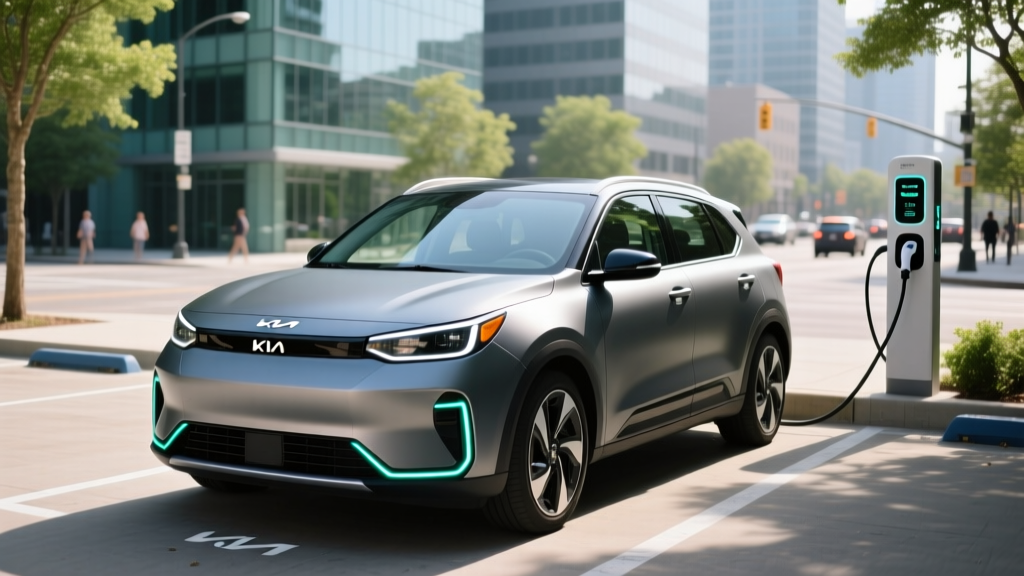
The 2025 Kia Niro EV is one of the most practical entry points into all-electric ownership, with an EPA-estimated 239 miles of range, a 64.8 kWh battery, and a starting MSRP around $39,600. But if you're researching a 2025 Kia Niro EV lease, the sticker price and monthly payment are only part of the equation. The real question is what this vehicle costs to own over the life of the lease — and whether the fuel savings, tax incentives, and reduced maintenance actually offset higher insurance premiums and EV depreciation patterns.
We've run the numbers with concrete data: electricity rates, EPA efficiency figures, IRS tax-credit rules, and insurance averages. Here's the full financial picture.
EPA Range: 239 miles (Wind trim) | Real-world highway: ~200–215 miles; cold weather (30°F): ~175–190 miles
Battery: 64.8 kWh usable, NMC chemistry
DC Fast Charging: Peak ~85 kW, 10–80% in approximately 45 minutes
Level 2 Charging: 11 kW onboard charger, ~7 hours for a full charge
Motor Output: 201 hp, 291 lb-ft torque | 0–60 mph: ~6.8 seconds
EPA Efficiency: 113 MPGe combined (30 kWh/100 mi)
Base MSRP: $39,600 (Wind) / $42,600 (Wave) — destination included
Warranty: 10 years/100,000 miles battery & powertrain; 5 years/60,000 miles bumper-to-bumper
Federal Tax Credit: Do You Actually Qualify for $7,500?
The IRS §30D Clean Vehicle Credit can deliver up to $7,500 — and since 2024, it can be transferred to the dealer as a point-of-sale discount, which effectively lowers your lease's capitalized cost. But eligibility is not automatic. The rules have tightened significantly under the Inflation Reduction Act, and they continue to evolve.
- Vehicle MSRP cap: SUVs/vans/pickups ≤ $80,000; sedans/others ≤ $55,000. The Niro EV qualifies (MSRP well under $55K).
- Buyer income limits (modified AGI): $300,000 joint / $225,000 head of household / $150,000 individual. Applies to the tax year of delivery or prior year, whichever is lower.
- Battery sourcing requirements: $3,750 half requires critical minerals from the US or FTA partners; the other $3,750 requires battery components manufactured/assembled in North America. Both halves must be met for the full $7,500.
- Foreign Entity of Concern (FEOC) restriction: Vehicles with battery components from FEOC entities (China, Russia, North Korea, Iran) are disqualified entirely. Sourcing rules tighten annually.
- Point-of-sale transfer: You can elect to transfer the credit to the dealer at purchase, reducing the upfront price. For leases, the credit technically goes to the lessor (the leasing company), but most pass it through as a cap-cost reduction.
- Final assembly: Must occur in North America. The 2025 Niro EV is assembled in South Korea — this may disqualify it from the purchase credit, but leased vehicles can qualify under a separate commercial-vehicle credit (§45W) that the lessor claims and passes on. Confirm with your dealer.
Source: IRS §30D Clean Vehicle Credit. Rules are subject to change — verify at purchase time and consult a tax professional.
The lease loophole: Because the Niro EV is built in South Korea, purchasing one may not qualify for the §30D credit due to the North American final-assembly requirement. However, when you lease, the vehicle is technically acquired by the leasing company, which can claim the commercial clean-vehicle credit under §45W — and most major lessors (Kia Finance, Hyundai Capital) pass that $7,500 savings directly to the lessee as a capitalized-cost reduction. This is one of the strongest arguments for leasing the Niro EV rather than buying outright. Always confirm with the dealer that the lease quote reflects the credit.
5-Year Total Cost of Ownership Breakdown
Here's what owning (or leasing and running) the 2025 Kia Niro EV actually costs over 60 months, compared to a similarly priced gasoline compact SUV — we'll use the Kia Seltos (starting ~$27,000, 29 MPG combined) as a baseline.
| Category | Niro EV (2025) | Kia Seltos (Gas) |
|---|---|---|
| Purchase/Lease (after incentives) | ~$32,100 (net of $7,500 lease credit) | ~$27,000 |
| Fuel/Energy (75,000 mi total) | $2,925 (home charging at $0.13/kWh) | $8,880 (at $3.45/gal, 29 MPG) |
| Maintenance (5 years) | $1,200 | $3,500 |
| Insurance (5 years) | $9,750 (~$1,950/yr) | $7,500 (~$1,500/yr) |
| Estimated Depreciation | $16,050 (~50%) | $12,150 (~45%) |
| Total 5-Year Cost | ~$62,025 | ~$59,030 |
Key takeaway: The Niro EV's operating costs (fuel + maintenance) save roughly $8,255 over five years compared to the gas Seltos. But those savings are partially offset by higher insurance (~$2,250 more) and steeper depreciation (~$3,900 more), leaving the EV roughly $3,000 more expensive in total over five years. The gap narrows or disappears entirely if electricity rates are lower in your region, if you drive more than 15,000 miles/year, or if gas prices spike above $4/gallon.
According to fueleconomy.gov, the Niro EV's annual fuel cost is estimated at $550 (at 15,000 miles/year and national-average electricity rates), compared to roughly $1,750 for the gas Seltos.
Charging vs. Gas: The Per-Mile Math
The single largest ownership advantage of the Niro EV is energy cost — but the exact savings depend on where and how you charge.
| Scenario | $/Mile (Niro EV) | $/Mile (Gas SUV, 29 MPG) |
|---|---|---|
| Home charging (national avg $0.16/kWh, 30 kWh/100 mi) | $0.048 | $0.119 |
| Home charging (low-cost state, $0.10/kWh) | $0.030 | $0.119 |
| Public DC fast charging ($0.40/kWh avg) | $0.120 | $0.119 |
| Time-of-use off-peak ($0.08/kWh) | $0.024 | $0.119 |
At the national average residential electricity rate of roughly $0.16/kWh, the Niro EV costs about $0.048 per mile to fuel — less than half the cost of a 29 MPG gas SUV at $3.45/gallon. Over 15,000 miles/year, that's a savings of approximately $1,065 annually when charging at home.
The critical caveat: if you rely primarily on public DC fast chargers at $0.35–$0.50/kWh, your per-mile cost rises to $0.105–$0.150, which is comparable to or even more expensive than gasoline. The Niro EV's economic case depends heavily on consistent access to home or workplace Level 2 charging.
The Niro EV uses a CCS1 connector for DC fast charging. With the industry-wide shift to NACS (Tesla's connector), Kia has committed to adopting NACS on future models, but the 2025 Niro EV still ships with CCS. Adapters (CCS-to-NACS) are available for ~$200–$250 if you want Tesla Supercharger access.
Maintenance Savings: What You Won't Pay For
EVs eliminate the most common recurring maintenance items in a gasoline vehicle. The Niro EV has no engine oil, no transmission fluid, no spark plugs, no timing belt, no exhaust system, and no catalytic converter. Regenerative braking significantly extends pad and rotor life — many EV owners go 80,000+ miles on original brake pads.
| Service | Niro EV | Gas SUV |
|---|---|---|
| Oil changes (synthetic, ~$60 each) | Not required | ~10 changes / $600 |
| Transmission fluid | Not required | ~$200 |
| Brake pads/rotors | $0–$200 (regen extends life) | $600–$1,000 |
| Engine air filter | Not required | $100 |
| Cabin air filter | $150 (every 15K mi) | $150 |
| Tire rotation/replacement | $1,000 (EVs wear tires faster) | $800 |
| Coolant flush | $100 | $200 |
| Estimated Total (5 yr) | ~$1,250 | ~$3,550 |
Net maintenance savings: ~$2,300 over five years. The one area where EVs can cost slightly more is tires — the Niro EV's instant torque and heavier curb weight (~3,700 lbs) accelerate tread wear compared to a lighter gas crossover. Budget for a tire replacement around 40,000–50,000 miles.
Insurance Reality: The Cost EV Buyers Overlook
EV insurance premiums are typically 15–30% higher than equivalent gasoline vehicles. The 2025 Niro EV is likely to cost around $1,800–$2,100 per year for full coverage (depending on your state, driving record, and deductible), compared to $1,400–$1,600 for a gas Seltos.
The reasons are structural, not arbitrary:
- Higher repair costs: EV battery packs, power electronics, and specialized sensors require certified technicians and OEM parts. A minor rear collision that damages the high-voltage system can result in a total-loss declaration.
- Higher vehicle value: The Niro EV's MSRP is ~$12,000–$15,000 more than a base Seltos, so comprehensive and collision payouts are larger.
- Limited repair network: Fewer body shops are certified for high-voltage system repairs, which drives up labor rates and cycle times.
How to reduce premiums: Shop quotes from at least three insurers. Companies like Geico, Progressive, and USAA (for military families) often offer competitive EV rates. Some insurers offer green-vehicle discounts. Bundling with home insurance typically saves 10–15%.
Depreciation and Resale Value Trends
EV depreciation has been a moving target. After a sharp correction in 2023–2024 driven by Tesla price cuts and an influx of new models, the used EV market has stabilized somewhat. However, EVs still depreciate faster on average than gasoline vehicles.
Industry data from Kelley Blue Book and iSeeCars indicates that mainstream EVs lose approximately 45–55% of their value over five years, compared to 35–45% for comparable gas crossovers. For the Niro EV specifically, expect roughly 50% depreciation over 60 months — meaning a $32,100 purchase (after credit) could be worth approximately $16,000 at year five.
Factors working against EV resale:
- Battery health uncertainty: Used buyers discount for potential battery replacement risk, even though Kia's 10-year/100,000-mile battery warranty is transferable to second owners.
- Rapid tech advancement: Newer models with faster charging, longer range, and NACS connectors make older EVs less desirable.
- Tax-credit effect: The $7,500 purchase incentive effectively lowers the "true" cost basis, and used-EV buyers can claim up to $4,000 under §25E, which partially supports used pricing.
Leasing advantage: If you lease, depreciation is the lessor's problem, not yours. You lock in a residual value at signing and walk away at lease end regardless of market conditions. Given the volatility in EV resale values, leasing transfers that risk to Kia Finance.
State, Local, and Utility Incentives
Beyond the federal credit, many states and utilities offer additional incentives that can reduce your effective cost by hundreds to several thousand dollars:
- California: Up to $2,000 via the Clean Fuel Reward (point-of-sale); additional CVRP rebates for income-eligible buyers up to $7,000 (funding-dependent).
- Colorado: State tax credit of up to $5,000 for EVs under $80,000 MSRP.
- New York: Drive Clean Rebate up to $2,000 (point-of-sale).
- Utility rebates: Many electric utilities (e.g., PG&E, ConEdison, Austin Energy) offer $250–$1,000 rebates for home Level 2 charger installation, plus time-of-use rates that cut charging costs by 30–50%.
- HOV lane access: States including California, Colorado, Virginia, and Maryland offer free or discounted HOV/carpool lane access for EVs — a significant commute-time savings in metro areas.
Incentives vary by jurisdiction, income level, and funding availability. Check AFDC's state incentive database and your local utility for current programs.
Is the 2025 Kia Niro EV Lease Worth It? A Decision Framework
Choose the Niro EV lease if:
- You have reliable home or workplace Level 2 charging access
- Your daily commute is under 80 miles round-trip (the 239-mile EPA range provides ample buffer)
- You drive 12,000–18,000 miles/year (higher mileage = bigger fuel savings)
- You want to avoid depreciation risk by letting the lessor absorb resale uncertainty
- You qualify for the federal credit via the lease structure and your state offers additional rebates
Consider alternatives if:
- You lack consistent home charging and would rely on public DC fast charging (erasing fuel savings)
- You regularly drive 300+ miles in a single day (the ~85 kW peak charge rate means 45-minute stops)
- You live in an extremely cold climate where real-world winter range drops to ~175 miles
- You prefer to own vehicles long-term (8+ years) to maximize value from the 10-year powertrain warranty
Frequently Asked Questions
How much does a 2025 Kia Niro EV lease actually cost per month?
Lease payments vary by region, dealer, money factor, and residual. With the $7,500 federal lease credit applied as a cap-cost reduction, expect monthly payments in the range of $300–$450 for a 36-month lease with 10,000–12,000 miles/year and $2,000–$3,000 due at signing. Always negotiate the sale price (cap cost) before discussing monthly payments.
Can I charge the Niro EV at Tesla Superchargers?
Not natively. The 2025 Niro EV uses a CCS1 connector, while Tesla Superchargers use NACS. However, CCS-to-NACS adapters are available (~$200–$250), and Kia has indicated future models will adopt NACS natively. Tesla has also opened select Supercharger stations to non-Tesla EVs via the Tesla app using the built-in CCS cable at Magic Dock-equipped stations.
How long does the Niro EV battery last?
The 64.8 kWh NMC battery is covered by Kia's 10-year/100,000-mile warranty, which guarantees the battery retains at least 70% of its original capacity. Real-world degradation data from similar Hyundai/Kia E-GMP platforms suggests approximately 10–15% capacity loss over 100,000 miles under normal use. To maximize longevity, avoid frequent DC fast charging above 80% SoC and try not to regularly discharge below 10%.
What happens if the battery fails out of warranty?
Full battery replacement for the Niro EV currently costs approximately $8,000–$12,000 (parts and labor). However, catastrophic battery failure is rare — most degradation is gradual. Individual module replacement may be possible at lower cost. Kia's warranty is among the longest in the industry, and it transfers to subsequent owners if you sell before the 10-year mark.
Does the Niro EV qualify for the $7,500 tax credit if I buy instead of lease?
Likely not. The §30D purchase credit requires North American final assembly, and the 2025 Niro EV is assembled in Hwaseong, South Korea. However, leasing allows the lessor to claim the §45W commercial credit and pass savings to you. This is a significant advantage of leasing this particular model. Always confirm credit pass-through in writing with your dealer before signing.
How does cold weather affect the Niro EV's range?
In temperatures below 32°F, expect range to drop by 20–30% due to battery chemistry limitations and cabin heating demand. The 239-mile EPA range could shrink to approximately 170–190 miles in sustained cold. The Niro EV offers a heat pump (standard on Wave trim, optional on Wind in some markets), which recovers waste heat from the drivetrain to warm the cabin more efficiently, reducing range loss by roughly 5–8% compared to resistive heating. Preconditioning the battery and cabin while plugged in at home mitigates cold-weather losses significantly.