The Quick Answer: Is a BMW Electric Car Right for You?
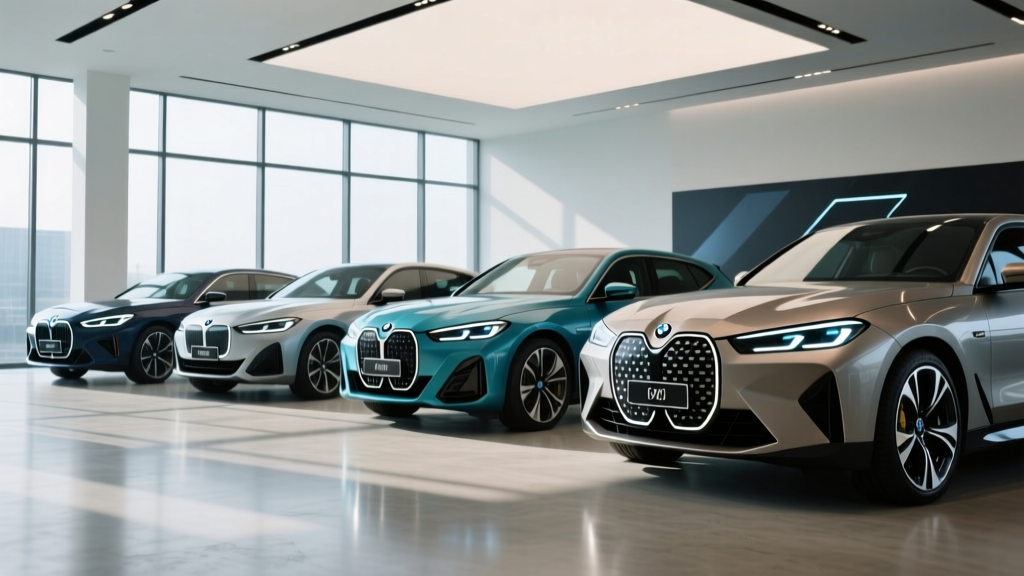
BMW's 2026 electric lineup spans four core models — the i4 gran coupe, i5 sedan, iX SUV, and i7 flagship — with EPA ranges from 282 to 318 miles, starting prices from roughly $52,000 to $106,000, and DC fast-charging speeds up to 205 kW. Most BMW EVs qualify for partial or full federal tax credits depending on your income, MSRP caps, and battery-sourcing compliance. The real-world ownership advantage over a gas BMW emerges within 3-5 years for drivers with home charging access, saving $4,000-$7,000 on fuel and maintenance over that period. If you lack reliable home or workplace Level 2 charging, a BMW plug-in hybrid (like the 550e xDrive) may serve you better until public infrastructure matures in your area.
BMW's 2026 Electric Lineup: Models, Range, and Specs
BMW has committed to its "Neue Klasse" architecture transition, but for the 2026 model year, the brand's EVs still ride on adapted CLAR platforms shared with their combustion siblings. That means you get BMW's signature driving dynamics and premium interiors, but with battery packs integrated into existing chassis designs rather than dedicated skateboard architectures. Here's what's available:
| Model | EPA Range | Battery (kWh usable) | Peak DC Charge | 10-80% Time | 0-60 mph | HP | Base MSRP |
|---|---|---|---|---|---|---|---|
| i4 eDrive40 | 307 mi | 81.5 kWh (NMC) | 205 kW | ~31 min | 5.5 sec | 335 | $52,200 |
| i4 M50 | 270 mi | 81.5 kWh (NMC) | 205 kW | ~31 min | 3.7 sec | 536 | $67,300 |
| i5 eDrive40 | 295 mi | 81.2 kWh (NMC) | 205 kW | ~30 min | 5.7 sec | 335 | $57,900 |
| i5 M60 | 256 mi | 81.2 kWh (NMC) | 205 kW | ~30 min | 3.7 sec | 593 | $84,100 |
| iX xDrive50 | 324 mi | 105.2 kWh (NMC) | 195 kW | ~35 min | 4.4 sec | 516 | $87,100 |
| i7 eDrive50 | 318 mi | 101.7 kWh (NMC) | 195 kW | ~34 min | 4.5 sec | 449 | $106,700 |
Real-world range caveat: EPA figures assume mixed driving at moderate temperatures. In our experience and consistent with EPA testing data, expect highway-only driving at 75 mph to reduce range by 10-15%, and cold-weather operation (below 32°F) to cut range by 20-30% due to battery thermal demands and cabin heating. An i4 eDrive40 rated at 307 miles EPA may deliver 215-245 miles on a cold winter highway run.
Real-World Range Expectations
EPA Sticker: 307 miles (i4 eDrive40)
Real-World Highway (70-75 mph, 65°F): ~260-275 miles
Cold Weather Highway (30°F, heater on): ~215-245 miles
City/Stop-and-Go with Regen: ~290-310 miles
Charging Speed and Infrastructure: What BMW Owners Actually Experience
BMW uses the CCS1 connector across its 2026 EV lineup, though the brand has announced NACS adoption for future models. For now, BMW owners access Tesla Superchargers via CCS-to-NACS adapters (included with some models or available for ~$200).
| Charging Level | Power (kW) | Miles Added Per Hour | Typical Use Case |
|---|---|---|---|
| Level 1 (120V household) | 1.4 kW | 3-5 mi/hr | Emergency/trickle only |
| Level 2 (240V home/public) | 7.4-11 kW | 20-35 mi/hr | Daily home/workplace charging |
| DC Fast Charging | Up to 205 kW | ~180-220 mi in 10 min | Road trips, rapid top-ups |
Charging curve reality: BMW's 205 kW peak rate applies only between roughly 10-30% state of charge. Above 50%, the rate tapers significantly — expect 80-100 kW at 60% SoC and 50 kW or less above 80%. This is why manufacturers quote 10-80% times rather than 0-100%. Charging from 80-100% can take as long as 10-80%, so plan your road-trip stops accordingly: arrive low, leave at 80%.
For home Level 2 charging, BMW recommends the Wallbox Pulsar Plus or BMW-branded Charging Station (~$600-800 for equipment). Professional installation by a licensed electrician typically runs $500-$2,000 depending on panel proximity and whether your home's electrical service needs upgrading from 100A to 200A (a $1,500-$3,000 job). Total home charging setup: $1,100-$5,000.
BMW Electric vs Gas: 5-Year Cost of Ownership
Let's compare the i4 eDrive40 against its closest combustion sibling, the 430i Gran Coupe, over 5 years and 75,000 miles (15,000 miles/year).
| Cost Category | i4 eDrive40 (EV) | 430i Gran Coupe (Gas) | Difference |
|---|---|---|---|
| Purchase Price (MSRP) | $52,200 | $49,900 | +$2,300 (EV) |
| Federal Tax Credit (§30D) | -$3,750 to -$7,500* | $0 | -$3,750 to -$7,500 (EV) |
| Fuel/Energy (75k miles) | $2,625 (home charging)** | $9,375 (premium gas) | -$6,750 (EV) |
| Maintenance | $1,200 | $3,500 | -$2,300 (EV) |
| Insurance (5-year total) | $9,500 | $8,200 | +$1,300 (EV) |
| 5-Year Net Cost | $61,775 - $65,525 | $70,975 | -$5,450 to -$9,200 (EV saves) |
*Federal tax credit eligibility depends on your modified adjusted gross income (AGI limits: $150K single, $300K joint), vehicle MSRP caps ($55K for sedans, $80K for SUVs/vans), and battery component/critical mineral sourcing requirements per IRS §30D rules. The i4 eDrive40 qualifies for partial credit ($3,750) or full credit ($7,500) depending on your tax year and sourcing compliance. Consult a tax professional.
**Assumes $0.14/kWh national average electricity rate and 3.5 miles/kWh efficiency. Rates vary widely — California owners may pay $0.25-$0.35/kWh on time-of-use plans, raising 5-year fuel cost to $4,700-$6,500.
The i4 breaks even on purchase price within 2-3 years if you qualify for the federal credit and charge primarily at home. Without the credit or with expensive public-only charging, break-even extends to 4-6 years or may not occur before resale.
Federal Tax Credit Eligibility: What BMW Buyers Need to Know
The §30D clean vehicle credit is not a flat $7,500 for every buyer. Here's the 2026 eligibility checklist:
- Income Caps: Modified AGI must not exceed $150,000 (single filers), $225,000 (head of household), or $300,000 (joint filers)
- MSRP Caps: Sedans (i4, i5, i7) must have base MSRP under $55,000; SUVs (iX) under $80,000. Options packages that push the vehicle above these thresholds can disqualify it
- Battery Sourcing: Vehicles must meet critical mineral and battery component requirements (phased percentages increasing annually). BMW's supply chain compliance varies by model year and production batch
- Point-of-Sale Transfer: You can transfer the credit to the dealer at purchase, reducing your out-of-pocket cost immediately rather than waiting for tax filing
- Final Assembly: Vehicle must undergo final assembly in North America (BMW's Spartanburg, SC plant produces some electrified models, but most i-series vehicles are assembled in Germany, which can disqualify them from §30D)
Critical caveat: Most BMW electric vehicles are assembled in Germany (Dingolfing or Munich plants), which typically disqualifies them from the §30D credit under current final-assembly rules. Some buyers have accessed credits via leasing loopholes (§45W commercial credit passed to lessees) — check with your dealer and tax advisor. This is a significant disadvantage versus domestically assembled competitors like the Tesla Model 3/Y, Ford Mustang Mach-E, or GM Ultium-based vehicles.
Real-World Ownership Considerations: Who Should (and Shouldn't) Buy a BMW EV
Decision Framework: Is a BMW Electric Car Right for Your Situation?
Choose a BMW EV (i4, i5, iX, i7) if:
- You have access to Level 2 home or workplace charging (240V, 30-50A circuit)
- Your daily driving is under 200 miles round-trip with occasional longer trips
- You live in a moderate climate or accept 20-30% winter range loss
- You value BMW's driving dynamics, interior quality, and dealer service network
- You can absorb the upfront premium or qualify for lease incentives
Consider a BMW plug-in hybrid (550e xDrive, X5 xDrive50e) or wait if:
- You lack reliable home/workplace charging and your area has sparse public DC fast-charging infrastructure
- You regularly drive 300+ miles in single trips through charging deserts (rural Midwest, Mountain West)
- You live in extreme cold climates (sustained sub-20°F winters) where range loss compounds charging logistics
- You need maximum cargo/passenger flexibility (BMW's EVs sacrifice some trunk space to battery packaging)
- The federal tax credit ineligibility makes the total cost prohibitive versus gas alternatives
Driving patterns matter: BMW's regenerative braking system (adaptive or manual one-pedal mode) excels in stop-and-go urban traffic, recapturing energy and extending range. Highway-heavy commuters see less regen benefit and higher consumption. If 80% of your miles are freeway, expect to charge more frequently and budget for 15-20% higher energy costs than EPA estimates suggest.
Climate impact: BMW equips its EVs with heat pump systems (standard on iX, optional on i4/i5) that reduce winter range loss by 5-10% compared to resistive heating. Preconditioning the battery while plugged in — via the BMW app — preserves range and enables faster DC charging in cold weather. Owners in Minnesota or Maine report 220-250 mile winter ranges from a 307-mile EPA-rated i4, while Southern California owners consistently achieve 290+ miles year-round.
Common Misconceptions About BMW Electric Cars
| Myth | Fact |
|---|---|
| "BMW EV batteries degrade quickly and cost $20K to replace" | BMW warranties cover 8 years/100,000 miles with 70% capacity retention guarantee. Real-world degradation data shows 5-8% loss over 5 years for NMC chemistries with proper charging habits (avoiding frequent 100% SoC). Replacement costs are $12,000-$18,000 out of warranty, but most owners never need one |
| "You can't take a BMW EV on road trips" | The iX xDrive50's 324-mile EPA range and 195 kW DC charging enable 200-mile highway segments with 15-20 minute charging stops. Planning apps (A Better Routeplanner, PlugShare) identify reliable CCS/adapter-compatible stations. Cross-country trips take 15-20% longer than gas due to charging stops |
| "BMW EVs qualify for the full $7,500 federal tax credit" | Most BMW EVs are assembled in Germany, failing the §30D final-assembly requirement. Lease structures may pass through commercial credits, but outright purchase typically yields $0-$3,750 credit depending on model year and sourcing. Always verify via the IRS's official vehicle eligibility list before purchase |
| "Electric BMWs are slower and less engaging than gas M cars" | The i4 M50's 536 hp and 3.7-second 0-60 time outperform the gas M440i (382 hp, 4.2 sec). Instant torque delivery and low center of gravity (battery pack) provide responsive handling, though the 4,800-lb curb weight is noticeable in tight corners versus lighter gas platforms |
| "Home charging installation is prohibitively expensive" | Basic Level 2 installs (Wallbox or BMW charger on existing 200A panel, <50 ft run) cost $1,100-$2,500. Only homes needing panel upgrades (100A to 200A) face $3,000-$5,000 total costs. Federal 30C tax credit covers 30% of charging equipment and installation costs (up to $1,000) through 2032 |
Maintenance, Insurance, and Long-Term Costs
BMW EVs eliminate oil changes, spark plugs, transmission fluid, and exhaust system repairs. Brake pad life extends to 80,000-120,000 miles thanks to regenerative braking (the friction brakes engage only for hard stops or when the battery is full). Scheduled maintenance is limited to cabin air filters ($80-$150 every 2 years), brake fluid flushes ($150-$200 every 3 years), and tire rotations.
Insurance premiums: BMW EVs typically cost 10-20% more to insure than their gas counterparts due to higher repair costs (specialized high-voltage training for body shops), battery replacement risk, and elevated MSRP. Expect $1,800-$2,400/year for an i4 (versus $1,500-$2,000 for a 430i) with good driving records. Shop quotes from EV-friendly insurers (Progressive, State Farm, Tesla Insurance in eligible states) — some offer 5-10% discounts for EVs.
Tire wear: EVs are heavier and deliver instant torque, accelerating tire wear by 15-25% versus gas cars. Budget for premium tire replacements (Michelin Pilot Sport EV, Continental EcoContact) every 30,000-40,000 miles at $200-$350 per tire. Rotating every 5,000-7,500 miles extends life.
Battery longevity: BMW's NMC (nickel manganese cobalt) chemistry prioritizes energy density and performance over cycle life. Expect 8-12% degradation over 8 years with typical use (charging to 80-90% daily, occasional 100% for trips). Avoiding frequent DC fast charging and extreme heat exposure (Arizona summers) preserves capacity. The 8-year/100,000-mile warranty covers defects and capacity below 70% — few owners report warranty claims.
BMW EV vs Competitors: How Does It Stack Up?
The i4 competes directly with the Tesla Model 3, Polestar 2, and Hyundai Ioniq 6. The iX targets the Tesla Model X, Audi e-tron, and Mercedes EQE SUV. Key differentiators:
- Driving dynamics: BMW's adaptive suspension, precise steering, and balanced weight distribution outperform most EV competitors in back-road engagement, though Tesla's acceleration and Autopilot tech lead in straight-line performance and driver assistance
- Interior quality: BMW's materials (Sensatec upholstery, open-pore wood, crystal controls) exceed Tesla's minimalist approach but trail Mercedes' EQ lineup in opulence
- Charging network: Tesla's Supercharger network remains the most reliable and extensive. BMW owners rely on Electrify America, EVgo, and ChargePoint (CCS) or use adapters for Superchargers — functional but less seamless than native Tesla access
- Tax credit eligibility: Tesla Model 3/Y, Ford Mach-E, and GM Blazer EV qualify for full §30D credits (domestic assembly + sourcing compliance). BMW's German assembly is a significant financial disadvantage for outright buyers
- Resale value: BMW EVs depreciate 45-55% over 3 years (per Kelley Blue Book), similar to Audi/Mercedes but worse than Tesla (35-45%). Lease residuals are often subsidized by BMW Financial, making leasing attractive
FAQ: BMW Electric Cars
Do BMW electric cars hold their value?
BMW EVs depreciate faster than gas BMWs and Tesla EVs, losing 45-55% of value over 3 years. High lease residuals (artificially inflated by BMW Financial) make leasing more attractive than buying if you plan to upgrade every 3-4 years. Long-term owners (7-10 years) absorb the depreciation hit but benefit from lower operating costs.
Can I charge a BMW EV at Tesla Superchargers?
Yes, but with a CCS-to-NACS adapter. BMW includes adapters with some 2026 models or sells them for ~$200. Tesla's Supercharger app or in-car navigation (via BMW's Connected Drive) shows available stalls. Charging speeds max out at 150-200 kW depending on the Supercharger generation, slightly below BMW's 205 kW peak on CCS networks.
What's the warranty on BMW EV batteries?
BMW covers the high-voltage battery for 8 years or 100,000 miles (whichever comes first) against defects and capacity loss below 70% of original. The electric drivetrain (motor, power electronics) is covered for 8 years/100,000 miles as well. Standard bumper-to-bumper coverage is 4 years/50,000 miles.
Are BMW EVs reliable?
Early i4 and iX models (2022-2023) had software glitches (iDrive 8 reboots, charging handshake failures) mostly resolved via over-the-air updates. NHTSA complaint data shows average reliability for BMW EVs, with fewer powertrain issues than gas BMWs (no timing chain, turbo, or transmission failures) but occasional 12V battery and infotainment problems. Consumer Reports rates BMW EVs as "average" to "better than average" for 2024-2025 models.
Should I lease or buy a BMW electric car?
Leasing often makes more financial sense for BMW EVs due to: (1) subsidized lease residuals that lower monthly payments, (2) pass-through of commercial tax credits (§45W) that you may not qualify for as a buyer, (3) protection from steep EV depreciation, and (4) ability to upgrade as battery/charging tech evolves. Buying makes sense if you drive <12,000 miles/year, plan to keep the car 7+ years, and can access the §30D credit.
How does BMW's driver assistance compare to Tesla Autopilot?
BMW's Driving Assistant Professional (standard on most 2026 EVs) is a Level 2 system offering adaptive cruise, lane centering, and automatic lane changes. It's competent but requires hands-on-wheel supervision and lacks Tesla's FSD (Supervised) city-street navigation. BMW's Highway Assistant (hands-off up to 85 mph on divided highways, eyes-on) is available on i5/i7 and rivals GM's Super Cruise for highway comfort. Neither system is "self-driving" — both require active driver attention per NHTSA guidelines.