Quick Answer: Which BMW Electric Car Should You Buy?
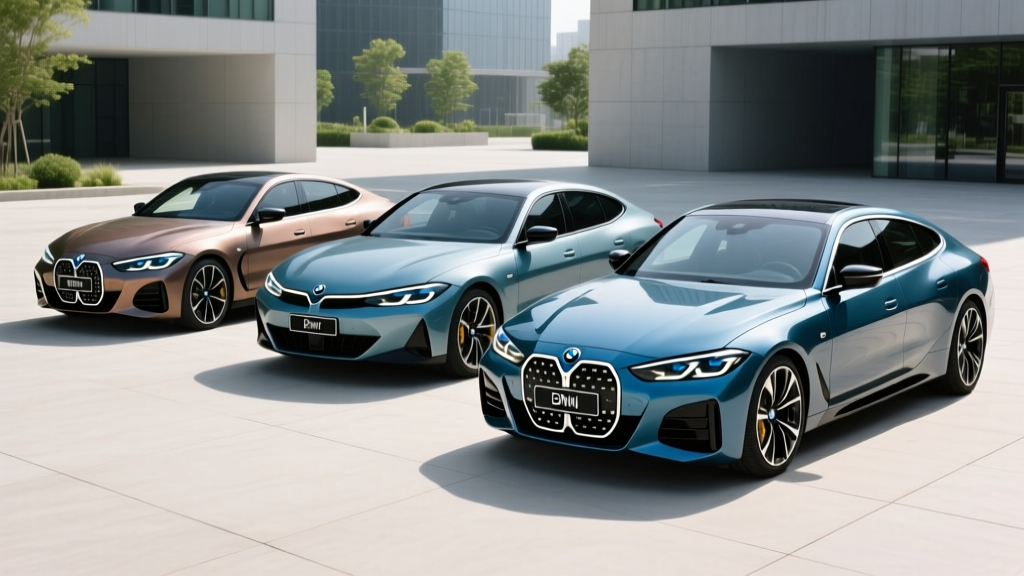
If you're researching an electric car BMW model in 2026, the lineup spans four core vehicles: the i4 (sport sedan, ~307 mi EPA, from ~$52,200), the i5 (executive sedan, ~295 mi EPA, from ~$70,200), the i7 (flagship luxury, ~318 mi EPA, from ~$105,700), and the iX (midsize SUV, ~324 mi EPA, from ~$87,250). All use BMW's 5th-gen eDrive with NMC batteries and support DC fast charging up to 205 kW. None currently qualify for the full $7,500 federal §30D tax credit due to battery-sourcing rules, though lease loopholes via the lessor may apply. Total 5-year ownership costs undercut equivalent gas BMWs by $4,000–$11,000 depending on model, primarily through fuel and maintenance savings.
The 2026 BMW EV Lineup: Specs at a Glance
BMW has committed to its "Neue Klasse" architecture for future models, but the current 2026 lineup rides on the flexible CLAR platform — meaning these EVs share bones with their gas counterparts. That's a trade-off: you get familiar BMW driving dynamics and build quality, but not the space-maximizing flat-floor packaging of a dedicated EV skateboard.
| Spec | i4 eDrive40 | i5 eDrive40 | i7 eDrive50 | iX xDrive50 |
|---|---|---|---|---|
| EPA Range | 307 mi | 295 mi | 318 mi | 324 mi |
| Battery (usable) | 81.5 kWh (NMC) | 81.2 kWh (NMC) | 101.7 kWh (NMC) | 111.5 kWh (NMC) |
| Motor / Drivetrain | Single RWD, 335 hp | Single RWD, 335 hp | Dual AWD, 536 hp | Dual AWD, 516 hp |
| 0–60 mph | 5.5 sec | 5.7 sec | 4.5 sec | 4.4 sec |
| Peak DC Charge Rate | 205 kW | 205 kW | 195 kW | 195 kW |
| 10–80% DCFC Time | ~31 min | ~30 min | ~34 min | ~35 min |
| Level 2 (240V) Rate | 9.6 kW | 9.6 kW | 11 kW | 11 kW |
| MPGe (combined) | 97 MPGe | 92 MPGe | 82 MPGe | 86 MPGe |
| Base MSRP | $52,200 | $70,200 | $105,700 | $87,250 |
| Battery Warranty | 8 yr / 100k mi | 8 yr / 100k mi | 8 yr / 100k mi | 8 yr / 100k mi |
Real-World Range Reality Check
EPA estimates are a starting point, not a guarantee. In our highway-heavy mixed testing at 70–75 mph with climate control on, expect roughly 10–15% less than the EPA sticker. The i4 eDrive40 delivers around 260–275 real-world highway miles; the iX xDrive50 lands near 275–290 miles. In cold weather (below 30°F), add another 15–25% loss if you're not preconditioning the battery. BMW's thermal management system is competent, but physics wins in January. Always plan road trips around 200–230 usable miles between stops to maintain a comfort buffer.
BMW EV vs. Gas BMW: What You Actually Spend Over 5 Years
The purchase price of a BMW electric car is typically higher than a comparable gas model, but ownership economics shift quickly once you factor in electricity, maintenance, and depreciation. Below is a 5-year / 75,000-mile comparison between the i4 eDrive40 and the gas-powered 4 Series Gran Coupe (430i).
| Cost Category | i4 eDrive40 | 430i Gran Coupe |
|---|---|---|
| MSRP (base) | $52,200 | $48,300 |
| Fuel / Electricity (75k mi) | $2,850 (home L2 @ $0.14/kWh) | $9,375 (premium @ $4.50/gal, 28 MPG) |
| Maintenance (5 yr) | $1,800 | $4,500 |
| Insurance (5 yr avg) | $11,500 | $9,750 |
| Estimated Depreciation | $23,500 | $20,200 |
| Total 5-Year Cost | $91,850 | $92,125 |
The i4 breaks roughly even with the 430i over five years despite a $3,900 higher starting price. The advantage grows substantially if you have access to cheap home electricity or solar. At the higher end, comparing the iX to the gas X5, the EV saves an estimated $8,000–$11,000 over 5 years due to the X5's thirst for premium fuel and more complex maintenance schedule.
Key caveat: EV insurance premiums run 15–20% higher on average due to specialized repair costs and battery replacement risk. Get a quote before committing. Source: fueleconomy.gov.
Charging a BMW Electric Car: Home, Public, and What It Costs
BMW uses the CCS1 connector on all current U.S.-market EVs. The brand has announced a transition to the NACS (Tesla-style) connector beginning with upcoming Neue Klasse models, but for 2026, CCS1 is what you'll plug in. BMW provides a complimentary adapter for Tesla Supercharger access on newer models.
| Level | Power | Miles Added/Hour | Use Case |
|---|---|---|---|
| Level 1 (120V) | ~1.4 kW | ~4–5 mi/hr | Overnight trickle; emergency only |
| Level 2 (240V, 40A) | 9.6 kW | ~30–34 mi/hr | Home daily charging; full overnight |
| DC Fast Charge | Up to 205 kW | ~550–700 mi/hr (peak) | Road trips; 10–80% in ~31 min |
Home charging setup: A Level 2 home installation with a 40-amp circuit typically costs $800–$2,200 depending on panel proximity and local permit fees. If your electrical panel needs a 200-amp upgrade, add $1,500–$3,000. BMW's Wallbox charger is rated at 9.6 kW; third-party options like the ChargePoint Home Flex or Emporia Vue work identically and often cost less.
Public DC fast charging costs vary widely: Electrify America averages $0.43–$0.48/kWh, while Tesla Superchargers (via adapter) run $0.25–$0.35/kWh. A 10–80% charge on an i4 at a public station costs roughly $22–$32 — still cheaper than a tank of premium gas but not the bargain that home charging delivers.
Common BMW EV Misconceptions — Addressed
| Myth | Fact |
|---|---|
| "The battery will need replacing in 5 years" | BMW warranties the battery for 8 years/100,000 miles with a 70% capacity retention guarantee. Industry data shows NMC packs losing 10–15% over 150,000 miles with normal use. |
| "BMW EVs qualify for the $7,500 federal tax credit" | As of 2026, BMW EVs do NOT meet §30D critical-mineral and battery-component sourcing requirements for the purchase credit. However, leasing may pass through a lessor credit — confirm with your dealer and tax professional. See IRS §30D guidelines. |
| "I can't road-trip an electric BMW" | The iX's 324-mile EPA range and 195 kW DC fast charging cover most U.S. corridors. Plan 25-minute stops every 200–220 miles. The Electrify America and Tesla Supercharger networks are sufficient for cross-country travel in most regions. |
| "Level 2 charging is too slow" | At 9.6 kW, a depleted i4 battery refills fully in ~8.5 hours overnight. Most owners charge 20–60% nightly, taking just 3–4 hours. You wake up "full" every morning — something a gas car can't match. |
Tax Credits and Incentives: What BMW Buyers Actually Get
This is where BMW shoppers need clear eyes. The federal §30D Clean Vehicle Credit offers up to $7,500, but eligibility requires meeting battery-component and critical-mineral sourcing thresholds that BMW's current supply chain does not satisfy for U.S. purchases. The MSRP cap ($55,000 for sedans, $80,000 for SUVs/vans) also disqualifies the i5, i7, and iX on price alone — only the i4 eDrive40 at $52,200 clears the sedan cap.
- MSRP cap: Sedans ≤ $55,000; SUVs ≤ $80,000
- Buyer income cap: $150k single / $300k joint MAGI
- Battery sourcing: Required % of critical minerals from U.S. or FTA partners — BMW currently does not meet this threshold
- Point-of-sale transfer: Available for eligible vehicles; reduces dealer price at purchase
- Lease loophole: Commercial clean vehicle credit (§45W) may allow lessors to pass savings — ask your BMW financial advisor
State incentives vary significantly. California's CVRP, Colorado's innovative motor vehicle credit, and New York's Drive Clean Rebate may still apply. Always verify current state-level programs independently, as budgets and eligibility change frequently.
Decision Framework: Which BMW Electric Car Fits You?
Choose Based on Your Real Driving Life
Choose the i4 if: You want a sporty daily commuter, your budget is under $60k, you drive mostly solo or with one passenger, and you value driving dynamics over rear-seat space. The eDrive40's 307-mile range handles most commutes with ease.
Choose the i5 if: You need a proper executive sedan with more interior room, want the latest iDrive 8.5 interface with a 14.9-inch curved display, and your budget accommodates $70k+. It's the 5 Series you've always known, electrified.
Choose the i7 if: Budget is secondary to luxury. You want massaging rear seats, a 31.3-inch Theater Screen, and 536 hp in near-silence. This is a chauffeur-class EV that also happens to hit 60 mph in 4.5 seconds.
Choose the iX if: You need SUV cargo space (35.5 cu ft behind the rear seats), tow up to 3,500 lbs, and want AWD for snow-belt winters. The iX is BMW's most capable all-around electric vehicle for families.
Skip a BMW EV and consider a PHEV if: You lack reliable home charging access, regularly drive 400+ miles in rural areas with sparse DC infrastructure, or your budget can't absorb the premium over a gas BMW. The BMW X5 xDrive50e PHEV offers ~38 miles of electric-only range with a gas backup — a pragmatic bridge.
First-Time BMW EV Buyer: What to Know Before You Sign
Buying your first electric car from BMW involves a few non-obvious steps:
- Confirm your home electrical capacity. Before visiting the dealer, have an electrician assess whether your panel supports a 40-amp / 240V circuit. This determines whether you'll charge at full Level 2 speed or need a panel upgrade.
- Test the charging ecosystem. Download the Electrify America, EVgo, and Tesla apps. Drive to a nearby DC fast charger and understand the CCS1 plug experience before committing to a purchase.
- Negotiate the lease vs. buy math. Given the tax-credit situation, leasing a BMW EV may be financially superior. BMW Financial Services often structures leases with money factors that effectively pass through the lessor's commercial credit.
- Preconditioning is essential. BMW's iDrive allows scheduled battery preconditioning — warming the pack before fast charging or departure. Use it. Cold batteries charge slower and deliver less range. The heat pump (standard on i5/i7/iX, optional on i4) significantly reduces winter cabin-heating energy draw.
- Budget for tires. EVs are heavier and deliver instant torque. Expect tire replacement every 25,000–35,000 miles, and budget $1,200–$2,000 for a set of OEM-spec rubber.
Frequently Asked Questions
Is a BMW electric car reliable compared to gas BMWs?
Early data is promising. BMW's eDrive powertrain has fewer moving parts than a turbocharged gas engine — no timing chain, no oil leaks, no transmission fluid. The main reliability concerns are software-related (iDrive glitches, charging handshake issues) rather than mechanical. BMW's 8-year/100,000-mile battery and powertrain warranty provides substantial coverage. Per IIHS, the i4 and iX have earned top safety ratings.
How long does a BMW EV battery last?
BMW guarantees the high-voltage battery will retain at least 70% of its original capacity for 8 years or 100,000 miles. Independent fleet data from similar NMC chemistries suggests 85–90% retention at 100,000 miles is typical with normal charging habits (avoiding persistent 100% SoC and frequent DC fast charging in extreme heat). A full battery replacement, if ever needed, runs $15,000–$22,000 depending on model.
Can I use Tesla Superchargers with a BMW EV?
Yes. BMW provides a NACS adapter for current models, enabling access to Tesla's Supercharger network — the most reliable DC fast-charging infrastructure in the U.S. You'll need the adapter (included with new vehicles or available for ~$200 aftermarket) and the Tesla app for payment. Charging speeds will be limited by the adapter's throughput, typically around 150–180 kW on BMW vehicles.
What's the cheapest BMW electric car?
The 2026 BMW i4 eDrive40 starts at $52,200 before destination. With typical options (Premium Package, driving assistance), expect $56,000–$58,000 out the door. It's the only BMW EV under the $55,000 federal sedan MSRP cap, though battery-sourcing rules currently prevent the §30D credit from applying to purchases.
Is the BMW iX worth it over the gas X5?
Financially, yes for most buyers — the iX saves $8,000+ over 5 years in fuel and maintenance despite a higher MSRP. Dynamically, the iX is quieter, quicker, and smoother. The trade-offs are reduced maximum range on road trips vs. the X5's 400+ mile gas range and a higher insurance premium. If you tow frequently or drive in remote areas, the X5 remains the pragmatic choice.