Quick Verdict: Who Should Buy the BMW CE 04 Electric Scooter?
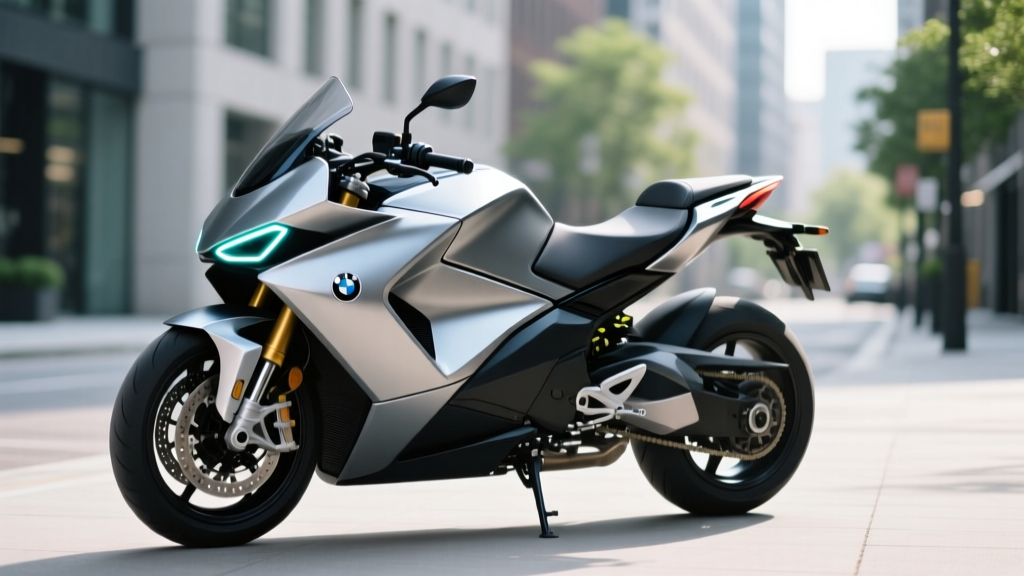
The BMW CE 04 is a premium electric maxi-scooter priced at $12,495 (2026 base MSRP) with an EPA-estimated 80 miles of range from its 8.9 kWh battery. It targets urban commuters who need highway-capable speeds (top speed ~75 mph), want zero tailpipe emissions, and have access to Level 2 charging at home or work. It is not a long-distance touring machine, and riders in regions with sparse charging infrastructure or extreme cold should weigh the range limitations carefully. If your daily round-trip commute is under 50 miles and you can charge overnight on a standard 120V outlet or a 240V Level 2 unit, the CE 04 offers low running costs (~$0.02/mile for electricity) and minimal maintenance compared to a gas scooter like the BMW C 400 GT.
What the BMW CE 04 Actually Is (And Isn't)
Let's clear up a common search confusion first. When people search for an "electric BMW bike," they're usually looking for one of two things: the BMW CE 04 electric maxi-scooter (street-legal, highway-capable, the focus of this guide) or the BMW CE 02, a smaller urban runabout aimed at younger riders with a lower price and shorter range. BMW Motorrad does not currently sell a full-size electric motorcycle in the traditional sense — no electric R 1250 GS or S 1000 RR equivalent exists in the 2026 lineup. The CE 04 is a scooter, with a step-through design, under-seat storage, and a platform built around urban and suburban commuting.
That distinction matters for buyers cross-shopping against electric motorcycles like the Zero SR/S or the LiveWire One, which offer sportier ergonomics and longer range at higher prices. The CE 04 occupies a specific niche: premium urban electric mobility with BMW branding, solid build quality, and tech-forward features like a 10.25-inch TFT display with navigation.
Range, Battery & Charging: The Numbers That Matter
The CE 04's 8.9 kWh lithium-ion battery (NMC chemistry) delivers an EPA-estimated 80 miles of mixed-use range. Here's what that translates to in real-world riding:
Real-World Range Expectations
- EPA estimate: 80 miles (mixed city/highway)
- City-only riding (30-45 mph): ~85-90 miles — regenerative braking recaptures energy in stop-and-go traffic
- Sustained highway (65-75 mph): ~55-65 miles — aerodynamic drag and lack of regen opportunities cut range sharply
- Cold weather (below 40°F): ~60-70 miles — battery chemistry loses efficiency, and cabin-heating isn't a factor, but battery thermal management draws power
Charging is where the CE 04's practicality hinges on your setup:
| Charging Level | Power (kW) | 0-100% Time | Practical Notes |
|---|---|---|---|
| Level 1 (120V household outlet) | ~1.0 kW | ~8.5 hours | Viable for overnight charging if you ride <50 mi/day |
| Level 2 (240V, optional onboard charger upgrade) | ~2.3 kW | ~3.5-4 hours | Requires the optional quick-charge package; ideal for home wallbox |
| DC Fast Charging | Not supported | N/A | The CE 04 has no DC fast-charge port — a key limitation |
The lack of DC fast charging is the CE 04's biggest practical limitation. You cannot top up at a public Electrify America or EVgo station during a lunch break. Every charge must happen at a Level 1 or Level 2 AC source, which means home or workplace charging is essentially mandatory for stress-free ownership.
Cost Breakdown: Purchase, Charging & Maintenance
The CE 04's $12,495 base MSRP is steep for a scooter — a gas-powered BMW C 400 GT starts around $8,695. But the total cost of ownership picture shifts when you factor in fuel, maintenance, and incentives.
| Cost Factor | BMW CE 04 (Electric) | BMW C 400 GT (Gas) |
|---|---|---|
| Base MSRP | $12,495 | $8,695 |
| Federal tax credit (§30D) | Up to $2,500* (2-wheeler credit under IRC §30D(e); verify current-year eligibility) | $0 |
| Effective purchase price | ~$9,995 (after max credit) | $8,695 |
| Fuel/energy cost per mile | ~$0.02 (at $0.15/kWh national avg) | ~$0.10 (at $3.50/gal, 70 MPG avg) |
| Annual fuel cost (5,000 mi/yr) | ~$100 | ~$500 |
| Annual maintenance | ~$100-150 (tires, brake fluid, cabin filter) | ~$400-600 (oil, filters, valves, belt) |
| 5-year total operating cost | ~$1,000-1,250 | ~$4,500-5,500 |
*Note: The federal qualified plug-in electric drive motor vehicle credit has specific rules for 2- and 3-wheeled vehicles under IRC §30D(e). The maximum credit is 10% of the purchase price up to $2,500. Income caps, phase-outs, and sourcing requirements may apply. Always verify current rules at irs.gov and consult a tax professional.
Over five years of ownership at 5,000 miles per year, the CE 04 saves roughly $3,000-$4,000 in operating costs compared to the gas C 400 GT. That nearly closes the purchase-price gap, though the gas scooter still wins on pure upfront affordability if you don't qualify for the tax credit.
CE 04 vs Gas Scooter vs Electric Motorcycle: Decision Context
| Attribute | BMW CE 04 (Electric Scooter) | BMW C 400 GT (Gas Scooter) | Zero SR/S (Electric Motorcycle) |
|---|---|---|---|
| MSRP | $12,495 | $8,695 | $21,495 |
| Range | 80 mi (EPA) | ~200 mi (4.2-gal tank, ~48 MPG) | 154 mi (city, Z-Force 15.8 kWh) |
| Top Speed | 75 mph | 85 mph | 124 mph |
| Refuel/Recharge Time | 3.5-8.5 hours (AC only) | ~3 minutes (gas station) | 1-10 hours (AC); optional quick-charge |
| Maintenance | Minimal | Moderate (oil, belt, valves) | Minimal |
| Storage | Under-seat (fits 1 helmet) | Under-seat + top case option | None |
| Best For | Urban commuting, daily <50 mi | Touring, longer commutes | Performance riding, longer commutes |
Common Misconceptions About the CE 04
| Myth | Fact |
|---|---|
| "It's a motorcycle, so it qualifies for the full $7,500 EV tax credit." | The CE 04 is eligible under the 2/3-wheeler provision, which caps at $2,500 (10% of purchase price), not the $7,500 four-wheel vehicle credit. |
| "I can fast-charge it on road trips." | The CE 04 has no DC fast-charge capability. It uses a standard J1772-compatible AC inlet only. Road trips require planning around multi-hour AC stops. |
| "80 miles of range is enough for anyone." | 80 miles works for short urban commutes. If your round-trip exceeds 50 miles or includes sustained highway speeds, you'll need mid-day charging access or should consider a gas alternative. |
| "Electric scooters need no maintenance at all." | Tires, brake pads/fluid, suspension, and the 12V auxiliary battery still require periodic service. BMW recommends annual inspections. Expect $100-150/year in routine maintenance. |
| "The battery will need replacing in a few years." | BMW provides a 5-year/unlimited-mile battery warranty on the CE 04 traction battery. NMC degradation on a scooter used for daily commuting typically retains 80%+ capacity after 5 years based on industry data. |
Real-World Ownership Considerations
Before committing to the CE 04, honestly assess these four factors:
Home Charging Access
Can you plug in at home? A standard 120V garage outlet works for overnight charging if your daily riding stays under 50 miles. If you need faster turnaround, a 240V Level 2 wallbox (like a ChargePoint Home Flex, ~$500-$700 for equipment plus $300-$800 for electrician installation) cuts charge time to roughly 3.5 hours with the optional quick-charge onboard charger. If you live in an apartment without charging access, the CE 04 is a poor fit. Public AC charging stations exist but are unreliable and slow for scooter use.
Climate & Season
Riders in mild climates (Southern California, Florida, Texas) will get the most from the CE 04 year-round. In northern states, winter riding means reduced range (expect 15-25% loss below 40°F), icy roads, and months where the scooter sits unused. Factor in whether you'll ride 12 months or 6-8 months — the cost-per-mile advantage shrinks if the scooter is garaged half the year.
Commute Distance & Highway Use
The CE 04 is happiest at 30-55 mph in city and suburban environments. Sustained 70+ mph freeway riding drains the battery quickly and leaves minimal range reserve. If your commute is 40 miles each way on the interstate, you'll arrive with ~15-20 miles of range remaining and need to charge before the return trip. For longer highway commutes, a gas scooter or an electric motorcycle with a larger battery (like the Zero SR/S) is more practical.
Insurance & Registration
Electric scooter insurance is typically modest — expect $200-$400/year depending on your state, riding history, and coverage level. Registration fees vary by state; some states apply additional EV registration fees to electric vehicles, though 2-wheelers are often exempt. Check your local DMV for specifics.
Decision Framework: Should You Buy the CE 04?
Choose the BMW CE 04 If:
- Your daily round-trip commute is under 50 miles, mostly city/suburban roads
- You have reliable home charging (garage outlet or Level 2 wallbox)
- You value low running costs, minimal maintenance, and zero tailpipe emissions
- You want a premium, tech-forward scooter with BMW build quality and dealer support
- You qualify for the up-to-$2,500 federal 2-wheeler EV credit, bringing the effective price closer to $10,000
Choose a Gas Scooter (BMW C 400 GT or similar) If:
- Your commute exceeds 60 miles round-trip or involves sustained highway speeds
- You lack home or workplace charging access
- You want to take weekend rides of 100+ miles without planning multi-hour charge stops
- Upfront cost is a priority — the $3,800 MSRP gap matters if you don't qualify for the tax credit
Choose an Electric Motorcycle (Zero SR/S, LiveWire) If:
- You want motorcycle ergonomics and performance, not scooter practicality
- You need 120+ miles of range and are willing to pay $20,000+
- Storage space isn't a priority
Frequently Asked Questions
Does the BMW CE 04 qualify for any federal tax incentives?
It may qualify under the IRC §30D provision for 2- and 3-wheeled plug-in electric vehicles, which offers a credit of 10% of the purchase price up to a maximum of $2,500. This is separate from the $7,500 credit for four-wheel EVs. Income limits and other requirements may apply. Verify current eligibility at irs.gov and consult a tax professional before relying on the credit in your purchase decision.
How long does the BMW CE 04 battery last?
BMW warranties the CE 04's traction battery for 5 years with no mileage limit. Based on NMC chemistry degradation patterns in similar-capacity packs, expect 80-85% capacity retention after 5 years of daily use. The battery is not user-replaceable; out-of-warranty replacement costs are estimated at $3,000-$4,500 based on BMW parts pricing, though this varies by dealer and market.
Can I charge the CE 04 at public EV charging stations?
Only at AC Level 2 stations with a J1772 connector — and only if you carry the appropriate cable. The CE 04 cannot use DC fast chargers (CCS, CHAdeMO, or NACS). Public Level 2 chargers are common at workplaces, parking garages, and some retail locations, but availability and reliability vary. For practical daily use, plan around home charging.
Is the BMW CE 04 highway-legal?
Yes. The CE 04 is a street-legal, highway-capable vehicle with a top speed of approximately 75 mph. It requires a motorcycle endorsement (or scooter-appropriate license depending on your state's classification). However, sustained highway riding significantly reduces range — plan accordingly.
How does the CE 04 compare to the BMW CE 02?
The CE 02 is a smaller, lighter, less powerful urban runabout aimed at younger riders and shorter commutes. It has a lower top speed (~47 mph), shorter range (~55 miles), and a lower price point. It's better suited for neighborhood and campus use; the CE 04 is the choice for riders who need highway capability and more range.