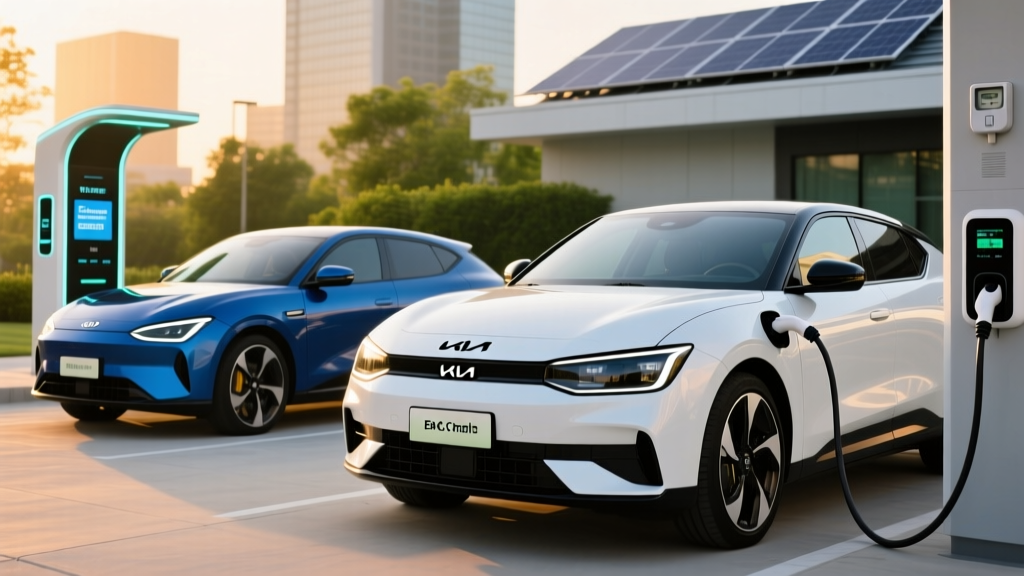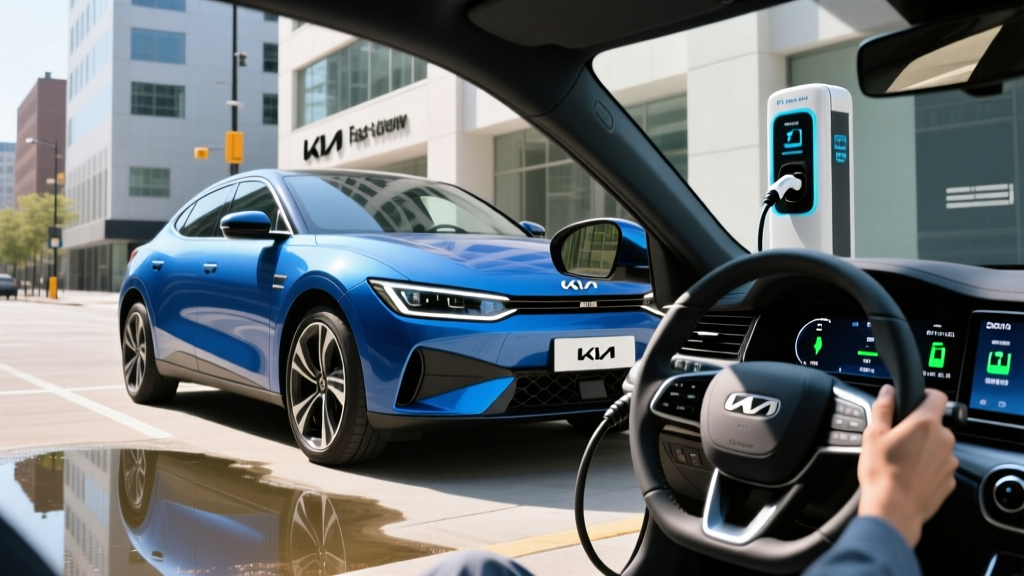
The Kia EV6 has been one of the most compelling electric crossovers since its launch, and the 2026 model year brings subtle refinements to an already strong package. If you've been searching showrooms and configurators for a blue Kia EV6 — whether in the striking Runway Blue, the deeper Neptune Blue, or the carryover Yacht Blue from previous years — you're looking at one of the fastest-charging EVs in its class, built on Hyundai Motor Group's 800-volt E-GMP platform. This review breaks down the exact numbers that matter: real-world range versus the EPA sticker, charging-curve behavior, federal tax credit eligibility under current IRS §30D rules, and whether the EV6 still holds up against an increasingly crowded field of midsize electric crossovers.
2026 Kia EV6 at a Glance: Key Specifications
| Specification | Light Range (RWD) | Wind / GT-Line (RWD) | Wind / GT-Line (AWD) | GT (AWD) |
|---|---|---|---|---|
| EPA Range | 232 mi | 310 mi | 282 mi | 206 mi |
| Battery (Usable) | 58.0 kWh | 77.4 kWh | 77.4 kWh | 77.4 kWh |
| Chemistry | NMC | NMC | NMC | NMC |
| Horsepower | 167 hp | 225 hp | 320 hp | 576 hp |
| 0–60 mph | ~7.3 sec | ~6.2 sec | ~4.5 sec | ~3.4 sec |
| Drivetrain | RWD | RWD | Dual-Motor AWD | Dual-Motor AWD |
| Max DC Fast Charge | ~175 kW | ~239 kW | ~239 kW | ~239 kW |
| 10–80% DC Time | ~22 min | ~18 min | ~18 min | ~18 min |
| Level 2 Rate (10.9 kW) | ~21 mi/hr | ~28 mi/hr | ~28 mi/hr | ~28 mi/hr |
| MPGe (Combined) | 117 MPGe | 134 MPGe | 106 MPGe | 85 MPGe |
| Base MSRP | $42,900 | $48,700 | $52,600 | $61,600 |
Source: EPA fueleconomy.gov, Kia Motors America. Prices exclude destination charge. 2026 model-year figures; confirm with dealer for final MSRP.
Real-World Range: What the EPA Sticker Doesn't Tell You
EPA Estimate: 310 miles (Wind RWD, 77.4 kWh battery)
Real-World Expectation: ~250–275 miles highway at 70–75 mph; ~210–230 miles in sub-freezing temperatures with cabin heating.
The headline 310-mile EPA figure on the Wind and GT-Line RWD trims is legitimate for mixed driving in moderate temperatures. However, the EV6 — like every EV — is sensitive to conditions. On a 300-mile highway trip at sustained 70–75 mph speeds in 65–75°F weather, expect to use roughly 30–32 kWh/100mi, which translates to about 250–270 miles of usable range before you'd want to stop. In cold weather (below 32°F), battery chemistry resistance and cabin heating demands can reduce range by 20–30%, pulling real-world highway range down to roughly 210–230 miles.
The AWD trims sacrifice about 28 miles of EPA range (282 mi) due to the front motor's parasitic drag and added weight, even though the system disconnects the front motor during light-load cruising. The performance-oriented GT drops to 206 miles — the trade-off for 576 horsepower and a sport-tuned suspension. If range is your top priority, the RWD Wind or GT-Line with the 77.4 kWh battery is the sweet spot.
Kia equips all EV6 trims with a heat pump and battery preconditioning, which helps mitigate cold-weather losses. Preconditioning the battery before a DC fast-charge stop (navigating to a charger via the built-in route planner triggers this automatically) is essential for hitting peak charge rates in cool weather.
Charging Speed: 800-Volt Architecture That Actually Delivers
| Charging Level | Power / Rate | Miles Added per Hour | Notes |
|---|---|---|---|
| Level 1 (120V, 12A) | ~1.4 kW | ~4 mi/hr | Emergency/trickle only; 77.4 kWh battery takes 55+ hours |
| Level 2 (240V, 48A) | 10.9 kW (onboard max) | ~28 mi/hr | Full charge in ~7.5 hrs (77.4 kWh); ideal for overnight home charging |
| DC Fast Charge (peak) | ~239 kW | N/A | 10–80% in ~18 min on a 350 kW charger; tapers sharply above 80% |
| DC Fast Charge (50 kW station) | 50 kW | ~120 mi/hr | Older CHAdeMO/CCS stations; 10–80% in ~55 min |
The EV6's 800-volt E-GMP architecture is its strongest competitive advantage. On a 350 kW DC fast charger (like Electrify America's newest stalls or Tesla Superchargers with the included NACS adapter on 2025+ models), the 77.4 kWh battery variants sustain charge rates above 200 kW from roughly 10–55% State of Charge (SoC), then taper to ~150 kW through 70%, and drop further to ~60–80 kW above 80%. This means the advertised 10–80% time of approximately 18 minutes is achievable, but charging from 80–100% adds another 20+ minutes — so plan to leave at 80% on road trips.
For home charging, the EV6's 10.9 kW onboard charger is competitive. A Level 2 home station at 48 amps (requiring a 60-amp dedicated circuit) will replenish the 77.4 kWh battery from empty in roughly 7.5 hours — easily covering daily driving overnight. Installation costs for a Level 2 home charger typically run $800–$2,000 depending on your electrical panel's capacity and the distance from panel to charger location. If your home has a 100-amp panel, a $1,500–$3,000 panel upgrade to 200 amps may be necessary — factor this into your EV budget.
A notable shift for the 2026 model year: Kia has adopted the NACS (Tesla) charge port on new EV6 models sold in North America, replacing the CCS1 connector used on 2022–2024 models. This grants native access to Tesla's Supercharger network — the most reliable and widespread DC fast-charging infrastructure in the U.S. — without an adapter. Owners of older CCS-equipped EV6s can use Kia's provided NACS adapter for Supercharger access.
Performance and Driving Dynamics
The EV6 lineup spans from a comfortable commuter to a legitimate performance machine. The base Light RWD (167 hp, 58 kWh) is adequate for city driving but feels underpowered for highway merging with the smaller battery. The Wind and GT-Line RWD (225 hp) offer a relaxed, torque-rich feel ideal for daily commuting, while the AWD variants (320 hp) deliver confident acceleration and all-weather traction.
The EV6 GT is the outlier: 576 horsepower, a 3.4-second 0–60 time, and an electronically limited top speed of 161 mph put it in Porsche Taycan territory at a fraction of the price. The GT includes a mechanical limited-slip differential, larger brakes, and a sport-tuned adaptive suspension. The trade-off is efficiency — 85 MPGe combined and just 206 miles of range mean frequent charging stops on road trips.
Across all trims, the EV6 offers multiple regenerative braking levels controlled by steering-wheel paddles, from a coasting mode (Level 0) to aggressive one-pedal-style driving (Level 3, or i-PEDAL mode). The brake blending is smooth, and the mechanical brakes are rarely needed in daily driving.
Interior Space, Tech, and Daily Livability
The EV6's crossover profile delivers practical interior dimensions. Front legroom measures 41.7 inches, with 38.0 inches in the rear — sufficient for adults on longer trips. Cargo volume behind the second row is 24.4 cubic feet, expanding to 50.2 cubic feet with the rear seats folded. A small front trunk (frunk) adds 0.74 cubic feet on AWD models and 1.8 cubic feet on RWD — enough for charging cables but not much more.
The dual 12.3-inch curved panoramic display dominates the dashboard, running Kia's latest connected-car infotainment with wireless Apple CarPlay and Android Auto. Physical climate controls returned in the 2025 refresh and carry into 2026 — a welcome improvement over the touch-capacitive panels that frustrated earlier owners. The EV6 also includes a vehicle-to-load (V2L) feature, which can power external devices up to 3.6 kW through a standard outlet adapter — useful for camping, tailgating, or emergency backup power for small appliances.
Driver-assistance technology includes Highway Driving Assist 2 (HDA2), which combines adaptive cruise control with lane-centering and automatic lane-change assist on divided highways. This is an SAE Level 2 system: the driver must remain engaged with hands on or near the wheel at all times. It is not autonomous driving. HDA2 performs well on well-marked interstates but struggles with faded lane markings, construction zones, and complex merging scenarios — standard limitations for all Level 2 systems.
Pricing, Trims, and Federal Tax Credit Eligibility
| Trim | Base MSRP | Est. With Destination | Federal §30D Credit | Effective Price (if eligible) |
|---|---|---|---|---|
| Light RWD | $42,900 | $44,190 | Up to $7,500* | ~$36,690* |
| Wind RWD | $48,700 | $49,990 | Up to $7,500* | ~$42,490* |
| GT-Line RWD | $52,100 | $53,390 | Up to $7,500* | ~$45,890* |
| Wind AWD | $52,600 | $53,890 | Up to $7,500* | ~$46,390* |
| GT-Line AWD | $56,500 | $57,790 | Up to $7,500* | ~$50,290* |
| GT AWD | $61,600 | $62,890 | Up to $7,500* | ~$55,390* |
*Federal tax credit eligibility under IRS §30D is subject to multiple requirements. See checklist below. Credit may be applied at point of sale as a down-payment reduction if the dealer is registered with the IRS. Consult a tax professional for your specific situation.
§30D Federal EV Tax Credit Requirements (2026):
- MSRP Cap: SUVs/crossovers must be under $80,000 MSRP — all EV6 trims qualify.
- Buyer Income Cap: Modified AGI must not exceed $150,000 (single), $225,000 (head of household), or $300,000 (joint filers).
- Battery Sourcing: Critical minerals and battery components must meet escalating percentages from U.S. or free-trade-agreement countries. Kia has worked to localize battery supply chains, but the exact credit amount ($3,750 or $7,500) depends on current-year sourcing compliance. Check the IRS's eligible vehicle list before purchasing.
- Final Assembly: Vehicle must undergo final assembly in North America. The EV6 is assembled in South Korea for most trims, which may disqualify it from the §30D credit. Kia's West Point, Georgia plant began EV6 production for certain 2025–2026 trims — verify the VIN on the IRS portal before relying on credit eligibility.
- Point-of-Sale Transfer: Eligible buyers can transfer the credit to the dealer at purchase, reducing the purchase price directly rather than waiting for a tax refund.
This is the critical caveat for EV6 buyers: because the EV6 was historically assembled in South Korea, not all trims qualify for the federal tax credit. Kia's Georgia production has shifted some VINs into eligibility, but you must verify your specific vehicle's VIN on the IRS/Fueleconomy.gov portal before assuming you'll receive $7,500. State incentives (such as those in California, Colorado, and New York) may still apply regardless of assembly location — check your state's energy office for current programs.
Pros and Cons: Living With the EV6
Pros
- Class-leading DC fast-charge speeds (239 kW peak, 10–80% in ~18 min)
- 800-volt architecture sustains high charge rates, not just peak numbers
- NACS charge port on 2025+ models grants native Supercharger access
- Striking design — blue paint options (Runway Blue, Neptune) stand out in a sea of white and gray EVs
- V2L capability (3.6 kW) for camping, tools, or emergency power
- Heat pump standard on all trims improves cold-weather efficiency
- Spacious rear seat and flat floor thanks to dedicated EV platform
- Kia's 10-year/100,000-mile powertrain warranty is best-in-class
Cons
- Small frunk (0.74–1.8 cu ft) limits front storage
- Federal tax credit eligibility uncertain due to South Korea assembly on many VINs
- Rear visibility is compromised by the sloping roofline and thick C-pillars
- Base Light trim's 58 kWh battery limits range to 232 miles
- GT trim's 206-mile range and 85 MPGe make road trips expensive and frequent
- No third-row seating; families needing 7+ seats must look elsewhere
- Some owners report software glitches with the infotainment system requiring dealer updates
Kia EV6 vs. Key Competitors: Which Should You Choose?
The EV6 competes in a segment that now includes strong alternatives. Here's how it stacks up on the metrics that matter:
| Metric | 2026 Kia EV6 Wind RWD | 2026 Hyundai Ioniq 5 SEL RWD | 2026 Tesla Model Y Long Range | 2026 Ford Mustang Mach-E Premium RWD |
|---|---|---|---|---|
| EPA Range | 310 mi | 318 mi | 320 mi | 290 mi |
| Battery | 77.4 kWh NMC | 77.4 kWh NMC | ~75 kWh NMC | 72 kWh NMC |
| Peak DC Charge | 239 kW | 239 kW | ~250 kW | ~150 kW |
| 10–80% Time | ~18 min | ~18 min | ~22 min | ~32 min |
| Base MSRP (equiv. trim) | $48,700 | $47,400 | $46,630 | $46,995 |
| Cargo (rear seats up) | 24.4 cu ft | 27.2 cu ft | 30.2 cu ft | 29.7 cu ft |
| Warranty | 10 yr / 100k mi | 10 yr / 100k mi | 8 yr / 120k mi (battery) | 8 yr / 100k mi |
Choose the Kia EV6 if: You want the fastest DC charging in the segment, value the 10-year warranty, prefer a bold design, and want NACS Supercharger access without an adapter.
Choose the Hyundai Ioniq 5 if: You want near-identical E-GMP underpinnings with slightly more cargo space and a lower starting price, and don't mind a more retro design.
Choose the Tesla Model Y if: Maximum cargo space, Supercharger network reliability (pre-NACS adoption by others), and software ecosystem are your top priorities, and you accept a stiffer ride.
Choose the Ford Mustang Mach-E if: You want a sporty driving feel and BlueCruise hands-free highway driving, and can accept slower DC charging speeds.
Warranty and Long-Term Ownership
Kia backs the EV6 with one of the strongest warranties in the EV market:
- Battery: 10 years / 100,000 miles (whichever comes first), covering capacity loss below 70% of original capacity.
- Powertrain (motors, reduction gear): 10 years / 100,000 miles.
- Bumper-to-Bumper: 5 years / 60,000 miles.
- Roadside Assistance: 5 years / 60,000 miles.
The 70% capacity-retention threshold is standard for the industry. Real-world degradation data from early 2022–2023 EV6 owners (tracked through community forums and telematics) suggests approximately 5–8% capacity loss after 60,000 miles — well within warranty tolerance. NMC chemistry in the EV6 benefits from the sophisticated thermal management system, which liquid-cools and heats the battery pack to maintain optimal operating temperatures. Avoiding routine charging to 100% (setting the charge limit to 80–90% for daily use) and minimizing repeated DC fast charging will further extend battery health over a 10–15 year ownership horizon.
Frequently Asked Questions
What is the real-world range of the blue Kia EV6?
The EPA rates the EV6 Wind RWD at 310 miles. In real-world highway driving at 70–75 mph in moderate temperatures, expect 250–275 miles. Cold weather (below freezing) can reduce this to 210–230 miles due to battery resistance and cabin heating demands. AWD trims rate at 282 miles EPA, with real-world highway range closer to 230–250 miles.
How fast does the Kia EV6 charge at home and on DC fast chargers?
On a DC fast charger rated at 350 kW, the EV6 (77.4 kWh trims) peaks at ~239 kW and charges from 10–80% in approximately 18 minutes. At home on a Level 2 charger (240V, 48A), the 10.9 kW onboard charger adds roughly 28 miles of range per hour, fully replenishing the battery overnight in about 7.5 hours.
Does the Kia EV6 qualify for the $7,500 federal EV tax credit?
It depends on the specific VIN. The §30D credit requires North American final assembly, and many EV6 units have been assembled in South Korea. However, Kia began producing certain EV6 trims at its West Point, Georgia plant for 2025–2026, making those VINs potentially eligible. You must verify your vehicle's VIN on the IRS eligible vehicle list and meet income and MSRP requirements. Consult a tax professional before relying on the credit.
Is the Kia EV6 worth buying over the Hyundai Ioniq 5 or Tesla Model Y?
The EV6 shares its platform with the Ioniq 5 and offers nearly identical charging performance and range. Choose the EV6 for its bolder styling, slightly sportier tuning, and Kia's 10-year warranty. The Model Y offers more cargo space and a mature software ecosystem but rides more stiffly. Test-drive all three — the decision often comes down to design preference and dealer experience.
What are the biggest drawbacks of the Kia EV6?
The most common complaints are the small frunk, compromised rear visibility from the sloping roofline, uncertain federal tax credit eligibility on South Korea–built VINs, and occasional infotainment software glitches. The base Light trim's 232-mile range is also limiting for road trips compared to the 310-mile Wind and GT-Line trims.
Can I get the Kia EV6 in blue for the 2026 model year?
Kia has offered the EV6 in various blue hues including Runway Blue, Neptune Blue, and Yacht Blue across different model years. Color availability varies by trim and model year — check Kia's online configurator or your local dealer for current 2026 color options, as manufacturers adjust palettes annually.