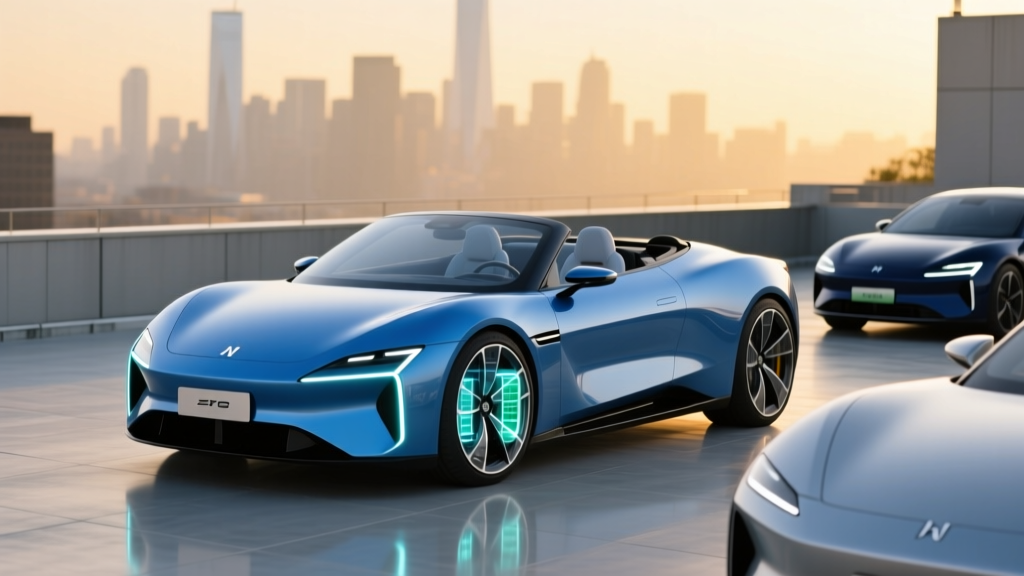
If you're searching for a blue electric convertible in 2026, your options remain limited but genuinely compelling. The most accessible model is the Mini Cooper SE Convertible, which offers an EPA-estimated 150 miles of range, a 32.7 kWh battery, and starts around $41,000. For European buyers, the Fiat 500e Cabrio (available in select blue hues) delivers up to 190 miles on the larger battery variant. Both are compact, city-oriented EVs that prioritize open-air driving over long-distance touring. If you need a four-seat electric convertible with 300+ miles of range, no production model currently fills that niche — you'll need to consider a hardtop EV or wait for upcoming announcements from OEMs like MG or Porsche.
Quick Answer
The Mini Cooper SE Convertible is the most widely available blue electric convertible in the US market for 2026, priced from ~$41,000 with 150 miles EPA range and DC fast charging up to 95 kW (10–80% in ~28 minutes). It qualifies for a portion of the federal §30D tax credit depending on battery sourcing. The Fiat 500e Cabrio is available in limited markets with up to 190 miles of range.
The Current Blue Electric Convertible Landscape
The electric convertible segment is small by design. Automakers have prioritized SUVs and sedans for electrification, leaving drop-top buyers with few battery-electric choices. As of the 2026 model year, here's what's actually on sale or confirmed for delivery:
| Model | EPA Range | Battery (kWh) | DC Fast Charge (kW) | 10–80% Time | 0–60 mph | Base MSRP |
|---|---|---|---|---|---|---|
| Mini Cooper SE Convertible | 150 mi | 32.7 (NMC) | 95 kW peak | ~28 min | 7.3 sec | $41,000 |
| Fiat 500e Cabrio (42 kWh) | 190 mi (WLTP est.) | 42 (NMC) | 85 kW peak | ~30 min | 9.0 sec | ~$38,000 (limited US) |
| MG Cyberster (announced) | ~270 mi (est.) | 77 (NMC) | ~150 kW (est.) | TBD | ~3.2 sec (AWD) | TBD |
The MG Cyberster is worth watching — it's a two-seat roadster with scissor doors and a power-retractable soft top, shown at international auto shows with a 77 kWh battery and rear- or all-wheel-drive options. However, US availability and final EPA certification remain unconfirmed as of early 2026. We list it as announced/preliminary.
Neither Tesla, BMW, nor Mercedes currently sells a fully electric convertible in the US. The BMW Z4 and Mercedes-AMG SL remain gasoline or mild-hybrid only. If a blue exterior is non-negotiable, the Mini offers Island Blue and Enigmatic Blue metallic options; the Fiat 500e has been offered in Ocean Blue in European markets.
Real-World Range: What the EPA Sticker Doesn't Tell You
Range Reality Check — Mini Cooper SE Convertible
EPA estimate: 150 miles
Real-world highway (65–75 mph): ~115–130 miles
Cold weather (below 32°F): ~95–115 miles
City driving with regen: ~145–160 miles
The Mini Cooper SE Convertible's 32.7 kWh usable battery is small by 2026 standards — most compact EVs now carry 58–77 kWh packs. That smaller battery keeps weight down (curb weight ~3,400 lbs) and preserves the car's go-kart handling character, but it fundamentally limits how far you can drive between charges.
On a warm-weather highway loop at 70 mph, expect roughly 115–130 miles before you need to plug in. In freezing temperatures, lithium-ion chemistry slows and cabin heating draws from the battery (the Mini uses a resistive PTC heater, not a heat pump), cutting range by 20–35%. If your daily commute is 40 miles round-trip with access to Level 2 charging at home, the Mini works beautifully as a fair-weather second car. If you regularly drive 200+ miles in a day, this is not your vehicle.
The Fiat 500e Cabrio's larger 42 kWh battery provides more buffer, but its WLTP range figures (190 mi) tend to overstate real-world US driving by 10–15%. Expect closer to 160 miles in mixed driving.
Charging at Home and on the Road
Charging infrastructure access is the single biggest ownership variable for any EV — convertibles included. Here's what you need to know:
| Charging Level | Power (kW) | Mini SE Convertible | Miles Added per Hour |
|---|---|---|---|
| Level 1 (120V household) | 1.4 kW | ~5 mi/hr | ~5 |
| Level 2 (240V home/public) | 7.4 kW (onboard max) | ~25 mi/hr | ~25 |
| DC Fast Charge | Up to 95 kW peak | 10–80% in ~28 min | ~120+ (peak) |
Home charging is essential. With a 32.7 kWh battery, a Level 2 home charger (240V, 32A) will fully replenish the Mini in about 4.5 hours — easily overnight. Level 1 charging from a standard outlet adds only ~5 miles per hour, meaning a full charge takes over 25 hours. That's impractical for daily use.
If you don't have access to home or workplace Level 2 charging, owning a short-range EV like the Mini SE Convertible becomes significantly more inconvenient. You'd be relying on public DC fast chargers multiple times per week, and while 95 kW peak charging is adequate for a small battery, public charger reliability remains inconsistent outside of the Tesla Supercharger network.
Charging curve reality: The Mini peaks at 95 kW only between roughly 10–40% state of charge. From 40–80%, the rate tapers to 50–70 kW. This is normal lithium-ion behavior to protect cell health, but it means the advertised "28-minute 10–80%" time assumes ideal battery temperature (preconditioned) and a charger capable of sustaining that curve.
Connector note: The Mini Cooper SE Convertible uses a CCS1 connector for DC fast charging in North America. If you're a Tesla Supercharger user, note that as of 2026, non-Tesla vehicles with CCS can access some Supercharger locations via the built-in adapter program, but coverage is not universal. Check Tesla's Supercharger map for compatible stations.
Cost Breakdown: EV Convertible vs. Gas Convertible
Let's compare the Mini Cooper SE Convertible against its closest gasoline sibling, the Mini Cooper S Convertible (2.0L turbo, ~$36,000 MSRP), over a 5-year / 60,000-mile ownership period:
| Cost Category | Mini SE Convertible (EV) | Mini Cooper S Convertible (Gas) |
|---|---|---|
| Purchase Price (MSRP) | $41,000 | $36,000 |
| Federal Tax Credit (§30D, est.) | –$3,750 to –$7,500* | $0 |
| Fuel/Energy (60k mi) | $2,400 (home L2 @ $0.14/kWh) | $7,200 (30 MPG @ $3.60/gal) |
| Maintenance (5 yr) | ~$1,200 | ~$3,500 |
| Insurance (5 yr avg) | ~$8,500 | ~$7,200 |
| 5-Year Total (est.) | ~$49,350–$53,100 | ~$53,900 |
*The IRS §30D federal tax credit ranges from $3,750 to $7,500 depending on battery component and critical-mineral sourcing requirements. Income caps apply ($150k single / $300k joint), and the vehicle must be under the $55,000 MSRP cap for sedans/convertibles. Eligibility changes frequently — consult a tax professional and check fueleconomy.gov for current status. Point-of-sale transfer is available at participating dealers.
The EV wins on fuel and maintenance — electricity at $0.14/kWh costs roughly $0.04/mile versus $0.12/mile for gasoline. The Mini SE also eliminates oil changes, spark plugs, and transmission fluid services. However, EV insurance premiums run 15–25% higher on average due to repair-cost complexity and battery replacement exposure.
If you qualify for the full $7,500 credit, the EV's effective purchase price drops to ~$33,500, making it cheaper than the gas Cooper S before you even plug in. If you're ineligible (income above caps, or battery sourcing doesn't meet current-year thresholds), the EV costs roughly $5,000 more upfront and you'll need ~4 years of fuel savings to break even.
Common Misconceptions About Electric Convertibles
| Myth | Fact |
|---|---|
| "EVs can't be convertibles — the battery is too heavy." | The Mini SE Convertible weighs ~3,400 lbs, comparable to many gas convertibles. Battery placement low in the chassis actually improves weight distribution. |
| "The battery will need replacing in 5 years." | BMW/Mini warranties the high-voltage battery for 8 years/100,000 miles with a capacity retention threshold of 70%. Real-world degradation data from similar NMC packs shows ~10–15% loss over 8 years under normal use. |
| "You can't drive a convertible EV in winter." | You can, but range drops 20–35% in freezing temps. With only 150 miles EPA, that means ~100 miles of real winter range. Practical for short commutes, not road trips. |
| "EVs are zero-emission." | Tailpipe emissions are zero, but upstream electricity generation varies. On a US-average grid mix, an EV like the Mini SE still produces roughly 40–60% fewer lifecycle CO₂ emissions than a comparable gas car over 100k miles (EPA). |
| "Any blue electric convertible will qualify for the $7,500 tax credit." | Credit eligibility depends on battery sourcing, buyer income, and MSRP caps — not color or body style. Always verify on fueleconomy.gov before purchasing. |
First-Time EV Buyer Checklist
If this is your first electric vehicle, here's what to confirm before signing for a blue electric convertible:
- Home charging access: Do you have a garage or dedicated parking spot where a Level 2 charger (240V, NEMA 14-50 or hardwired) can be installed? Budget $500–$2,000 for installation depending on panel capacity and run length. A 200A electrical panel is usually sufficient; older homes with 100A service may need a $1,500–$3,000 panel upgrade.
- Daily driving distance: If your round-trip commute plus errands exceeds 80 miles, a 150-mile-range EV leaves thin margins — especially in summer (A/C) or winter (heat). Aim for a vehicle with at least 2x your daily mileage in EPA range.
- Climate reality: If you live where temperatures regularly drop below freezing, budget 25–35% range loss. A heated steering wheel and seat heaters (both standard on the Mini SE) help because they use far less energy than cabin air heating.
- Public charging map: Before buying, download the PlugShare or ChargePoint app and map the DC fast chargers along your most common routes. If you're in a charging desert (rural areas, some apartment-only neighborhoods), a short-range EV is a risky choice.
- Tax credit verification: Check current §30D eligibility on fueleconomy.gov and confirm with your tax advisor. Credits can change mid-year based on updated battery sourcing determinations.
Decision Framework: Is a Blue Electric Convertible Right for You?
Choose the Mini Cooper SE Convertible if:
- You want a fun, city-sized convertible with instant torque and near-silent cruising
- Your daily driving is under 70 miles round-trip
- You have reliable Level 2 home charging
- This is a second car, not your sole vehicle
- You qualify for at least a partial federal tax credit
- You live in a mild-to-moderate climate (or accept winter range loss)
Look elsewhere if:
- You need 300+ miles of range for road trips
- You need four usable seats (the Mini's rear seats are token-only)
- You lack home charging and public DC infrastructure is sparse in your area
- You live in a region with extreme cold (regular sub-20°F winters)
- You need towing capability or significant cargo space
Consider a plug-in hybrid convertible (like the BMW Z4 sDrive30i, gas-only but illustrative) or a hardtop EV (Tesla Model 3, Hyundai Ioniq 6) if range and practicality outweigh the open-air experience.
Frequently Asked Questions
Can I get a Tesla as a convertible?
No. Tesla does not currently produce any convertible model, and none are on the announced roadmap. The Tesla Roadster (announced in 2017) was originally described with a removable glass roof panel, not a traditional soft-top or retractable hardtop, and remains unreleased as of 2026.
What's the longest-range electric convertible available?
Among currently available models, the Fiat 500e Cabrio (42 kWh battery) offers the most range at approximately 190 miles WLTP (~160 miles real-world US). The announced MG Cyberster targets ~270 miles with a 77 kWh pack, but US availability and EPA certification are not confirmed.
How long does the Mini Cooper SE Convertible battery last?
Mini/BMW warranties the high-voltage battery for 8 years or 100,000 miles, guaranteeing at least 70% of original capacity. Based on real-world data from similar NMC chemistry packs, expect roughly 85–90% capacity retention at the 8-year mark under normal charging habits (avoiding frequent 100% charges and DC fast charging in extreme heat).
Is insurance more expensive for an electric convertible?
Yes, typically 15–25% higher than an equivalent gas convertible. Insurers factor in higher repair costs for EV-specific components (battery, power electronics), limited body-shop familiarity, and higher parts pricing. Get a quote before purchasing — premiums vary significantly by insurer, state, and driving record.
Does the blue paint cost extra?
On the Mini Cooper SE Convertible, metallic paint options including Island Blue and Enigmatic Blue typically add $500–$750 to the MSRP. Solid white and certain other colors are included at no extra charge. Fiat pricing varies by market.
Can I install a home charger in a condo or apartment?
It depends on your building's electrical infrastructure and HOA rules. Many newer condos have EV-ready parking with Level 2 access. For older buildings, installation may require HOA approval, electrical panel upgrades, and shared-cost arrangements. Some states have "right to charge" laws that limit HOA restrictions on EV charging — check your local regulations.