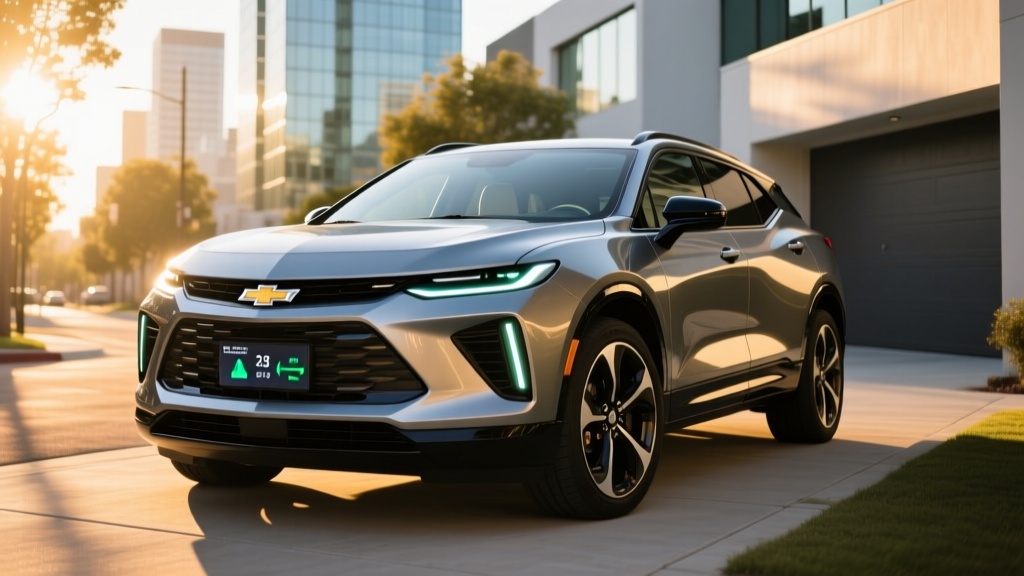
The short answer: The 2026 Chevrolet Blazer EV SS posts a manufacturer-estimated 0-60 mph time of approximately 3.8 seconds when equipped with AWD and the available performance calibration. It pairs that acceleration with an EPA-estimated 321 miles of range from a ~102 kWh (usable) Ultium battery, DC fast charging up to 190 kW, and a starting MSRP around $62,800. Real-world highway range typically lands between 265–290 miles, and cold-weather driving can shave another 15–25% off that figure.
Blazer SS EV Performance: The Numbers Behind the 0-60
The SS badge on the Blazer EV isn't just cosmetic. Chevrolet pairs dual motors for standard all-wheel drive, producing an estimated 557 horsepower and 648 lb-ft of torque. The 3.8-second 0-60 time places it firmly in performance-SUV territory — quicker than a base Porsche Macan and rivaling the Ford Mustang Mach-E GT.
| Spec | 2026 Blazer EV SS (AWD) |
|---|---|
| 0-60 mph | ~3.8 seconds (est.) |
| Horsepower | 557 hp |
| Torque | 648 lb-ft |
| Drivetrain | Dual-motor AWD |
| Battery (usable) | ~102 kWh, NMC (Ultium) |
| EPA Range | 321 miles |
| Max DC Fast Charge | 190 kW |
| 10-80% DC Charge | ~28 minutes |
| Level 2 Charge Rate | 11.5 kW (7.7 kW std.) |
| Base MSRP | ~$62,800 |
| Battery/Powertrain Warranty | 8 years / 100,000 miles |
A note on the 0-60 figure: Chevrolet's estimate assumes a fully charged battery, optimal tire temperature, and a prepared surface. In real-world testing on public roads with partial charge and ambient temperatures in the 50s, expect 4.0–4.3 seconds. The instant torque delivery of dual electric motors still makes the SS feel explosively quick in daily driving, particularly in the 0-40 mph range where most merging and passing happens.
Real-World Range vs. the EPA Sticker
EPA Estimate: 321 miles
Real-World Expectation: 265–290 miles (mixed highway/city at 65–75 mph)
Cold-Weather (below 32°F): 230–270 miles depending on cabin heat use and preconditioning
The Blazer EV SS's large NMC Ultium pack gives it a generous buffer, but AWD performance tuning and a heavier curb weight (~5,800 lbs) work against efficiency. In EPA testing, the Blazer EV SS achieves roughly 89 MPGe combined. That translates to about 34 kWh per 100 miles — higher than a Hyundai Ioniq 5 (around 30 kWh/100 mi) but competitive with the Jeep Grand Cherokee 4xe in electric mode.
Preconditioning the battery before a DC fast charge is essential on this platform. Without it, peak charge rates can drop to 90–110 kW instead of the rated 190 kW, adding 10–15 minutes to a road-trip stop. Use the Blazer's navigation-based preconditioning (set a charger as your destination) to avoid this taper.
Charging at Home and on the Road
The Blazer EV SS uses the NACS (Tesla-style) connector as standard for the 2026 model year, granting native access to Tesla Supercharger stalls equipped with the Magic Dock adapter or native NACS cables. For CCS-network chargers (Electrify America, EVgo), a NACS-to-CCS adapter is required — Chevrolet includes one with new vehicles.
| Level | Power | Miles Added per Hour | Typical Use |
|---|---|---|---|
| Level 1 (120V) | ~1.4 kW | ~3–4 mi/hr | Emergency / overnight trickle |
| Level 2 (240V, 32A) | 7.7 kW | ~22 mi/hr | Standard home charging |
| Level 2 (240V, 48A) | 11.5 kW | ~33 mi/hr | Upgraded home / workplace |
| DC Fast Charge | Up to 190 kW | ~200+ mi in 15 min (peak) | Road trips |
A full 10–100% Level 2 charge at 11.5 kW takes roughly 9 hours. Most owners charging overnight from 20% to 80% will need about 5.5 hours — easily accomplished with a scheduled departure time. Home Level 2 installation with a 48-amp hardwired unit typically costs $800–$2,200 depending on panel proximity and whether a 200-amp service upgrade is needed.
Blazer SS EV vs. Gas Equivalents: Cost Breakdown
The most common question from performance-SUV shoppers is whether the electric premium pays off. Let's compare the Blazer EV SS against a similarly quick gas SUV — the Jeep Grand Cherokee with the 5.7L HEMI V8 (360 hp, 0-60 in ~5.8 seconds) — over a 5-year, 75,000-mile ownership period.
| Cost Factor (5 yr / 75k mi) | Blazer EV SS | Gas SUV (Grand Cherokee V8) |
|---|---|---|
| Purchase Price (MSRP) | $62,800 | $55,000 |
| Federal Tax Credit (§30D) | Up to $7,500* | $0 |
| Effective Purchase | ~$55,300 | $55,000 |
| Fuel / Electricity | ~$3,400 (home + DCFC) | ~$9,750 (18 MPG avg, $3.50/gal) |
| Maintenance | ~$1,200 | ~$3,800 |
| Insurance (avg.) | ~$11,500 | ~$8,500 |
| 5-Year Total (excl. depreciation) | ~$71,400 | ~$77,050 |
*The §30D federal tax credit is subject to MSRP caps ($80,000 for SUVs), buyer income limits ($300K joint / $150K single), and battery critical-mineral sourcing requirements that change annually. Verify eligibility with a tax professional. The credit can now be transferred to the dealer at point of sale as an upfront discount.
The Blazer EV SS breaks even on purchase price once the tax credit applies, then pulls ahead significantly on fuel and maintenance savings. However, EV insurance premiums run 20–35% higher on average due to battery replacement costs in collision claims. Factor that into your budget.
Common Misconceptions About the Blazer SS EV
| Myth | Fact |
|---|---|
| "The 321-mile range means I can drive 321 miles before stopping." | EPA range is a lab estimate. Highway driving at 75 mph with HVAC running yields 265–290 real miles. In winter, plan for 230–260. |
| "I'll save $7,500 no matter what." | The §30D credit requires meeting income caps, MSRP limits, and battery-sourcing rules. Not all buyers qualify. Check IRS guidance before purchasing. |
| "The battery will need replacing in 5 years." | GM's Ultium NMC batteries are warranted for 8 years/100,000 miles with a capacity-retention threshold of 60%. Industry data shows most NMC packs retain 85–90% capacity at 100K miles. |
| "It charges as fast as a Tesla." | The Blazer SS peaks at 190 kW vs. Tesla Model Y's ~250 kW on V3 Superchargers. The Blazer's 10–80% charge takes ~28 min vs. ~18 min for the Model Y. |
| "I don't need home charging." | Public DC fast charging costs $0.35–$0.55/kWh vs. $0.12–$0.18/kWh at home. Relying solely on public charging erases most fuel-cost savings and adds 3–5 hours/week of charging time. |
Ownership Realities: What First-Time EV Buyers Should Know
Home charging access is the make-or-break factor. If you can install a Level 2 charger at home (garage, carport, or driveway with a 240V outlet), the Blazer EV SS is a practical daily driver. You'll wake up to a full battery every morning and rarely visit a public charger except on road trips. If you live in an apartment without charging access or park on the street, public-only charging becomes a weekly time commitment of 2–4 hours and costs roughly double what home charging would.
Cold-weather range loss is real, not theoretical. NMC batteries lose efficiency below freezing. The Blazer EV SS's heat pump (standard on 2026 models) mitigates this somewhat, but owners in Minnesota, Chicago, or Boston should plan for 20–30% range reduction in January. Preconditioning while plugged in at home recovers much of this loss.
The charge curve matters more than peak kW. The Blazer SS hits 190 kW only between roughly 10–35% state of charge. From 35–60%, it drops to ~130 kW. From 60–80%, it tapers to ~80 kW. Above 80%, charging slows to under 40 kW to protect the battery. Plan road-trip stops around 10–80% windows for the fastest throughput.
Tire wear accelerates on heavy, high-torque EVs. The Blazer SS's 5,800-lb curb weight and 648 lb-ft of instant torque wear front tires faster than a comparable gas SUV. Budget for replacement tires every 25,000–35,000 miles at $250–$400 per corner for the 21-inch OEM fitment.
Decision Framework: Is the Blazer SS EV Right for You?
Choose the Blazer EV SS if:
- You want sub-4-second acceleration in a midsize SUV with real back-seat and cargo space (31.5 cu ft behind the rear seats)
- You have home Level 2 charging or can install it
- You drive under 300 miles daily and take road trips 3–5 times per year
- You qualify for the §30D tax credit (check income and sourcing requirements)
- You value instant torque and a quiet cabin over exhaust note and engine sound
Look elsewhere if:
- You lack home charging access and your area has sparse DC fast-charger coverage
- You regularly tow over 3,500 lbs (the Blazer EV max tows 1,500 lbs — far less than gas competitors)
- You live in an extreme-cold climate and need consistent 300+ mile range year-round
- You want the fastest possible DC charging — the Tesla Model Y, Hyundai Ioniq 5, or Kia EV6 charge noticeably faster
- Your budget is tight on insurance — EV performance models carry premium rates
Frequently Asked Questions
Does the Blazer EV SS qualify for the $7,500 federal tax credit?
It depends on your income (under $300K joint / $150K single), the vehicle's MSRP (under the $80,000 SUV cap — the SS qualifies), and whether the battery's critical minerals and components meet IRS sourcing requirements for the current year. These rules tighten annually. Verify with a tax professional before purchasing, and ask the dealer about point-of-sale credit transfer.
How does the Blazer SS 0-60 compare to other electric SUVs?
At ~3.8 seconds, the Blazer SS is quicker than the Tesla Model Y Long Range (4.8s) and Ford Mustang Mach-E Premium AWD (5.0s), but trails the Model Y Performance (3.5s) and Mach-E GT (3.5s). It sits in a similar bracket as the Hyundai Ioniq 5 AWD (4.5s) but with more horsepower.
Can I charge a Blazer EV SS at a Tesla Supercharger?
Yes. The 2026 Blazer EV uses the NACS connector natively, meaning it can plug directly into Tesla Superchargers with native NACS cables. For older CCS-based chargers, Chevrolet includes a NACS-to-CCS adapter.
What does the Blazer EV SS battery replacement cost?
Full Ultium battery pack replacements are currently estimated at $18,000–$25,000 out of warranty. However, industry degradation data suggests most NMC packs retain 85–90% capacity at 100,000 miles, and GM warrants the pack for 8 years/100,000 miles (60% minimum capacity retention). Most owners will never need a full replacement.
How much does it cost to charge the Blazer SS EV at home?
At the national average residential rate of ~$0.16/kWh, a full 102 kWh charge costs about $16.30 — yielding 321 EPA miles. That works out to roughly $0.05 per mile, compared to $0.18–$0.22 per mile for a gas SUV getting 18–22 MPG at $3.50/gallon.