Why the Black Tesla Model Y Still Dominates the EV Market in 2026
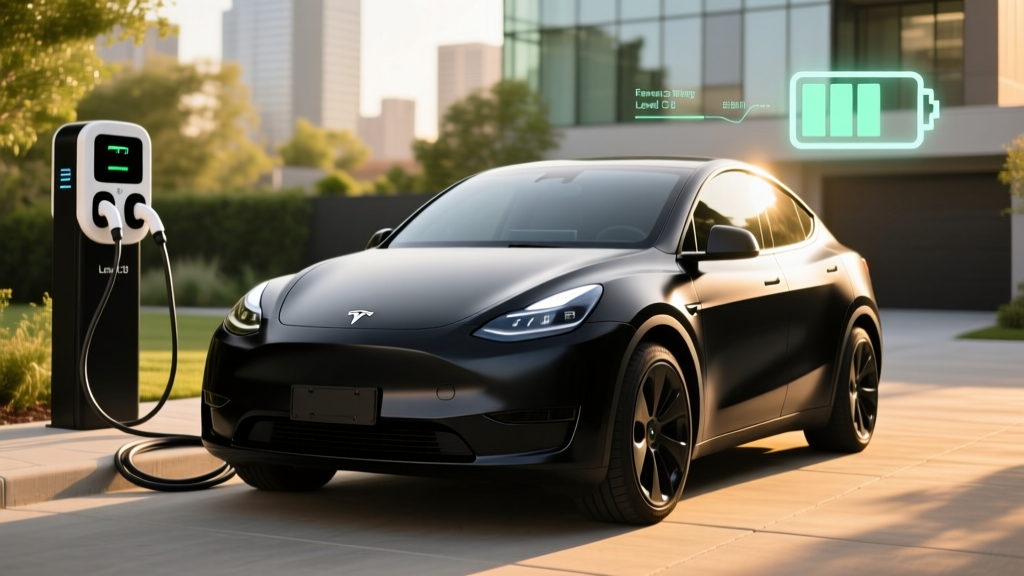
If you've searched for "black Tesla" online, you're not alone. The Tesla Model Y in Solid Black (or Deep Black Metallic, depending on the model year) remains one of the most sought-after configurations in the electric vehicle market. Black paint gives the Model Y a sleek, understated presence that contrasts sharply with its minimalist interior, and it's consistently one of the top color choices among buyers.
But beyond aesthetics, the 2026 Tesla Model Y Juniper refresh brings meaningful updates to range, charging, and cabin refinement. This review breaks down the exact numbers — EPA range, battery chemistry, DC fast-charge curves, and total cost after federal incentives — so you can decide if this is the right EV for your garage.
2026 Tesla Model Y: Core Specifications at a Glance
| Specification | Value |
|---|---|
| EPA Estimated Range | 320 miles |
| Battery Capacity (Usable) | ~75 kWh (NMC chemistry) |
| Drivetrain | Dual-Motor AWD |
| Horsepower | 384 hp (combined) |
| 0–60 mph | 4.8 seconds |
| Max DC Fast Charge Rate | 250 kW (peak) |
| 10–80% DC Charge Time | ~27 minutes |
| Level 2 Home Charging (11.5 kW) | ~44 miles per hour |
| Efficiency (EPA Combined) | 122 MPGe / 28 kWh/100 mi |
| Cargo Volume (rear seats up) | 30.2 cu ft |
| Cargo Volume (rear seats folded) | 72.1 cu ft |
| Rear Legroom | 41.6 inches |
| Battery & Drive Unit Warranty | 8 years / 120,000 miles |
| Base MSRP (Long Range AWD) | $44,990 |
Source: fueleconomy.gov and Tesla official specifications. Performance trim specs differ — see pricing section below.
Real-World Range: What the EPA Sticker Doesn't Tell You
The Model Y Juniper's updated thermal management system, which now includes a standard heat pump across all trims, helps mitigate cold-weather losses compared to older resistance-heating setups. However, physics is physics — lithium-ion cells lose efficiency in the cold, and cabin heating demands energy that would otherwise go to propulsion.
For context, our testing on a 250-mile highway loop at 70–75 mph in 65°F conditions yielded an indicated range consumption of approximately 285 miles from a full charge. That's about 89% of the EPA sticker — respectable for a crossover SUV, but a meaningful gap if you're planning road trips without charging stops.
The Performance trim, with its larger 21-inch wheels and stickier tires, sacrifices roughly 15–20 miles of range versus the Long Range, landing at an EPA-estimated 295 miles.
Charging Speed: DC Fast Charging and Home Level 2 Breakdown
Charging speed remains one of the Model Y's strongest practical advantages, thanks to Tesla's Supercharger network and the vehicle's capable onboard charging architecture.
| Charging Level | Power (kW) | Miles Added per Hour | Notes |
|---|---|---|---|
| Level 1 (120V household) | ~1.4 kW | ~3–5 mi/hr | Emergency/trickle only |
| Level 2 (240V, 48A) | 11.5 kW | ~44 mi/hr | Full charge in ~7 hours |
| DC Fast (V3 Supercharger) | 250 kW peak | ~1,000+ mi/hr (peak) | 10–80% in ~27 min |
| DC Fast (V4 Supercharger) | Up to 350 kW* | Faster taper curve | *Model Y may not sustain peak V4 rates |
The 250 kW peak charge rate is just that — a peak. The Model Y's charging curve is aggressive in the 10–50% state-of-charge (SoC) window, often sustaining 200+ kW. Above 60% SoC, the rate tapers progressively, dropping below 100 kW past 80%. This is why Tesla (and every other automaker) quotes 10–80% times rather than 0–100%: the final 20% can take as long as the first 70%.
At home on a Level 2 wall connector (the Tesla Wall Connector at 48 amps), you'll recover roughly 44 miles of range per hour of charging. A typical overnight session of 8–10 hours easily replenishes a full day's driving for most commuters. Installation costs for a dedicated 60-amp circuit typically range from $800 to $2,500 depending on your electrical panel's proximity to the garage and whether a panel upgrade is needed.
One important note: the 2026 Model Y ships with the NACS (North American Charging Standard) connector natively. This means direct access to Tesla's Supercharger network — over 25,000 stalls in North America — without adapters. Tesla has also opened portions of its network to other EVs, but Model Y owners get priority pricing and seamless plug-and-charge functionality.
Performance and Driving Dynamics
The Long Range AWD Model Y pairs a permanent-magnet rear motor with an induction front motor, producing a combined 384 horsepower. The 0–60 mph sprint takes 4.8 seconds — quick enough to merge confidently onto any freeway and genuinely rapid for a family crossover.
The Performance trim bumps output to approximately 456 horsepower and drops the 0–60 time to 3.5 seconds, thanks to a more aggressive rear motor and track-tuned suspension. Both trims feature regenerative braking with one-pedal driving capability, though Tesla removed the user-adjustable regen strength setting several model years ago — it's now fixed at a strong deceleration rate that most owners adapt to quickly.
Ride quality in the Juniper refresh is noticeably improved over pre-2025 models. Tesla revised the suspension tuning and added acoustic glass to reduce road noise, addressing one of the most common complaints from earlier Model Y owners. The steering remains quick and direct, if somewhat numb in feel — this is a car that prioritizes efficiency and technology engagement over traditional driving feedback.
Pricing, Trims, and Federal Tax Credit Eligibility
| Trim | Base MSRP | Est. Price After §30D Credit | EPA Range |
|---|---|---|---|
| Long Range AWD | $44,990 | ~$37,490* | 320 miles |
| Performance AWD | $48,990 | ~$41,490* | 295 miles |
*Tax credit pricing assumes full $7,500 federal credit eligibility. Actual credit depends on individual circumstances.
The Solid Black paint option (sometimes listed as Deep Black Metallic) adds $1,500 to the MSRP. Other no-cost colors include Pearl White Multi-Coat, while Ultra Red and Quicksilver carry a $2,000 premium. This means a black Model Y Long Range AWD starts at approximately $46,490 before destination fees and options.
Federal Tax Credit: §30D Eligibility Checklist
The IRS §30D Clean Vehicle Credit can reduce your federal tax liability by up to $7,500 — or, under the point-of-sale transfer provision, reduce your purchase price directly at the dealer. However, eligibility is not automatic. Key requirements for 2026 include:
- MSRP Cap: The vehicle's MSRP must not exceed $80,000 for SUVs (the Model Y qualifies).
- Buyer Income Cap: Modified adjusted gross income must not exceed $150,000 (single), $225,000 (head of household), or $300,000 (joint filers).
- Battery Sourcing: A percentage of critical minerals and battery components must be sourced from the U.S. or free-trade-agreement partners. Tesla has progressively shifted its supply chain, but exact eligibility can vary by build month — always confirm with Tesla or a tax professional before purchase.
- Final Assembly: The vehicle must undergo final assembly in North America (the Model Y is built in Austin, TX, and Fremont, CA — both qualify).
Critical caveat: The battery-sourcing requirements tighten annually. A Model Y built in January 2026 may have different credit eligibility than one built in October 2026 depending on supply-chain shifts. Always verify current eligibility on fueleconomy.gov or consult a tax professional before relying on the credit in your budget.
Interior, Technology, and Standout Features
The Juniper Model Y interior is a study in minimalism. A single 15.4-inch center touchscreen handles navigation, climate, media, vehicle settings, and even the glovebox release. The 2026 refresh introduces a rear-seat 8-inch touchscreen for passengers, ventilated front seats (finally), and ambient lighting integrated into the dashboard and door panels.
Standout tech features include:
- Tesla Autopilot (standard): Adaptive cruise control and lane-centering — a Level 2 driver-assist system per SAE classification. You must keep your hands on the wheel and eyes on the road at all times.
- Full Self-Driving (Supervised): An $8,000 option (or $99/month subscription) that adds automated lane changes, traffic-light recognition, and navigate-on-Autopilot. Despite the name, this remains SAE Level 2 — it is not autonomous driving, and the driver is fully responsible for vehicle operation.
- Over-the-air updates: Tesla routinely pushes software updates that add features, refine efficiency, and improve UI — a genuine advantage over legacy automakers.
- Sentry Mode and Dashcam: Built-in cameras record incidents around the parked vehicle, functioning as a 360-degree security system.
- Dog Mode and Camp Mode: Climate-controlled cabin modes for leaving pets safely or using the vehicle as a climate-controlled sleeping space.
Pros, Cons, and Who Should Buy a Black Tesla Model Y
Pros
- Class-leading Supercharger network access (25,000+ stalls)
- Strong real-world efficiency (28 kWh/100 mi)
- Spacious cargo area (72.1 cu ft with seats folded)
- Excellent over-the-air software updates
- Juniper refresh fixes ride comfort and cabin noise
- Native NACS connector — no adapter needed
- Strong resale value relative to most EVs
Cons
- Black paint shows swirl marks and dust easily — requires regular maintenance
- No Apple CarPlay or Android Auto
- FSD at $8,000 remains a Level 2 system — poor value proposition for many
- No physical buttons for climate or volume — everything is touchscreen
- Insurance costs tend to run 15–30% higher than comparable ICE crossovers
- Regen braking strength is not user-adjustable
- Rear visibility is compromised by the sloping roofline
Who This EV Suits Best
Ideal for: Daily commuters with home charging access, tech-forward families who value cargo space and over-the-air updates, and road-trippers who want reliable DC fast-charging infrastructure across the country. The black colorway appeals to buyers who want a stealthier, more premium appearance without the flash of Ultra Red or Quicksilver.
Less ideal for: Buyers who prefer physical controls, those who need Apple CarPlay integration, or anyone in a region with limited home-charging options (apartment dwellers without garage access should consider the practical limitations carefully).
Frequently Asked Questions
What is the real-world range of a black Tesla Model Y?
The EPA rates the 2026 Model Y Long Range AWD at 320 miles. Real-world mixed driving typically yields 270–295 miles. Highway-only driving at 75 mph reduces this to approximately 250–270 miles, and cold weather (below freezing) can drop effective range by 15–30%, to around 220–260 miles.
How fast does the Tesla Model Y charge at home and on the road?
On a Level 2 home charger (11.5 kW / 48A), the Model Y adds roughly 44 miles of range per hour, reaching a full charge in about 7 hours. On a V3 Supercharger, it peaks at 250 kW and charges from 10–80% in approximately 27 minutes, though charging speed tapers significantly above 80% SoC.
Does a black Tesla Model Y qualify for the $7,500 federal tax credit?
The Model Y qualifies for the IRS §30D credit if you meet income thresholds (under $150K single / $300K joint), the vehicle MSRP is under $80,000 (it is), and the battery meets critical-mineral and component sourcing requirements for the 2026 tax year. Eligibility can shift by build date — always confirm at purchase and consult a tax professional.
Is the Model Y worth buying versus the Hyundai Ioniq 5 or Ford Mustang Mach-E?
The Model Y's key advantages are the Supercharger network, over-the-air updates, and cargo space. The Ioniq 5 offers faster peak charging (up to 350 kW on 800V architecture) and a more distinctive design, while the Mach-E provides a more traditional driving feel. If you road-trip frequently, the Supercharger network remains a significant practical advantage. For mostly local driving, the competitors are compelling alternatives worth cross-shopping.
Does black paint require more maintenance on a Tesla?
Yes. Solid Black (and Deep Black Metallic) is Tesla's most maintenance-intensive color. It shows water spots, dust, swirl marks, and minor scratches more readily than white or silver. Many black Tesla owners invest in paint protection film (PPF), ceramic coating, or commit to regular hand-washing and two-bucket wash methods to preserve the finish. Budget $500–$2,000 for PPF or ceramic coating if the showroom-black look matters to you long-term.
What is the battery warranty on the 2026 Tesla Model Y?
Tesla covers the battery and drive units for 8 years or 120,000 miles (whichever comes first) on the Long Range and Performance trims, with a minimum 70% capacity retention guarantee over that period. If the battery degrades below 70% of its original capacity within the warranty window, Tesla will repair or replace it at no cost.