Quick Verdict: The Black Tesla Model Y in 2026
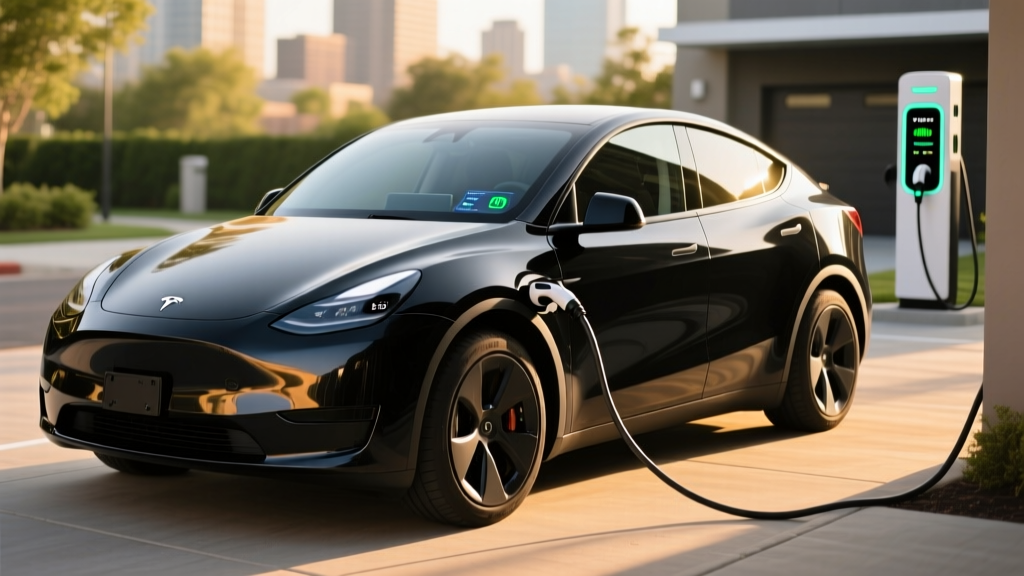
The black Tesla Model Y remains one of the most-searched configurations in the EV market, and for good reason. The 2026 Model Y Long Range AWD pairs a 320-mile EPA range with access to Tesla's 17,000+ Supercharger network, a minimalist interior that maximizes cargo space, and over-the-air updates that keep the platform current years after purchase. The Solid Black paint option ($1,500) is the most popular exterior color Tesla offers, hiding road grime better than white while maintaining a stealthier profile than the signature red.
But the 2026 refresh also faces stiffer competition than ever. The Hyundai Ioniq 5, Ford Mustang Mach-E, and Chevrolet Equinox EV have closed the gap on range and charging speed. This review breaks down exactly what you get — and what you sacrifice — when ordering a black Tesla Model Y in 2026.
Spec Table: 2026 Tesla Model Y at a Glance
| Specification | Long Range AWD | Performance |
|---|---|---|
| EPA Range | 320 miles | 285 miles |
| Battery (usable) | ~78 kWh (NMC) | ~78 kWh (NMC) |
| Drivetrain | Dual-motor AWD | Dual-motor AWD |
| Horsepower | 384 hp | 456 hp |
| 0–60 mph | 4.8 sec | 3.5 sec |
| Max DC Fast Charge | 250 kW | 250 kW |
| 10–80% DC Charge | ~27 min | ~27 min |
| Level 2 Home Charge | 11.5 kW (~44 mi/hr) | 11.5 kW (~44 mi/hr) |
| Efficiency | 122 MPGe / 28 kWh/100mi | 111 MPGe / 30 kWh/100mi |
| Cargo Volume | 76.2 cu ft (rear seats folded) | 76.2 cu ft |
| Base MSRP | $44,990 | $48,990 |
| Battery Warranty | 8 yr / 120,000 mi | 8 yr / 120,000 mi |
Source: fueleconomy.gov, Tesla spec sheets. Figures reflect 2026 model year.
Real-World Range: What the EPA Sticker Doesn't Tell You
Real-world expectation: ~270–290 miles on mixed highway/city driving; ~230–250 miles in sustained 75+ mph highway conditions; ~220–240 miles in sub-freezing winter weather with cabin heat.
The 320-mile EPA figure for the Long Range AWD is achievable in moderate temperatures (55–75°F) with mixed city/highway driving at or below 65 mph. Tesla's heat pump, standard on all 2026 Model Y trims, significantly reduces winter range loss compared to older resistive-heating EVs — but you should still budget a 20–30% reduction when temperatures drop below 32°F.
On a 300-mile highway road trip at 75 mph in 40°F weather, expect to arrive with roughly 30–50 miles of buffer remaining, assuming you departed at 100% State of Charge. The NMC (nickel manganese cobalt) battery chemistry provides strong energy density, which is why the Model Y achieves 320 miles from a relatively compact ~78 kWh usable pack. The trade-off versus LFP chemistry is a slightly lower cycle-life ceiling, though Tesla's battery management system and 8-year/120,000-mile warranty mitigate long-term degradation concerns for typical ownership periods.
If you regularly drive in extreme cold or at sustained highway speeds above 75 mph, the Model Y Performance's lower 285-mile EPA range (due to larger 21" wheels and stickier tires) will compress further to roughly 200–220 real-world miles in winter. Plan charging stops accordingly.
Charging Speed: Supercharger Network and Home Setup
| Charging Method | Power | Speed (Miles Added/Hour) | Notes |
|---|---|---|---|
| Level 1 (120V outlet) | ~1.4 kW | ~4–5 mi/hr | Emergency/trickle only; ~64 hours for full charge |
| Level 2 (240V, 48A Wall Connector) | 11.5 kW | ~44 mi/hr | Full charge in ~7–8 hours; ideal overnight |
| DC Fast Charge (V3 Supercharger) | Peak 250 kW | ~1,000 mi/hr at peak | 10–80% in ~27 min; tapers significantly above 80% |
| DC Fast Charge (V4 Supercharger) | Peak 250 kW (current Y) | ~1,000 mi/hr at peak | Model Y limited to 250 kW; Cybertruck-class vehicles access higher rates |
The Model Y's peak 250 kW DC fast-charge rate is not sustained across the entire session. Like all EVs, the charge curve tapers as the battery fills: you'll see 250 kW only between roughly 10–30% State of Charge, dropping to ~150 kW by 50%, ~75 kW by 70%, and below 40 kW past 85%. This is why Tesla and the industry quote 10–80% times rather than 0–100%.
For home charging, Tesla's Wall Connector ($475) on a 60-amp circuit delivers 11.5 kW (48 amps), adding roughly 44 miles of range per hour of charging. A full overnight session (8 hours) replenishes about 350 miles — more than enough for daily use. Installation costs vary widely: expect $500–$1,500 if your electrical panel has capacity, or $2,000–$4,000+ if a panel upgrade to 200A is needed. Always consult a licensed electrician for a site assessment before purchasing equipment.
Tesla's NACS (North American Charging Standard) connector is now the industry standard adopted by Ford, GM, Rivian, and others starting in 2025. This means the Model Y's native connector is compatible with the broadest and most reliable DC fast-charging network in North America — a significant practical advantage over CCS-equipped competitors still reliant on Electrify America or EVgo infrastructure.
Performance, Interior, and Technology
The Long Range AWD's dual-motor setup produces 384 horsepower and achieves a 4.8-second 0–60 mph time — quick enough to merge confidently onto any freeway and overtake without hesitation. The Performance trim bumps output to 456 hp and drops the sprint to 3.5 seconds, though at the cost of ~35 miles of EPA range and a firmer ride from its adaptive suspension and 21" Überturbine wheels.
Inside, the 2026 Model Y continues Tesla's minimalist approach: a single 15.4" touchscreen handles all infotainment, climate, and vehicle controls. The absence of physical buttons is polarizing — some owners love the clean aesthetic, while others miss tactile HVAC and volume controls. The updated Juniper-generation interior (introduced for the 2025 refresh) added ambient lighting, ventilated front seats, a rear-seat entertainment screen, and improved sound insulation that noticeably reduces road noise at highway speeds.
Cargo capacity remains a class-leading 76.2 cubic feet with the 60/40-split rear seats folded, plus an additional ~4.1 cubic feet in the front trunk (frunk). Rear legroom measures 41.6 inches, accommodating adults comfortably on trips up to a few hours. The panoramic glass roof creates an airy cabin but contributes to solar heat gain in summer — Tesla includes a factory tint, though many owners add an aftermarket sunshade ($40–$80).
On the technology front, Tesla's Autopilot comes standard and provides competent SAE Level 2 lane-centering and adaptive cruise control. Full Self-Driving (Supervised), a $8,000 option or $99/month subscription, adds automatic lane changes, traffic-light recognition, and city-street navigation — but this remains a Level 2 driver-assist system that requires continuous driver supervision and hands-on-wheel engagement. It is not autonomous driving.
Pricing, Tax Credits, and Total Ownership Cost
| Trim | Base MSRP | Solid Black Paint | Destination | Total Before Credit |
|---|---|---|---|---|
| Long Range AWD | $44,990 | +$1,500 | $1,390 | $47,880 |
| Performance | $48,990 | +$1,500 | $1,390 | $51,880 |
Under the IRS §30D Clean Vehicle Credit, the 2026 Tesla Model Y may qualify for up to $7,500 in federal tax credits — but eligibility is not automatic. Key requirements for 2026 include:
- MSRP Cap: The vehicle must have an MSRP at or below $80,000 for SUVs (Model Y qualifies).
- Buyer Income Cap: Modified adjusted gross income must not exceed $150,000 (single), $225,000 (head of household), or $300,000 (joint filers).
- Battery Sourcing: Critical minerals and battery components must meet phased-in domestic/free-trade-agreement sourcing thresholds that tighten annually. Tesla has maintained partial eligibility in recent years — confirm current-year status on fueleconomy.gov before purchasing.
- Point-of-Sale Transfer: As of 2024, buyers can transfer the credit to the dealer at purchase, reducing the out-of-pocket price immediately rather than waiting for a tax refund.
If you qualify for the full $7,500, a black Model Y Long Range AWD effectively costs ~$40,380 after credit — competitive with similarly equipped rivals that offer less range and no Supercharger access. Consult a tax professional to confirm your personal eligibility, as rules are subject to legislative change.
Pros and Cons of the Black Tesla Model Y
Pros
- 320-mile EPA range covers most daily and road-trip needs
- Supercharger network: 17,000+ reliable DC fast chargers across North America
- Class-leading 76.2 cu ft cargo space with frunk
- Over-the-air updates add features post-purchase
- Heat pump standard for efficient cold-weather operation
- Strong resale value relative to EV segment average
- Juniper interior refresh improves comfort and noise levels
Cons
- No physical buttons — all controls via touchscreen
- 250 kW peak charge rate trails Hyundai Ioniq 5's 350 kW capability
- FSD (Supervised) costs $8,000 and remains Level 2, not autonomous
- Firm ride on Performance trim with 21" wheels
- Rear visibility limited by sloping roofline; no rear wiper
- Solid Black paint shows swirl marks without careful washing
- Tax credit eligibility varies by year and sourcing rules
Is the Black Tesla Model Y Worth It vs. Competitors?
The Model Y competes in the most crowded EV crossover segment. Here's how it stacks up against key 2026 rivals:
vs. Hyundai Ioniq 5: The Ioniq 5 charges faster (up to 350 kW on 800V architecture, 10–80% in ~18 min) and offers a more conventional interior with physical controls. However, its 305-mile EPA range falls short, and its CCS connector limits it to non-Tesla networks. If fast DC charging is your top priority, the Ioniq 5 wins. If charging-network reliability matters more, the Model Y wins.
vs. Ford Mustang Mach-E: The Mach-E Extended Range AWD offers ~312 miles EPA and a more driver-focused cockpit with physical controls. Its BlueCruise hands-free highway driving (on pre-mapped roads) is more polished than Tesla's Autopilot for hands-off convenience. But Ford's charging network access is fragmented, and the Mach-E's cargo volume (69.9 cu ft) trails the Model Y.
vs. Chevrolet Equinox EV: Starting around $33,000, the Equinox EV 3RS offers 319 miles of range at a significantly lower price point. It's a strong value play, but its 150 kW peak charge rate and smaller cargo area make it better suited for budget-conscious commuters than road-trippers.
Choose the black Tesla Model Y if: You value Supercharger network access, need maximum cargo space, take regular road trips, and want OTA software updates.
Choose the Hyundai Ioniq 5 if: You prioritize the fastest possible DC charging speeds and prefer a conventional interior layout.
Choose the Chevrolet Equinox EV if: Budget is the primary driver and you mainly commute under 100 miles daily.
Frequently Asked Questions
What is the real-world range of the black Tesla Model Y?
The Long Range AWD achieves 320 miles EPA, but expect 270–290 miles in real-world mixed driving, 230–250 miles at sustained highway speeds above 75 mph, and 220–240 miles in sub-freezing winter conditions. The heat pump helps, but cold weather always reduces lithium-ion battery efficiency.
How fast does the Tesla Model Y charge at home and on the road?
At home on a Level 2 Tesla Wall Connector (11.5 kW), you'll add ~44 miles per hour — a full overnight charge in 7–8 hours. On a V3 Supercharger, peak rate is 250 kW with a 10–80% session taking approximately 27 minutes. The charge curve tapers significantly above 80% SoC.
Does the 2026 Tesla Model Y qualify for the $7,500 federal EV tax credit?
It may, depending on your income (capped at $150K single / $300K joint), the vehicle's MSRP (must be ≤$80K for SUVs — Model Y qualifies), and current battery-sourcing requirements that tighten annually. Check fueleconomy.gov and consult a tax professional before relying on credit eligibility. The point-of-sale transfer option lets you apply the credit at purchase.
How much does a black Tesla Model Y cost after tax credits?
A Long Range AWD in Solid Black lists at ~$47,880 including destination. If you qualify for the full $7,500 §30D credit, your effective price drops to approximately $40,380. Add FSD ($8,000) or other options to adjust accordingly.
Is Tesla's Full Self-Driving actually self-driving?
No. FSD (Supervised) is an SAE Level 2 driver-assist system. It can navigate city streets, change lanes, and recognize traffic controls, but you must keep your hands on the wheel and remain fully engaged at all times. True self-driving (Level 4) is currently available only in geofenced robotaxi services like Waymo in select cities.
What's the battery warranty on the Model Y?
Tesla covers the battery and drive unit for 8 years or 120,000 miles (whichever comes first), with a minimum 70% capacity retention guarantee. If your battery degrades below 70% within that window, Tesla will repair or replace it at no cost. Real-world data from high-mileage Teslas suggests typical degradation of 10–15% over 100,000 miles with proper charging habits (avoiding frequent 100% charges on NMC chemistry).