Quick Verdict: The Black Polestar 2 in 2026
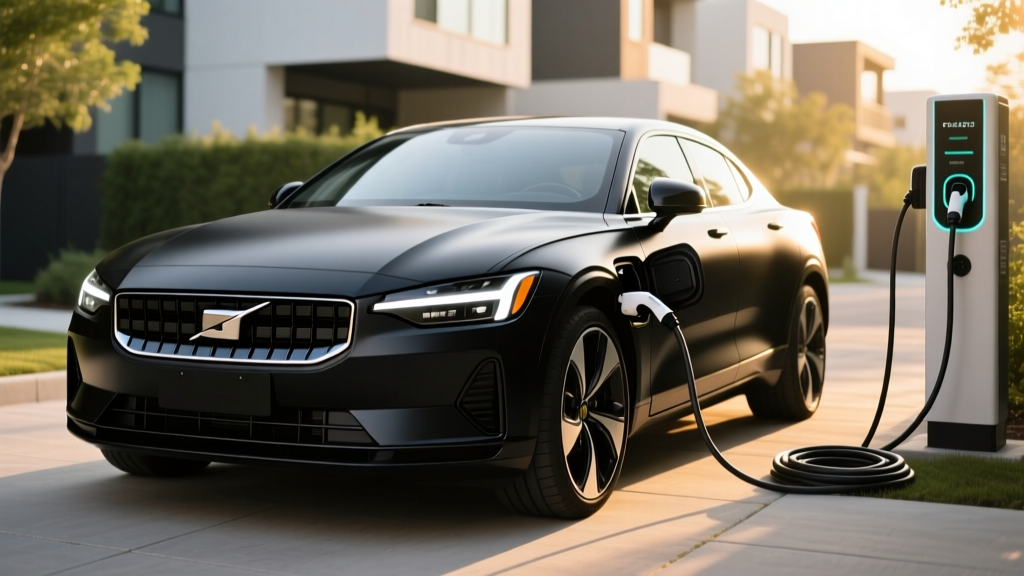
The Polestar 2 has matured into one of the most compelling premium electric sedans on the market, and in its most-requested colorway — Midnight (the brand's deep metallic black) — it cuts a genuinely striking figure. For 2026, Polestar has refined the lineup with an updated 82 kWh (usable) NMC battery pack, a rear-wheel-drive Single Motor variant that prioritizes range, and a Dual Motor Performance option that rockets to 60 mph in 4.1 seconds. Whether you're drawn to the black Polestar 2 for its Scandinavian design ethos, its Google-built infotainment, or its legitimate long-distance capability, this review breaks down every number that matters before you sign the lease or purchase agreement.
The short version: the Single Motor Long Range delivers an EPA-estimated 320 miles of range and starts at $54,950 before incentives, while the Dual Motor with the Performance Pack drops range to 276 miles but transforms the car into a legitimate sports sedan rival. Both variants now charge at up to 205 kW on DC fast chargers, a meaningful bump from the 150 kW ceiling of earlier model years. Let's get into the data.
Full Specifications at a Glance
| Specification | Single Motor LR | Dual Motor LR | Dual Motor + Performance Pack |
|---|---|---|---|
| EPA Range | 320 mi | 298 mi | 276 mi |
| Battery (Usable) | 82 kWh (NMC) | 82 kWh (NMC) | 82 kWh (NMC) |
| Drivetrain | RWD | AWD | AWD |
| Horsepower | 299 hp | 421 hp | 476 hp |
| Torque | 361 lb-ft | 502 lb-ft | 502 lb-ft |
| 0-60 mph | 5.9 sec | 4.3 sec | 4.1 sec |
| Max DC Charge Rate | 205 kW | 205 kW | 205 kW |
| 10-80% DCFC Time | ~26 min | ~26 min | ~26 min |
| Level 2 (AC) Rate | 11 kW (~37 mi/hr) | 11 kW (~37 mi/hr) | 11 kW (~37 mi/hr) |
| Efficiency (Combined) | 107 MPGe (31 kWh/100mi) | 98 MPGe (34 kWh/100mi) | 92 MPGe (37 kWh/100mi) |
| Cargo (rear seats up) | 14.4 cu ft (liftback) | 14.4 cu ft | 14.4 cu ft |
| Cargo (rear seats folded) | 40.5 cu ft | 40.5 cu ft | 40.5 cu ft |
| Base MSRP (2026) | $54,950 | $58,450 | $63,950 |
Real-World Range: What to Actually Expect
EPA sticker: 320 miles | Real-world highway (70-80 mph): ~265-280 miles | Cold weather (below 32°F, mixed driving): ~225-250 miles | City/commute (moderate temps): ~300-315 miles
The EPA's 320-mile estimate for the Single Motor Long Range is achievable in moderate temperatures with a mix of city and suburban driving where regenerative braking recovers energy frequently. However, if your primary use case involves sustained highway travel at 75-80 mph — the scenario that generates the most range anxiety — plan for roughly 265 to 280 miles from a full charge. That's a 12-17% reduction from the sticker, which is typical for a sedan with the Polestar 2's frontal area and weight (~4,680 lbs for the Single Motor).
Cold weather compounds this. In our experience with NMC packs in sub-freezing temperatures, expect a 20-30% range reduction if you're not preconditioning the battery. The Polestar 2 does offer battery preconditioning — activated automatically when you set a DC fast-charger as your navigation destination — which mitigates cold-weather charging slowdowns but does consume some energy from the pack to warm the cells. If you garage the car and precondition while still plugged in, you'll retain far more usable range on cold mornings.
The Dual Motor variants sacrifice range for power and all-weather traction. The 298-mile EPA figure for the standard Dual Motor translates to roughly 245-260 miles in real-world highway driving, while the Performance Pack model's stickier 20-inch rubber and sportier tuning drop real-world highway range to approximately 225-240 miles. For road-trippers, that means planning a charge stop every 2.5 to 3 hours at highway speeds.
Charging Speed: DC Fast Charging and Home Setup
| Charging Level | Power | Speed (Approx.) | Use Case |
|---|---|---|---|
| Level 1 (120V household) | ~1.4 kW | ~4-5 mi/hr | Emergency/overnight trickle |
| Level 2 (240V home/public) | Up to 11 kW | ~37 mi/hr | Daily home charging |
| DC Fast Charge (CCS) | Up to 205 kW peak | 10-80% in ~26 min | Road trips, rapid top-ups |
The 2026 Polestar 2's 205 kW peak DC fast-charge rate is a substantial improvement, but as with all EVs, the peak rate is not sustained across the entire charging session. The charge curve is aggressive from roughly 10% to 50% state of charge, where you'll see rates near the 205 kW ceiling on a 350 kW-capable station. From 50% to 80%, the rate tapers progressively — typically averaging 100-130 kW through that window. The 10-80% session takes approximately 26 minutes under ideal conditions (warm battery, high-power charger).
Above 80%, charging slows dramatically to protect battery health — expect rates below 40 kW, making the 80-100% top-off an additional 25-35 minutes. The practical takeaway for road trips: charge from 10-80%, then move on. That 26-minute stop adds roughly 215 miles of real-world range to the Single Motor, which is enough to reach your next stop comfortably.
For home charging, the Polestar 2's onboard charger accepts up to 11 kW on a 240V Level 2 circuit. That translates to roughly 37 miles of range per hour of charging, meaning a full 10-100% session takes about 8.5 hours — easily accomplished overnight. You'll need a 48-amp dedicated circuit (60-amp breaker) to realize the full 11 kW. Installation costs for a Level 2 home setup typically range from $800 to $2,500 depending on your electrical panel's capacity and the distance from panel to charger location. If your home has a 200-amp panel with available capacity, expect the lower end; older homes with 100-amp service may require a panel upgrade adding $1,500-$3,000. Always get a quote from a licensed electrician before committing.
The Polestar 2 uses the CCS1 connector for DC fast charging in North America. While Polestar has not yet transitioned to the NACS (Tesla-style) connector as of the 2026 model year, adapters are available for Supercharger access, and the CCS network via Electrify America, EVgo, and others continues to expand. Per fueleconomy.gov, the combined efficiency rating of 107 MPGe for the Single Motor means you're spending roughly $0.04-$0.06 per mile on electricity at national average residential rates — compared to $0.12-$0.15 per mile for a comparable 28 MPG gas sedan at $3.50/gallon.
Performance and Driving Dynamics
The 2026 model year marks a significant shift for the Polestar 2: the Single Motor variant now drives the rear wheels rather than the fronts, a change that improved weight distribution and driving feel. The 299 hp and 361 lb-ft of torque deliver a 5.9-second 0-60 mph time that's more than adequate for highway merging and daily driving, and the RWD layout gives the car a more natural, balanced character through corners than the old FWD setup.
The Dual Motor Long Range steps up to 421 hp and 502 lb-ft, cutting the 0-60 time to 4.3 seconds with the traction advantage of all-wheel drive. But the real performance story is the optional Performance Pack ($5,500), which bumps output to 476 hp via a software unlock, adds manually adjustable Öhlins dampers, Brembo front brakes with gold calipers, and 20-inch forged alloy wheels. The result is a 4.1-second 0-60 time and chassis dynamics that genuinely rival a BMW M340i or Audi S4 — cars costing considerably more. The Öhlins dampers are a standout: 22-position adjustable, they let you dial the ride from compliant daily-driver to track-ready firmness.
One-pedal driving is available with adjustable regen levels, though the Polestar 2's regen isn't quite aggressive enough for true one-pedal operation in all scenarios — you'll still use the friction brakes at very low speeds. The brake blend is smooth, a common pain point in lesser EVs that Polestar has largely solved.
Interior, Tech, and Practicality
Step inside a black Polestar 2 (officially the "Midnight" exterior with the available charcoal or slate interior) and the Scandinavian minimalism is immediately apparent. The 11.15-inch center touchscreen runs a Google-built infotainment system with native Google Maps navigation, Google Assistant voice control, and access to the Google Play Store for apps. The Google Maps integration is one of the best EV navigation experiences available — it factors in battery state of charge, elevation changes, and charger availability to plan routes with charge stops automatically.
The 12.3-inch driver display is clean and configurable, and a head-up display is available on Plus and Pilot trim packages. Wireless Apple CarPlay is supported, though Android users will find the native Google system more seamlessly integrated. The audio system on upper trims is a 13-speaker Harman Kardon setup that punches above its weight.
Practicality is a mixed story. The liftback design gives the Polestar 2 a 14.4 cu ft cargo area behind the rear seats — more usable than a traditional sedan trunk thanks to the wide hatch opening — and expands to 40.5 cu ft with the 60/40 rear seats folded. There is no front trunk (frunk), which is a missed opportunity for stowing charging cables. Rear legroom measures 33.4 inches, which is tight for taller passengers on longer trips; the Tesla Model 3 offers roughly 2 inches more. The panoramic glass roof (standard on most trims) adds an airy feel but does reduce headroom slightly and increases cabin heat load in summer — the included shade panel helps.
Driver assistance comes via Polestar's Pilot Pack, which includes adaptive cruise control with stop-and-go, lane-centering steering assist, and blind-spot monitoring. Per IIHS, the Polestar 2 has earned top marks in crashworthiness testing. However, this is an SAE Level 2 system — you must keep your hands on the wheel and eyes on the road at all times. It is not a hands-free system like GM's Super Cruise or Ford's BlueCruise, and it does not approach the capability of Level 4 robotaxi services.
Pricing, Trims, and Federal Tax Credit Eligibility
| Trim | MSRP (2026) | Est. After §30D Credit | Key Features |
|---|---|---|---|
| Single Motor Long Range (Core) | $54,950 | ~$47,450* | 320 mi range, 11.15" screen, CCS charging, heated front seats |
| Single Motor LR Plus | $58,450 | ~$50,950* | Adds panoramic roof, Harman Kardon audio, heat pump, Pilot Pack |
| Dual Motor Long Range | $58,450 | ~$50,950* | AWD, 421 hp, 298 mi range |
| Dual Motor + Performance Pack | $63,950 | ~$56,450* | 476 hp, Öhlins dampers, Brembo brakes, 20" wheels |
*Estimated prices assume full $7,500 federal tax credit eligibility. Actual credit depends on individual tax liability, income limits, MSRP caps, and battery sourcing requirements under IRS §30D. Consult a tax professional and verify current rules at irs.gov.
The federal EV tax credit under §30D remains a moving target. For the Polestar 2 to qualify for the full $7,500 credit, several conditions must align: the vehicle's MSRP must fall below the $55,000 cap for sedans (which eliminates the Dual Motor Performance Pack from eligibility at $63,950), the buyer's modified adjusted gross income must not exceed $150,000 (single) or $300,000 (joint filing), and the battery's critical minerals and components must meet phased-in sourcing requirements that tighten annually. The Single Motor Long Range Core at $54,950 squeaks under the sedan MSRP cap, making it the most credit-friendly configuration. As of 2026, the point-of-sale transfer option allows you to apply the credit as an immediate price reduction at the dealership rather than waiting for tax filing — a significant cash-flow advantage.
Polestar's battery warranty covers 8 years or 100,000 miles (whichever comes first) against defects and capacity loss below 70% of original capacity. The limited vehicle warranty runs 4 years / 50,000 miles, with complimentary scheduled maintenance for 3 years / 36,000 miles.
Pros and Cons
- 320-mile EPA range (Single Motor) is competitive in class
- 205 kW DC fast charging is a meaningful upgrade
- Google Maps EV routing is best-in-class navigation
- Performance Pack with Öhlins dampers offers genuine sports-sedan dynamics
- Liftback cargo versatility exceeds typical sedan trunks
- Strong IIHS safety ratings
- RWD Single Motor is more engaging than prior FWD layout
- Rear legroom (33.4 in) is tight vs. Model 3 and Ioniq 6
- No frunk — charging cables eat into cargo space
- Still on CCS connector; NACS adapter required for Superchargers
- Performance Pack exceeds $55K sedan MSRP cap for tax credit
- Driver assist is competent but not hands-free (Level 2 only)
- Base price above $54K — premium territory before incentives
- Cold-weather range loss significant without preconditioning discipline
How the Black Polestar 2 Stacks Up Against Competitors
The Polestar 2 occupies a specific niche: premium European design with legitimate performance credentials, priced between the mass-market EVs and the luxury tier. Its most direct competitors include:
Tesla Model 3 Long Range ($47,740): More range (341 mi EPA), access to the Supercharger network natively, more rear legroom, and a lower starting price. But the Model 3's interior materials and ride quality don't match the Polestar 2's premium feel, and the minimalist interior isn't for everyone. Choose the Model 3 if range-per-dollar and charging infrastructure are your top priorities.
Hyundai Ioniq 6 SE Long Range ($42,715): Delivers an outstanding 360 miles of EPA range at a significantly lower price, with 800V architecture enabling 10-80% charging in approximately 18 minutes. The trade-off is a less premium interior, less engaging driving dynamics, and a design that polarizes. Choose the Ioniq 6 if efficiency and value dominate your decision.
BMW i4 eDrive40 ($57,975): More traditional luxury sedan execution with a 301-mile EPA range, excellent ride quality, and BMW's iDrive system. Priced higher and less efficient, but the badge cachet and dealer network matter to some buyers. Choose the i4 if you want a conventional luxury experience that happens to be electric.
The black Polestar 2 is the right pick if you value Scandinavian design, want a Google-native tech experience, appreciate the liftback practicality, and are willing to pay a modest premium over the Model 3 for build quality and driving refinement. It's best suited as a daily commuter and weekend road-tripper for singles, couples, or small families who don't regularly carry rear-seat passengers on long drives.
Frequently Asked Questions
Does the black Polestar 2 qualify for the $7,500 federal EV tax credit?
The Single Motor Long Range Core ($54,950) and Plus ($58,450) trims fall under the $55,000 MSRP cap for sedans and may qualify, provided you meet the income limits ($150K single / $300K joint MAGI) and the battery meets critical-mineral and component-sourcing thresholds under §30D. The Dual Motor Performance Pack at $63,950 exceeds the sedan cap and is ineligible. Always verify current eligibility at irs.gov and consult a tax professional — rules change annually.
How fast does the Polestar 2 charge at home?
On a 240V Level 2 home charger delivering 11 kW, the Polestar 2 gains approximately 37 miles of range per hour. A full charge from 10% to 100% takes about 8.5 hours. Most owners charge overnight and wake up to a full battery every morning, making public charging largely unnecessary for daily driving.
What is the real-world range of the Polestar 2 in winter?
Expect a 20-30% range reduction in sustained sub-freezing temperatures. The Single Motor Long Range, rated at 320 miles EPA, typically delivers 225-250 miles in cold-weather mixed driving. Preconditioning the battery while plugged in and using the heat pump (included on Plus trims and above) can recover 10-15 miles of that loss.
Is the Polestar 2 a good car for road trips?
Yes, with planning. The 205 kW DC fast-charging capability means 26-minute stops from 10-80% at high-power stations, adding roughly 215 real-world miles. Google Maps in the Polestar 2 automatically plans charge stops into your route. The main limitation is the CCS connector — you'll rely on Electrify America, EVgo, and similar networks rather than Tesla Superchargers unless you carry a NACS adapter.
How does the Midnight (black) color hold up?
Polestar's Midnight metallic is a deep, near-black finish that photographs beautifully but, like all dark automotive paints, shows swirl marks, dust, and water spots more readily than lighter colors. Budget for a ceramic coating ($1,000-$2,000 professional application) or commit to regular hand washing to keep it looking showroom-fresh. The black-on-black aesthetic with the available charcoal interior is the most requested configuration and tends to hold resale value well.
What is the Polestar 2's battery warranty?
Polestar covers the high-voltage battery for 8 years or 100,000 miles, whichever comes first. The warranty guarantees the battery will retain at least 70% of its original capacity during that period. If degradation falls below that threshold, Polestar will repair or replace the battery at no cost. This is in line with industry standards set by Tesla, Hyundai, and BMW.