The Quick Answer
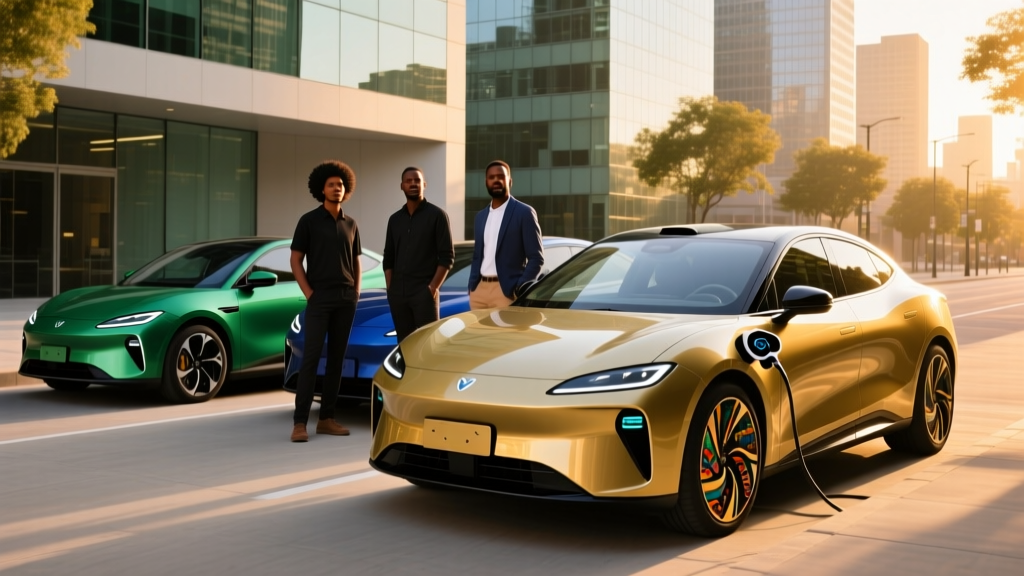
As of 2026, there is no major, publicly recognized black owned electric car company mass-producing highway-legal passenger EVs in the United States. The automotive manufacturing sector — EV or otherwise — requires billions in capital, extensive safety certification (FMVSS/NHTSA), and complex supply chains, which has kept ownership of OEMs concentrated among legacy automakers and a handful of well-funded startups (Tesla, Rivian, Lucid, Canoo). However, Black entrepreneurs and investors are increasingly active in the EV ecosystem through charging infrastructure, fleet management, battery recycling, aftermarket accessories, and dealership ownership. If your goal is to support Black-owned businesses in the electric mobility space, there are viable options — but buying a complete vehicle from a Black-owned OEM isn't one of them yet.
The Reality of EV Manufacturing Ownership in 2026
Building a car company from scratch is one of the most capital-intensive endeavors in any industry. Tesla burned through over $20 billion before achieving consistent profitability. Rivian raised more than $10 billion before delivering its first R1T. Lucid required similar investment to bring the Air sedan to market. These figures represent a structural barrier that affects all underrepresented founders, not just Black entrepreneurs.
The global EV market in 2026 includes roughly 60 active passenger vehicle manufacturers selling in the U.S. None are majority Black-owned. The closest examples of diverse leadership in the EV space include:
- Charging networks and services: Black founders have launched EV charging installation companies, fleet charging consultancies, and community charging advocacy organizations — particularly in underserved urban areas where home charging access is limited.
- Dealerships and retail: Several Black-owned franchise dealerships across the U.S. now sell EVs from major manufacturers, providing culturally competent sales experiences and community trust.
- Aftermarket and accessories: Companies offering EV-specific wraps, wheel packages, and home charging solutions have emerged with diverse ownership.
- Battery recycling and second-life applications: Startups in the circular economy space, some Black-founded, are addressing the growing volume of retired EV batteries.
The key distinction: supporting Black-owned businesses in the EV ecosystem is entirely possible. Expecting a Black-owned company to manufacture a $30,000–$70,000 vehicle that meets NHTSA crash standards, EPA range certification, and IRS §30D tax credit battery-sourcing requirements is asking something no new entrant of any background has accomplished without billions in backing.
If You're Buying an EV, Here's What Actually Matters
Whether your motivation is supporting diverse businesses, reducing emissions, cutting fuel costs, or simply getting a great vehicle, the practical decision framework for buying an EV remains the same. Let's break down the numbers that drive the purchase decision.
EV vs. Gas: 5-Year Cost Comparison
Below is a realistic 5-year/75,000-mile ownership comparison between a popular 2026 EV and a comparable gas vehicle. We're using the EPA's fueleconomy.gov data and national average energy/fuel prices.
| Category | Hyundai Ioniq 5 SEL AWD | Toyota RAV4 XLE AWD |
|---|---|---|
| Base MSRP | $46,700 | $33,425 |
| Federal Tax Credit (§30D) | Up to $7,500 (if eligible) | $0 |
| Effective Purchase Price | ~$39,200 | $33,425 |
| Fuel/Energy (75,000 mi) | $3,375 (home L2, $0.15/kWh) | $9,375 (gas, $3.50/gal, 30 MPG) |
| Maintenance (5 yr) | ~$1,800 | ~$4,200 |
| Insurance (5 yr avg) | ~$11,500 | ~$9,000 |
| 5-Year Total | ~$55,875 | ~$56,000 |
Note: §30D tax credit eligibility depends on MSRP caps ($55,000 for SUVs), buyer income limits ($150K single / $300K joint), battery component and critical mineral sourcing requirements, and point-of-sale transfer rules. Always verify current eligibility at irs.gov before purchasing. Credit rules are subject to change.
The takeaway: even with a higher sticker price, the Ioniq 5 reaches near cost-parity over five years when you factor in fuel savings (~$6,000), lower maintenance (~$2,400 saved), and the tax credit. Insurance remains the one area where EVs consistently cost more — typically 15-25% higher premiums due to repair complexity and battery replacement costs.
Real-World EV Ownership: What First-Time Buyers Must Know
The biggest mistake new EV buyers make is focusing exclusively on EPA range and ignoring the practical logistics of daily ownership. Here's what actually determines whether an EV works for you.
Charging Access: The Make-or-Break Factor
Roughly 80% of EV charging happens at home. If you have a garage or dedicated parking spot with access to a 240V outlet (or the ability to install one), EV ownership is seamless. A Level 2 home charger delivers roughly 25–44 miles of range per hour of charging, meaning overnight replenishment covers virtually any daily commute.
| Level | Power (kW) | Miles Added/Hour | Best For |
|---|---|---|---|
| Level 1 (120V) | 1.0–1.4 kW | 3–5 mi/hr | Overnight trickle, PHEVs |
| Level 2 (240V) | 7.2–19.2 kW | 25–65 mi/hr | Daily home charging |
| DC Fast Charge | 50–350 kW | 180–1,000+ mi/hr | Road trips, quick top-ups |
Home installation costs: A Level 2 charger installation typically runs $800–$2,500 if your electrical panel has capacity. If you need a panel upgrade (common in older homes), add $1,500–$4,000. Always hire a licensed electrician and pull permits — unpermitted work can void home insurance.
If you can't charge at home — common for apartment dwellers, street-parkers, and many urban residents — EV ownership becomes significantly harder. You'll depend on public Level 2 chargers (slower, often occupied) or DC fast chargers (more expensive, typically $0.30–$0.50/kWh vs. $0.12–$0.18/kWh at home). This is a real limitation, not a minor inconvenience. A PHEV (plug-in hybrid) may be a more practical choice if home charging isn't available.
Range Reality: EPA Sticker vs. What You'll Actually Get
EPA range estimates are generated under controlled laboratory conditions. In practice, expect:
- Highway driving (70+ mph): 10–20% less than EPA rating due to aerodynamic drag
- Cold weather (below 30°F): 20–40% range reduction depending on battery chemistry and whether the vehicle has a heat pump
- Mountain driving: Significant uphill consumption, partially offset by downhill regenerative braking
- DC fast charging taper: Charging peaks at the rated kW (e.g., 240 kW) but slows dramatically above 80% State of Charge — a "10-80% in 18 minutes" claim doesn't mean 0-100% in 24 minutes
A vehicle with a 310-mile EPA rating might realistically deliver 250–270 miles on a highway road trip in moderate weather, and as low as 190–220 miles in sub-freezing conditions. Plan accordingly.
Common EV Misconceptions — Fact-Checked
| Myth | Fact |
|---|---|
| "EV batteries need replacing every few years" | Federal law mandates 8-year/100,000-mile battery warranties. Most NMC and LFP batteries retain 85-92% capacity at 150,000 miles based on fleet data. Replacement costs $8,000–$20,000 if needed out of warranty, but most outlast the vehicle. |
| "EVs are worse in cold weather" | Range drops 20-40% in extreme cold — real and significant. But EVs start instantly (no cold cranking), cabin preconditioning works off grid power while plugged in, and heat pumps (standard on many 2026 models) cut heating energy by 50%. |
| "The grid can't handle mass EV adoption" | Most charging happens overnight during off-peak hours when grid capacity is underutilized. Smart charging and V2G (vehicle-to-grid) technology actually stabilize grids. Local transformer upgrades are sometimes needed for dense EV adoption in a single neighborhood. |
| "EVs produce more lifetime emissions than gas cars" | Manufacturing an EV generates more upfront emissions (battery production), but within 1-2 years of driving, the EV breaks even. Over a 150,000-mile lifetime, EVs produce 50-70% fewer total emissions than gas equivalents, even on coal-heavy grids. Source: EPA Green Vehicles. |
| "You can't take road trips in an EV" | The Tesla Supercharger network (now open to NACS-equipped vehicles from Ford, GM, Rivian, and others) covers all major U.S. corridors. With 10-80% charges taking 15-25 minutes at 150-350 kW stations, road trips require planning but are entirely feasible. |
Decision Framework: Is an EV Right for You?
If X, Then Y — Your EV Decision Guide
If you have home charging access AND drive under 250 miles/day:
→ A BEV (battery electric vehicle) is likely ideal. You'll charge overnight, wake up "full," and rarely visit a gas station or public charger.
If you have home charging BUT regularly drive 300+ miles in a day:
→ Look for a BEV with 300+ miles EPA range and fast DC charging (200+ kW peak). Alternatively, a PHEV eliminates range anxiety entirely with a gas backup.
If you CANNOT charge at home (apartment, street parking):
→ A PHEV is usually the better choice — you can charge when convenient and use gas when you can't. A BEV is possible but requires reliable access to public chargers near your home or workplace.
If you live in a cold climate (frequent sub-30°F winters):
→ Prioritize EVs with heat pumps, larger battery packs (to absorb the 20-40% cold penalty), and preconditioning features. LFP batteries handle cold slightly worse than NMC but offer longer cycle life.
If your budget is under $35,000:
→ New BEV options are limited (Chevrolet Equinox EV, Nissan Leaf, base Hyundai Kona Electric). Consider the used EV market, where the separate §25E used EV credit offers up to $4,000 (capped at 30% of sale price, income limits apply).
If you want to support diverse/Black-owned businesses:
→ Purchase from a Black-owned franchise dealership, use Black-owned EV charging installation services, or invest in EV ecosystem startups with diverse leadership. The vehicle itself will come from a major manufacturer, but where you spend your money around that purchase can align with your values.
Where Black Entrepreneurs Are Shaping the EV Future
While a black owned electric car company producing complete vehicles doesn't yet exist at scale, the EV transition is creating wealth-building opportunities across the value chain:
- Charging infrastructure: The federal NEVI program is deploying $5 billion for charging corridors, and community-based organizations are advocating for equitable deployment in underserved areas — creating contracting and ownership opportunities.
- Fleet electrification consulting: As delivery fleets, municipal vehicles, and ride-share operators transition to electric, specialized consultancies are in high demand.
- EV workforce training: Electrician demand for home charger installations is surging. Trade schools and apprenticeship programs focused on EV infrastructure represent a significant economic opportunity.
- Software and data: Route optimization, battery health analytics, and charging management platforms are software-driven businesses with lower capital barriers than manufacturing.
Frequently Asked Questions
Are there any Black-founded EV startups I should know about?
Several Black entrepreneurs have launched EV-adjacent businesses — charging services, fleet management, and accessories — but none have reached the stage of manufacturing and selling a complete highway-legal passenger vehicle. The capital requirements ($1B+ minimum to reach production) remain the primary barrier.
Can I get the $7,500 federal tax credit on any EV?
No. The §30D credit has strict eligibility requirements: the vehicle must be under the MSRP cap ($55,000 for SUVs, $55,000 for sedans), the buyer must be under income limits ($150K single / $300K joint), and the battery must meet critical mineral and component sourcing thresholds that favor North American manufacturing. Many popular EVs qualify for only a partial credit or none at all. Always check the latest list at irs.gov before committing to a purchase.
How much does it cost to install a home EV charger?
Level 2 charger equipment runs $300–$700. Professional installation adds $500–$1,800 if your panel has capacity. A full panel upgrade (100A to 200A) costs $1,500–$4,000 additional. Total: $800–$6,500 depending on your home's electrical situation. Get at least two quotes from licensed electricians.
Do EVs really save money compared to gas cars?
Yes, but the timeline depends on your mileage, local electricity rates, and whether you qualify for the tax credit. High-mileage drivers (15,000+ miles/year) with cheap home electricity ($0.10–$0.15/kWh) and full tax credit eligibility see payback in 2–3 years. Low-mileage drivers without a tax credit may take 5–7 years to break even on the higher purchase price.
What happens to an EV battery after it degrades?
EV batteries rarely fail catastrophically. Gradual degradation to 80-85% capacity over 10-15 years is typical. If replacement is needed out of warranty, costs range from $8,000–$20,000 depending on the vehicle. Retired EV batteries are increasingly repurposed for stationary energy storage before final recycling — a growing industry with opportunities for diverse entrepreneurs.