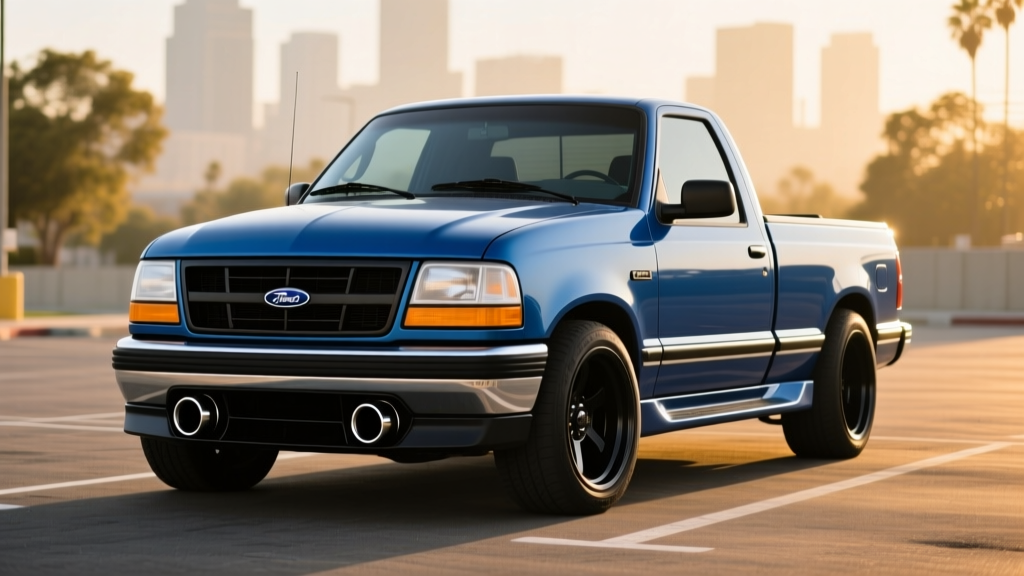
The 1999 Ford F-150 SVT Lightning occupies a unique place in truck history — a factory-hot-rod pickup that proved the F-150 platform could be a legitimate performance machine. For readers arriving here from a search for the 1999 Ford F-150 SVT Lightning, it is essential to clarify up front: this is a gasoline-powered, internal-combustion performance truck, not an electric vehicle. Ford's SVT division built it around a supercharged 5.4L V8, not a battery pack and electric motors.
However, with Ford now selling the all-electric F-150 Lightning (2022–present), interest in the original SVT Lightning has surged. Collectors, restorers, and truck enthusiasts are cross-shopping the 1999–2004 SVT models against the modern electric Lightning. This article provides the definitive spec profile of the 1999 SVT Lightning, places it in the context of today's EV truck landscape, and helps you decide whether the original combustion legend or the modern electric truck fits your garage.
1999 Ford F-150 SVT Lightning: Core Specifications
| Specification | 1999 Ford F-150 SVT Lightning |
|---|---|
| Engine | 5.4L Triton SOHC V8, Eaton supercharger |
| Horsepower | 360 hp @ 4,750 rpm |
| Torque | 440 lb-ft @ 3,250 rpm |
| Transmission | 4R100 4-speed automatic |
| Drivetrain | Rear-wheel drive (RWD) |
| 0-60 mph | ~5.8 seconds (period testing) |
| Top Speed | Electronically limited to ~110 mph |
| Fuel Economy (EPA) | 12 city / 16 highway / 14 combined mpg |
| Fuel Tank | 25 gallons |
| Curb Weight | ~4,610 lbs |
| Bed Length | 6.5 ft (FlareSide short bed) |
| Original MSRP | ~$30,650 (1999) |
| Current Collector Value | $25,000–$55,000+ (condition/mileage dependent) |
The 1999 model year marked the debut of the SVT Lightning nameplate on the tenth-generation F-150. Ford's Special Vehicle Team (SVT) took the standard FlareSide short-bed F-150 and fitted a supercharged version of the 5.4-liter Triton V8. The result was the quickest production pickup of its era, outpacing contemporary V8 muscle sedans and establishing a template that Ram, GMC, and eventually Ford itself would revisit with electric powertrains decades later.
Performance and Driving Character
The Eaton supercharger is the defining feature of the 1999 SVT Lightning. Producing 360 horsepower and 440 lb-ft of torque — exceptional figures for a production truck in 1999 — it delivered a 0-60 mph time in the high five-second range. Period tests by Car and Driver and Motor Trend recorded 5.8-second sprints, with the quarter-mile arriving in approximately 14.3 seconds at around 97 mph.
The 4R100 four-speed automatic transmission was heavy-duty but slow-shifting by modern standards. The Lightning used a 3.73:1 rear axle ratio with a limited-slip differential. Steering was recirculating-ball, typical of the era, and the suspension received SVT-specific monotube dampers, stiffer springs, and a 1-inch drop compared to the standard F-150.
Braking was a known weak point. The 1999 model used standard F-150 front disc/rear drum brakes, which struggled with the truck's weight and performance. Ford upgraded to four-wheel discs in the 2000 model year, one of several running improvements SVT made during the truck's production run (1999–2004).
For context: the 2026 Ford F-150 Lightning Extended Range produces 580 horsepower and 775 lb-ft of torque, hits 0-60 mph in approximately 3.8 seconds, and does it all on electricity. The performance gap between 1999 and today is dramatic, though the SVT's supercharged V8 soundtrack remains something no electric motor can replicate.
Fuel Economy and Running Costs
Real-World Expectation: Owners report 11–13 mpg in mixed driving, dropping to 9–10 mpg under hard acceleration or towing. With a 25-gallon tank, expect roughly 280–350 miles of range per fill-up in normal driving.
The SVT Lightning was never an efficiency proposition. The supercharged 5.4L V8, combined with a heavy body-on-frame chassis and the aerodynamics of a 1990s pickup, delivered fuel economy that was poor even by late-1990s truck standards. At current national average fuel prices (~$3.20/gallon in early 2026), filling the 25-gallon tank costs approximately $80, yielding a fuel cost of roughly $0.23–$0.29 per mile.
By comparison, the 2026 Ford F-150 Lightning achieves an EPA-estimated 66–70 MPGe (approximately 48–51 kWh/100 miles). Charging at home at the national average electricity rate of ~$0.16/kWh translates to roughly $0.07–$0.08 per mile — approximately one-third the per-mile fuel cost of the SVT Lightning.
Interior, Cargo, and Practicality
The 1999 SVT Lightning's interior was largely stock F-150 XLT with SVT-specific touches: embroidered seats, a leather-wrapped steering wheel, and a boost pressure gauge mounted in the center stack. Seating was limited to a front bench or bucket seats (depending on configuration), with no rear passenger accommodation beyond a cramped jump-seat area in the regular-cab layout.
Cargo capacity centered on the 6.5-foot FlareSide bed. The FlareSide's narrower bed width (approximately 50 inches between the wheel wells) limited its utility for flat-sheet materials, though the bed was adequate for typical truck tasks. Payload capacity was rated at approximately 1,200 pounds, and towing capacity was around 5,000 pounds when properly equipped — modest figures even for the era, reflecting the SVT's performance-over-utility mission.
Modern EV trucks have moved decisively past these limitations. The current F-150 Lightning offers a full crew cab with seating for five adults, a 5.5-foot bed with a class-leading front trunk (frunk) adding 14.1 cubic feet of lockable storage, and a maximum towing capacity of 10,000 pounds.
Collector Market and Pricing in 2026
The 1999 Ford F-150 SVT Lightning has become a genuine collector vehicle. First-year examples in excellent, low-mileage condition command significant premiums. Here is the current market landscape:
| Condition / Mileage | Approximate 2026 Market Value |
|---|---|
| Concours / Under 20,000 miles | $45,000–$65,000+ |
| Excellent / 20,000–60,000 miles | $30,000–$45,000 |
| Good / 60,000–100,000 miles | $20,000–$30,000 |
| Driver-quality / 100,000+ miles | $12,000–$20,000 |
| Project / Needs Restoration | $8,000–$14,000 |
The original MSRP of approximately $30,650 in 1999 equates to roughly $57,000 in 2026 dollars when adjusted for inflation. Well-preserved examples have appreciated beyond that inflation-adjusted figure, particularly in Oxford White and Rio Red — the two most desirable colors alongside the standard Black.
As a used, gasoline-powered vehicle, the 1999 SVT Lightning does not qualify for the IRS §25E used clean vehicle credit, which applies only to qualifying used electric and plug-in hybrid vehicles priced at $25,000 or below. The §30D new clean vehicle credit is similarly inapplicable. There are no federal tax incentives available for purchasing a 1999 SVT Lightning.
1999 SVT Lightning vs. 2026 F-150 Lightning EV
The nameplate connection invites direct comparison. Here is how the original SVT stacks up against the current electric F-150 Lightning across key metrics:
| Metric | 1999 SVT Lightning | 2026 F-150 Lightning (Lariat ER) |
|---|---|---|
| Powertrain | 5.4L Supercharged V8, RWD | Dual-motor AWD, 131 kWh usable battery |
| Horsepower | 360 hp | 580 hp |
| Torque | 440 lb-ft | 775 lb-ft |
| 0-60 mph | ~5.8 sec | ~3.8 sec |
| EPA Range / Fuel Range | ~300–350 mi (gas) | ~320 mi (EPA est.) |
| "Refuel" Time | ~5 min (gas station) | ~41 min (10–80% at 150 kW DC) |
| Towing Capacity | ~5,000 lbs | 10,000 lbs |
| Cab / Seating | Regular cab, 2–3 seats | SuperCrew cab, 5 seats |
| Fuel/Energy Cost per Mile | ~$0.23–$0.29 | ~$0.07–$0.08 (home charging) |
| Price (2026) | $20,000–$55,000 (collector market) | ~$72,000–$85,000 MSRP (new) |
| Federal Tax Credit | None | Up to $7,500 (§30D, eligibility varies) |
The comparison reveals two trucks built for entirely different purposes. The SVT Lightning is a collector-grade performance artifact — a supercharged V8 hot rod that delivers analog driving thrills and appreciating value. The modern F-150 Lightning is a practical daily-driver and work truck that happens to be quick, efficient, and technologically advanced.
Who Should Buy the 1999 SVT Lightning?
Pros
- Iconic SVT heritage and appreciating collector value
- Supercharged V8 sound and analog driving experience
- Relatively simple mechanicals — enthusiast-serviceable
- Strong aftermarket and parts community
- Quick for its era (5.8-second 0-60 mph)
- Distinctive, aggressive FlareSide styling
Cons
- Poor fuel economy (12–14 mpg combined)
- Weak brakes on the 1999 model year (drums rear)
- Regular cab limits practicality and passenger space
- Aging electronics, rubber, and suspension components
- No modern safety features (no ESC, limited airbags)
- Rising insurance costs for collector vehicles
- No federal tax incentives available
The 1999 SVT Lightning is best suited for:
- Collectors and enthusiasts seeking a landmark American performance truck with appreciating value.
- Weekend drivers who want a supercharged V8 experience for car meets, cruises, and occasional spirited driving.
- Restorers willing to invest in bringing a driver-quality example back to concours condition.
It is not suited for daily commuting (fuel costs are punishing), family hauling (regular cab, minimal safety features), or anyone seeking modern driver-assistance technology. If your primary goal is a practical, efficient, quick truck for daily use, the modern electric F-150 Lightning — or competitors like the Rivian R1T and Chevrolet Silverado EV — are far more rational choices.
Ownership Considerations for a 27-Year-Old Performance Truck
Buying a 1999 SVT Lightning in 2026 means accepting the realities of owning a nearly three-decade-old high-performance vehicle. Key ownership factors include:
- Spark plug ejection: The 5.4L 2-valve Triton V8 is notorious for spark plugs blowing out of the cylinder heads due to stripped threads. A thread-insert repair (Heli-Coil or Time-Sert) is considered mandatory preventative maintenance, costing $800–$1,500 if not already performed.
- Supercharger maintenance: The Eaton M112 supercharger requires periodic coupler and oil service. Rebuild kits are available, but neglected units can develop bearing noise and reduced boost.
- Transmission: The 4R100 is robust if maintained, but at 27 years old, fluid degradation and seal wear are concerns. A flush and inspection should be a post-purchase priority.
- Insurance: Collector-car insurance (Hagerty, Grundy, etc.) is recommended for agreed-value coverage, typically $300–$600/year for a $35,000 vehicle with limited mileage.
- Parts availability: Ford no longer manufactures many SVT-specific components, but the aftermarket and enthusiast community (lightningrodz.com, SVTPerformance forums) maintain strong parts networks.
Frequently Asked Questions
Is the 1999 Ford F-150 SVT Lightning an electric vehicle?
No. The 1999 SVT Lightning is a gasoline-powered truck with a supercharged 5.4-liter V8 engine. It is not electric, hybrid, or plug-in. The electric Ford F-150 Lightning debuted for the 2022 model year and is a completely different vehicle that shares only the Lightning nameplate.
How fast is the 1999 SVT Lightning?
The 1999 SVT Lightning produces 360 horsepower and 440 lb-ft of torque, achieving a 0-60 mph time of approximately 5.8 seconds. The quarter-mile is approximately 14.3 seconds at 97 mph. Top speed is electronically limited to around 110 mph.
What is the fuel economy of the 1999 SVT Lightning?
The EPA rated the 1999 SVT Lightning at 12 mpg city, 16 mpg highway, and 14 mpg combined. Real-world owners typically report 11–13 mpg in mixed driving. With a 25-gallon fuel tank, range per fill-up is approximately 280–350 miles.
How much does a 1999 SVT Lightning cost in 2026?
Collector-market pricing ranges from approximately $12,000 for a high-mileage project truck to $65,000+ for a concours-condition, low-mileage example. Most driver-quality examples trade between $20,000 and $40,000 depending on mileage, condition, and color.
Does the 1999 SVT Lightning qualify for any federal tax credits?
No. Federal EV tax credits under IRS §30D (new clean vehicles) and §25E (used clean vehicles) apply only to qualifying electric and plug-in hybrid vehicles. The gasoline-only 1999 SVT Lightning does not qualify for any federal purchase incentives.
Should I buy the 1999 SVT Lightning or the 2026 F-150 Lightning EV?
These are fundamentally different purchases. Buy the 1999 SVT Lightning if you want a collectible, analog, supercharged V8 performance truck for weekend enjoyment and potential appreciation. Buy the 2026 F-150 Lightning EV if you need a practical, fast, efficient daily-driver and work truck with modern technology, crew-cab space, and low operating costs. Many enthusiasts own both.
What are the most common problems with the 1999 SVT Lightning?
The most well-documented issues include spark plug ejection from the 5.4L Triton cylinder heads (requiring thread-insert repair), weak rear drum brakes on the 1999 model year (upgraded to discs in 2000), supercharger coupler wear, and age-related deterioration of rubber bushings, hoses, and seals. The 4R100 transmission is generally reliable if fluid has been maintained.
Sources: Ford SVT historical archives, EPA fueleconomy.gov database, IRS §30D clean vehicle credit guidelines, Hagerty collector-car valuation tools.